The final week of our "warm season" stay in Illinois drew to a close a bit earlier than in most years. We missed the peak of autumn color. It was forecast to be much more subdued this year because of the late-summer drought.
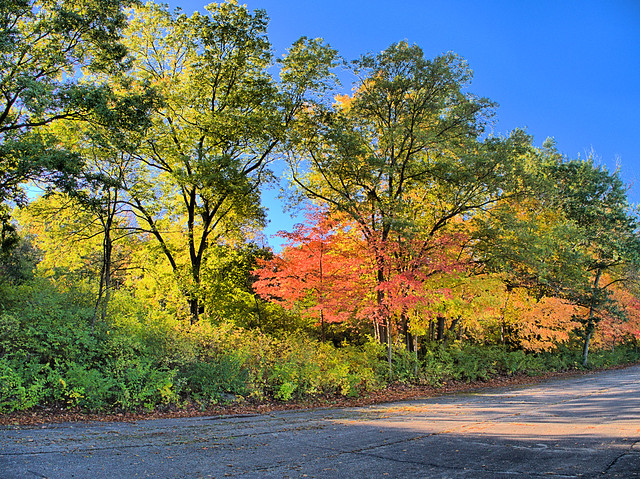
A few maples, at nearby Lippold Park in Batavia, stood out among the oaks...
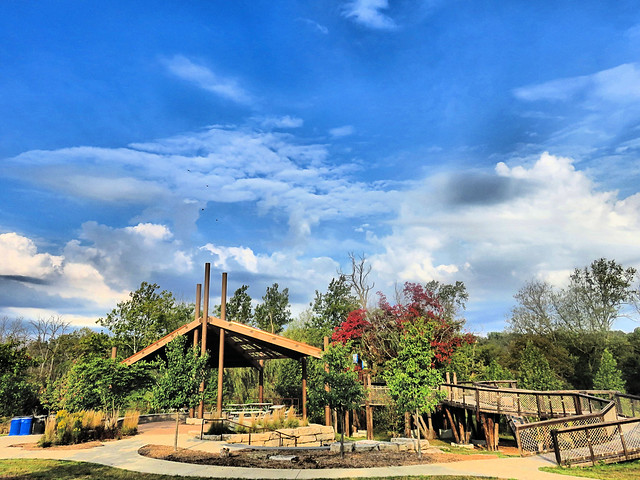
...and one accented the pavillion:
Usually our schedule permits us the opportunity, not only to witness the end of fall migration, but to see a variety of other northern "target" land bird species which spend their winters in NE Illinois.
I hoped to see Fox Sparrows which usually arrive late in October, but which have posed for photos as early as October 7. Slate-colored Juncos and Purple Finches become abundant after mid-October. Red-breasted Nuthatches are irregular migrants and may suddenly show up as early as August. American Tree Sparrows, Lapland Longspurs and Snow Buntings usually wait until November, although any of these birds might appear a month or more earlier. So far I had not seen any of the aforementioned species.
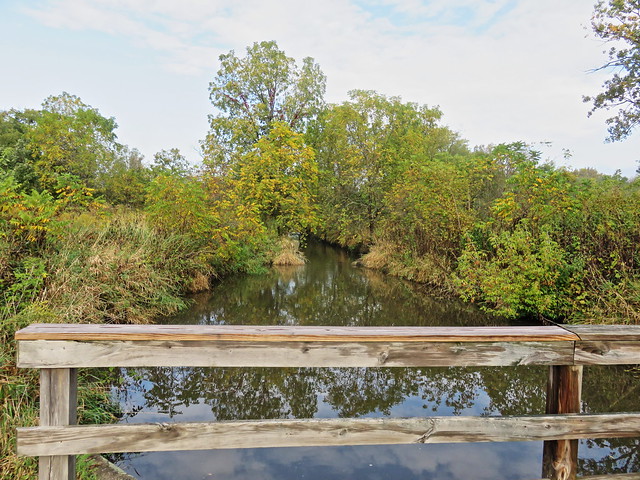
We had a lovely walk at Bliss Woods preserve in Sugar Grove, but saw few birds. Blackberry Creek provided a nice fence and reflection:
Rain and family committments limited the opportunities for birding as our departure approached. Rather than focus on failure, let's talk about what we did see in early October. Among the warblers were...
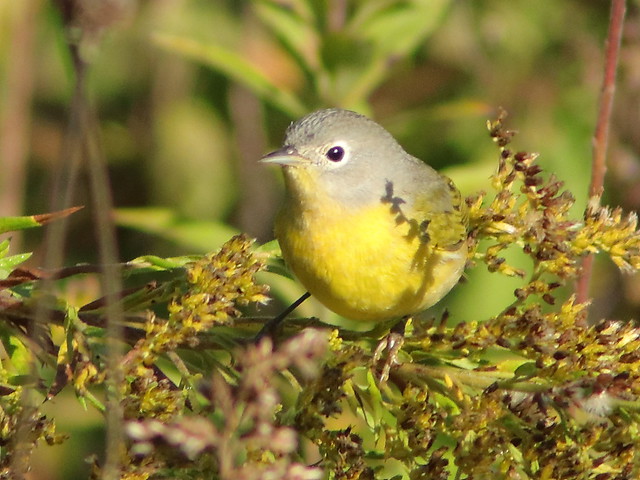
Nashville Warbler:
Black-throated Green Warbler:
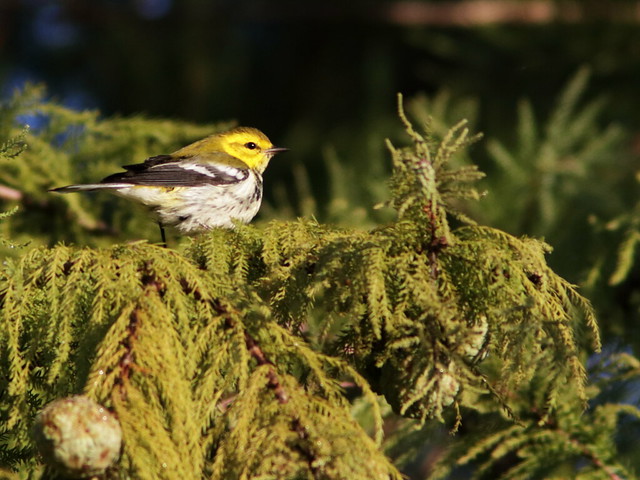
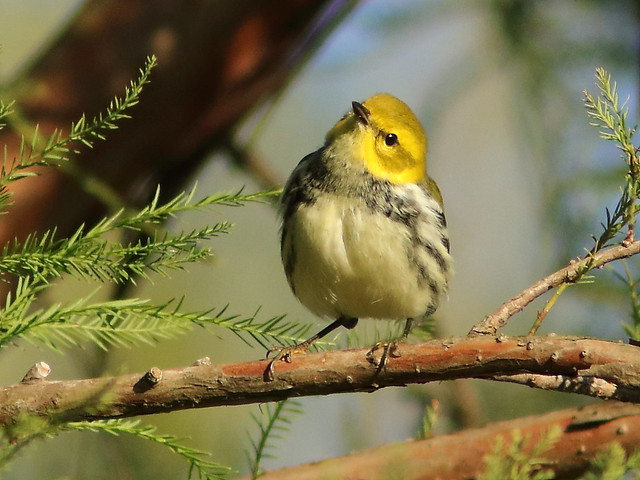
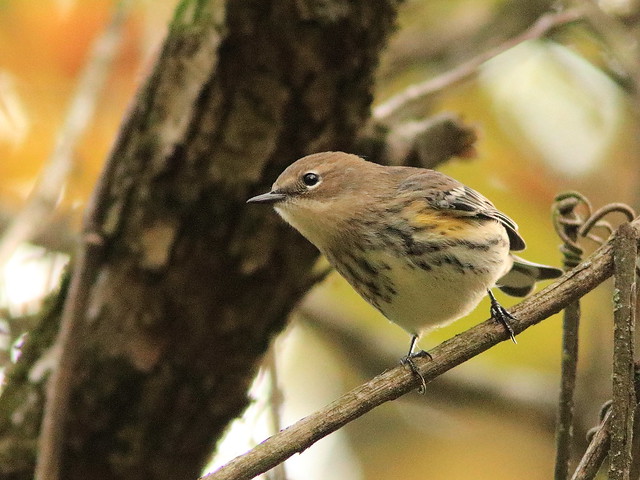
The arrival of Yellow-rumped Warblers signals that the end of migration is approaching:
As expected, some of the earlier-arriving northern sparrows were present, including the White-throated Sparrow...
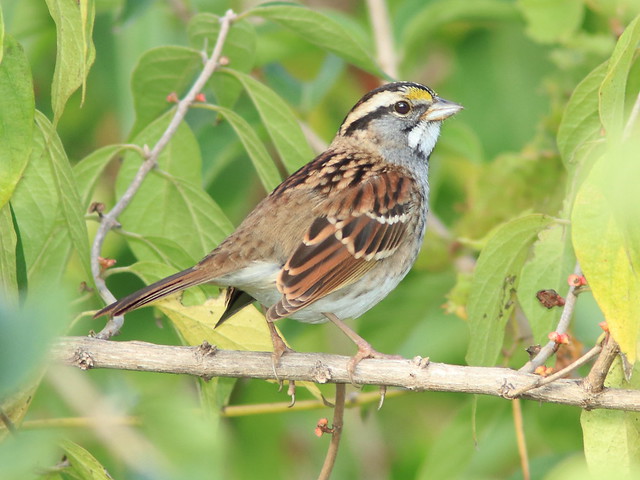
...and White-crowned Sparrow. This is an immature:

Speaking of crowns, the highlights of our final week were flocks of two kinglet species. They are very active and tiny and difficult to photograph as they flit among the leaves.
The female Golden-crowned Kinglet has a yellow cap:
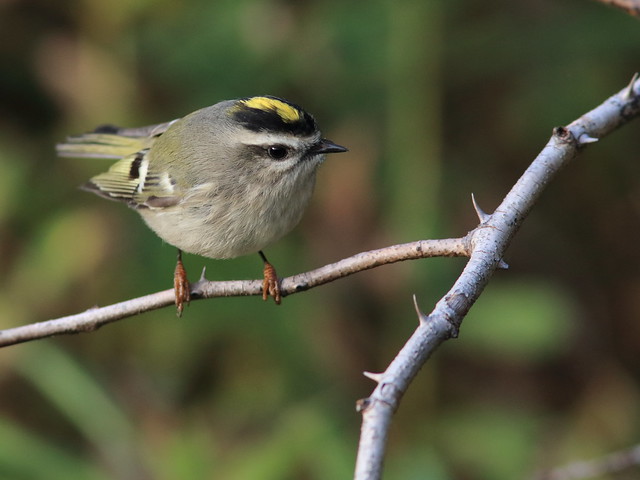
Male Golden-crowned Kinglets have varying amounts of red in the center of the patch:

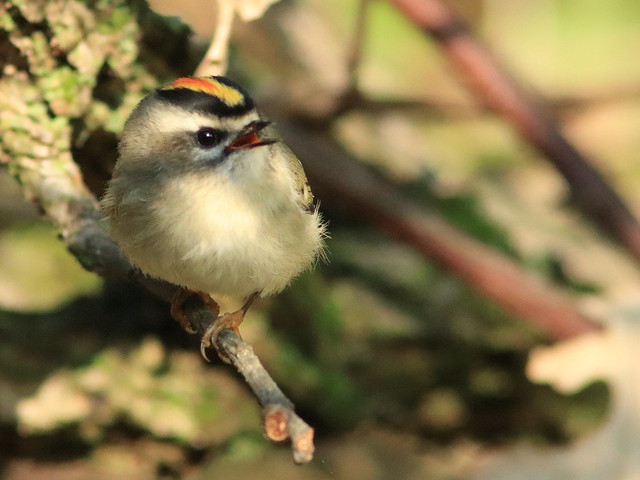
The red feathers may be retracted and become barely visible, as in this male:
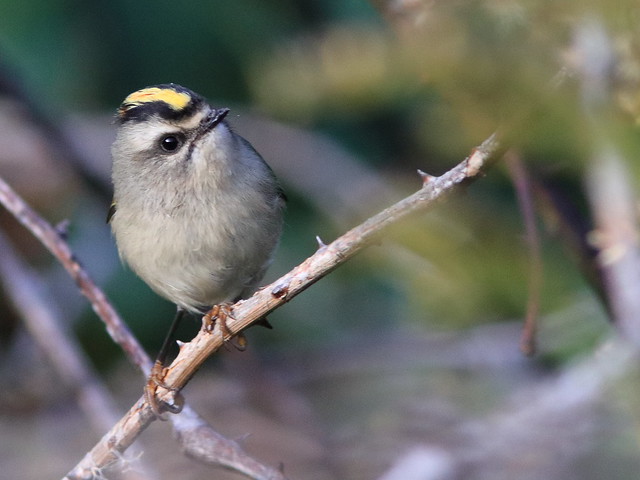
Ruby-crowned Kinglets were present among the Golden-crowns. The males erect a red crest when excited or displaying to females or rivals, but they seem to be more placid during fall migration:
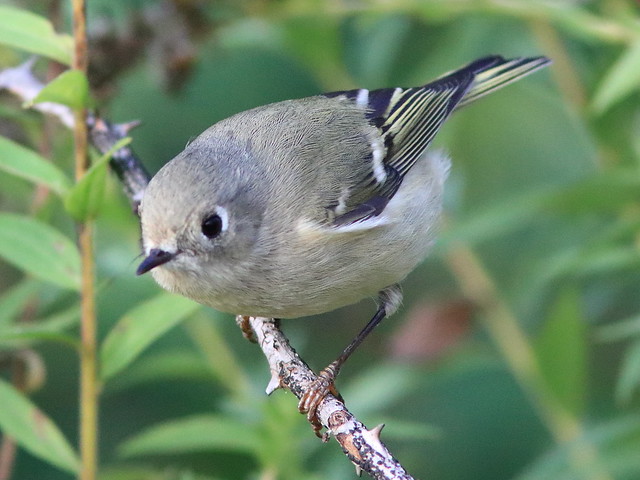
Here is a Ruby-crowned Kinglet displaying this May, at almost the same spot in Nelson Lake preserve:
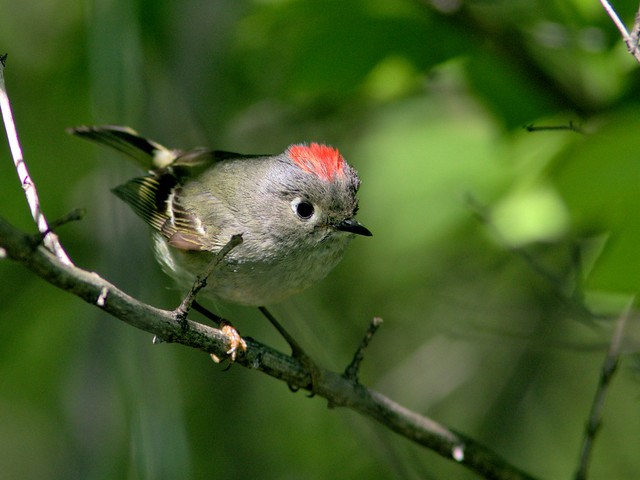
My first photo of the precious ruby crown was taken at Lippold Park in April, 2010:

= = = = = = = = = = = = = = =
Linking to Misty's CAMERA CRITTERS,
Linking to Eileen's SATURDAY'S CRITTERS,
Linking to FENCES AROUND THE WORLD by Gosia
Linking to SKYWATCH FRIDAY by Yogi, Sylvia and Sandy
Linking to WEEKEND REFLECTIONS by James
Linking to BirdD'Pot by Anni
Linking to Wild Bird Wednesday by Stewart
Linking to Wordless Wednesday (on Tuesday) by NC Sue
Linking to ALL SEASONS by Jesh
________________________________________________
Please visit the links to all these memes to see some excellent photos on display
________________________________________________
Mary Lou and I try to get out each morning about three-quarters to a half hour before sunrise, when the skies are clear and the air is often cool and still.
With the approach of winter, the period of twilight lengthens as the southward path of the rising sun rolls along just beneath the eastern horizon. On the first day of summer the Sun rises more directly and the sky takes less time to lighten up. This phenomenon is much more apparent nearer the Equator, where the "Dawn comes up like thunder," quickly turning from dark to light.
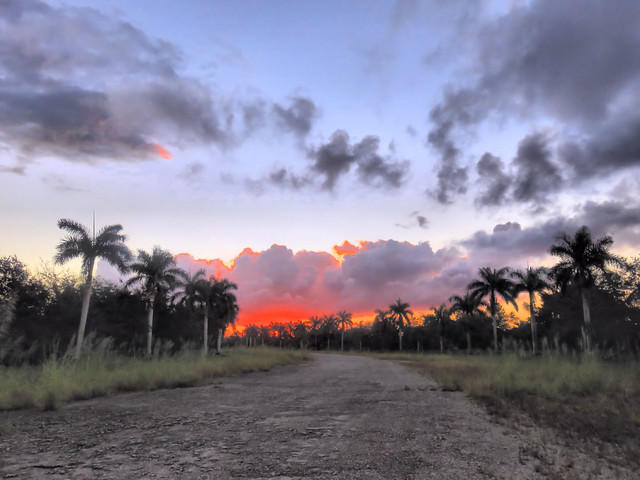
On November 6 our walk was cut short by the threat of rain. Just before sunrise, the eastern horizon appeard to be on fire ("Red in the morning, sailors take warning"):
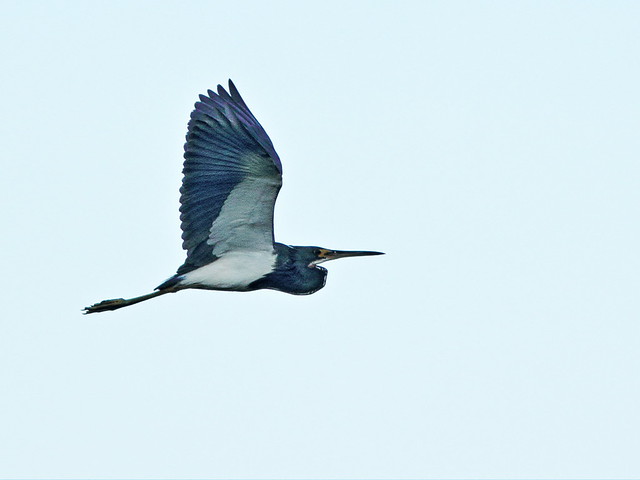
On the way in it is usually too dark for photography, but on another morning I tried anyway as a Tricolored Heron flew past before sunrise...
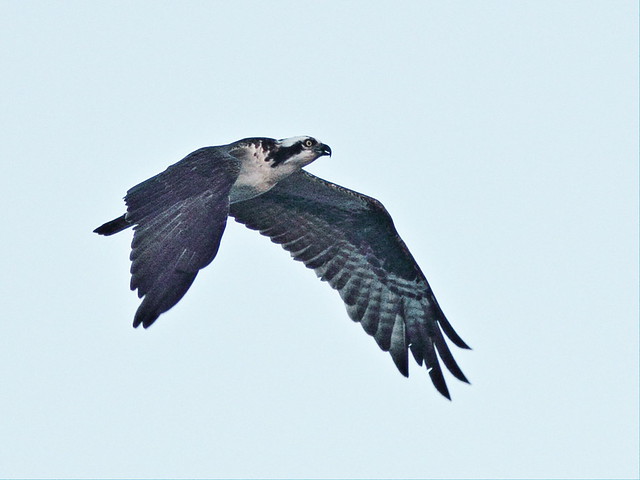
...as did an Osprey:
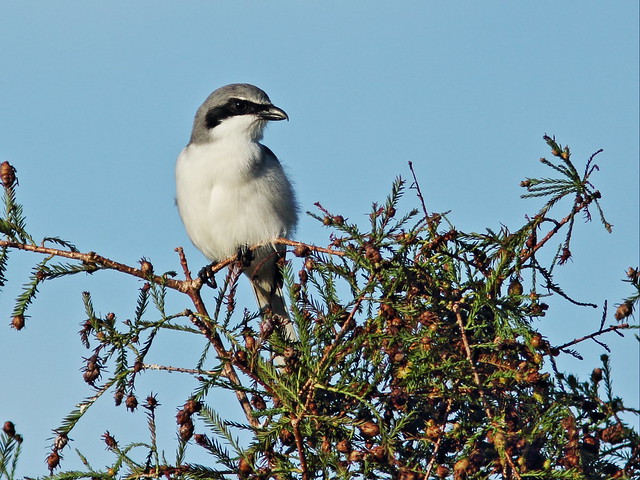
Later in the day, a Loggerhead Shrike stood guard atop a Pond Cypress...
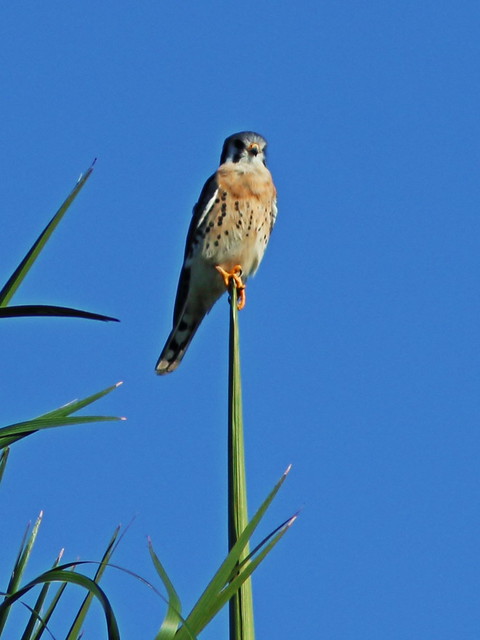
...and an American Kestrel perched on a leaf shoot from a Royal Palm :
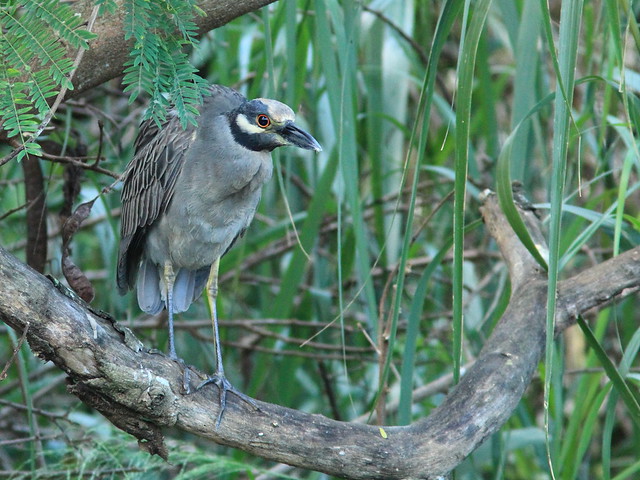
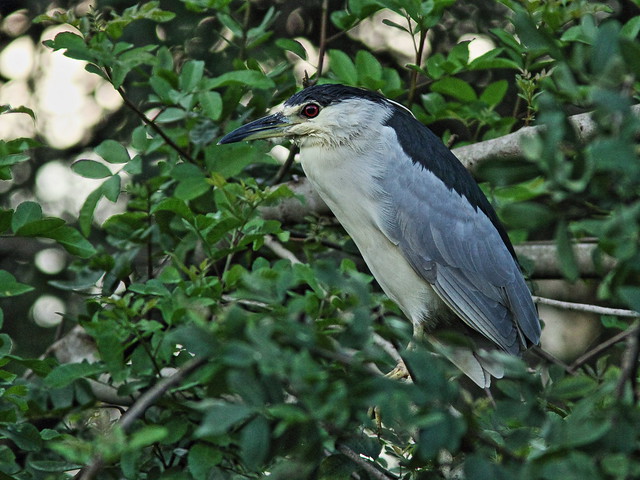
At what remained of the once-thriving heron rookery, the only occupants were a female Yellow-crowned Night-Heron...
...and a Black-crowned Night-Heron:
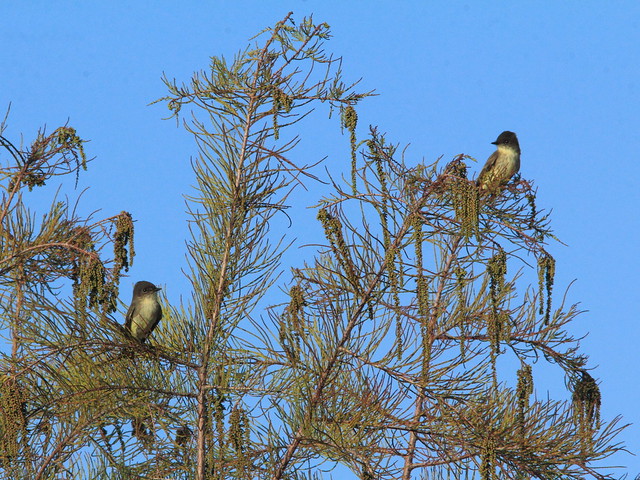
Visitors from the north, two Eastern Phoebes shared the top of another cypress:
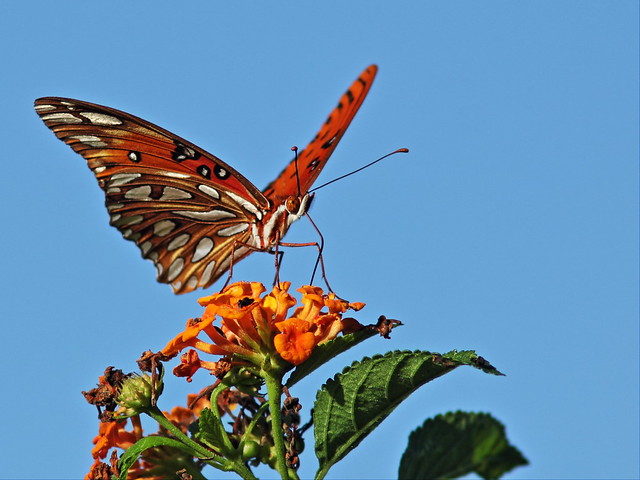
A Gulf Fritillary extracted nectar from a Lantana flower:
The fruits of Lantana attract buntings. A male and female Painted Bunting suddenly flew to a nearby perch:
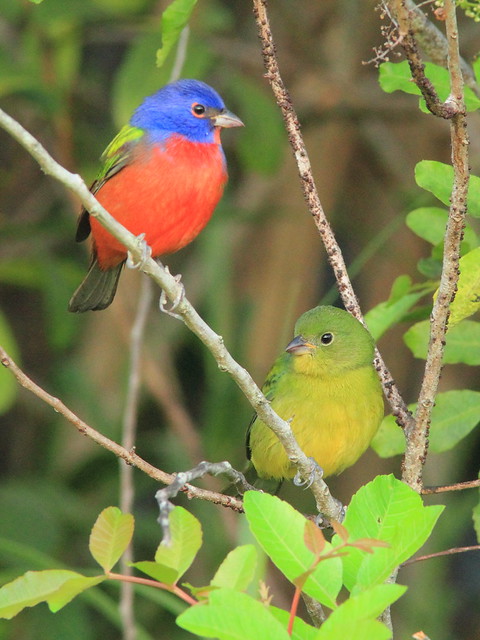
I love to observe and photograph this species away from artificial feeders. The males are usually shy and retiring, so this was a lucky series of shots:
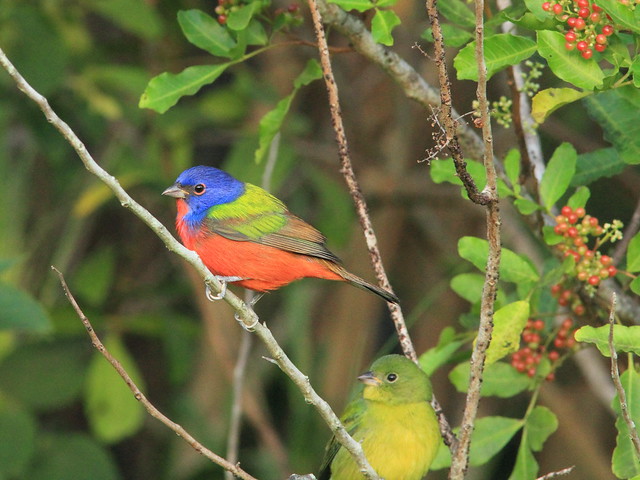

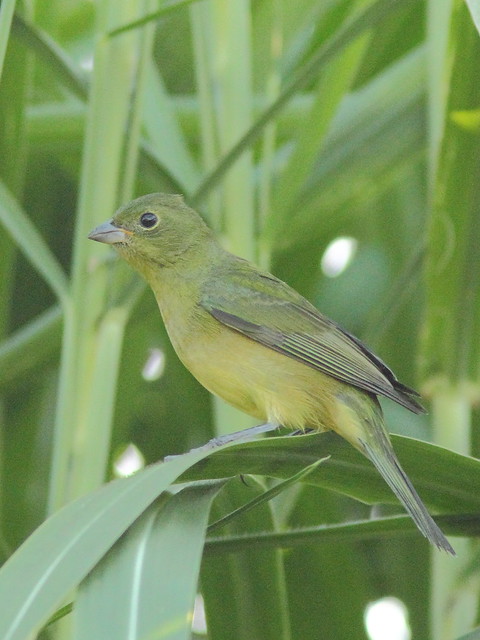
A female Painted Bunting perched on a tall grass stem:
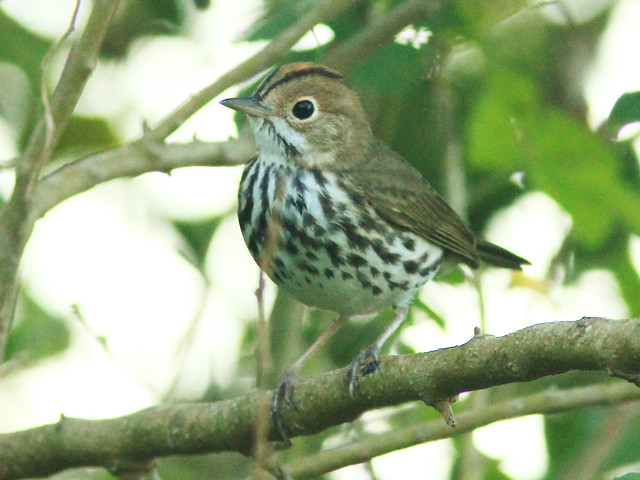
An Ovenbird flew in but did not provide me with a clear view:
A Ruby-throated Hummingbird foraged in a Ligustrum bush. I could not see it in the viewfinder but clicked the shutter blindly several times. It happened to appear in one photo:

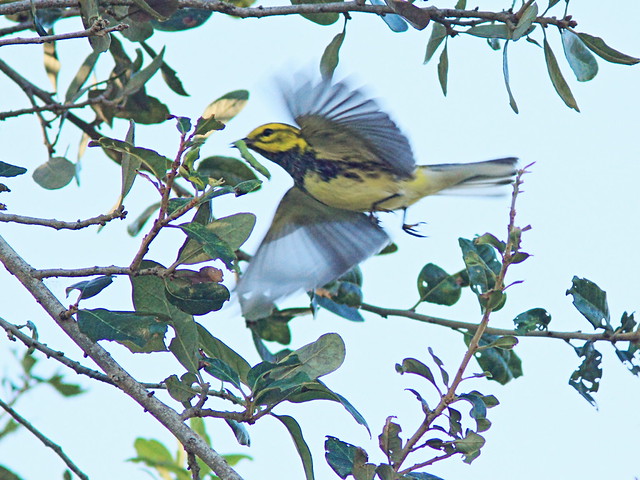
Black-throated Green Warblers foraged in the Live Oaks:
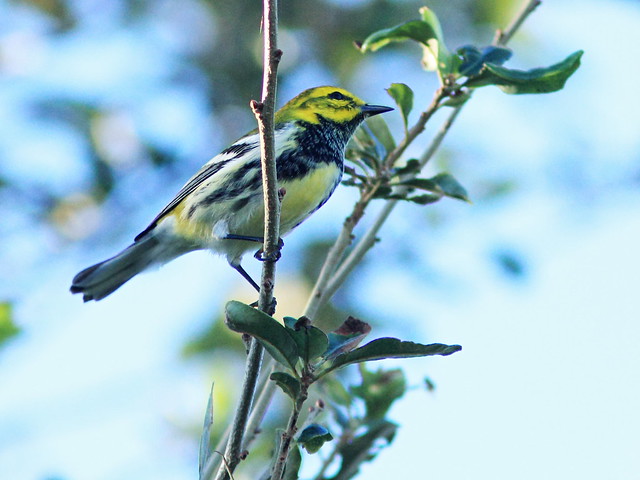
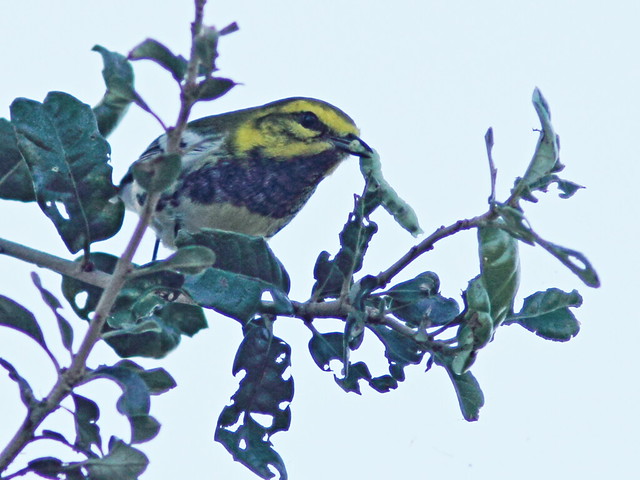
They are very active, flitting among the branches in search of caterpillars:
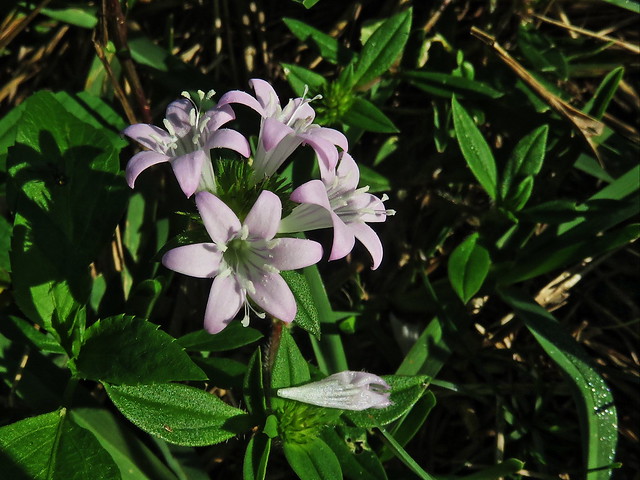
These flowers were tiny, less than 1/2 inch wide. I got this shot with my Canon PowerShot SX700 HS in macro mode, hand held. Image stabilization is amazing. It is just a "weed" (Largeflower Mexican Clover -- Richardia grandiflora), but close up it looks like a magnificent bouquet.
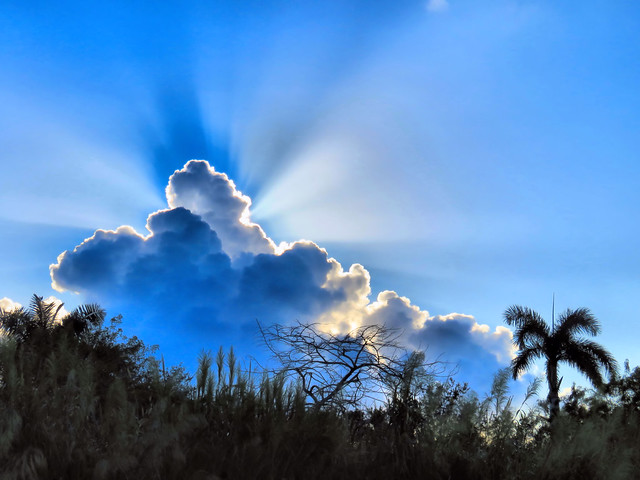
On November 9 the clouds moved in a bit later in the morning:
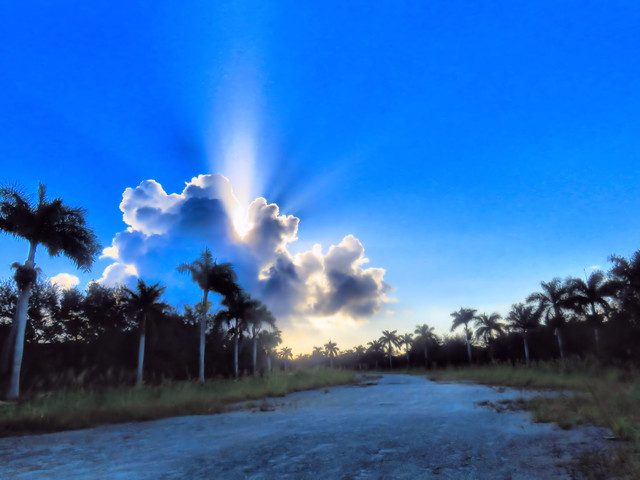
We kept a wary eye on the storm as we walked back towards home:
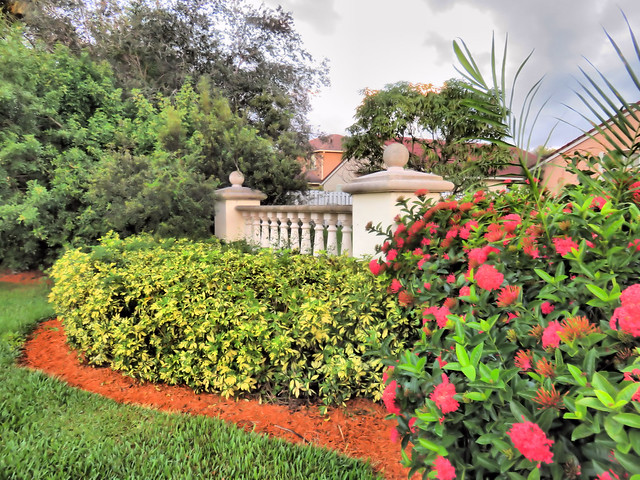
At the gate, the Ixora blossoms attracted butterflies:
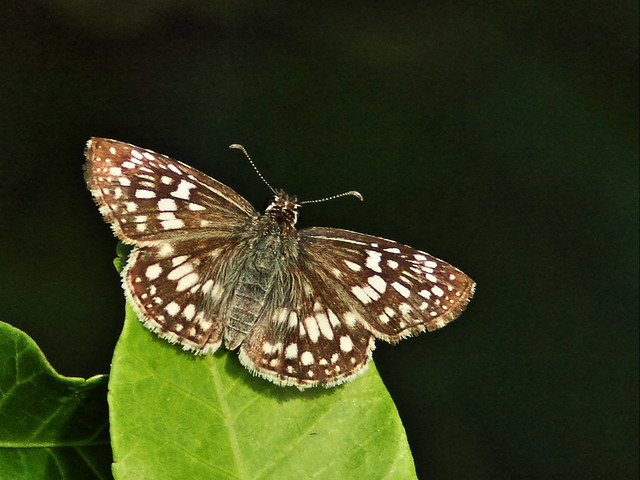
Among them, a tiny Tropical Checkered-skipper with a wingspan of less than an inch:
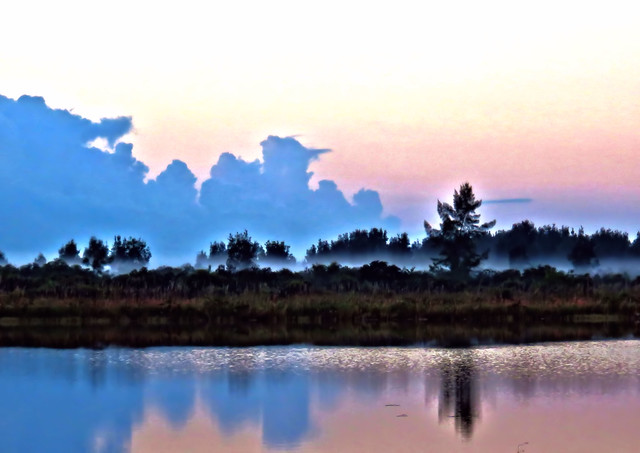
 Fog lifting on opposite shore:
 = = = = = = = = = = = = = = =
Linking to Misty's CAMERA CRITTERS,
Linking to Eileen's SATURDAY'S CRITTERS,
Linking to GOOD FENCES by Tex (Theresa).
Linking to SKYWATCH FRIDAY by Yogi, Sylvia and Sandy
Linking to WEEKEND REFLECTIONS by James
Linking to BirdD'Pot by Anni
Linking to Wild Bird Wednesday by Stewart
Linking to I Heart Macro by Laura
________________________________________________
Please visit the links to all these memes to see some excellent photos on display
________________________________________________
Rainy weather sidelined us for a couple of days during our second week in Illinois, but the month of May started out cool and clear. On May 2nd at 5:30 AM the Chicago weather radar images revealed massive migratory movement that filled the entire coverage circle. The base velocity display indicated birds were traveling due north. Ominous echoes moving in from the west portended the arrival of a storm system. The evidence of so many northbound birds reminded me of my New Jersey childhood birding days when, in early May the nearly leafless trees sometimes seemed to drip with the color of many species of warblers.
The prior day's birding had been promising. Within a couple of hours at Nelson Lake/Dick Young Forest Preserve I had recorded 38 bird species, among them my first-of-season (FOS) Black-throated Green and Nashville Warblers as well as Ovenbird and Northern Waterthrush. I sighted all of these while standing in a small spot next to the creek that crosses the east path.
This is the "sit spot" that had been so productive the previous day. This morning promised to hold even more FOS's.

Black-throated Green Warbler


I was thrilled to get a good shot of a male Yellow-rumped (Myrtle) Warbler in full breeding plumage, something we usually do not see in South Florida.

I missed a photo of the Ovenbird, but this is a poor shot of a Nashville Warbler, for the record.

The Northern Waterthrush was more cooperative.

I was surprised to find a Lincoln's Sparrow, almost hidden in the leaf litter.

Nearby, a White-throated Sparrow explored under the shrubs, scratching noisely.

Mary Lou's brother from Florida was expected to arrive at Midway Airport around 8:30 AM, and she preferred to stay home to prepare for his visit. That weekend our daughter and her husband were to host over a hundred guests for our granddaughter's First Communion/Cinco de Mayo Party with a pig roast. Knowing there would be little time for hiking until after the weekend, I set out alone for Nelson's Lake at 7:00 AM, hoping for about an hour and a half of birding. Pulling into the parking lot I was greeted by the song of Eastern Meadowlarks.

I scanned the lake from the viewing platform. The lake was almost entirely dry in the fall, but snowmelt and the recent heavy rains had filled the lake. Few waterfowl were present, probably because nearly all the fish died off during the drought.

A White-crowned Sparrow foraged for green seeds next to the platform.

It was 60 degrees (F) and storm clouds were already gathering as I headed down the path along the east prairie.

American Robins formed small groups along the way.

A Savannah Sparrow sang from a trailside shrub.

I waited at the "sit spot" for over an hour as the weather deteriorated, and saw a few Yellow-rumps but no other warblers and certainly no more FOS sightings. A Northern Cardinal offered a bit of color.

Against the gray sky, A Canada Goose occupied a lonely "sit spot" atop the silo next to the parking lot as I departed. I wondered if he saw any FOS birds from his vantage point.

Although the next few days were occupied with family and friends, I did get a few choice photos from our daughter's back yard deck. The feeders were well-stocked, but this Black-capped Chickadee preferred to glean in the emerging leaves of one of their ornamental trees.

The feeders attracted scores of White-crowned Sparrows, many in full song.

The wrought iron fence railings framed this Savannah Sparrow.

A Red-tailed Hawk wheeled overhead.

A robin incubated eggs in a mud and straw nest, sheltered under the eaves on a downspout at the front corner of our daughter's home.

The Great Horned Owl fledged the day after I last photographed it in the nest at nearby Fabyan Park. Here it seems very interested in something directly under its perch.

The Wake Robins (Trillium) are opening their buds.

Blue Violets, the State Flower of Illinois, are now in bloom.
