Most of my latest photo opportunities have been in our back yard, shooting through window glass. Opening the sliding glass door to our patio is usually enough to scare away any potential subject. The lawn slopes down along the shore of the lake, obscuring the lower parts of any creature viewed from inside the house. This young Anhinga was a case in point:


A Tricolored Heron posed briefly before descending to the lake's edge:

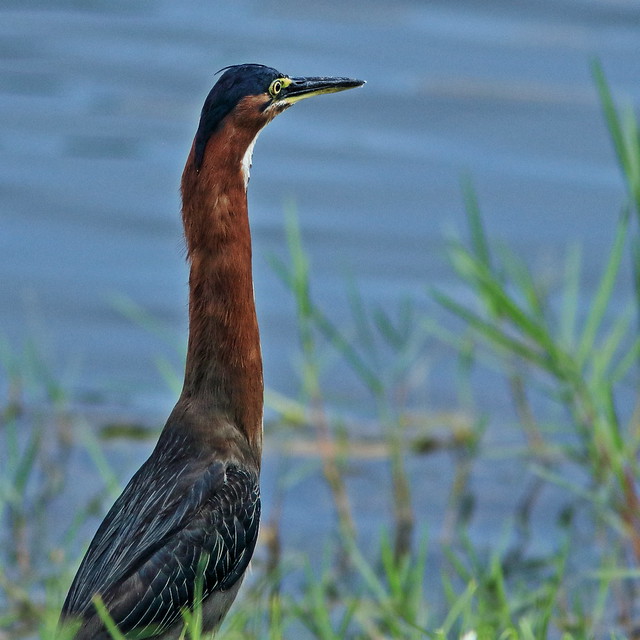
A Green Heron stretched his neck:

This Green Iguana let me sneak up close:


A Muscovy Duck hatched out 15 ducklings under the Cocoplum hedge in our back yard. She ushered them to their first swim in the lake:


Out in the wild-lands, the hatching of the Killdeers' four eggs on July 8 led me to expect that there were little ones out there begging to star in baby photos. So far, I have only seen the adults, this one on July 12:

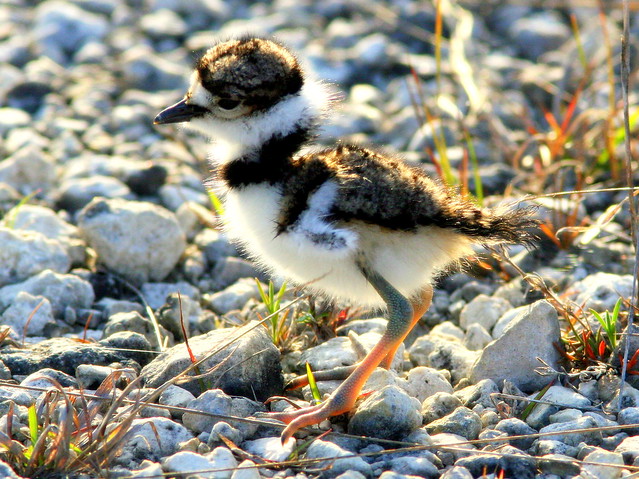
I perused the archives to find my last photo of a Killdeer chick out in the open (April 16, 2009):
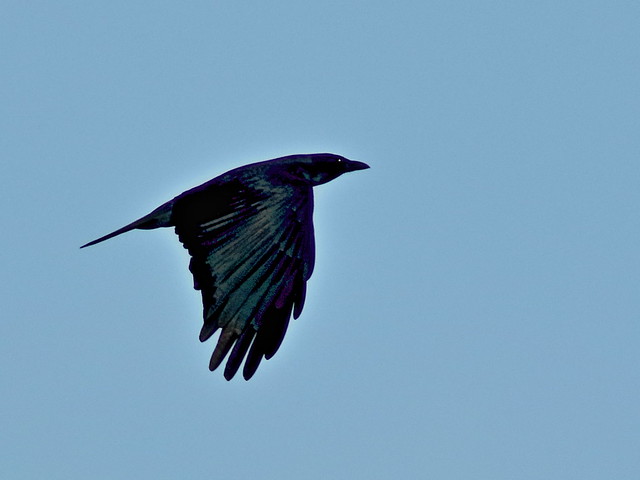
This got me thinking about how I have ignored some of the most common birds. Our only local Corvid species are Blue Jays and Fish Crows. They are present every morning and often overlooked. The black feathers of crows absorb most of the light and photos of their plumage usually lack contrasting highlights.
Action compensated for the lack of feather detail when a Northern Mockingbird pursued a Fish Crow:

I had to search for the last time one of my shots showed plumage detail, as in these Fish Crows (January, 2020 and March, 2019):

Blue Jays are very active, but rarely pose out in the open. This was an exception (October, 2019):

I liked the composition of this image of a Blue Jay in our back yard Mango tree (June, 2019):

As if to break the monotony of summer bird sightings, on July 14 this Marsh Rabbit was unusually tolerant of my presence. I am a bit concerned, as this territory is occupied by a Barn Owl, Bobcats and Coyotes. Away from its preferred aquatic habitat, it was munching on forbs along the path.
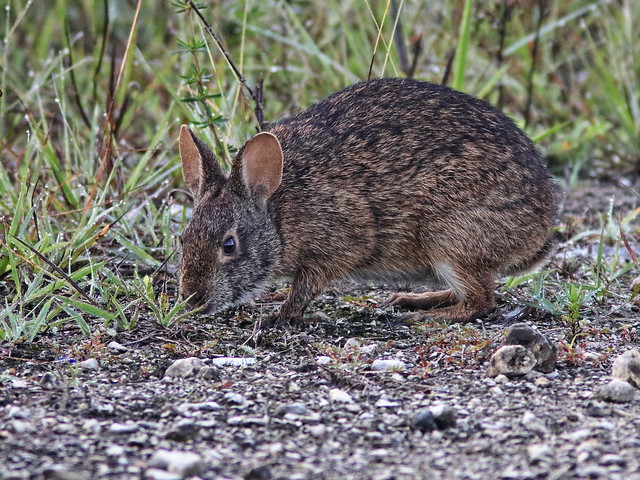

Although closely related to the Eastern Cottontail, the Marsh Rabbit lacks the white on its tiny tail and has a darker coat. Its broader feet are an adaptation for swimming. Shorter ears and smaller hind legs are evident in this view. It usually runs rather than hops as does the Cottontail:

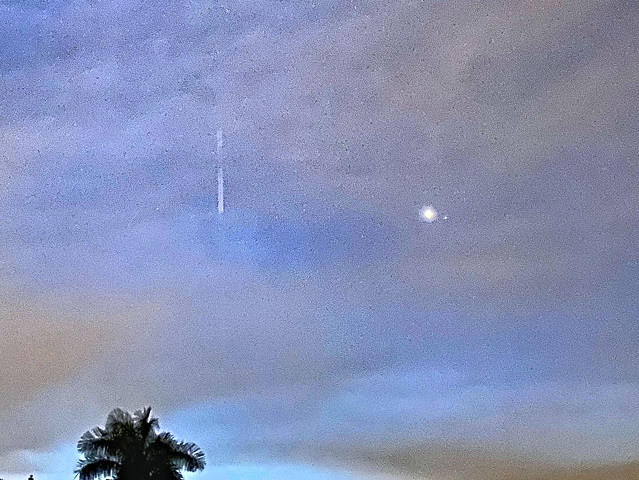
On July 12, the Comet Neowise was visible about an hour before sunrise. The comet quickly dimmed as the sun rose and light clouds covered it. In the eastern sky it is to the left of Planet Venus, which incidentally has the bright star Aldebaran next to it on the right.
On July 7, the waning Buck Moon was setting into the Everglades behind the lake, opposite the rising sun. Anti-solar rays converged on the horizon.

One of my favorite "sit spots" (if I had a lawn chair) is this sheltered view of the south wet prairie, between a Swamp (Bald) Cypress on the left and a fruit-laden Pondapple:

= = = = = = = = = = = = = = =
Linking to:
Fences Around the World
Skywatch Friday
Weekend Reflections
Saturday's Critters
BirdD'Pot
Camera Critters
All Seasons
Wordless Wednesday (on Tuesday)
Natasha Musing
Our World Tuesday
________________________________________________
Please visit the links to all these posts to see some excellent photos on display
________________________________________________