Showing posts with label Marsh Rabbit. Show all posts

Thursday, April 1, 2021

Crops & Clips: Flashback three years to April, 2018

At the beginning of the month I like to review images from three years back and  look for favorite themes and memes in the monthly collection-- critters of all kinds (especially birds), skies and reflections, flowers and fences as well as scenes which speak for themselves. 

We started the month of April, 2018 exploring the wonders of nature on the eastern shore of the Gulf of Mexico. Our Illinois children and grandchildren flew in and we spent several days with them on Sanibel Island.  

Instead of my trusted DSLR, I carried my new mirrorless camera (Olympus E-M10 Mkii) to Sanibel. It was straight out of the box and its features and controls were utterly different from those of my Canon. Therefore I learned how to use my new camera by trial and error (mostly error). 

Shorebirds at sunrise (Sanderling, Willet and a gull):


Sun rising over the beach:


Willet:

Panoramic iPhone view of the Gulf from the condo where we stayed:

We visited Ding Darling refuge and were entertained by the antics of foraging Reddish Egrets:


I was not pleased with the colors, as they were sometimes over-saturated and not true to life, as with this Little Blue Heron:

Marsh Rabbit:

Panorama (iPhone) of the estuary at Ding Darling:

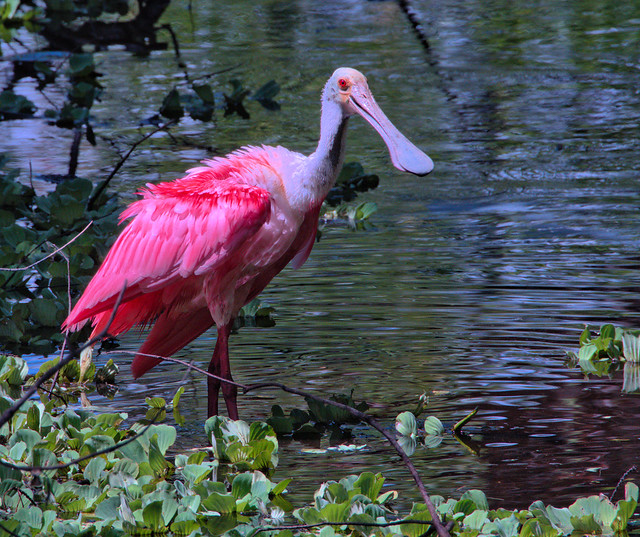
On the way home we stopped briefly at Audubon's Corkscrew Swamp Sanctuary, where we saw Roseate Spoonbills (which did not need the extra saturation to show off their magnificent plumage):


A Great Egret was badly overexposed, but I liked the composition:

Back home at the local Bald Eagle nest, their eaglet had fledged:


Wood Storks were raising their young at the rookery in Weston:

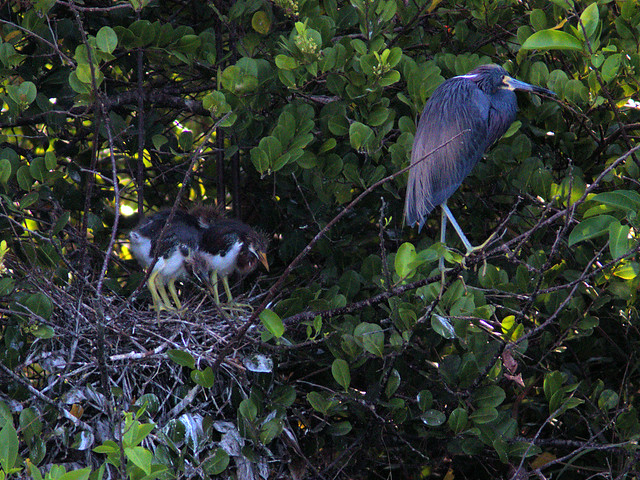
A Tricolored Heron guarded nestlings:
On our wetlands, Least Terns had migrated in to breed on shopping center rooftops:

A vine growing up in a tree in our local wetlands had these pretty little flowers (Clematis?):

Fog lifting on April 18:

We finished the month back in Illinois. We had decided to sell our condo there and live in Florida permanently. Our first visit was Jones Meadow Park near our condo. Recent heavy rains had flooded the trails:


It was a treat to see American Robins, as they are infrequent winter visitors in Florida:


Brown Creepers do not migrate into south Florida:

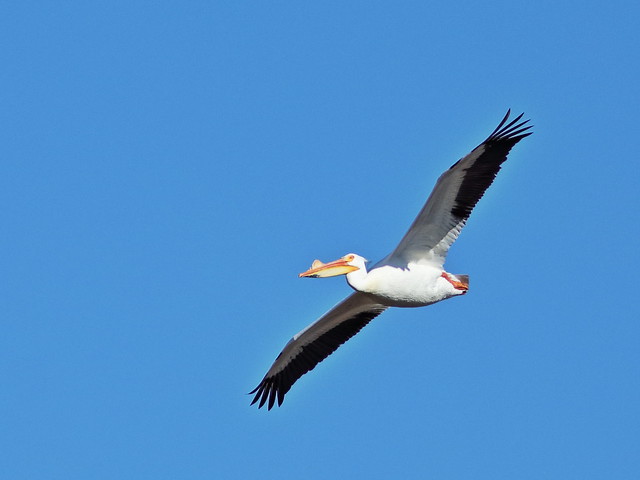
American White Pelicans had arrived at Nelson Lake:

Iconic twin oaks at Nelson Lake:

At Lippold Park, Canada Geese had a nest at the end of the boardwalk, with a fair warning as they will attack people who come too close:

Indeed, this goose, possibly the gander, was guarding the entrance to that part of the boardwalk:

Nearby. three male Mallards swam in precision as they approached a pair of Blue-winged Teal:

We could see the male Bald Eagle on its nest across the road:

A Red-winged Blackbird was singing:

Trout Lilies were in bloom:

Marsh Marigold bloomed along a muddy part of the trail:


= = =  = = =  = = = =  = = = = =

Linking to:


Garden Affair

Fences Around the World

Nature Thursday

Skywatch Friday

Weekend Reflections

Saturday's Critters

BirdD'Pot

Camera Critters

All Seasons

Wordless Wednesday (on Tuesday)

Natasha Musing

Our World Tuesday

________________________________________________

Please visit the links to all these posts to see some excellent photos on display
________________________________________________

Thursday, July 16, 2020

Corvid and Comet on COVID mornings

While sheltering in place, the sameness of the days bears some similarity to our early morning forays into the neighborhood wetland preserve. We are entering the post-breeding season, sandwiched between spring and fall migrations. Of course we see many familiar faces out there, more than when sequestered at home, but it is often difficult to find enough different species to satisfy my Birders' Minimum Daily Requirement of twenty. Similarly, our backyard birds are lacking in diversity. In fact, I tend to pass up chances for photos of the most common species.

Most of my latest photo opportunities have been in our back yard, shooting through window glass. Opening the sliding glass door to our patio is usually enough to scare away any potential subject. The lawn slopes down along the shore of the lake, obscuring the lower parts of any creature viewed from inside the house. This young Anhinga was a case in point:

Anhinga female 01-20200712

Anhinga female 02-20200712

A Tricolored Heron posed briefly before descending to the lake's edge:

Tricolored Heron thru window 02-20200711

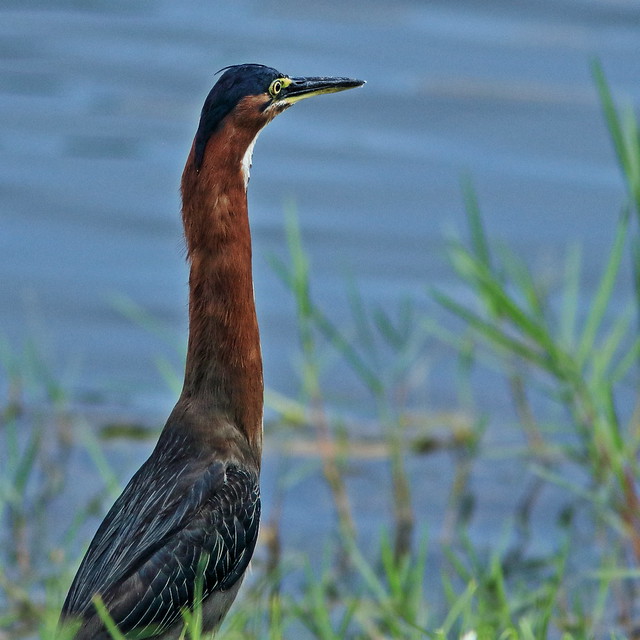
A Green Heron stretched his neck:

Green Heron backyard thru glass 01-20200705

Green Heron backyard thru glass 02-20200705

This Green Iguana let me sneak up close:

Green Iguana 03-20200612

Green Iguana 02-20200612

A Muscovy Duck hatched out 15 ducklings under the Cocoplum hedge in our back yard. She ushered them to their first swim in the lake:

Muscovy ducklings 05-20200712

Muscovy hen with 15 ducklings 01-20200712

Muscovy hen with 15 ducklings 03-20200712

Out in the wild-lands, the hatching of the Killdeers' four eggs on July 8 led me to expect that there were little ones out there begging to star in baby photos. So far, I have only seen the adults, this one on July 12:

Killdeer 02-20200712

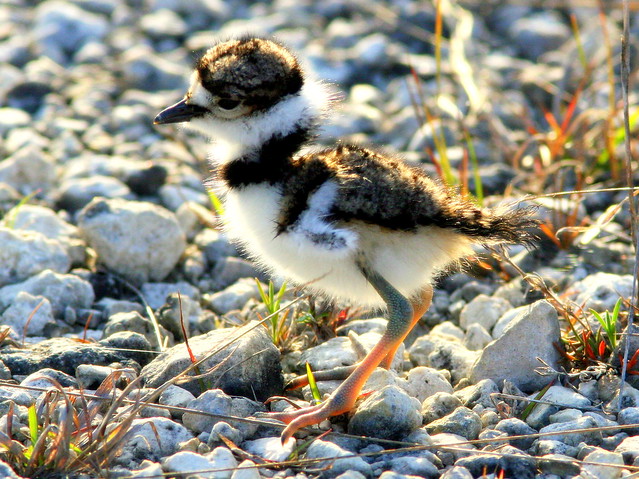
I perused the archives to find my last photo of a Killdeer chick out in the open (April 16, 2009):

Killdeer Chick Backlit 20090416

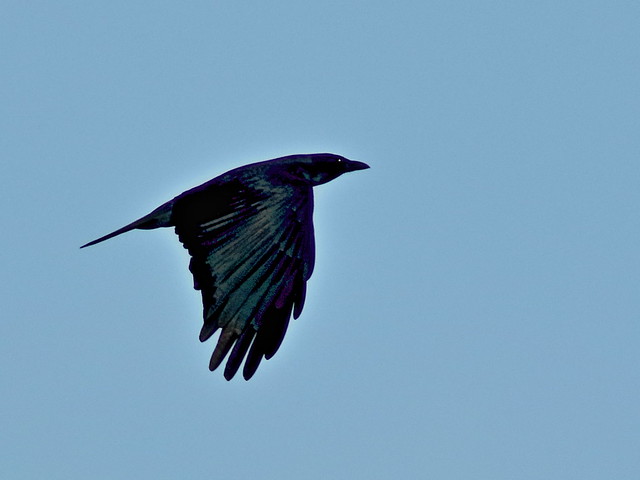
This got me thinking about how I have ignored some of the most common birds. Our only local Corvid species are Blue Jays and Fish Crows. They are present every morning and often overlooked. The black feathers of crows absorb most of the light and photos of their plumage usually lack contrasting highlights. 

Action compensated for the lack of feather detail when a Northern Mockingbird pursued a Fish Crow:

Fish Crow and Northern Mockingbird 03-20190506

I had to search for the last time one of my shots showed plumage detail, as in these Fish Crows (January, 2020 and March, 2019):

Fish Crow 02-20200113
  
Fish Crow 20190314

Blue Jays are very active, but rarely pose out in the open. This was an exception (October, 2019):

Blue Jay 01-20191017

I liked the composition of this image of a Blue Jay in our back yard Mango tree (June, 2019):

Blue Jay in our mango tree 20190623

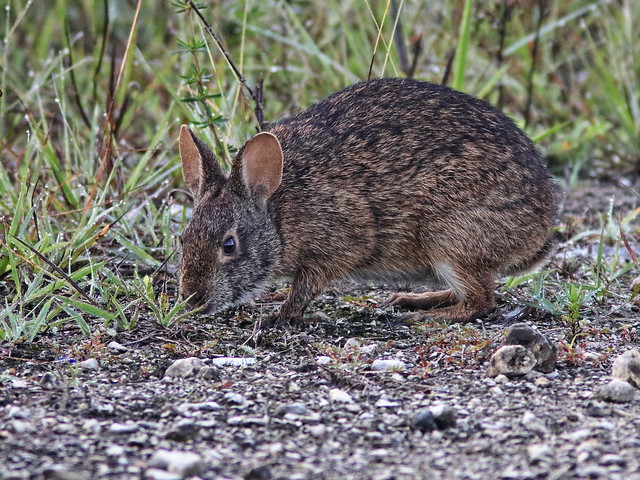
As if to break the monotony of summer bird sightings, on July 14 this Marsh Rabbit was unusually tolerant of my presence. I am a bit concerned, as this territory is occupied by a Barn Owl, Bobcats and Coyotes. Away from its preferred aquatic habitat, it was munching on forbs along the path.

Marsh Rabbit 02-20200714

Marsh Rabbit 03-20200714

Although closely related to the Eastern Cottontail, the Marsh Rabbit lacks the white on its tiny tail and has a darker coat. Its broader feet are an adaptation for swimming. Shorter ears and smaller hind legs are evident in this view. It usually runs rather than hops as does the Cottontail:

Marsh Rabbit 05-20200714

On July 12, the Comet Neowise was visible about an hour before sunrise. The comet quickly dimmed as the sun rose and light clouds covered it. In the eastern sky it is to the left of Planet Venus, which incidentally has the bright star Aldebaran next to it on the right. 
  
Comet Neowise Venus Aldebaran 02-20200712

On July 7, the waning Buck Moon was setting into the Everglades behind the lake, opposite the rising sun. Anti-solar rays converged on the horizon.

Buck Moon and anti-solar rays 20200707

One of my favorite "sit spots" (if I had a lawn chair) is this sheltered view of the south wet prairie, between a Swamp (Bald) Cypress on the left and a fruit-laden Pondapple:

Cypress and Pondapple at wet prairie 20200712 


= = =  = = =  = = = =  = = = = =

Linking to:

Fences Around the World

Skywatch Friday

Weekend Reflections

Saturday's Critters

BirdD'Pot

Camera Critters

All Seasons

Wordless Wednesday (on Tuesday)

Natasha Musing

Our World Tuesday


________________________________________________

Please visit the links to all these posts to see some excellent photos on display
________________________________________________