Showing posts with label Fish Crow. Show all posts

Thursday, May 20, 2021

Early morning birding Lagniappe

The excitement of spring migration and the drama surrounding the successful rescue of both the eaglets has subsided, but routine morning walks sometimes offer a little something extra.

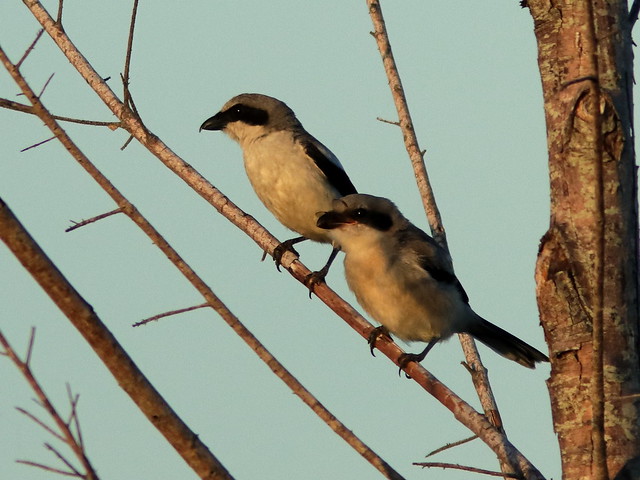
An adult Loggerhead Shrike caught a dragonfly and fed it to a youngster:

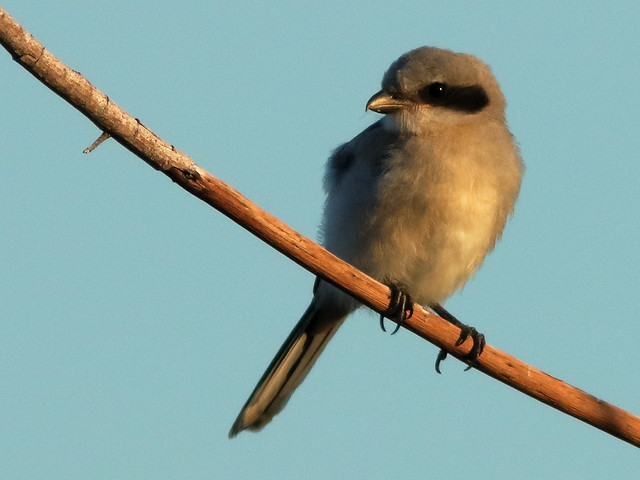
The cute baby shrike:
A Red-winged Blackbird attacked a Fish Crow:

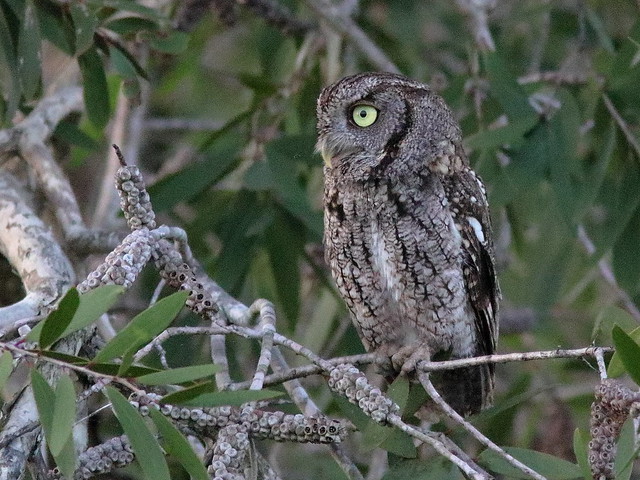
An Eastern Screech-Owl settled close by and posed nicely:

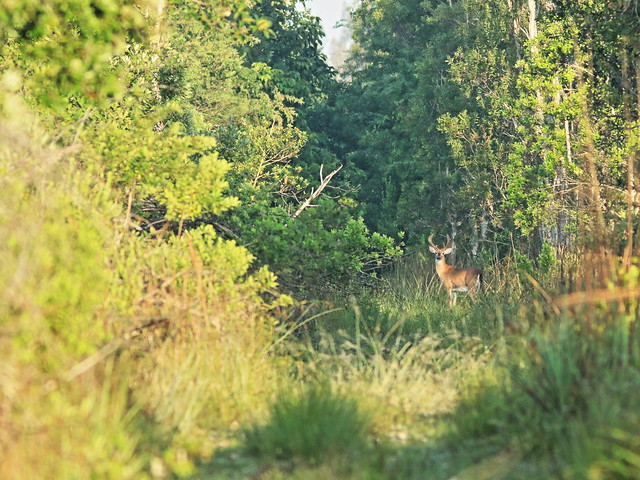
Out on the Bar Ditch Trail, a White-tailed buck with antlers in velvet watched me as I walked along at sunrise:

More than 50 White Ibises flew over in a loose "V" formation:

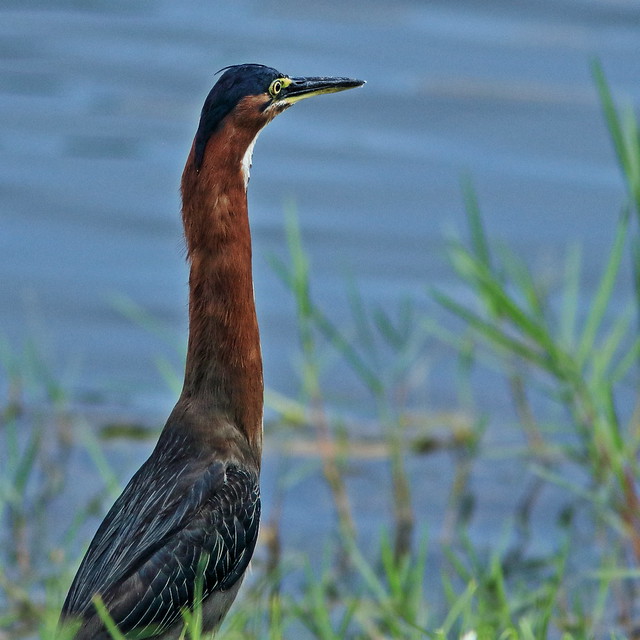
A Green Heron crouched low in the ditch as I passed by. If it had not moved a bit, I would never have seen it:

Common Ground Doves have been uncommon and even missing the past couple of months, but three suddenly showed up this week. Only one male posed for a photo:

Least Terns usually arrived in early April, courted and then brought their young to our lake, but none appeared this year. Many of the urban terns nest on flat gravel roofs such as that on the supermarket about a mile away. These roofs last about 30 years and many are being replaced with more modern technology involving insulated panels and an impermeable membrane, not friendly to the terns (as well as nighthawks, Killdeer and gulls)  This week I was surprised to briefly see my first and only Least Tern:

A Black-necked Stilt lingered at nearby Chapel Trail preserve:

A female Northern Cardinal carried sticks to a hidden nest:

A Tricolored Heron foraged at the edge of the lake in our back yard. They usually are very shy, but this one provided some nice views:

Water levels in the wetland lake have reached the season's low and the water is receding from the lakeside marsh. This photo was taken ten minutes before sunrise:
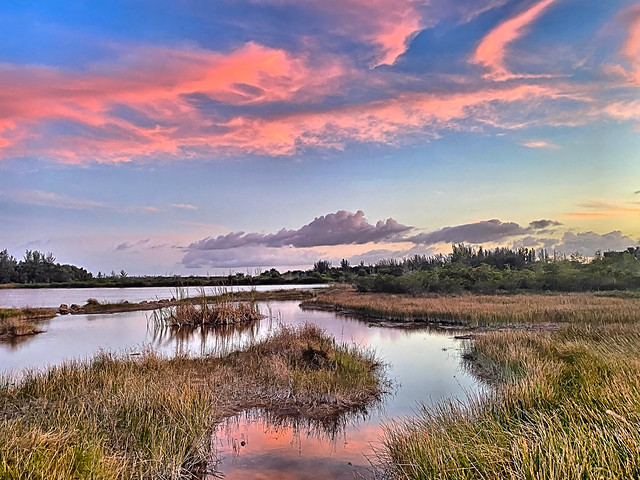
At sunrise, the sheltered water behind an old levee reflects a colorful sky:
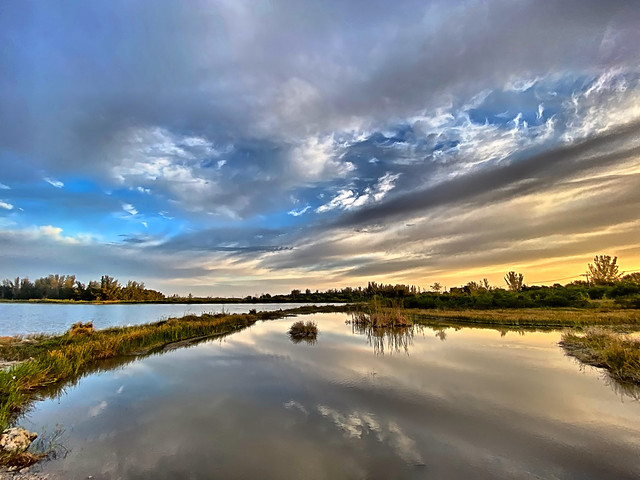
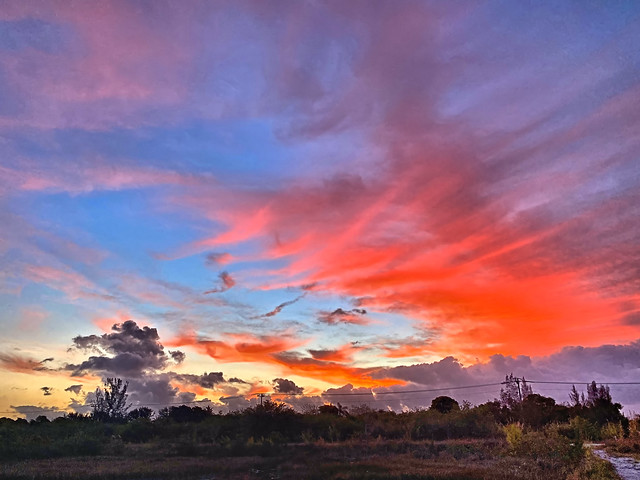
The rainy season is starting early. The official start of hurricane season his being moved earlier, to May 15 instead of June 1.  On May 18, the sun rose behind storms moving in from The Bahamas:


Our children started school when we lived in New Orleans and learned about "Lagniappe"---  

A lagniappe (lan-Yap) is an old Louisiana tradition, especially in the French Quarter of New Orleans... The word lagniappe might be applied to any unexpected bonus that comes with something else. For example, if you bought a car and found a 50 dollar bill in the trunk, it would be a lagniappe (Wikipedia).

= = =  = = =  = = = =  = = = = =

Linking to:


Skywatch Friday

Weekend Reflections

Saturday's Critters

BirdD'Pot

Camera Critters

All Seasons

Wordless Wednesday (on Tuesday)

Natasha Musing

Our World Tuesday

________________________________________________

Please visit the links to all these posts to see some excellent photos on display
________________________________________________

Thursday, July 16, 2020

Corvid and Comet on COVID mornings

While sheltering in place, the sameness of the days bears some similarity to our early morning forays into the neighborhood wetland preserve. We are entering the post-breeding season, sandwiched between spring and fall migrations. Of course we see many familiar faces out there, more than when sequestered at home, but it is often difficult to find enough different species to satisfy my Birders' Minimum Daily Requirement of twenty. Similarly, our backyard birds are lacking in diversity. In fact, I tend to pass up chances for photos of the most common species.

Most of my latest photo opportunities have been in our back yard, shooting through window glass. Opening the sliding glass door to our patio is usually enough to scare away any potential subject. The lawn slopes down along the shore of the lake, obscuring the lower parts of any creature viewed from inside the house. This young Anhinga was a case in point:

Anhinga female 01-20200712

Anhinga female 02-20200712

A Tricolored Heron posed briefly before descending to the lake's edge:

Tricolored Heron thru window 02-20200711

A Green Heron stretched his neck:

Green Heron backyard thru glass 01-20200705

Green Heron backyard thru glass 02-20200705

This Green Iguana let me sneak up close:

Green Iguana 03-20200612

Green Iguana 02-20200612

A Muscovy Duck hatched out 15 ducklings under the Cocoplum hedge in our back yard. She ushered them to their first swim in the lake:

Muscovy ducklings 05-20200712

Muscovy hen with 15 ducklings 01-20200712

Muscovy hen with 15 ducklings 03-20200712

Out in the wild-lands, the hatching of the Killdeers' four eggs on July 8 led me to expect that there were little ones out there begging to star in baby photos. So far, I have only seen the adults, this one on July 12:

Killdeer 02-20200712

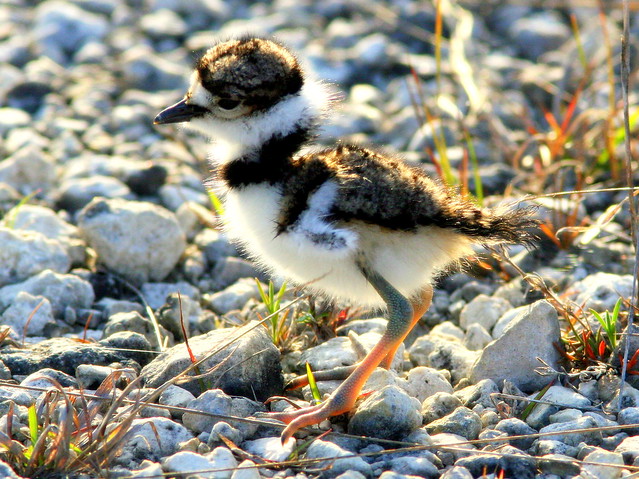
I perused the archives to find my last photo of a Killdeer chick out in the open (April 16, 2009):

Killdeer Chick Backlit 20090416

This got me thinking about how I have ignored some of the most common birds. Our only local Corvid species are Blue Jays and Fish Crows. They are present every morning and often overlooked. The black feathers of crows absorb most of the light and photos of their plumage usually lack contrasting highlights. 

Action compensated for the lack of feather detail when a Northern Mockingbird pursued a Fish Crow:

Fish Crow and Northern Mockingbird 03-20190506

I had to search for the last time one of my shots showed plumage detail, as in these Fish Crows (January, 2020 and March, 2019):

Fish Crow 02-20200113
  
Fish Crow 20190314

Blue Jays are very active, but rarely pose out in the open. This was an exception (October, 2019):

Blue Jay 01-20191017

I liked the composition of this image of a Blue Jay in our back yard Mango tree (June, 2019):

Blue Jay in our mango tree 20190623

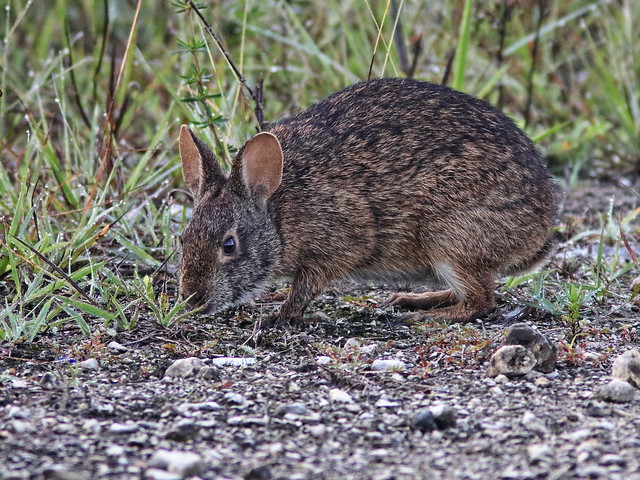
As if to break the monotony of summer bird sightings, on July 14 this Marsh Rabbit was unusually tolerant of my presence. I am a bit concerned, as this territory is occupied by a Barn Owl, Bobcats and Coyotes. Away from its preferred aquatic habitat, it was munching on forbs along the path.

Marsh Rabbit 02-20200714

Marsh Rabbit 03-20200714

Although closely related to the Eastern Cottontail, the Marsh Rabbit lacks the white on its tiny tail and has a darker coat. Its broader feet are an adaptation for swimming. Shorter ears and smaller hind legs are evident in this view. It usually runs rather than hops as does the Cottontail:

Marsh Rabbit 05-20200714

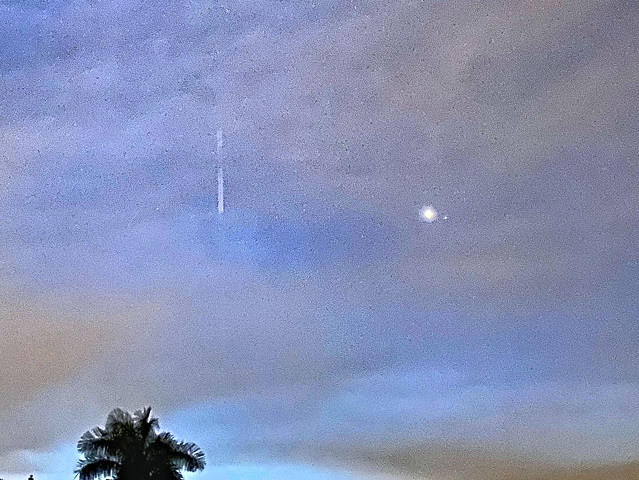
On July 12, the Comet Neowise was visible about an hour before sunrise. The comet quickly dimmed as the sun rose and light clouds covered it. In the eastern sky it is to the left of Planet Venus, which incidentally has the bright star Aldebaran next to it on the right. 
  
Comet Neowise Venus Aldebaran 02-20200712

On July 7, the waning Buck Moon was setting into the Everglades behind the lake, opposite the rising sun. Anti-solar rays converged on the horizon.

Buck Moon and anti-solar rays 20200707

One of my favorite "sit spots" (if I had a lawn chair) is this sheltered view of the south wet prairie, between a Swamp (Bald) Cypress on the left and a fruit-laden Pondapple:

Cypress and Pondapple at wet prairie 20200712 


= = =  = = =  = = = =  = = = = =

Linking to:

Fences Around the World

Skywatch Friday

Weekend Reflections

Saturday's Critters

BirdD'Pot

Camera Critters

All Seasons

Wordless Wednesday (on Tuesday)

Natasha Musing

Our World Tuesday


________________________________________________

Please visit the links to all these posts to see some excellent photos on display
________________________________________________


Thursday, June 25, 2020

Crops & Clips: Early Birds

It's odd how one's definition of "elderly" can change over the years. My private family medicine practice included delivering babies. I always referred my high-risk patients to an Obstetrician. These included any pregnant women who were at high risk, among them "elderly primigravida"-- those whose first pregnancy occured after they were 35 years old. When I was in my 40's I probably would have classified someone in their 70s as "elderly."

However, when I reached 70 years of age I would not have liked being called "elderly," Those are folks who are frail and "really old." They probably were hard of hearing, all went to bed early, got up several times to pee, and were up and about well before the sun was shining. I'm now a mid-octogenarian but that's not me, not quite. Happy to say, I must have made a pact with the Devil when given a choice between losing my hearing or my water. I can still bird by ear!

My advice to older people, both as a physician and in retirement, as a US Forest Service volunteer interpreter on high-altitude trails, was that they should guard against heat stress and especially dehydration. MaryLou and I follow these instructions by venturing out on our morning walks while the sun is well below the horizon. Although she often gets home before sunrise, I carry water and walk back on the shady side of the path. 

Encounters with nocturnal and crepuscular species are the rewards of early birding. More often they are heard but go unseen. This past week a pair of Eastern Screech-Owls stayed out late enough for me to take advantage of dawn's early light. The pair illustrated the two color forms of this species, gray and rufous. 

Gray morphs are more common, present in more than 90% of Eastern Screech-Owls. I enjoyed capturing their varied postures:

Eastern Screech-Owl 05-20200622

Eastern Screech-Owl 06-20200622

Eastern Screech-Owl 03-20200622

It was more difficult for me to see the rufous owl in the dim light. Indeed, in the dark, our eyes are less sensitive to red (high-wavelength) colors than to the the lower (blue) end of the spectrum. Perhaps this is the female of the pair, as rufous morphs occur more frequently in warm and moist climates and are more numerous in females:  

Eastern Screech-Owl, rufous morph 01-20200624

Eastern Screech-Owl, rufous morph 02-20200624

Eastern Screech-Owl, rufous morph 03-20200624

Screech-owls are quite vocal and sometimes continue to call after sunrise. They may attack a human who approaches too close to their nest. I had one hit me in the forehead and another nearly carried off my hat as I was trying to locate their nest hole in a dead palm. As a kid I remember when screech-owls which nested in a neighborhood church steeple attacked womens' hats as they walked into church.  

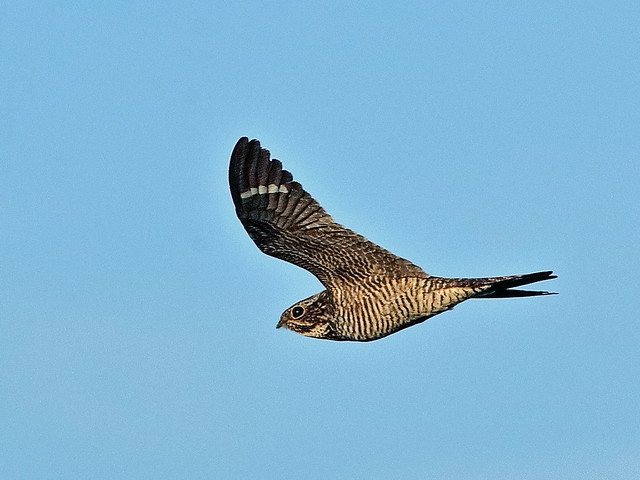
The Common Nighthawk, a species of Nightjar, seems to become more active during the half hour before sunrise. At least two pairs are defending nesting territories along our route. They circle overhead and dive down and pull up sharply to create a startling "boom."  

This male nighthawk (distinguished by large white markings on its wings, throat and tail) swooped down so close to me that I could not fit him in the frame:

Common Nighthawk 03-20200520

The female Common NIghthawk has smaller white patches, restricted to her wings:

Common Nighthawk female 02-20200529

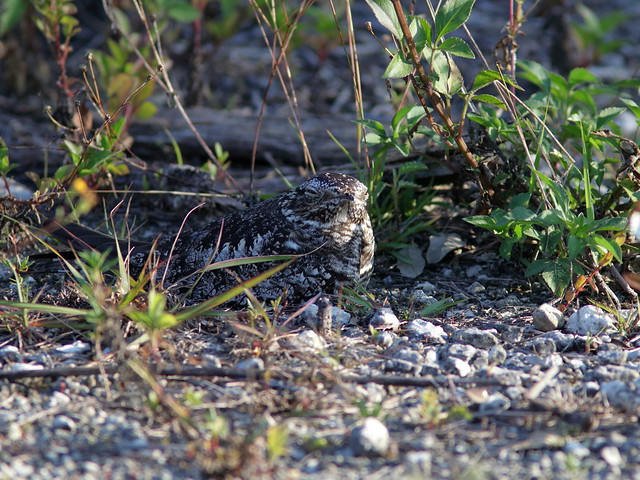
This female Common Nighthawk was almost invisible as she sat on her eggs, eyes closed:

Common Nighthawk female incubating 02-20190529

Two other Nightjar species are more nocturnal. I have identified them by voice but so far have had only fleeting sightings and no photos. The Eastern Whip-poor-will is a winter visitor, replaced in spring by the Chuck-wills-widow which breeds locally.  This eBird bar chart depicts the weekly frequency of my local sightings of the three Nightjar species over the past ten years:  

Nightjhars in Miramar WCA

In mid-June, we walked out under the waning crescent of the Strawberry Moon:

Strawberry Moon waning crescent 20200616 

I enjoy standing at the shore of the lake and just listening to the sounds of nature. With the COVID-19 lockdown in place it was much more quiet and  peaceful-- few airplanes and greatly reduced traffic sounds. Sunrise occurs over the populated area, so its beauty competes with power poles: 

Sunrise 01-20200621

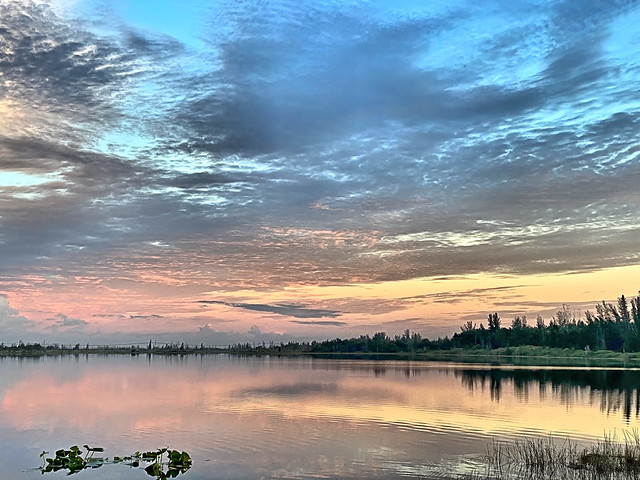
Opposite the sunrise, the view over the placid lake and distant Everglades is subdued but colorful:

View to west at sunrise 01-20200618

View to west at sunrise 02-20200618

The red epaulets of a Red-winged Blackbird glow in the gloaming:

 Red-winged Blackbird 02-20200622

This is a Little Blue Heron "shot in the dark" before sunrise:

Little Blue Heron before sunrise 03-20200617

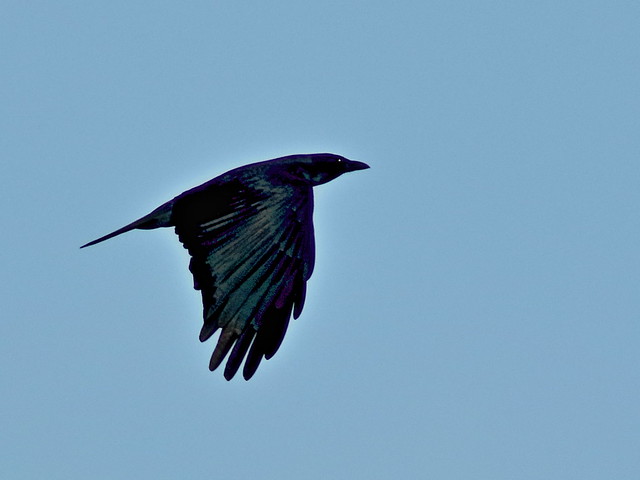
A Fish Crow is a silhouette even by day:

Fish Crow 01-20200624

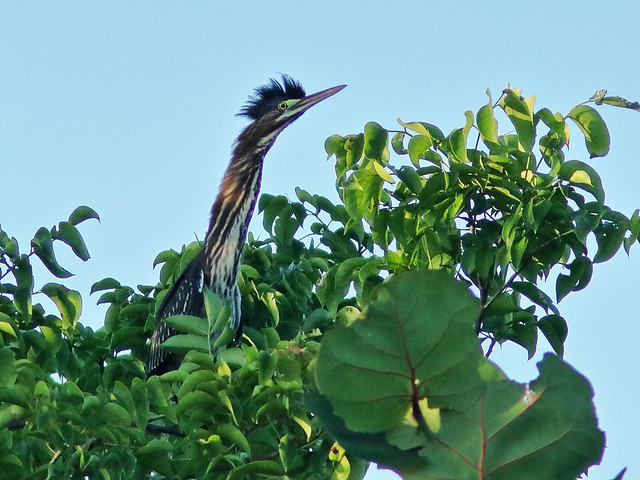
The morning rays catch the outstretched neck of a partially-hidden Green Heron:

Green Heron 03-20200624

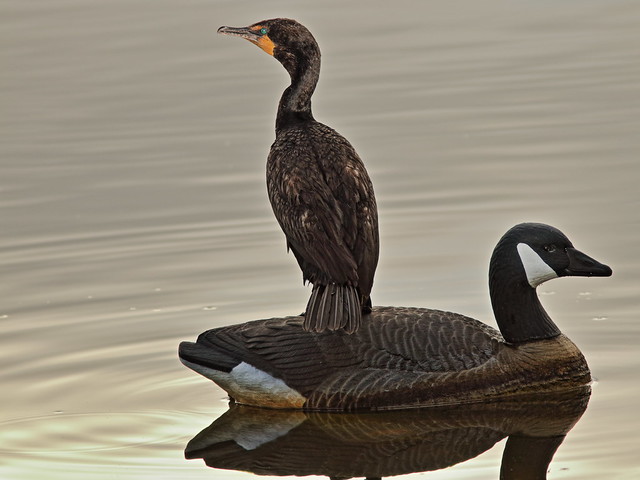
In our back yard, a dimly-lit Double-crested Cormorant hitches a ride on a decoy:

Double-crested Cormorant on decoy 20200618

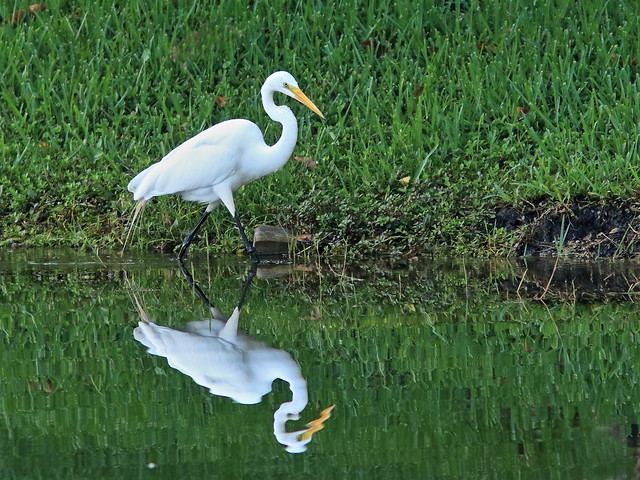
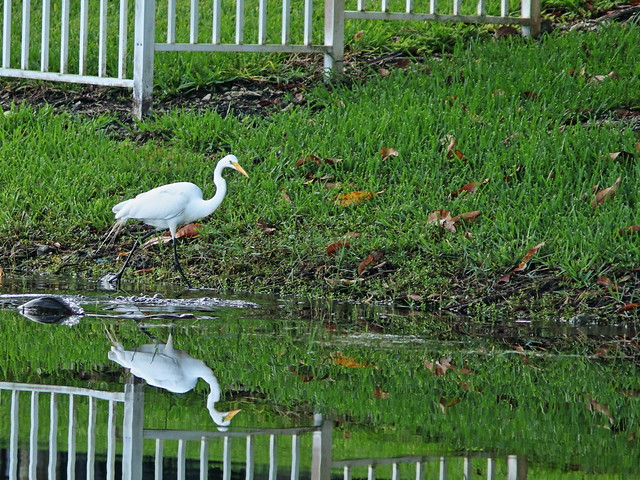
Lights, camera, action! A Great Egret reflects in front of a neighbor's fence:

Great Egret 01-20200618

Great Egret 02-20200618

A tiny Dainty Sulphur brightens up a grubby spot on the ground:

Dainty Sulphur 20200506


= = =  = = =  = = = =  = = = = =

Linking to:

Fences Around the World

Skywatch Friday

Weekend Reflections

Saturday's Critters

BirdD'Pot

Camera Critters

All Seasons

Wordless Wednesday (on Tuesday)

Our World Tuesday


________________________________________________

Please visit the links to all these posts to see some excellent photos on display
________________________________________________