The moisture has produced some spectacular cloud formations over our local wetlands, such as these mirrored layers on February 19, 2016:

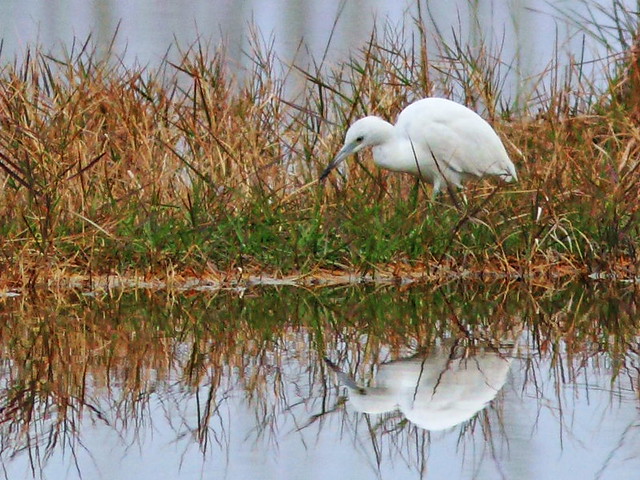
Because prey is diluted into flooded prairies, herons are widely dispersed. The water is generally too deep for Wood Storks, tactile feeders which require greater concentration of prey. Alone on the lake, an immature Little Blue Heron casts a fine reflection (February 20, 2016):
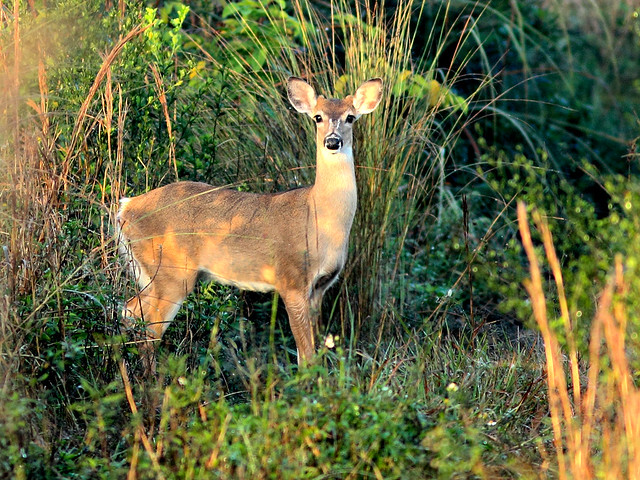
Deer have retreated to higher ground. This yearling White-tailed Deer "button buck" on the levee is the only one I have seen so far this year (February 2, 2016):
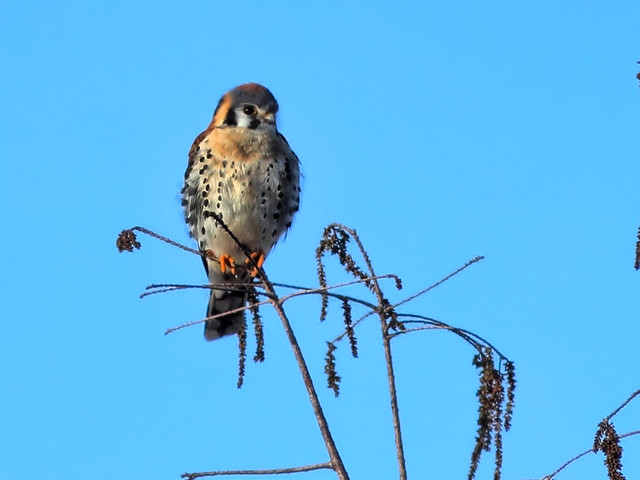
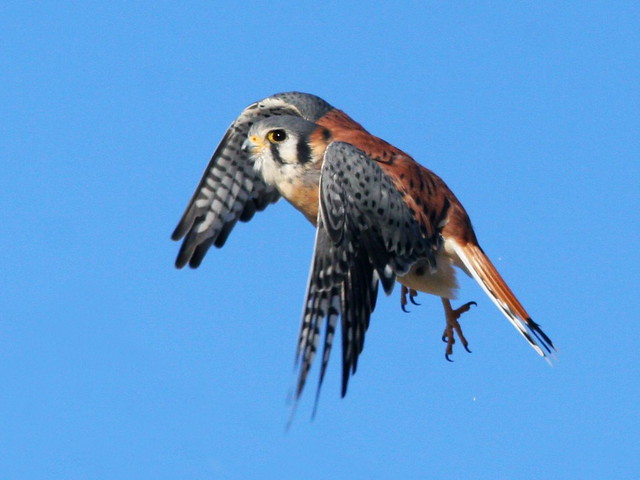
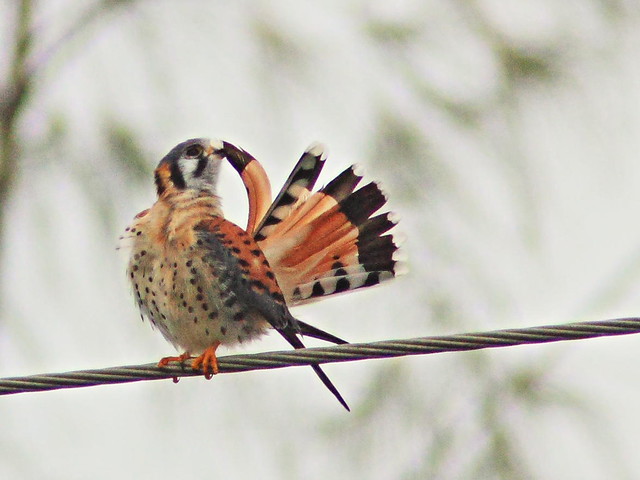
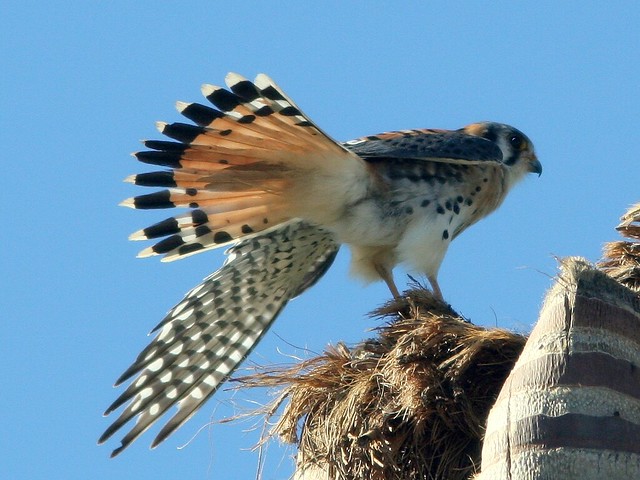
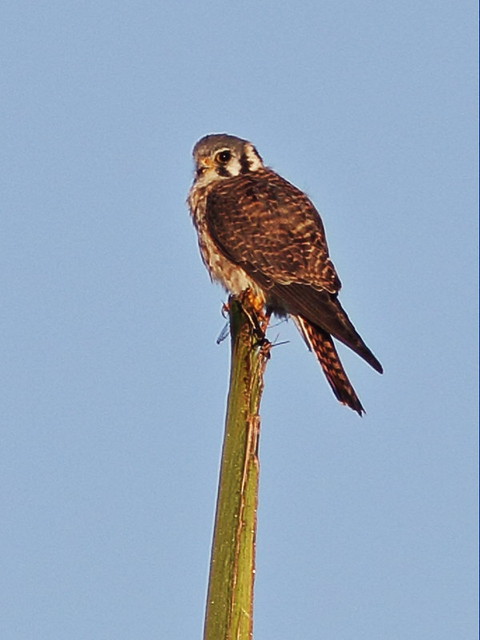
Although I commonly see falcons in our west Miramar (Broward County, Florida) birding patch during the winter, nearly all are American Kestrels. I never tire of photographing this beautiful little raptor. The males have blue wings and those of the larger females are brown.
February 17, 2016:
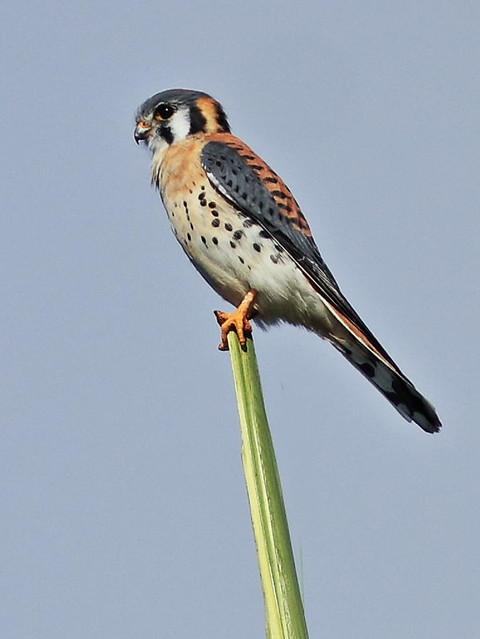
January 9, 2016, perched high atop the emerging leaf spire of a Royal Palm:
"Kestrel" refers to a species with the habit of hovering into the wind while searching for prey, as this bird is doing June 3, 2015:
Perhaps my favorite photo captured a male preening on a wire, December 7, 2015:
Stretching, a kestrel shows off its bright plumage (December 10, 2010):
Most of the kestrels I see here are males, as shown in the above photos, but here is one of my few of a female American Kestrel. Kestrels take small birds and rodents but subsist mainly upon insects. She is holding a dragonfly in her talons on March 1, 2014:
A second species of falcon, the Merlin, appears rarely but regularly every winter. This one caught a small bird and is in the process of plucking its feathers, February 8, 2016:
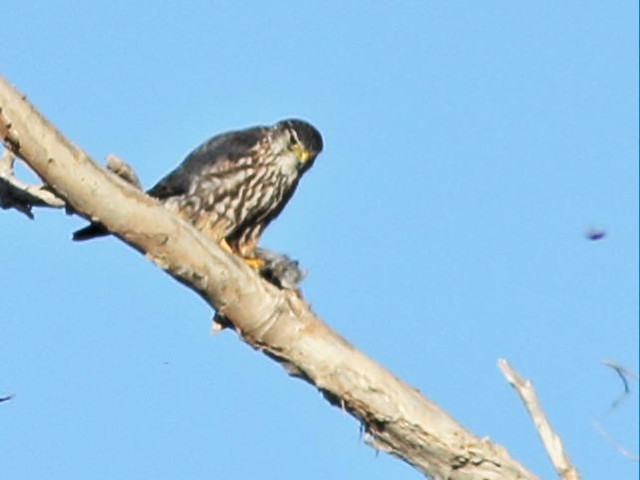
I have found it difficult to get very close to a Merlin, so my photos are mostly of poor quality, as is this one, taken November 17, 2013:

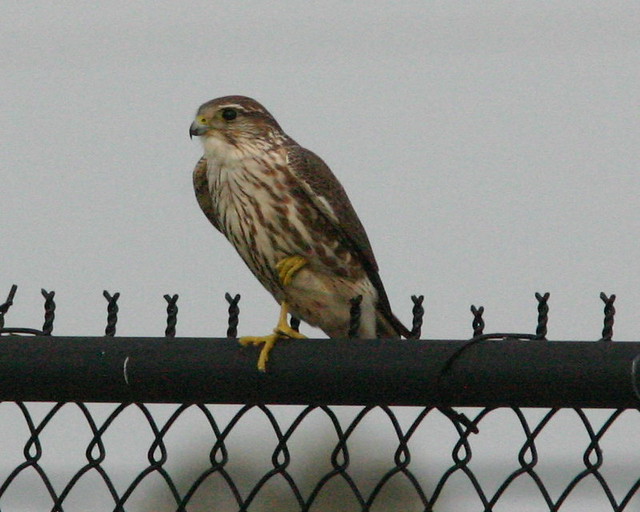
A lucky photo opportunity occurred on December 11, 2008 when a Merlin was sitting on the fence as I drove into the parking lot of nearby Chapel Trail Nature Preserve in Pembroke Pines:
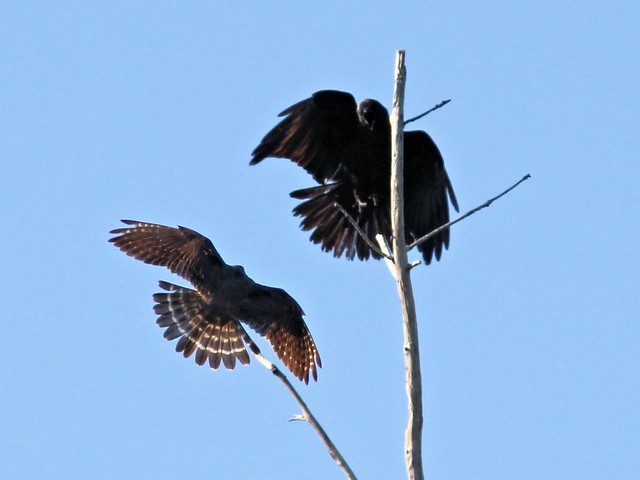
In flight the American Kestrel appears rather light underneath, while the Merlin is usually heavily marked. Merlin in flight, March 21, 2013:

Here a Merlin is in a dramatic confrontation with a Fish Crow (March 28, 2013):
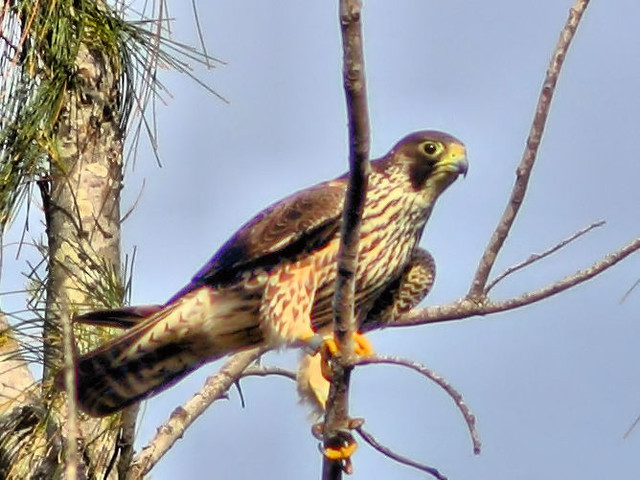
Earlier this winter I saw a large falcon fly over, undoubtedly a Peregrine Falcon, but never got a photo. Then, as I was trying to locate a calling Pileated Woodpecker at the far north end of the wetlands, this large falcon flew in right over my head and briefly settled in a tree only about 100 yards away. I obtained several images in a short burst before it flew off. This is my first image of a local Peregrine, on February 19, 2016:
My only other photos of Peregrine Falcons date back to October, 2009 when I last visited Brigantine refuge in New Jersey
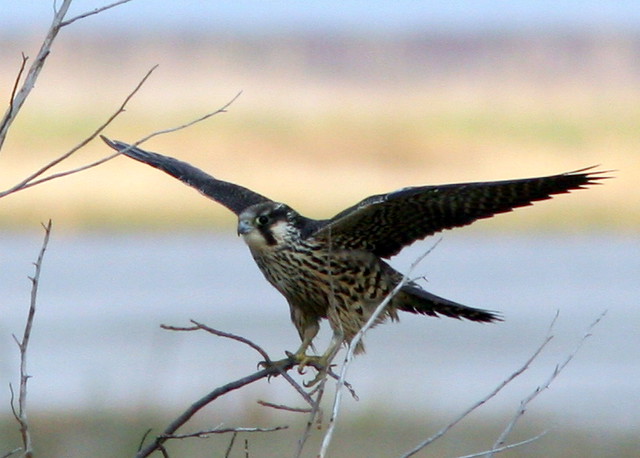
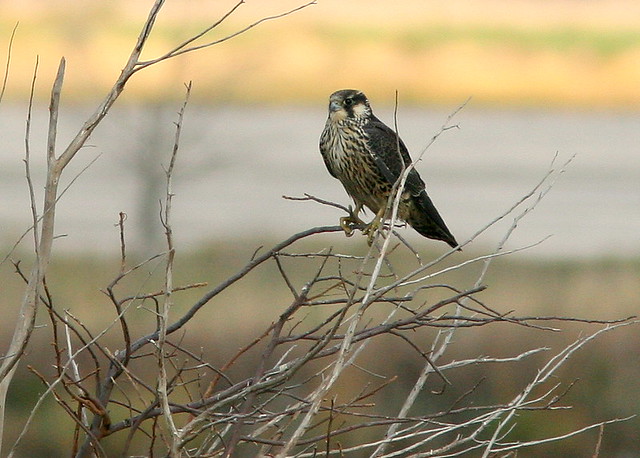
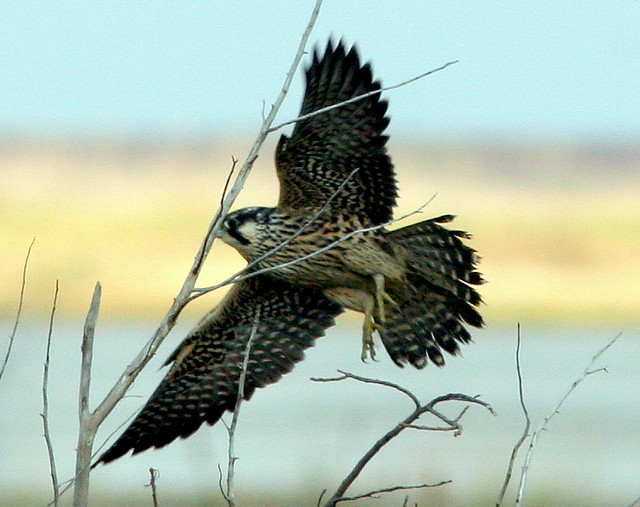
I grew up calling these three falcons Sparrow Hawks, Pigeon Hawks and Duck Hawks. That was their official names when I relied upon my 1939 revision of Roger Tory Peterson's "The Field Guide to the Birds." My mother gifted it to me around 1943 when I was a Cub Scout, after paying $2.75 for it. According to the Inflation Calculator, it cost $37.66 in 2016 dollars, quite a sacrifice in those days.
I made a cover for it out of woodgrain-patterned oil cloth, and despite being exposed to sun and rain as well as a few dunks into swampy water, it has survived to this day:
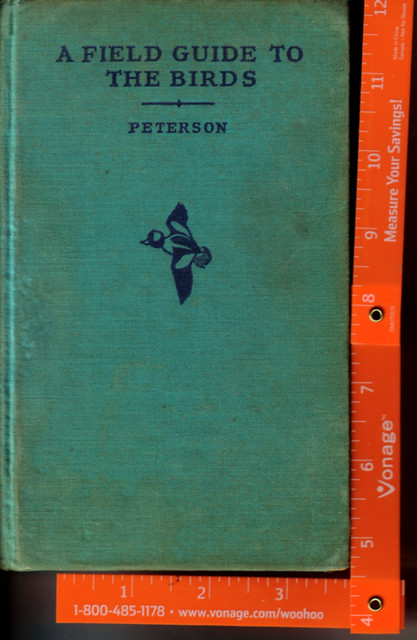

My 1947 edition of Peterson gave the three species new names in parentheses: Kestrel (now properly called American Kestrel), Merlin and Peregrine Falcon, with footnotes to indicate that these were the "Author's preference." This book also looks the worse for wear, as I started keeping a life list for a Boy Scout merit badge in December, 1948. I logged my first "Sparrow Hawk" on February 21, 1949, species #22.
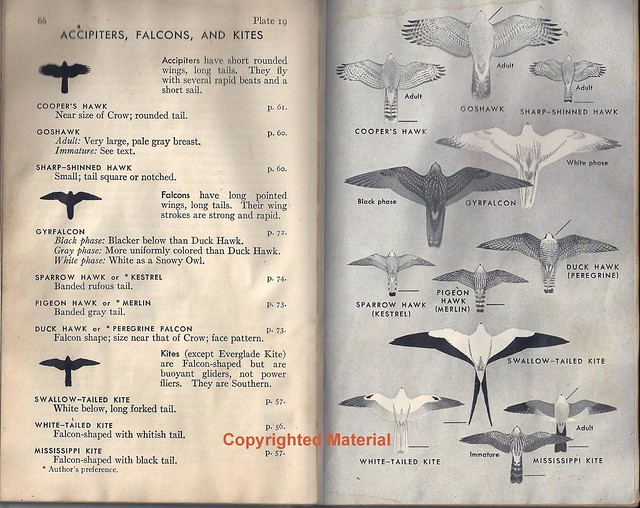
Later I learned that these bird-eating falcons were not true hawks at all. Aside the obvious differences in morphology, they differ from other diurnal raptors in the manner in which they dispatch their prey. Eagles, Buteos and Accipiters "knead" victims with their talons, while falcons kill them with their sharp beaks. The American Kestrel is not closely related to the Common Kestrel of Europe, and indeed may be classified nearer to the Eurasian and Australian hobbies. (Ref: Wikipedia)
= = = = = = = = = = = = = = =
Linking to Misty's CAMERA CRITTERS,
Linking to Eileen's SATURDAY'S CRITTERS,
Linking to GOOD FENCES by Tex (Theresa).
Linking to WEEKEND REFLECTIONS by James
Linking to BirdD'Pot by Anni
Linking to Wild Bird Wednesday by Stewart
________________________________________________
Please visit the links to all these memes to see some excellent photos on display
________________________________________________