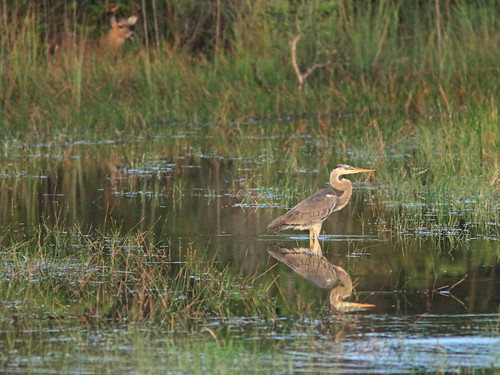
When I took this photo of a Great Blue Heron and its reflection, I did not know that a deer was watching from the seclusion of the wooded grove on the other side of the water:
Sunrise from our back patio:

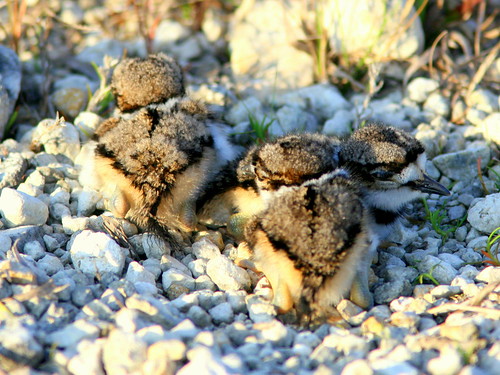
Early one morning, I almost stepped on these three newly hatched Killdeer chicks, huddled at the edge of the gravel track. I had unknowingly walked by their nest many times previously:
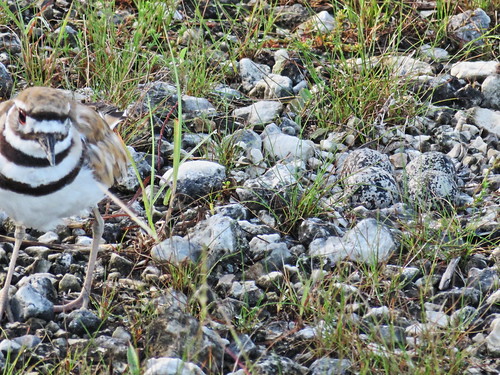
Killdeer eggs are also very hard to find. This courageous female stood defiantly in my way. At first I did not see the four eggs in the nest she was protecting, just to the right in this photo:
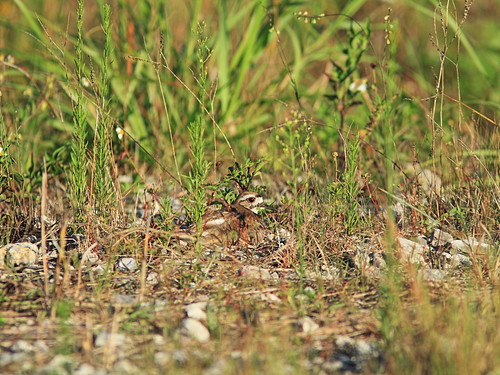
Another incubating Killdeer is nearly invisible:
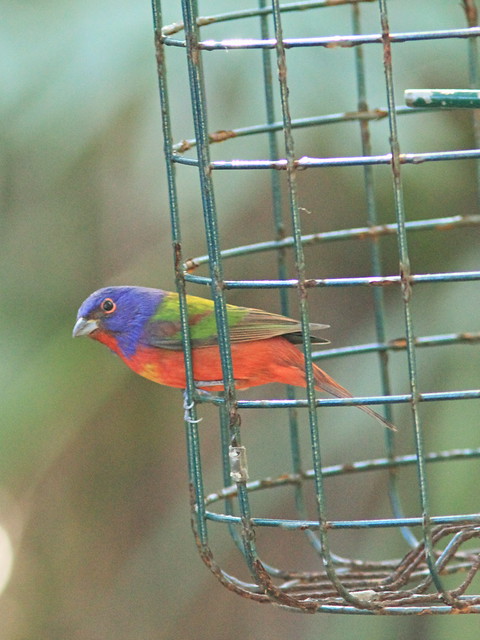
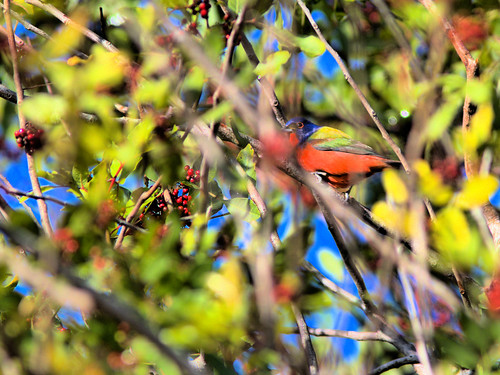
It's hard to believe that a male Painted Bunting might be included among the "Cryptic Critters" I have encountered:
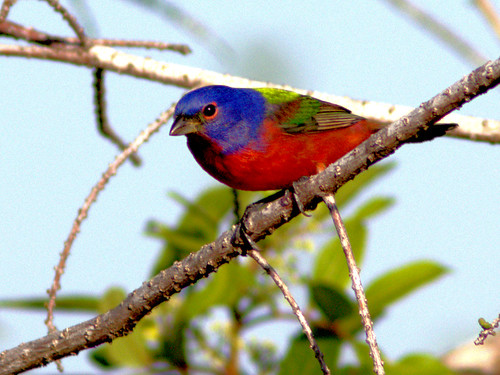
Yet, here he is in a Brazilian Pepper, almost overlooked against the green leaves, red berries and blue sky:
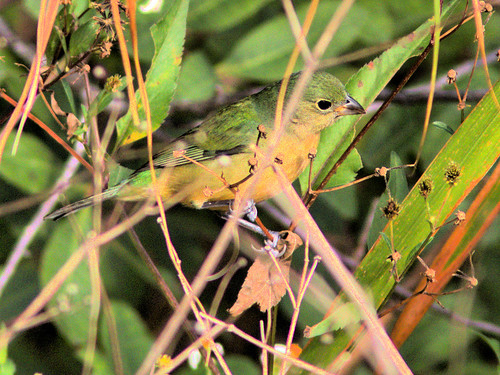
The bright green female Painted Bunting can sometimes be very hard to find among the leaves:
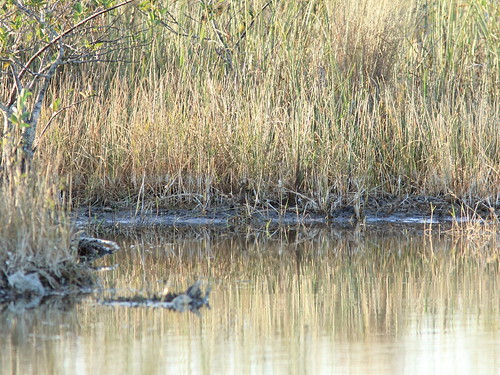
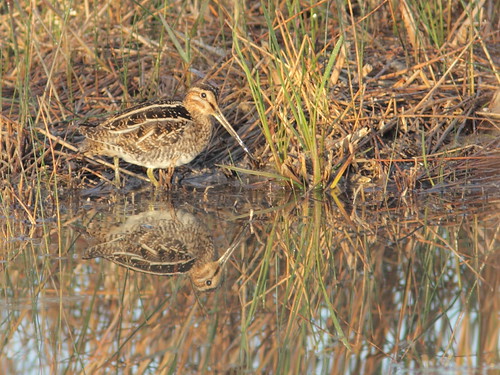
A Wilson's Snipe is very easy to overlook amid the grass and sedges. It is in the center of this photo at the edge of the water (click to enlarge):
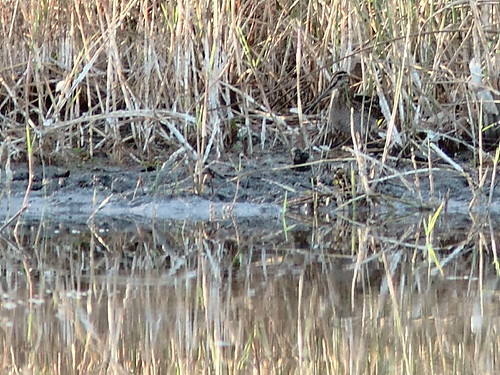
See it better in this crop of the above photo:
It is nice when one comes out into the open:
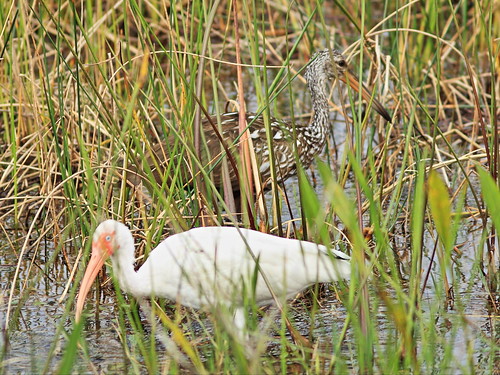
I almost did not see this Limpkin, standing right behind a White Ibis:
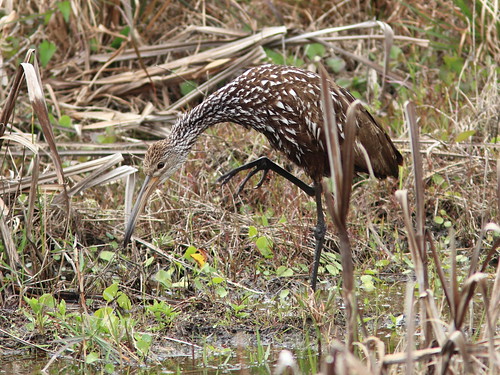
This is a clearer view of a Limpkin hunting for Apple Snails:
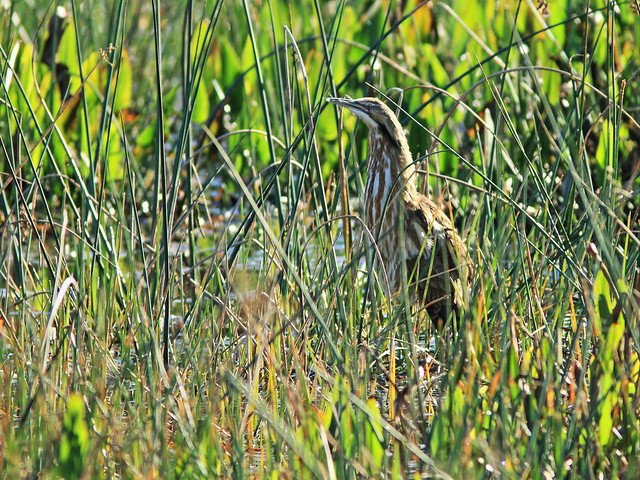
This American Bittern is watching me intently:
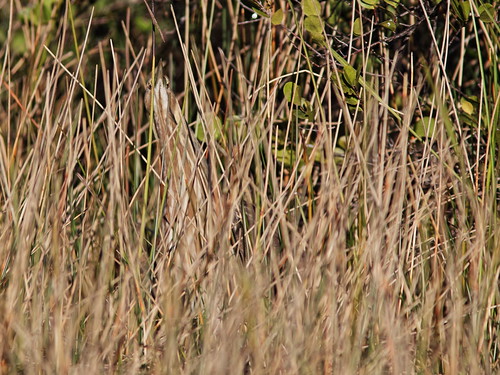
A study of stealth in slow motion, the bittern can disappear right before one's eyes:
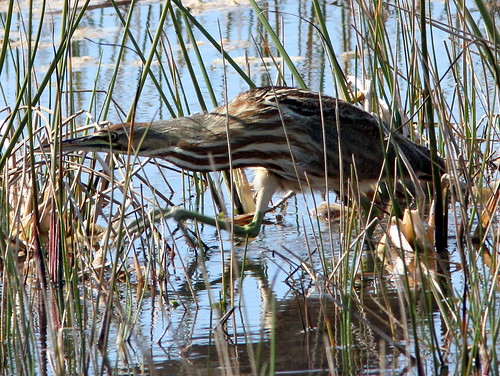
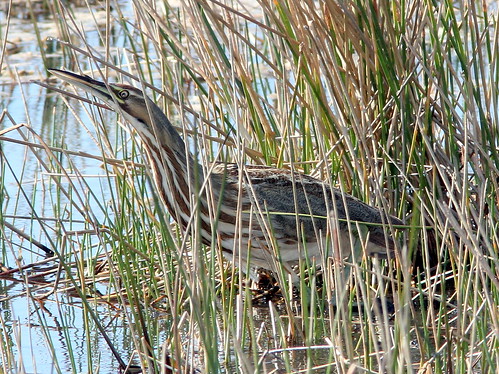
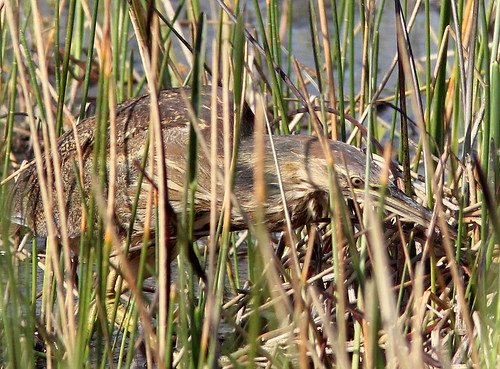
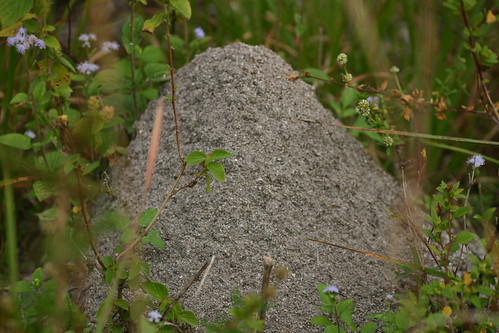
So, the lesson in all of this is to tread lightly and watch where you step. Fire ant nests are often not this easy to find:
WARNING TO OPHIDIOPHOBIAS (I know who you are)-- DO NOT LOOK AT THE NEXT PHOTOS!
When birding in marshy areas I spend almost as much time looking down at my next footfall as looking up. I followed a little muddy deer trail and nearly stepped on something even more dangerous. I did not see it as I was taking photos of scenery and distant falcons. Then, as I turned to walk back to the main path, I saw something next to my foot which looked like a small yellow insect fluttering its wings-- an odd dragonfly or moth? No, as I bent down for a closer look I saw it was the vibrating yellow tail of a juvenile venomous Cottonmouth water moccasin .
It was in a defensive posture. When I moved, it opened its jaws wide and straight up. However the lining of its mouth was not white as is the case of adult Cottonmouths.
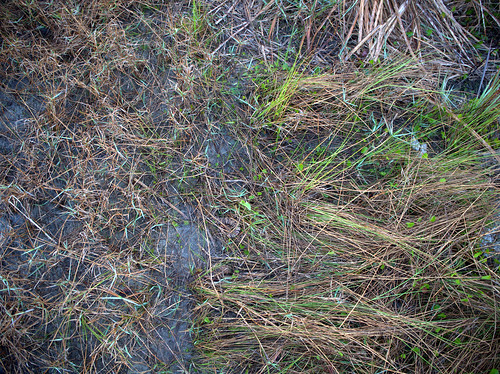
It was so well camouflaged that I could not see it in the viewfinder. The muddy foot path is on the left in this photo and I took several shots just to be sure one of them included the snake. It is on the right side of the path just beneath the very center of this picture (click to enlarge).
Its yellow tail is near the upper left corner of this photo:
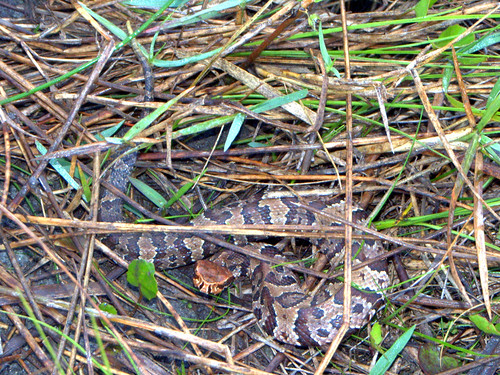
It is only about 10-12 inches long. Here its mouth is partly open:
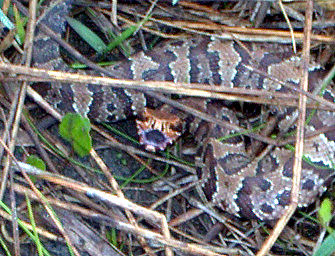
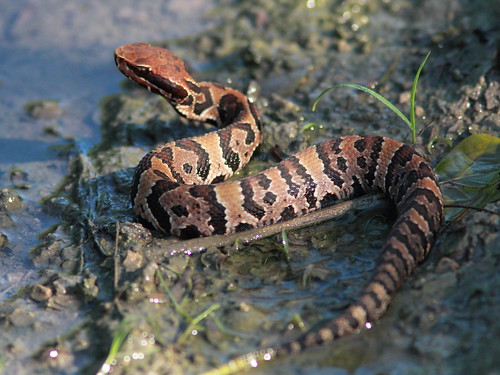
Baby Cottonmouths are born alive. Unlike adults, they are colorfully banded and "...juveniles have bright-yellow tail tips that they use as a caudal lure to attract prey. They undulate the tail tip slowly back and forth to lure prey, such as frogs, within striking distance." Ref: LiveScience.com
Here is a better photo of a "Yellow-tail" which I took back in 2011. It was sitting out in the open in the middle of a muddy path:
= = = = = = = = = = = = = = =
Linking to Misty's CAMERA CRITTERS,
Linking to Eileen's SATURDAY'S CRITTERS,
Linking to SKYWATCH FRIDAY by Yogi, Sylvia and Sandy
Linking to WEEKEND REFLECTIONS by James
Linking to BirdD'Pot by Anni
Linking to Our World Tuesday by Lady Fi
Linking to Wild Bird Wednesday by Stewart
Linking to Wordless Wednesday (on Tuesday) by NC Sue
Linking to ALL SEASONS by Jesh
________________________________________________
Please visit the links to all these memes to see some excellent photos on display
________________________________________________