Like many birders, I try to make time to see birds at every opportunity when not engaged in higher priority activities. This was the case earlier this week when we received word that Mary Lou's brother Richard was admitted to the hospital and had taken a bad turn. We drove almost 300 miles to Leesburg to visit him, and stayed at a hotel in Lake Mary, a community in The Villages. We spent the better part of two days with him and family members, getting back to our hotel late in the day.
Knowing of our passion, Mary Lou's younger brother Ray had researched the Internet and, early on our first morning, led us to a couple of birding spots. The first was Paradise Park, only about a half mile from the hotel. We had little time to spare but spent an interesting half hour, during which time I logged 12 bird species.
The sun was rising out over the lake, creating very difficult photographic conditions. I rescued a few poorly exposed images, among them...
A flock of five Long-billed Dowitchers with a Lesser Yellowlegs in the foreground:
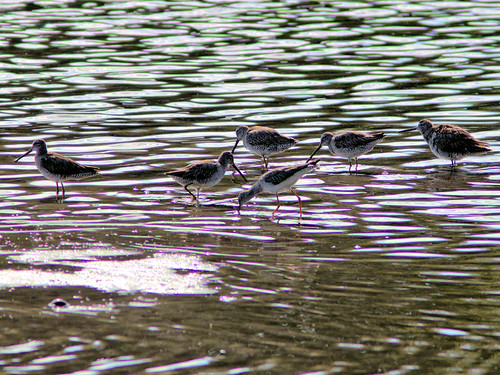
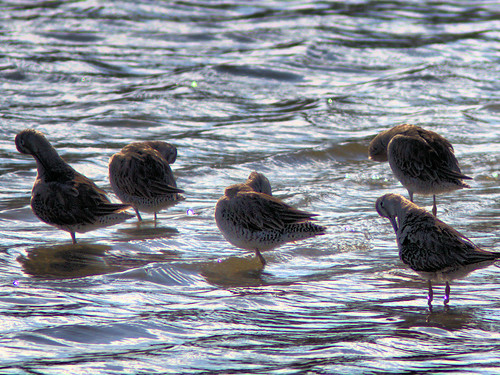
A poor shot of the dowitchers, which are large sandpipers with substantial straight bills:
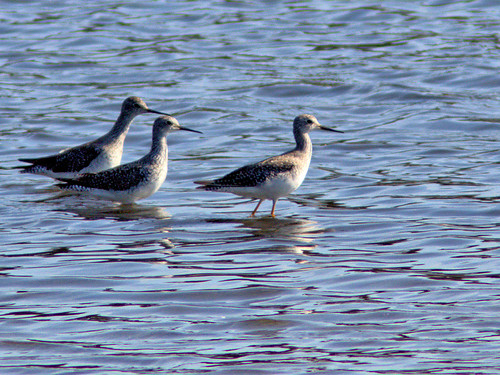
Three Lesser Yellowlegs...
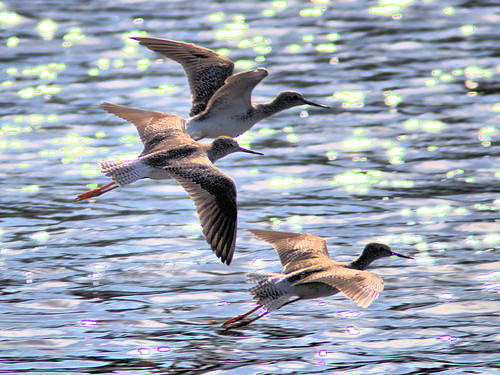
...which took flight:
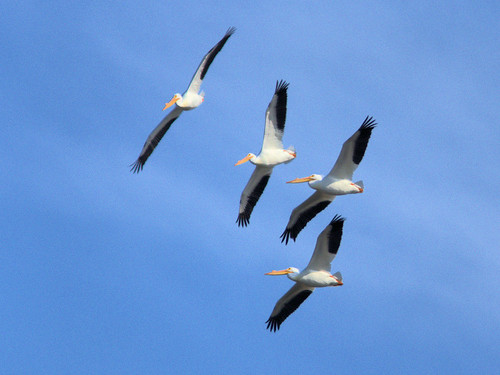
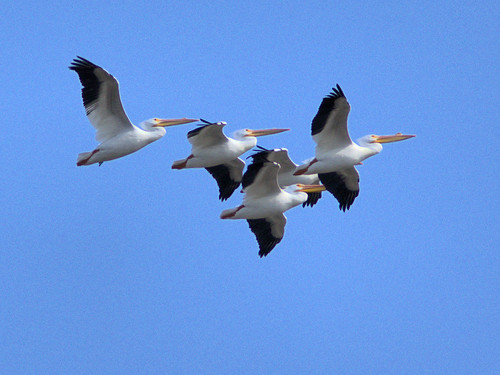
Two small flocks of American White Pelicans soared over the lake and then 14 joined together in the sky. Appearing ungainly on land, they are majestic in flight:
On the way back to the hospital, Ray pointed out Veterans' Memorial Park a small park right next door to our hotel. That evening, just before sunset, we walked out from the parking lot and visited it.
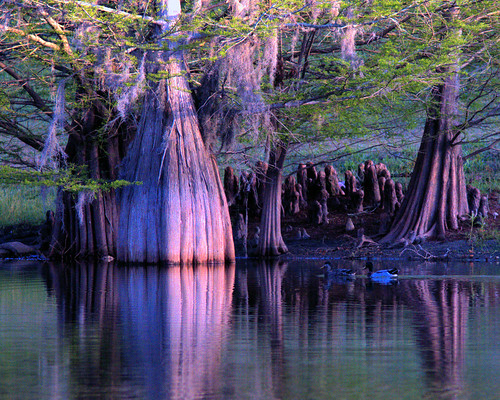
Beautiful old Bald Cypress trees bordered the far side of the small lake:
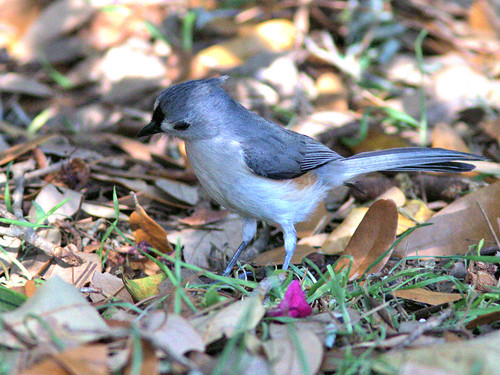
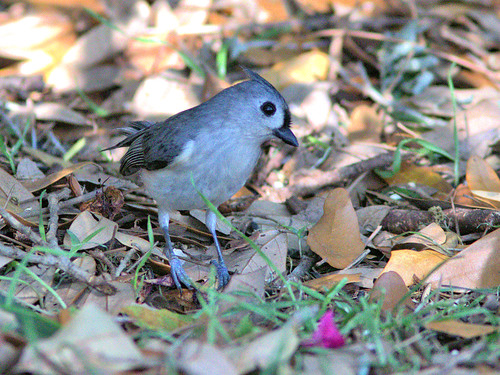
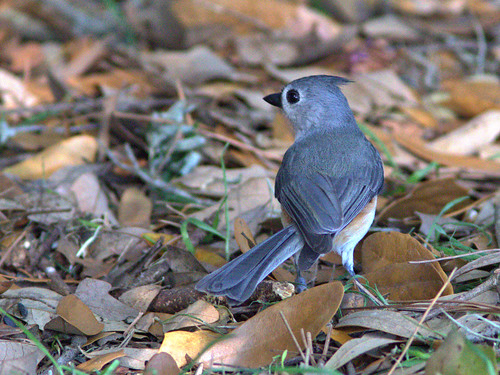
A Tufted Titmouse was singing vigorously:
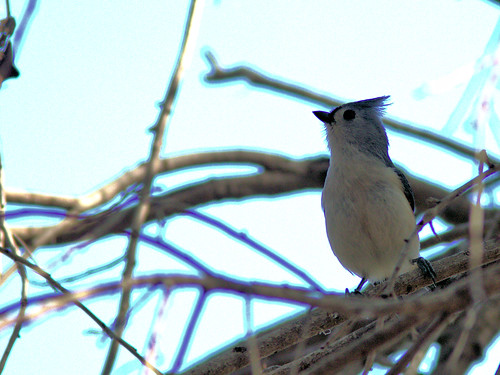
It flew down to the ground and poked around in the leaves:
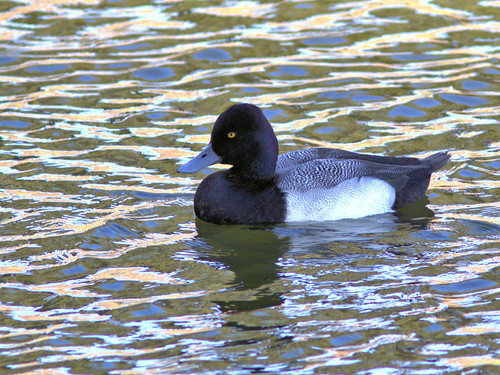
It was getting dark but I was able to get some of my best shots ever of two pairs of Lesser Scaup in the lake. I loved the way the low light played on the ripples. This is one of the males:
Female Lesser Scaup:

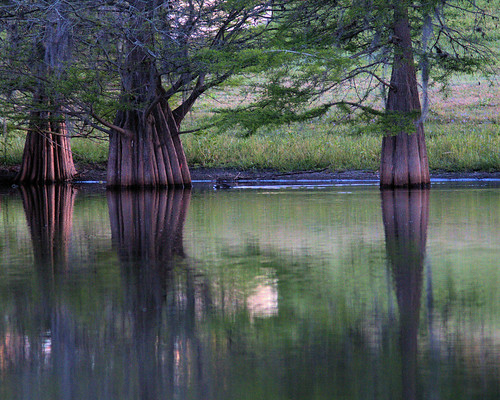
We returned the next morning just after sunrise. The old cypress trees cast beautiful reflections:
We were amazed to find two Black-bellied Whistling-Ducks in the small pond, next to a busy highway:
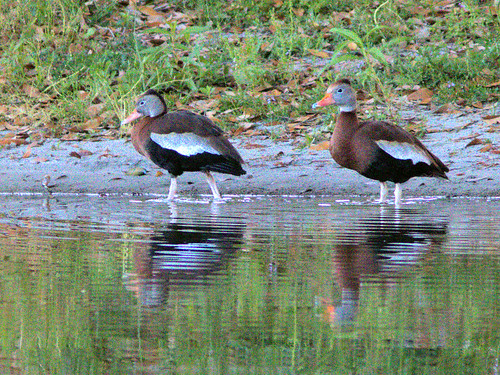
A Hooded Merganser photo-bombed the whistling-ducks:
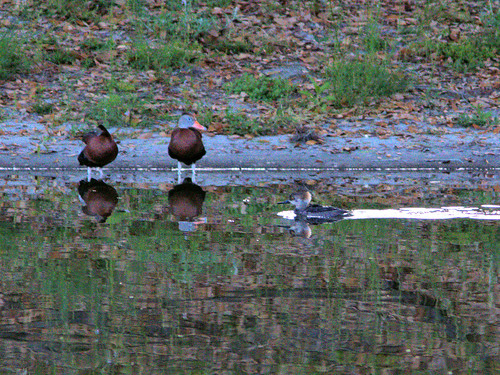
The merganser paddled over nearer to us...
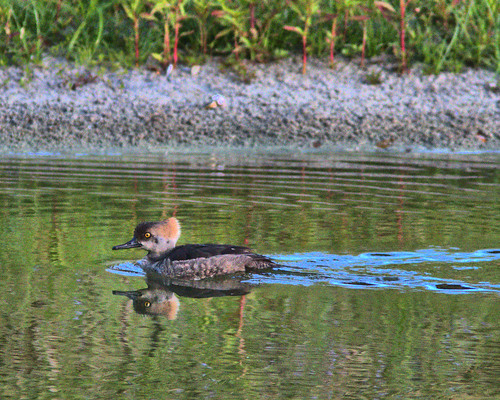
...where it joined another, possibly its mate:
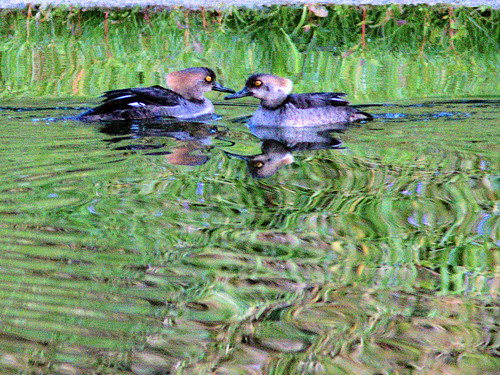
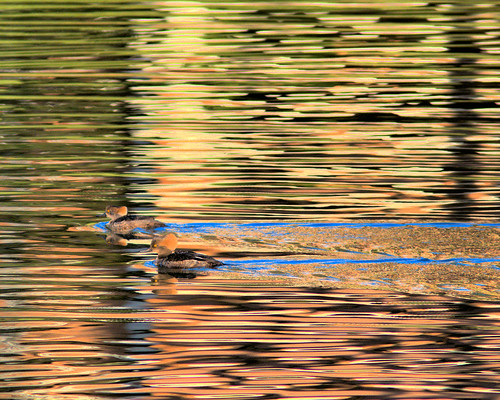
They swam out under a bridge into a larger lake. The effect of early morning sun and the reflection of the hotel created a dazzling effect:
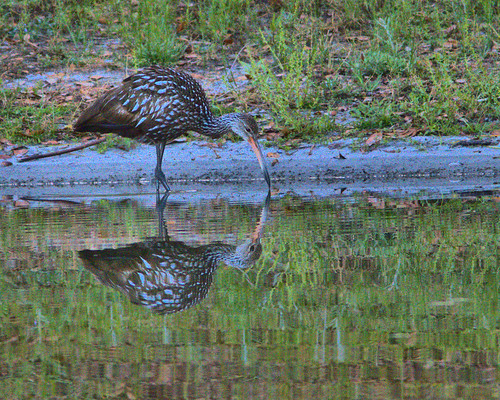
Before we departed, one last scan revealed a Limpkin!
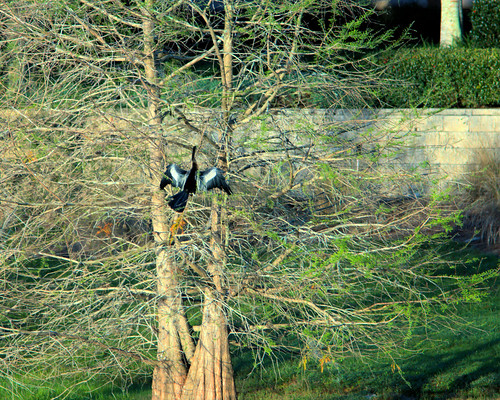
An Anhinga dried its wings in a cypress tree next to the hotel. The wall is my substitute for the fence meme:
 In the space of only a little more than a half hour, we recorded 24 bird species. See the eBird checklist at this link: http://ebird.org/ebird/view/checklist/S35021519
= = = = = = = = = = = = = = =
In the space of only a little more than a half hour, we recorded 24 bird species. See the eBird checklist at this link: http://ebird.org/ebird/view/checklist/S35021519
= = = = = = = = = = = = = = =
Linking to Misty's CAMERA CRITTERS,
Linking to Eileen's SATURDAY'S CRITTERS,
Linking to GOOD FENCES by Gosia
Linking to SKYWATCH FRIDAY by Yogi, Sylvia and Sandy
Linking to WEEKEND REFLECTIONS by James
Linking to BirdD'Pot by Anni
Linking to Wild Bird Wednesday by Stewart
Linking to Wordless Wednesday (on Tuesday) by NC Sue
Linking to ALL SEASONS by Jesh
________________________________________________
Please visit the links to all these memes to see some excellent photos on display
________________________________________________
After enduring a South Florida winter which felt more like summer, it was refreshing to experience cool (even cold) nights and clear skies. Now we slept with the windows open, which was possible only a few times this entire winter in Florida. Each morning we were out early on nearby wilderness preserves and parks.
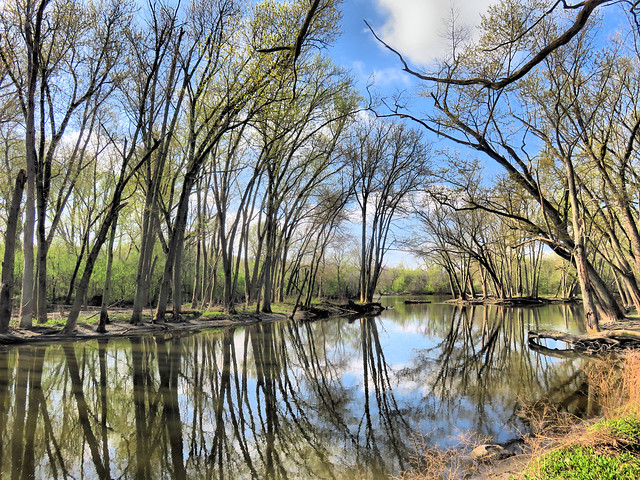
This is a view of a slough along the Fox River at Les Arends Kane County Forest Preserve:
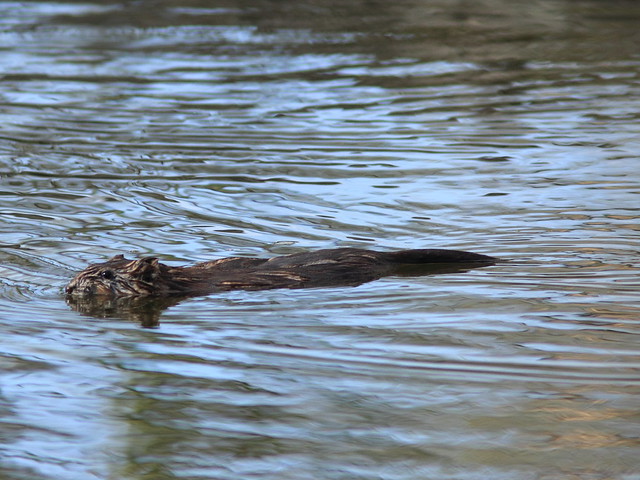
Moments later the still water was disturbed by a busy Muskrat...
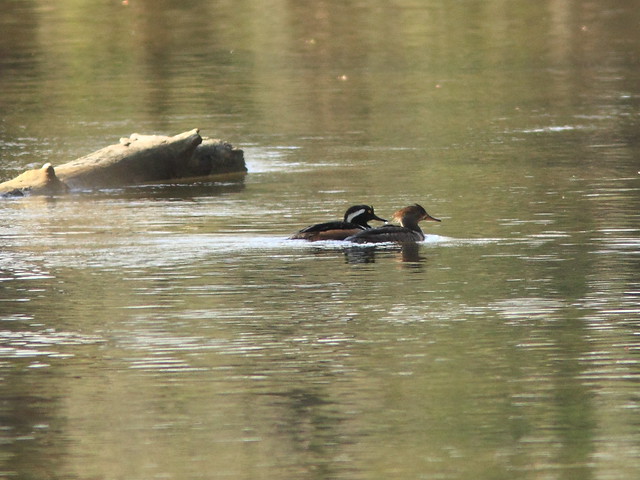
...and a pair of Hooded Mergansers:
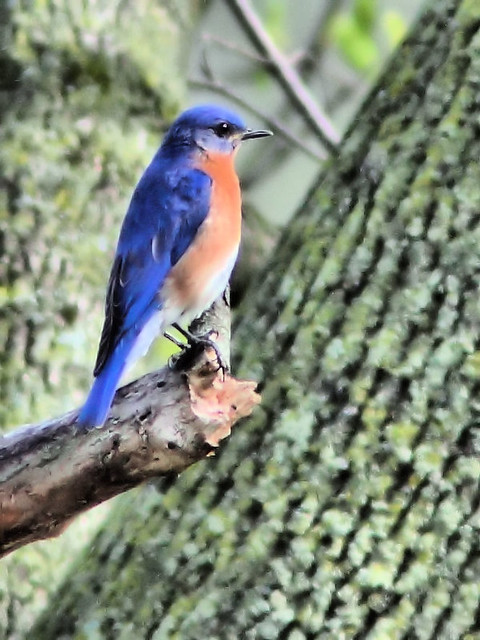
Eastern Bluebirds were a sure sign of spring:
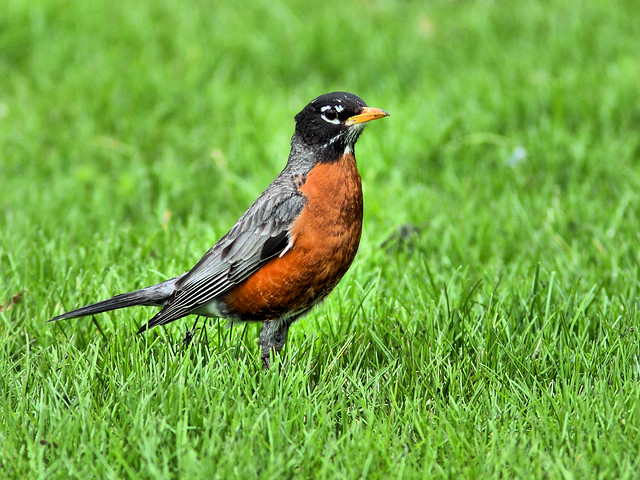
American Robins foraged on the lawns:
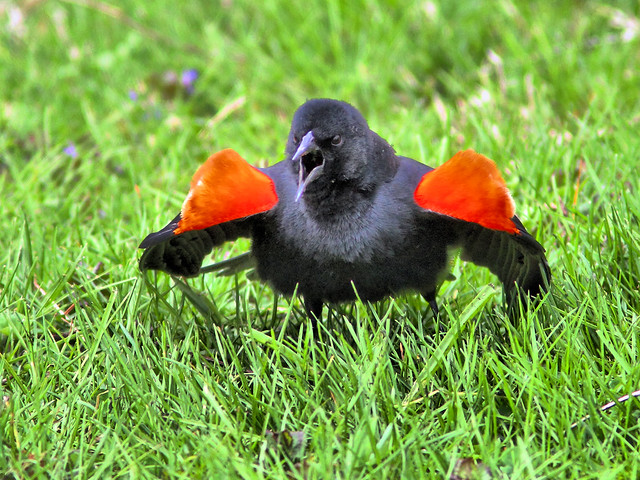
This Red-winged Blackbird displayed its epaulets as it burst into song:
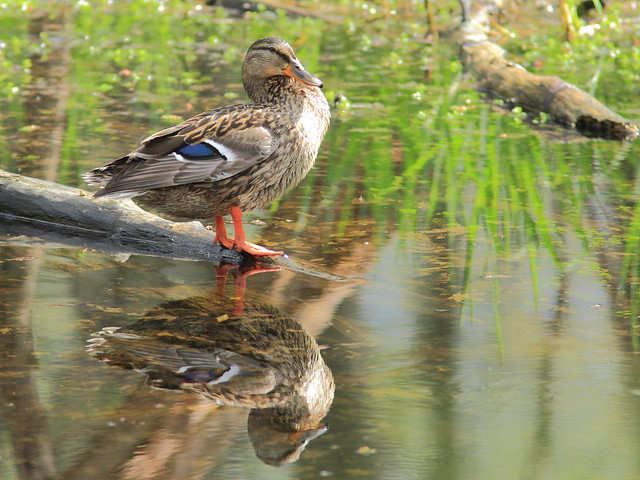
A female Mallard rested in the flood plain, casting a fine reflection:
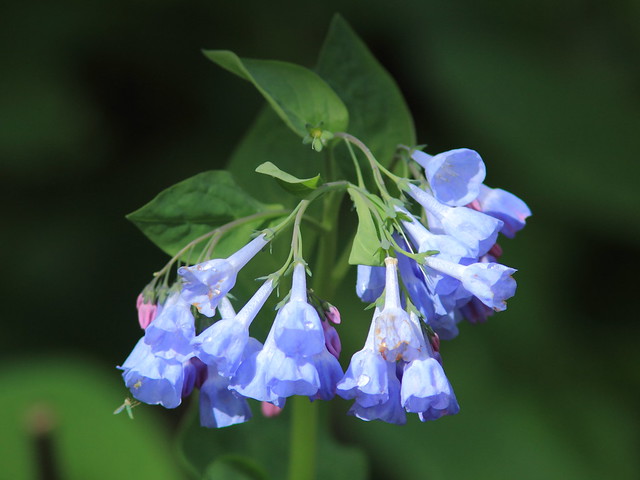
Bluebells flourished in the shade:
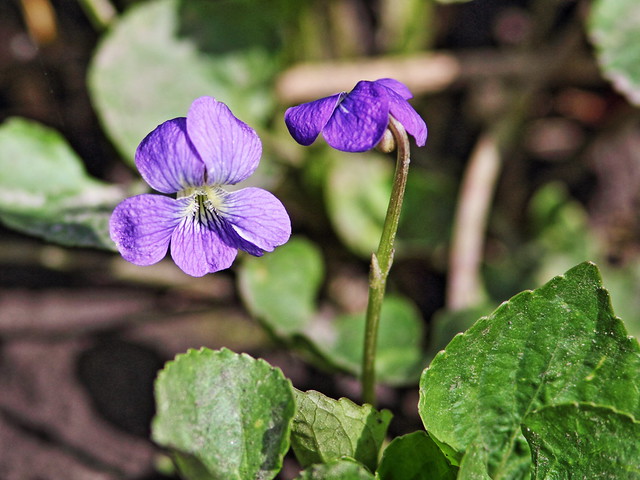
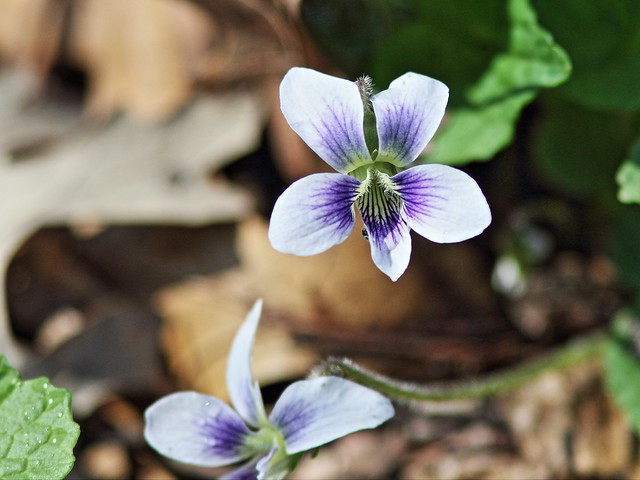
Violets, both blue and white, further evidenced the advance of the seasons:
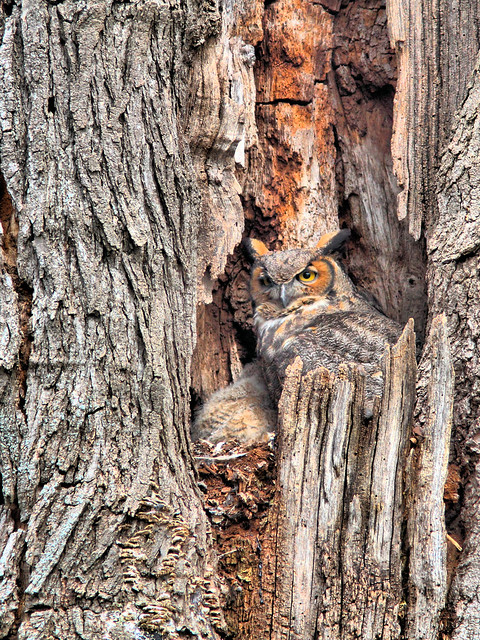
At Fabyan Forest Preserve, a Great Horned Owl again nested in an old snag:
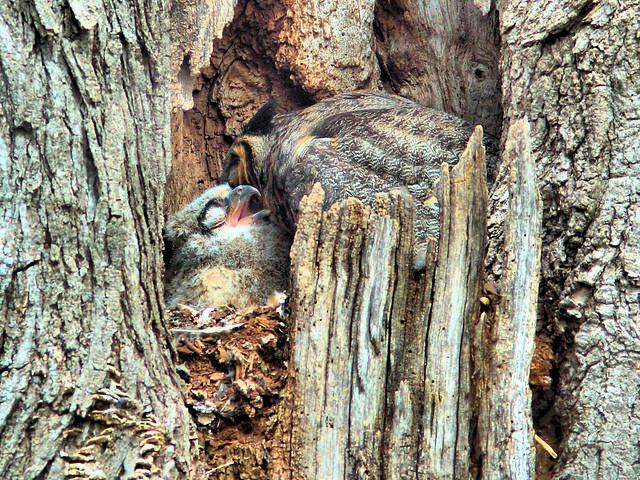
The adult groomed its single owlet:
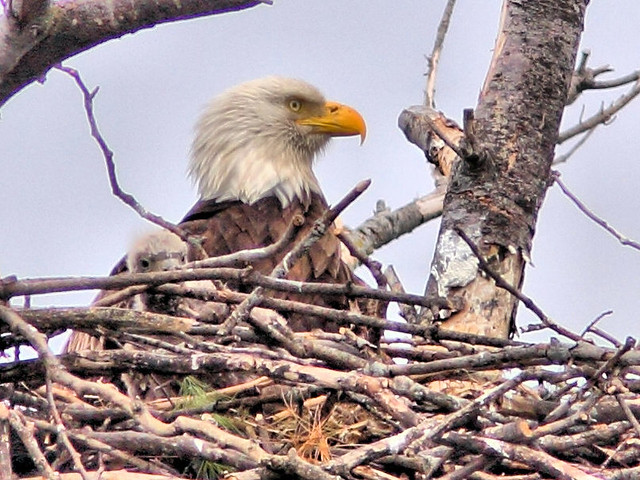
A pair of Bald Eagles started nesting near our second home in Illinois just after we moved there in 2007. After about three years their nest fell down and for the last three or four years they have been breeding successfully in a native pine tree which is right in the middle of a residential school parking lot. The cars park right up to the tree trunk, and crowds often watch from very close by:
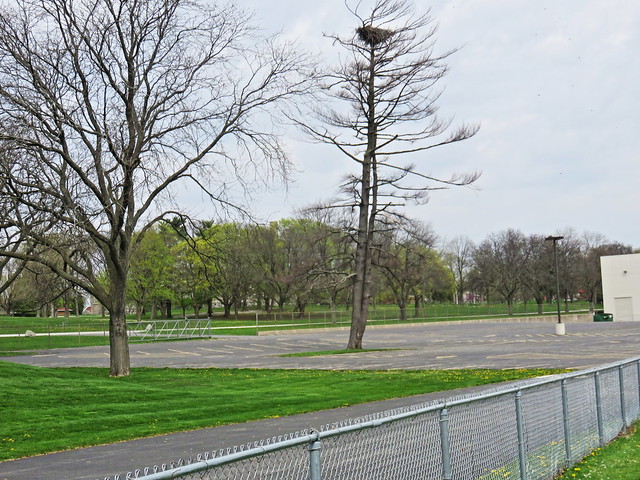
Unfortunately, the tree started declining and by last fall it was nearly dead. Now it is completely lifeless:
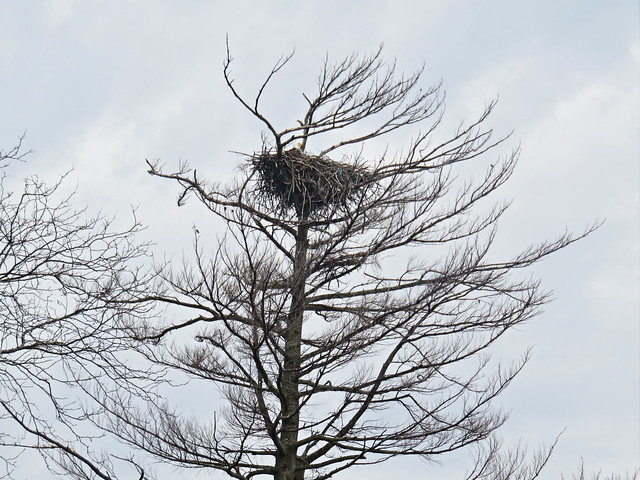
There are at least two eaglets which look to be about 3 weeks old. Dead pines have soft wood which rots rapidly, and this tree will quickly become a hazard to those who park or walk near it. The tree probably starved because its roots were nearly entirely covered by the asphalt pavement. I do not think anything was done to speed its demise. I wonder what will happen if the eagles continue to use the tree-- at some point it may need to be taken down:
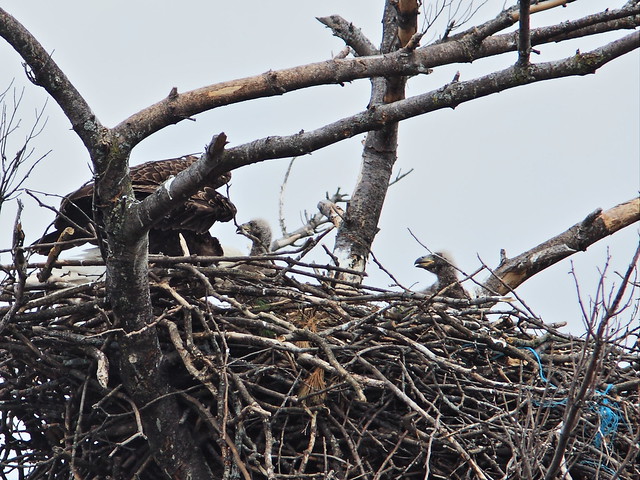
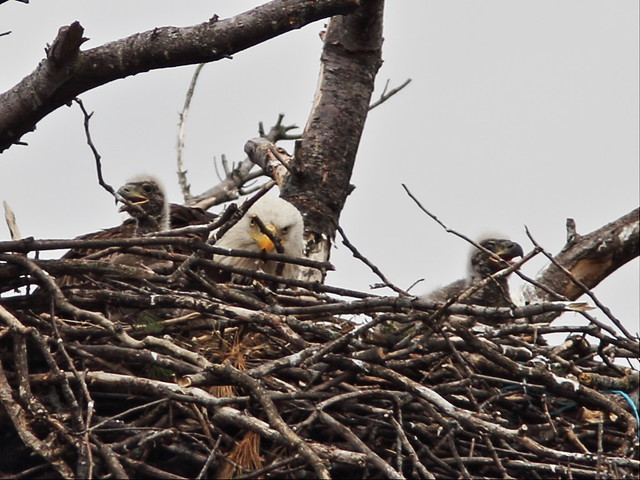
Interestingly, this was the first nest in Kane County since before DDT was banned, and the Pembroke Pines (Florida) nest near our permanent home was also the first in Broward County!
= = = = = = = = = = = = = = =
Linking to Misty's CAMERA CRITTERS,
Linking to Eileen's SATURDAY'S CRITTERS,
Linking to GOOD FENCES by Tex (Theresa).
Linking to SKYWATCH FRIDAY by Yogi, Sylvia and Sandy
Linking to WEEKEND REFLECTIONS by James
Linking to BirdD'Pot by Anni
Linking to Wild Bird Wednesday by Stewart
Linking to Today's Flowers Friday by Denise
________________________________________________
Please visit the links to all these memes to see some excellent photos on display
________________________________________________
On our second day in Albuquerque, there had been light rain during the night, continuing into the morning, and reports of snow and high winds up at Sandia Crest. We therefore decided to begin our day at Rio Grande Nature Center. There were reports on the Internet that a Harris's Sparrow had been present there for the past three days.
As we entered the parking lot, we delighted in the beauty of a Cottonwood in all its fall glory.

At the pond next to the parking lot, there was a mixed assembly of dabbling ducks, mostly Mallards. Among them, a beautiful male Gadwall.

A single Western Grebe with firery red eyes stood out in the center of the pond.


A lone Pied-billed Grebe looked tiny in comparison.

A pair of Hooded Mergansers appeared briefly, and I was lucky to catch them before they swam out of sight.

Our next stop was at the feeders on the way to the interpretive center. White-crowned Sparrows were abundant.

In the past it was unusual for us to see more than one or two White-throated Sparrows here, but this morning we saw at least six adults.

They had bright golden lores.

We were amazed to see that huge numbers of White-winged Doves were mobbing the feeders. We led bird hikes there, and White-wings were absent until just before we moved to Florida in 2004.

A White-breasted Nuthatch joined Red-winged Blackbirds at the feeder.

This Dark-eyed (Oregon) Junco wears evidence of the efficiency of the RGNC banding team.

The golden Cottonwood leaves provided a beautiful background a Downy Woodpecker which, uncharacteristically lacks black markings on its outer tail feathers.

An unusual find was this Townsend's Solitaire, which usually does not stray so far from the Sandia foothills.

We then watched the pond adjacent to the interpretive center, where we found several pairs of brightly-colored Wood Ducks. These two dominated the feeder.

Here is another beautiful male.

The rain let up, and Mary Lou and I birded the area and searched for the Harris's Sparrow until the interpretive center opened at 10:00 AM. Unfortunately, no one had left a record of exactly where the sparrow had been seen, and we were unsuccessful in our quest.