Three years ago we started out the month of September at our (then) second home in NE Illinois. My archives include 450 photos processed that month. As usual, I will look for images which depict favorite memes-- critters (especially birds), skies, reflections, fences and scenes which speak for themselves.
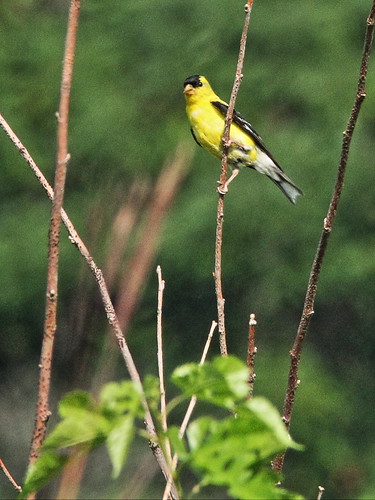
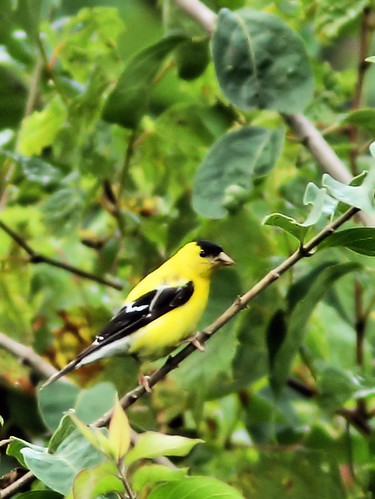
Yellow was the predominant color in the prairies, as goldenrod and sunflowers bloomed. Male American Goldfinches had not yet begun to change into their drab olive winter plumage:
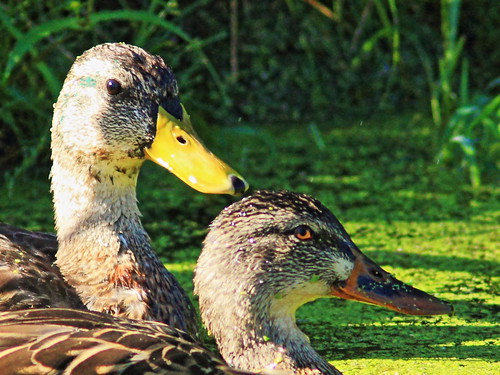
The Mallards had molted into unisex "eclipse" plumage and were temporarily flightless, but the male could be identified by his bright yellow bill:
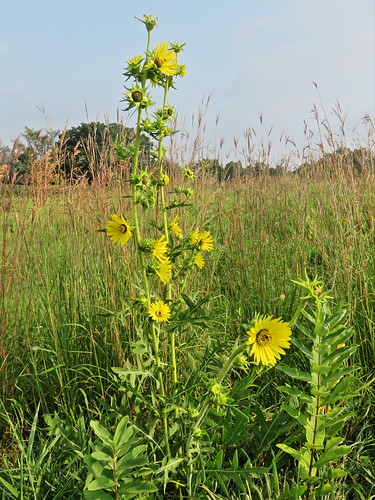
The Compass Plant looks a bit like a sunflower, whose blooms rotate to face the sun. However, this plant got its name because its flowers were believed to point to the north and south. which is not always the case. It is a plant of the tall grass prairie, and its tap root reaches deep into the soil, allowing it to survive fire and drought:
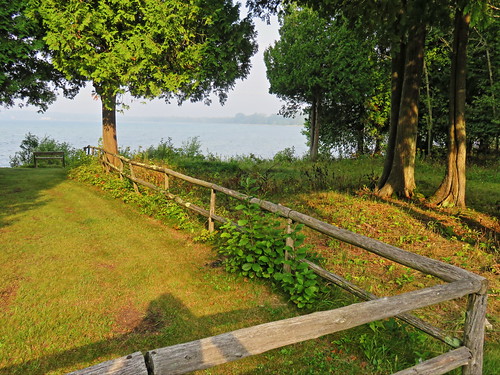
Early in the month, we accompanied our daughter and her family on a short vacation trip to Baileys Harbor Yacht Club Resort in NE Wisconsin, nearly 300 miles north of the Chicago area. Located in Door County, on the Upper Peninsula east of Green Bay, its namesake harbor opens into huge Lake Michigan. We occupied a waterfront condo, an easy walk from the shoreline.
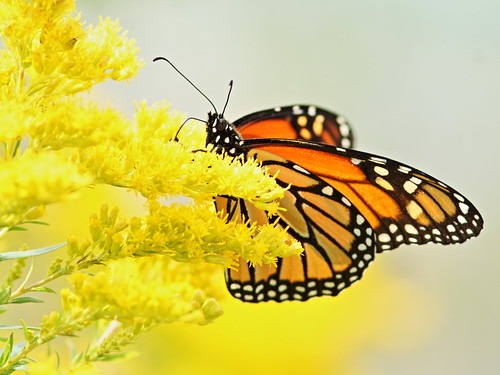
Monarch butterflies abounded. This one was fighting the wind as it held fast to the flowers:
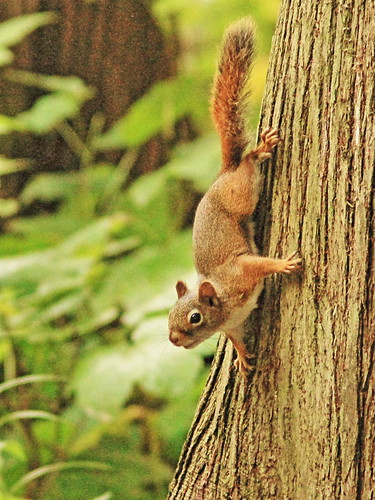
A curious Red Squirrel looked on as we walked the rustic pathways:
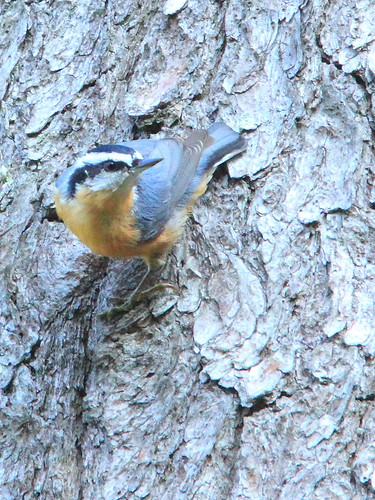
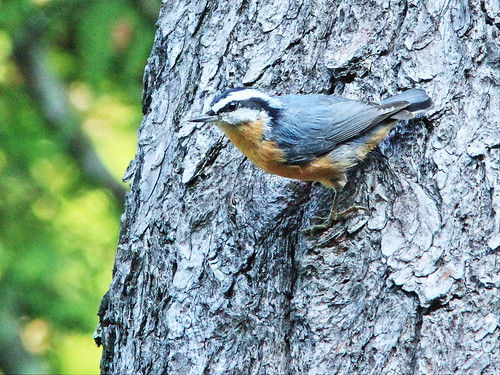
Red-breasted Nuthaches were common:
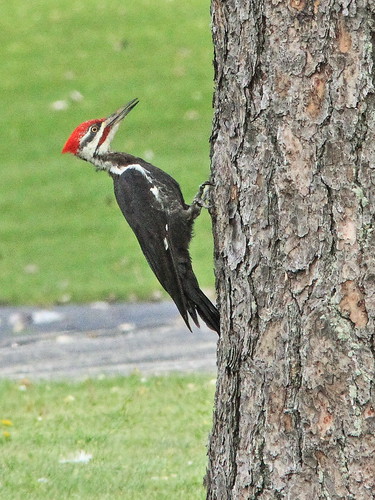
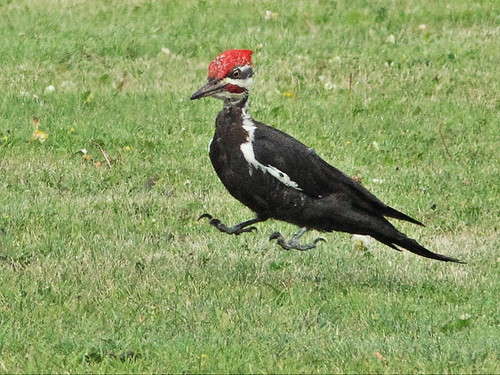
A Pileated Woodpecker, identified as a male by his red "mustache," foraged in the trees and on the ground, where I caught him in 'mid-hop:"
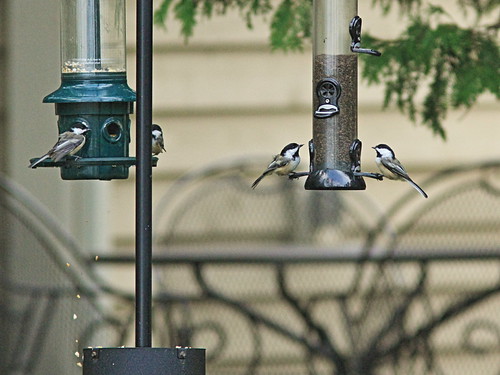
Black-capped Chickadees flocked to the feeders:
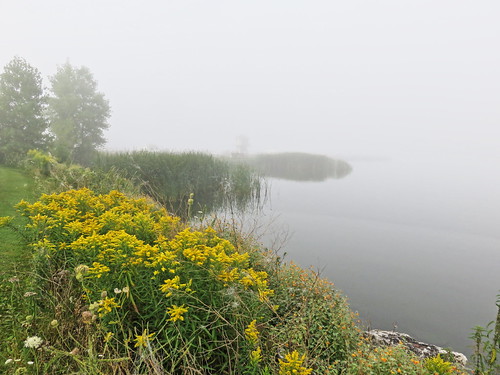
The shoreline on a foggy morning:
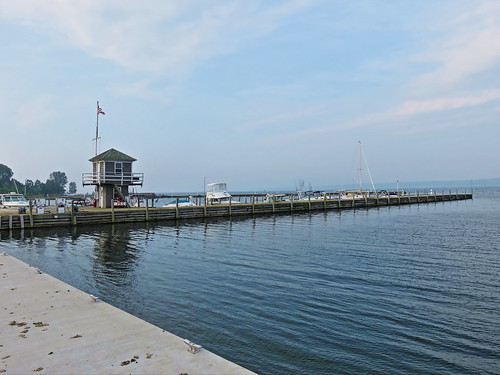
The Marina:
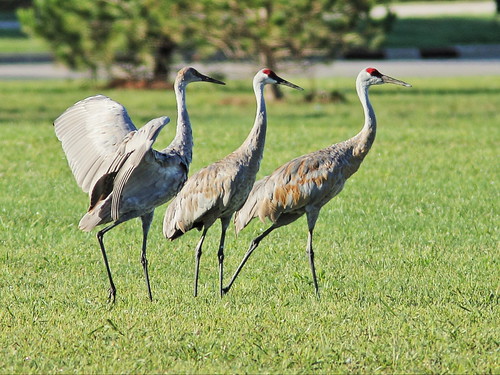
Back in Illinois, a young ("colt") Sandhill Crane followed its parents across a neighbor's lawn:
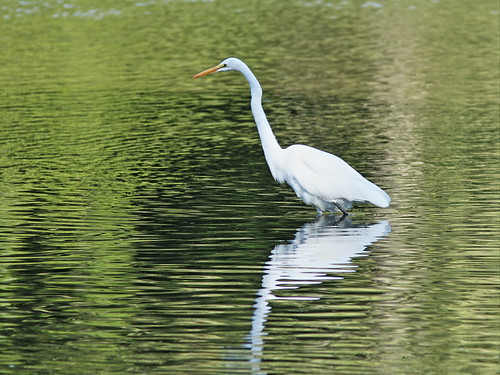
The windy weather made it difficult to find reflections, but this Great Egret saw itself on the surface of the Fox River at Lippold Park, near our home:
Wind-swept "horsetails" stirred in the clouds above Nelson Lake preserve...
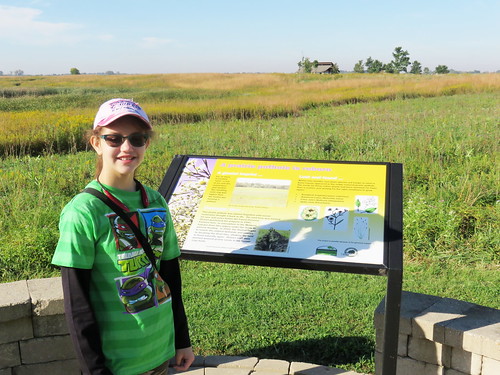
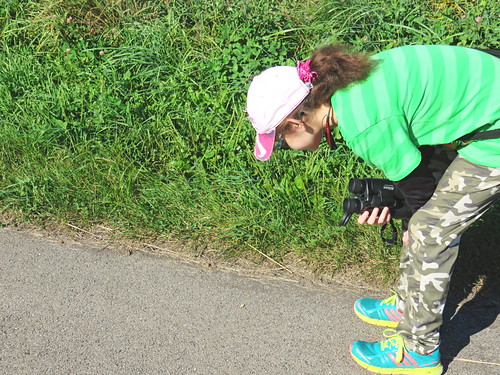
...where our Granddaughter Graci accompanied us on our final hike for the year. She wanted me to try to photograph all her sightings, which I did, and will not bore you here except for:
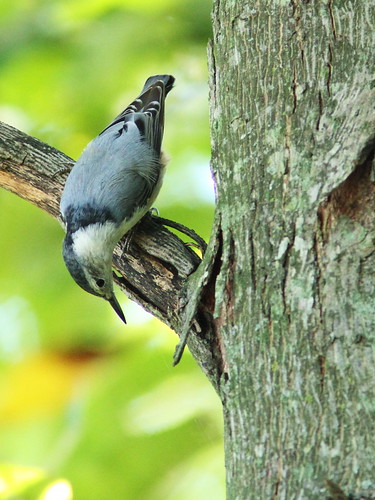
We saw a White-breasted Nuthatch...
...and a line of ants carrying a dead moth:
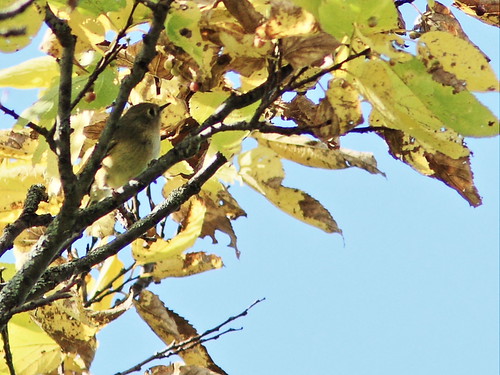
By the time we departed for Florida, the leaves were turning to autumn colors, almost hiding this diminutive Ruby-crowned Kinglet:
We will miss the colors which accompany the change in season...
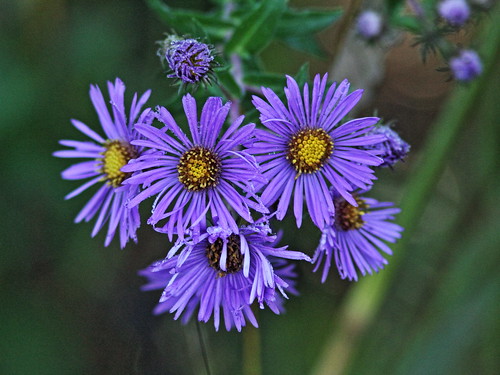
...New England Asters, so common on the fall prairie:
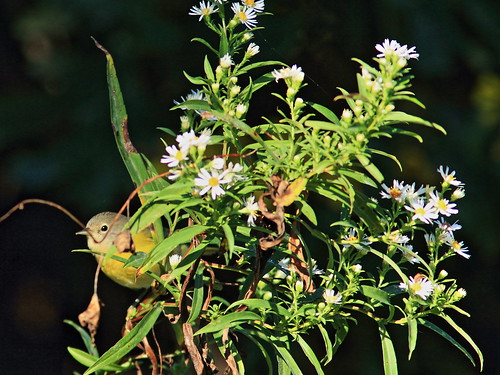
Nashville Warbler in a daisy patch:
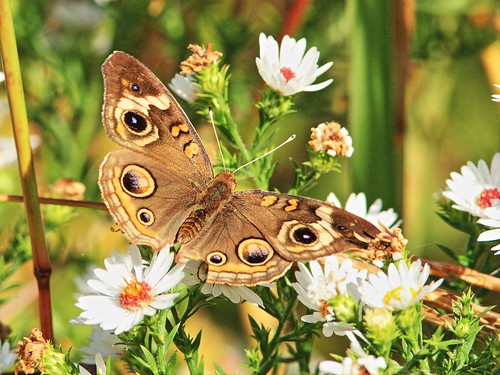
A Common Buckeye on daisies:
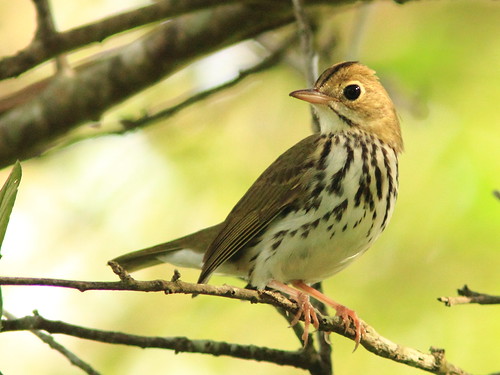
Back in Florida, there is something magic about the morning light, which envelops an Ovenbird:
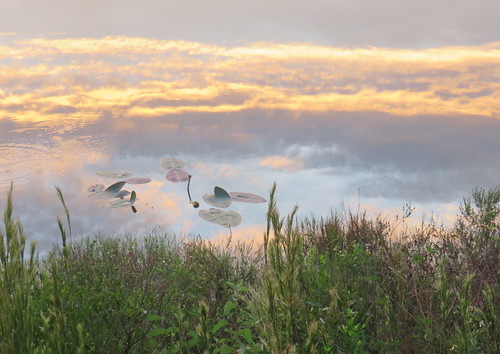
On September 29, sky and clouds reflect on lily pads, the "Reflection of the Month:"
= = = = = = = = = = = = = = = Linking to Misty's CAMERA CRITTERS,
We departed from our south Florida home on April 21, just as spring migration was beginning. Our destination was our condo in NE Illinois, just emerging from two weeks of unusually cold and wet weather.
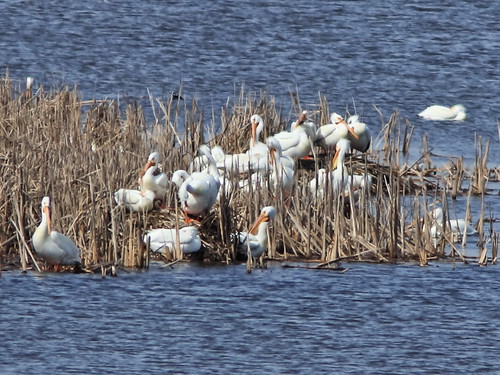
The next morning we headed to nearby Nelson Lake Marsh/Dick Young Forest Preserve, where we were surprised to find a large flock of migrating American White Pelicans. I counted at least 60. This is at the eastern edge of their northbound migration from wintering grounds in the Western and Central US.
American
White Pelicans commonly winter in Florida and along the Gulf of Mexico
but migrate in a northwesterly direction, generally avoiding the eastern
coastal areas. (*See end note)
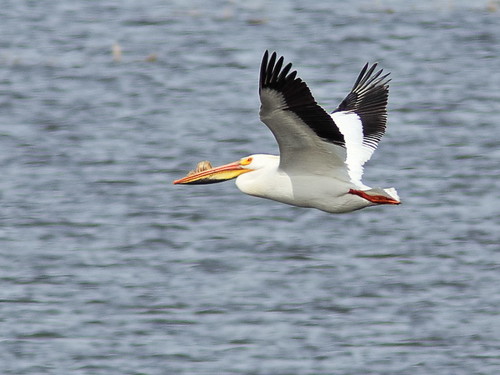
During breeding season the adults grow a vertical fibrous plate on their upper mandibles which is shed before they migrate southbound:
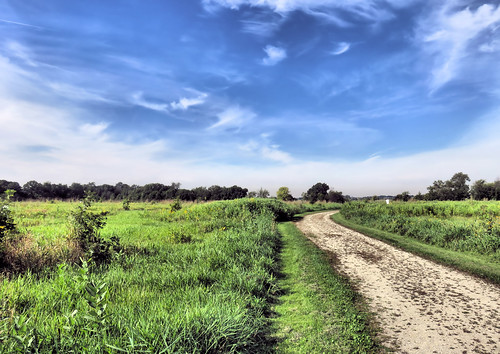
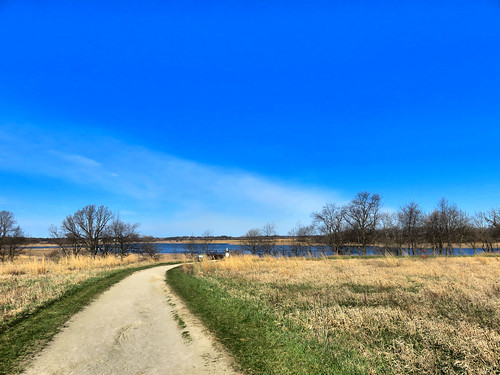
The prairie was just starting to geen up. This is the east entry path, looking towards the viewing platform which overlooks the lake:
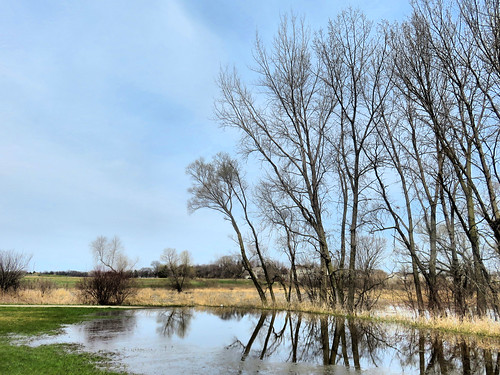
On our way back to the condo we stopped at Jones Meadow Park, where the path had been flooded because of rain and snow-melt. The bare trees cast nice reflections:
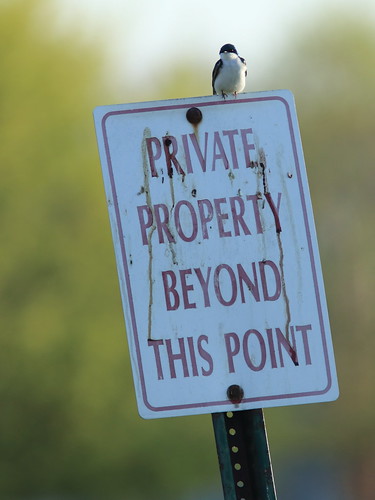
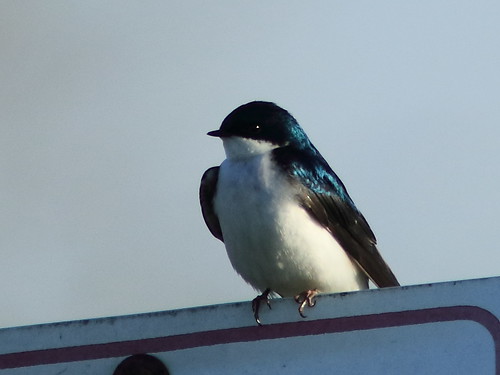
A Tree Swallow defiled the warning sign:
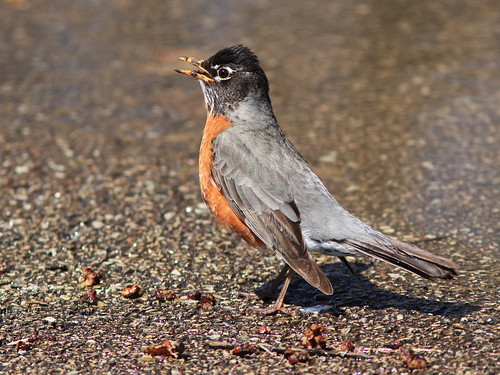
Seeing an American Robin is quite a thrill. While they migrate into Florida, they rarely appear in our neighborhood:
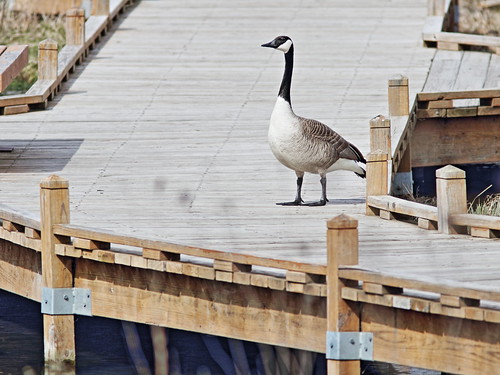
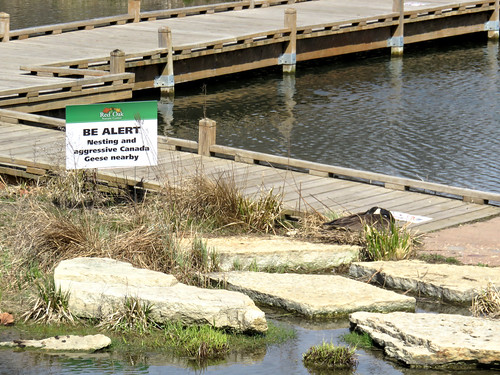
The next day we visited Lippold Park in Batavia, Illinois. The Canada Geese were nesting. At the end of the boardwalk an especially protective pair guarded their eggs and even attacked some visitors. We steered clear:
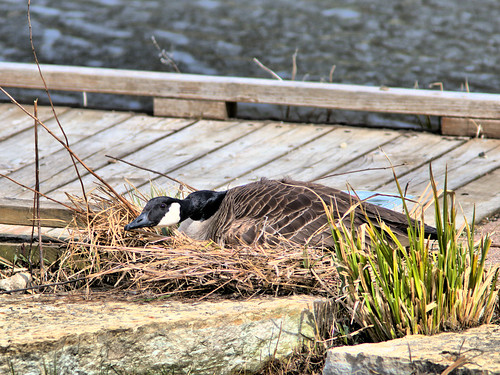
We observed the incubating female from across the pond:
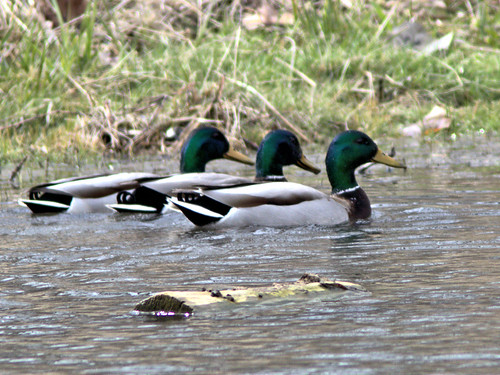
Three male Mallards swam in closed ranks:
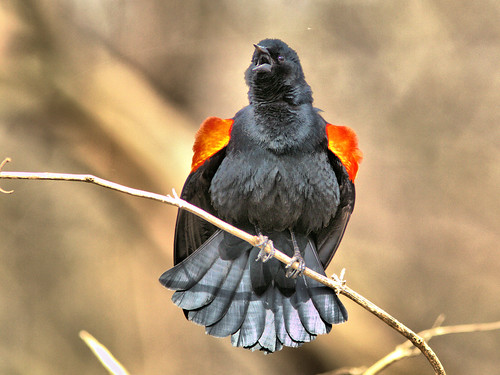
I obtained one of my nicest photos of a male Red-winged Blackbird as it sang "Conk-ra-lee!"
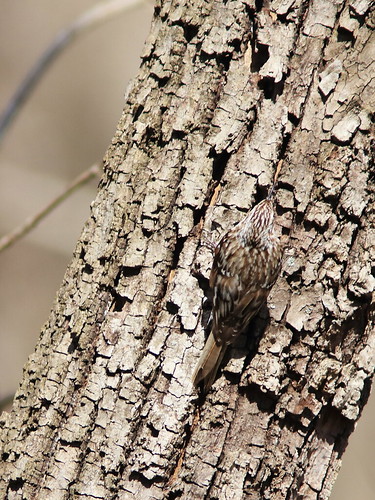
In the wooded area, a Brown Creeper was almost invisible against the bark of a tree:
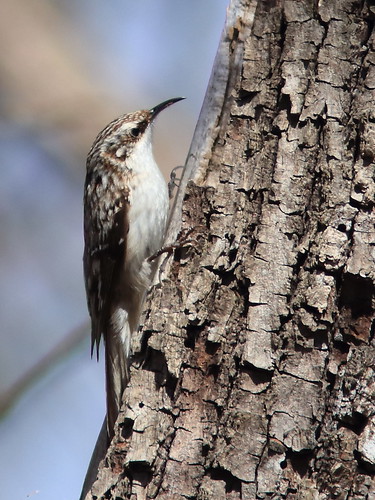
I finally obtained a side view:
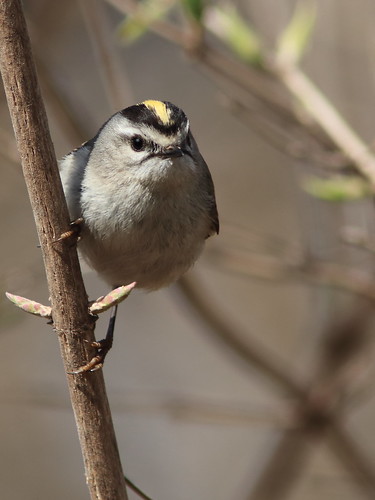
A sweet little Golden-crowned Kinglet posed very briefly:
We are in the throes of marketing our condo-- so much stuff to move out and donate or give away. Our granddaughters were given two new puppies this week-- so much excitement! They will never forget Siboney but the girls are absolutely thrilled with their pets...
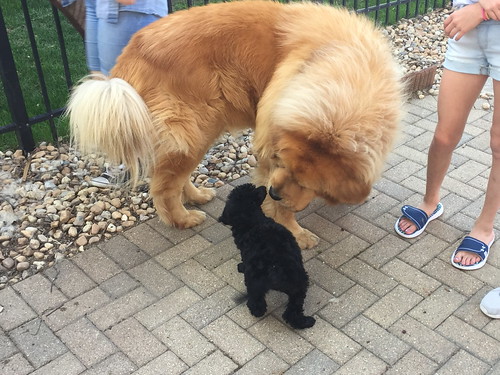
...a tiny (but eventually full-sized) Poodle puppy named Cazador ("Hunter" in Spanish) meets old Tibetan Mastiff Agramonte for the first time:
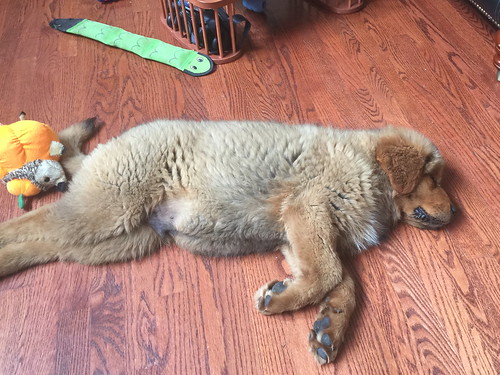
The next day, Moncada (4 month old Tibetan Mastiff, named after General Guillermon Moncada, hero of the Cuban War of Independence and civil rights advocate) arrived-- here napping after having great fun with his new little "brother"...
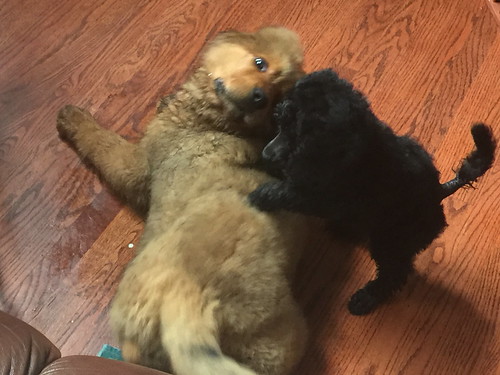
...and they got along splendidly, even after Cazador jumped on him and woke him up!:
With so much going on I may need to take a break but will try to get out as much as possible while my emails pile up! Sorry if I have not yet gotten back to everyone who have posted such great comments (they get a priority position in my in-box!).
*PS: We have had them in our local south Florida "Wounded Wetlands," where in 2012, I documented their cooperative fishing style (pardon my New Jersey accent):
= = = = = = = = = = = = = = = Linking to Misty's CAMERA CRITTERS,
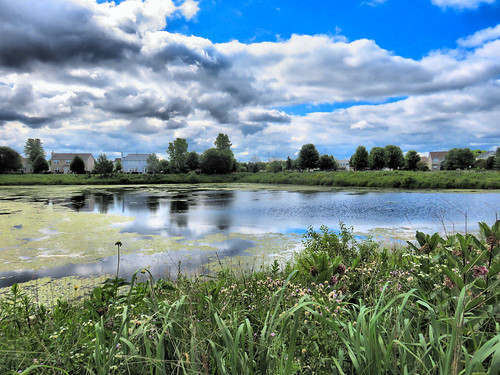
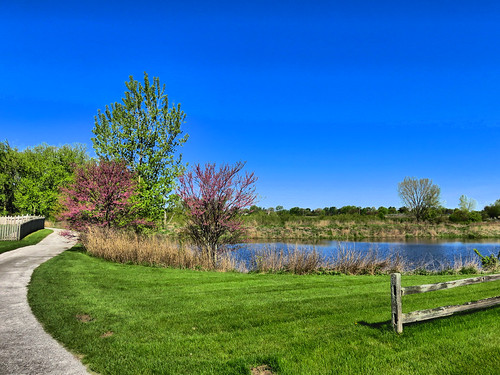
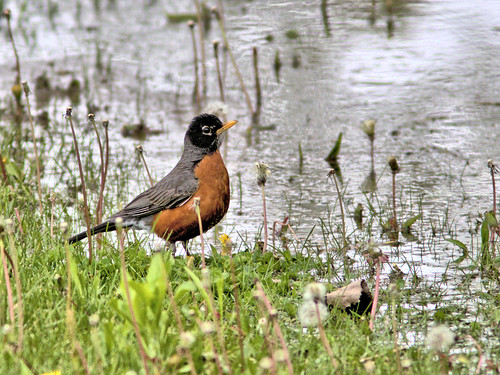
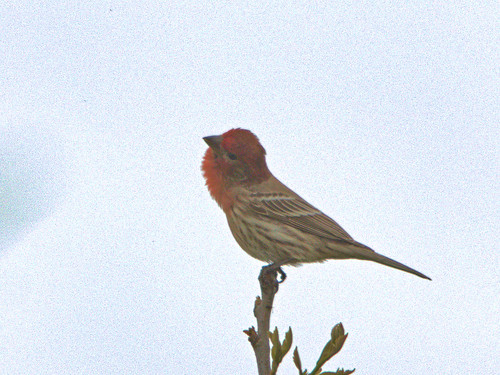
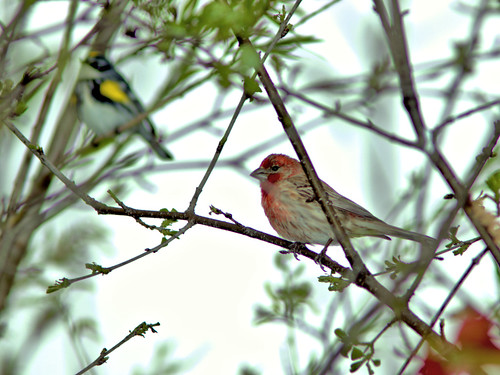
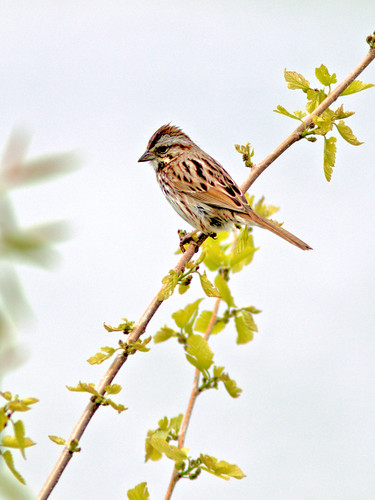
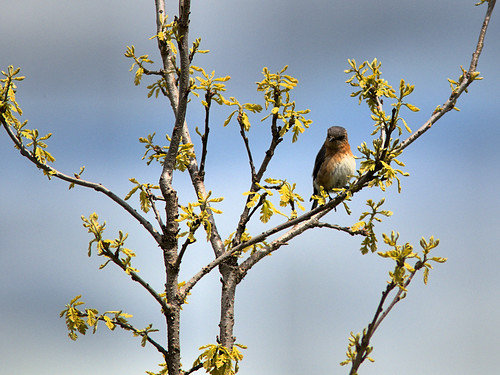
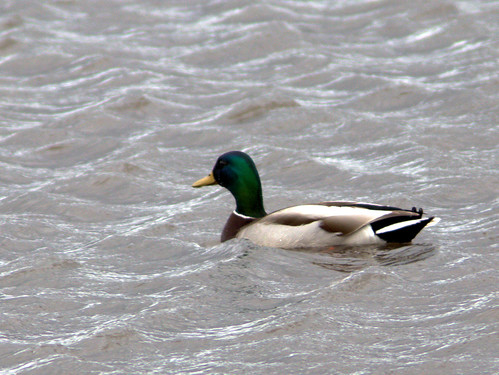
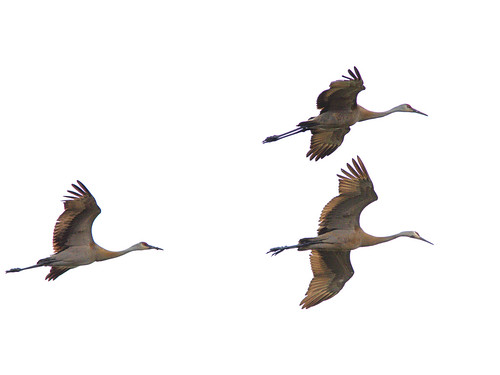
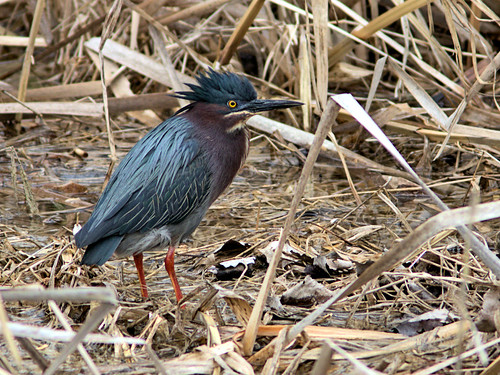
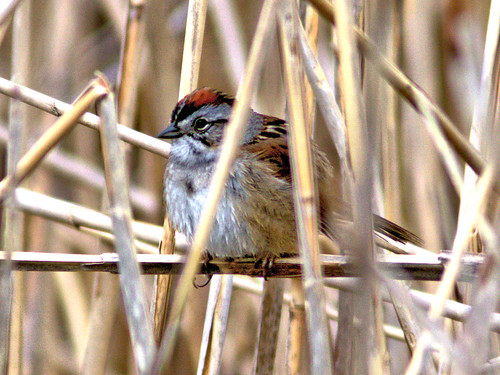
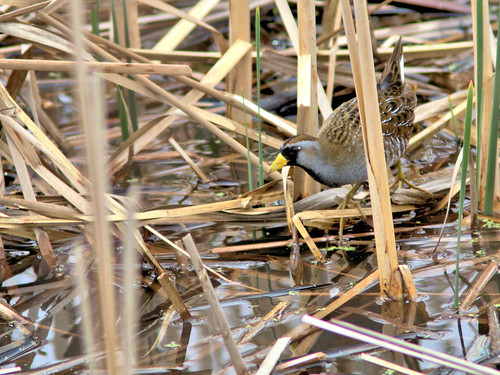
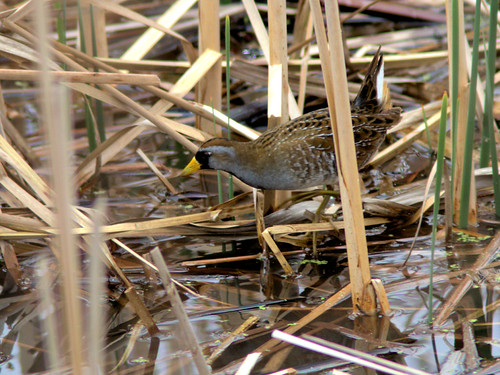
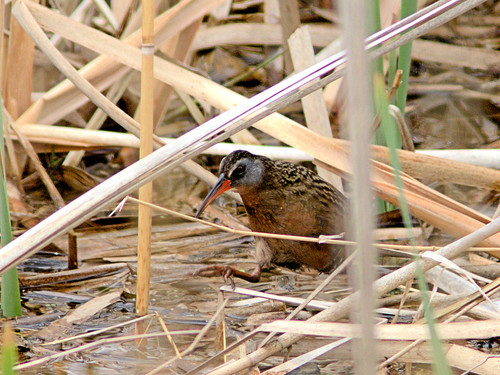
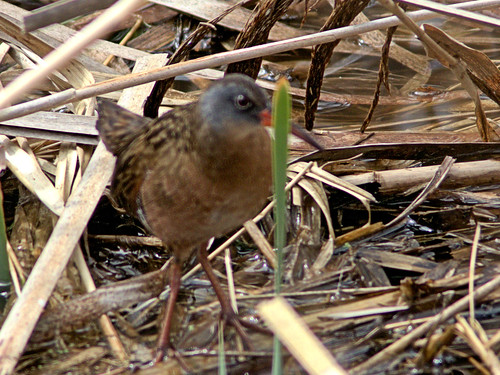
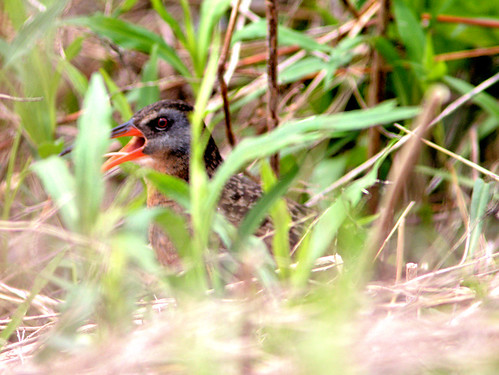
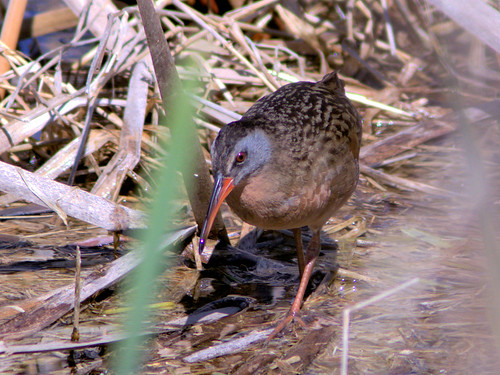
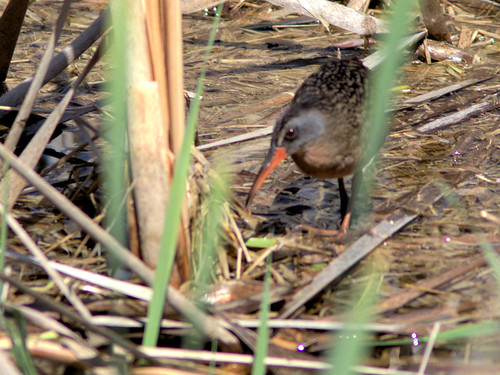
Jones Meadow Park is located only a few blocks away from our second home in NE Illinois. It is surrounded by development but is a quiet oasis with remarkably varied habitats, including manicured lawns with ornamental shrubbery, woodlands, a pond, wet meadows and marshes. This is one of my favorite photos of the area, taken in June of last year: A paved pathway winds around the south and western edges of the wetlands, and a grassy berm separates the pond from the marsh. It was my first stop, on the morning after we flew in from Florida. In this view near the entrance (taken a few days later), the berm occupies the opposite shore: The marsh had flooded up over the pathway, and attracted an American Robin in search of drowning worms: A House Finch sang from the top of a little tree: Another House Finch was joined by an (out-of-focus) Yellow-rumped Warbler in a small shrub: Song Sparrows were abundant: A female Eastern Bluebird perched near the path: A male Mallard paddled in the pond: Migrating Canada Geese flew overhead, as did three Sandhill Cranes, calling loudly: It was cold and drizzling with the threat of heavier storms, so I hurried up and along the berm with one objective in mind. I wanted to see two species of rails, the Sora and Virginia Rail. In my haste I almost overlooked a Green heron among the dried reeds: Marsh birds tend to be secretive, and they take advantage of the abundant vegetation. This Swamp Sparrow was barely visible through the dried cattails: As I walked along the berm I heard a Sora calling, but only caught a glimpse of the reclusive creature: However, to my surprise, a Virginia Rail appeared at the edge of the cattails: It briefly walked out into the open. I found it almost impossible to focus the camera because of intervening high grasses and reeds. This was the best image out of my dozen or more attempts: A second Virginia Rail called from a grassy patch at the edge of the berm: The rain picked up and I returned to the car. That might have been the end of this story, but Mary Lou and I returned 5 days later on a much nicer morning and did get better views and photos of the rail:
= = = = = = = = = = = = = = = Linking to Misty's CAMERA CRITTERS,