When I am out in the Wounded Wetlands of western Broward County, Florida, I do not have high expectations that some rare bird will suddenly brighten my day.
Actually, working a "patch" might seem boring, yet I have recorded ("officially" per eBird) 171 bird species here since I started regularly posting trip reports in October, 2009. All but a handful were also photographed on-site. A number of species were seen rarely or sometimes only once.
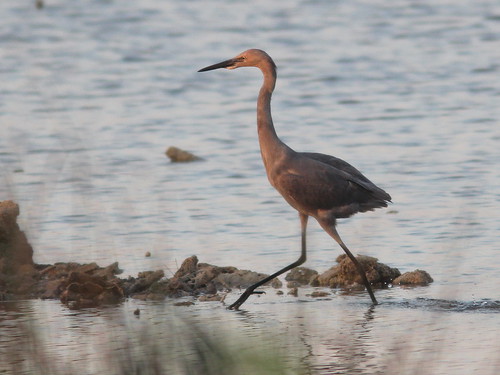
An immature Reddish Egret appeared in the spring of 2011 and remained for only two weeks. This species prefers brackish estuaries and rarely wanders inland:
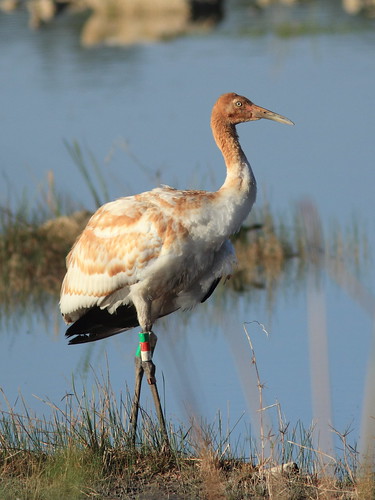
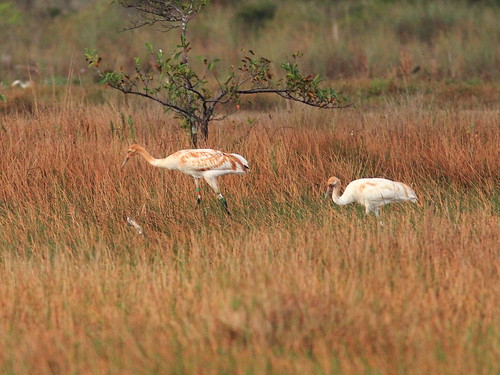
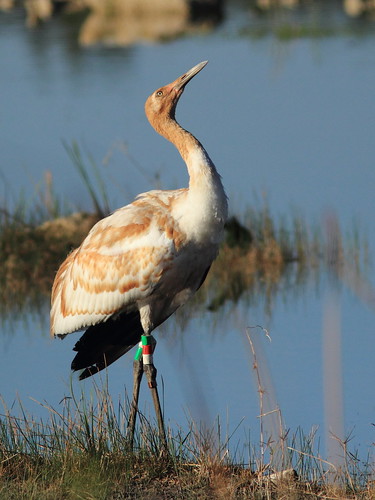
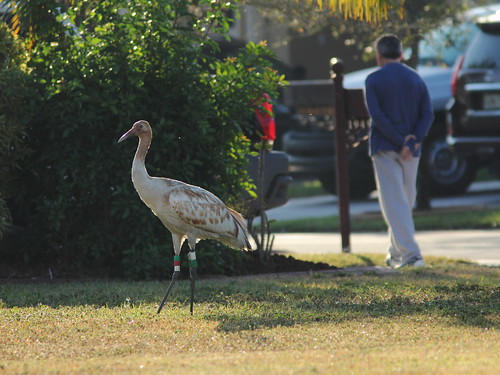
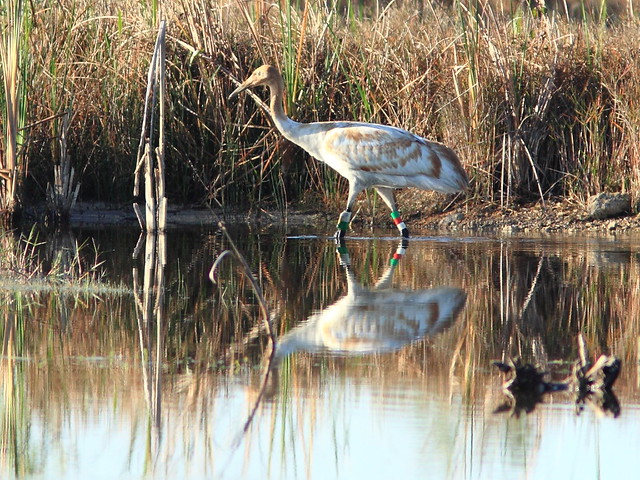
Another "one-off" species was actually represented by two captive-reared juvenile Whooping Cranes from Wisconsin which overshot their normal wintering grounds in northern Florida:
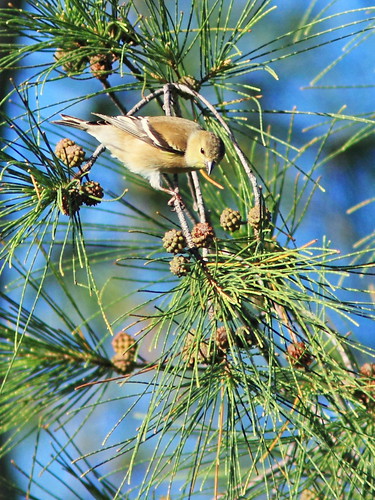
A flock of 15 American Goldfinches, a species which winters in south Florida irregularly, arrived once on December 9, 2015 and departed the same day:
To date I have submitted a total of 1,307 eBird checklists, of which 860 have been from my local patch, a hotspot officially known as the West Miramar Water Conservation Area (WCA). My eBird West Miramar WCA Life List
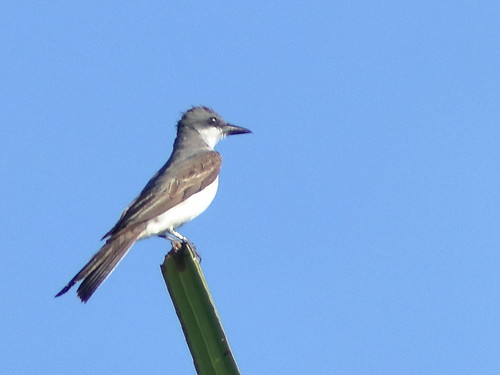
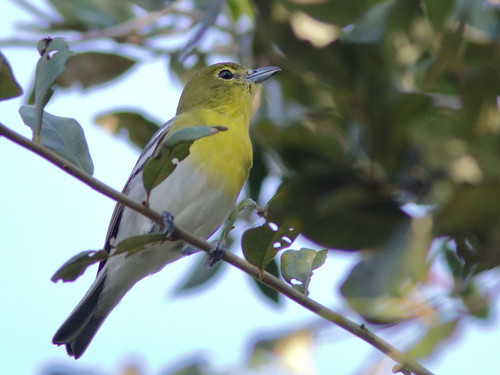
New additions to the list have decreased over time. I had seen a total of 80 species by the end of 2010, added 27 more in 2011, 13 in 2012, 14 in 2013. 8 in 2014, 15 in 2015, 6 in 2016, 3 in 2017, and only four species (Gray Kingbird, Royal Tern, Chipping Sparrow and Yellow-throated Vireo) this year to date. ADDENDUM (December 13) Only an hour after posting this I added a fifth new species at 6:30 AM, when we heard an Eastern Whip-poor-will calling just as we started our walk!
Am I succumbing to the Law of Diminishing Returns? Is the "gain not worth the pain?" Time to quit and stop wasting energy?
Gray Kingbird (August 23, 2018):
Yellow-throated Vireo (November 23, 2018):
If my walks were only about counting birds I might certainly get bored. More importantly, they are a time to observe and enjoy the beauty and mystery of nature.
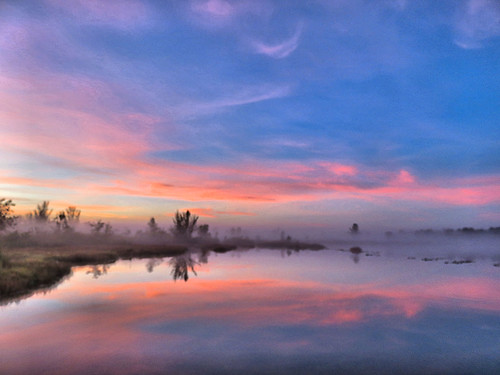
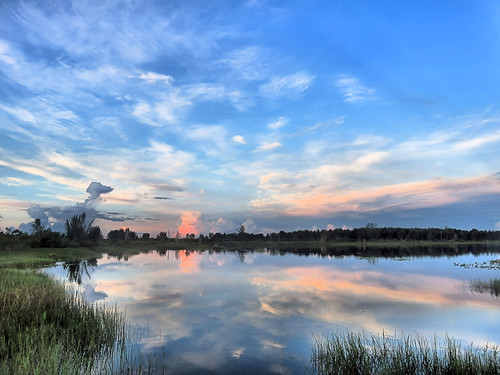
No two sunrises are alike... Pink clouds and fog on November 25, 2018:
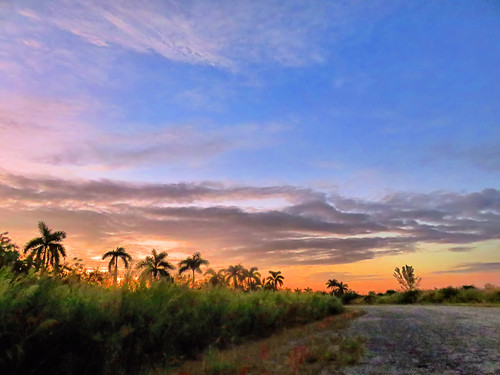
An unsettled sky a half hour before sunrise on December 5, 2018:
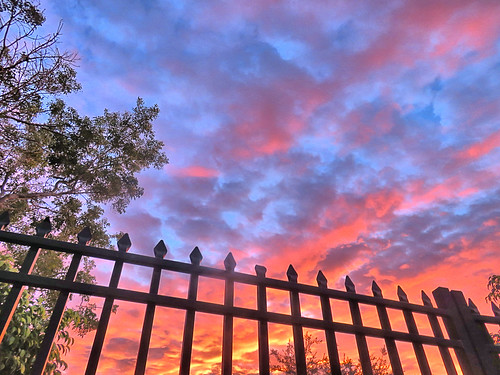
Sun rising behind the east gate to our patch (November 29, 2018):
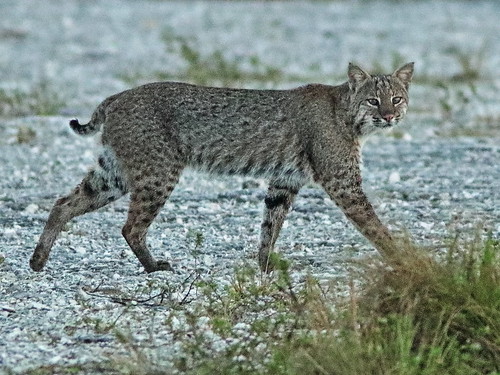
Behaviors are interesting and sometimes unexpected. There is the thrill of the sudden appearance of a Bobcat, deer or even a Coyote...
Male Bobcat on November 19, 2018:
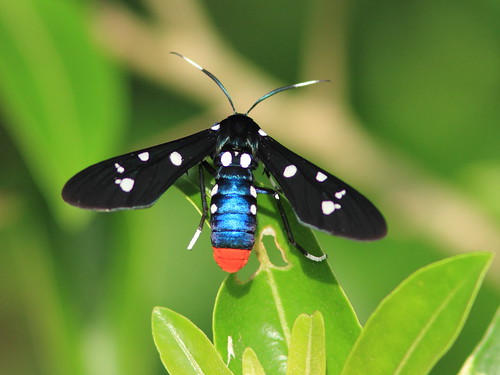
...and of finding beauty in the commonplace and the smallest of things.
Who would have known that there is a moth which resembles a wasp? Polka-Dot Wasp Moth-Syntomeida epilais:
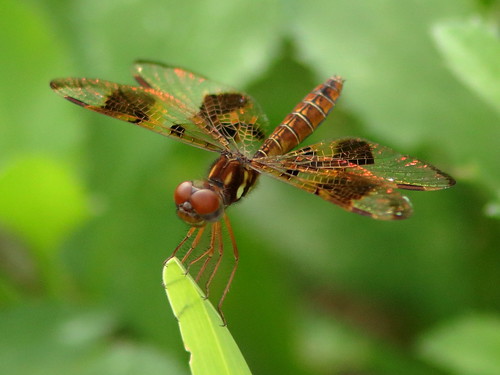
The smallest of our dragonflies also imitates a wasp, waving its wings slowly in a very menacing manner. Eastern Amberwing - Perithemis tenera:
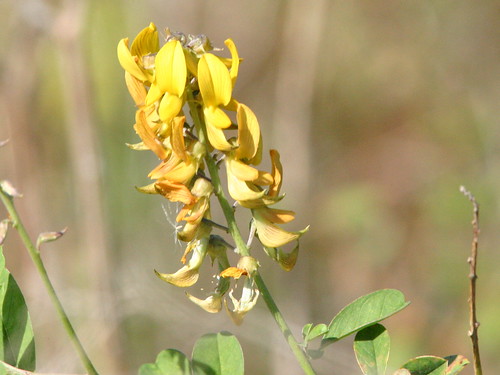
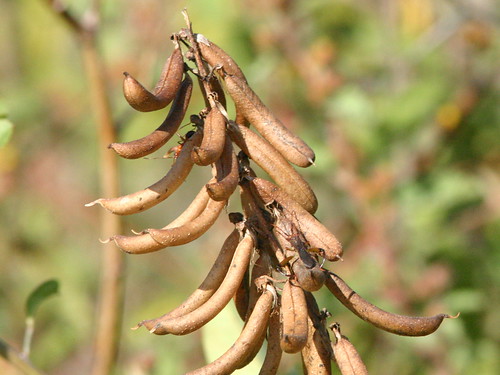
I bumped into a wild pea plant with seed pods which rattled with a sound like pebbles rolling in a paper cup. I learned that is is quite poisonous. Flowers and fruit of Smooth Rattlebox, Crotalaria pallida:
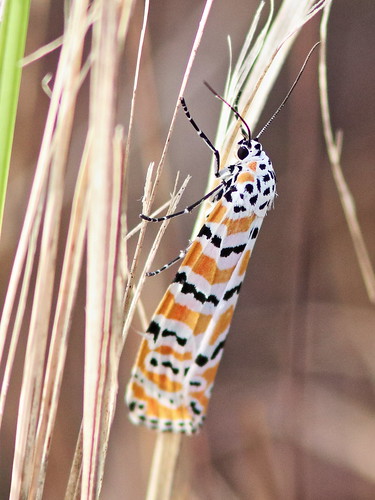
Later I found an unusually beautiful red patterned moth which requires that same plant to host its larvae, which themselves are protected by the noxious substances they ingest. Bella or Rattlebox Tiger Moth -Utetheisa bella:
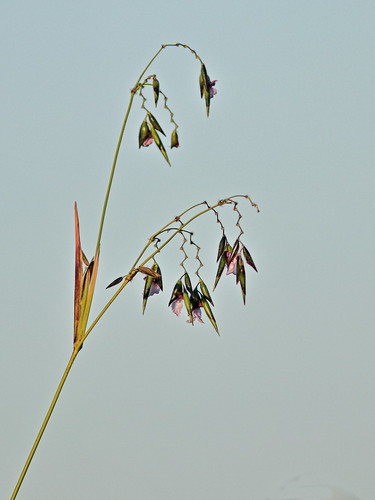
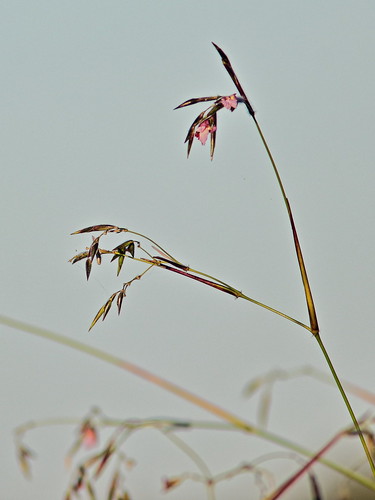
I admire the delicate beauty of the flowers of the Bent Alligator Flag, a plant related to members of the Arrowroot family: bananas, cannas and the Bird of Paradise. Their zig-zag stems reach up as high as 8 feet.
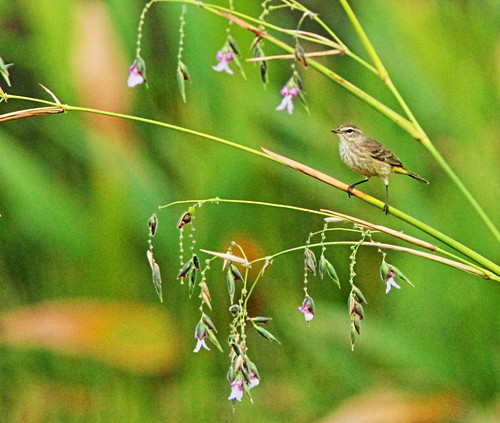
Tiny insects are lured to their blossoms and are momentarily trapped and dabbed with pollen before being released so they may cross-fertilize other flowers. The insects attract Palm Warblers:
Purple Gallinules eat the flowers and seeds:
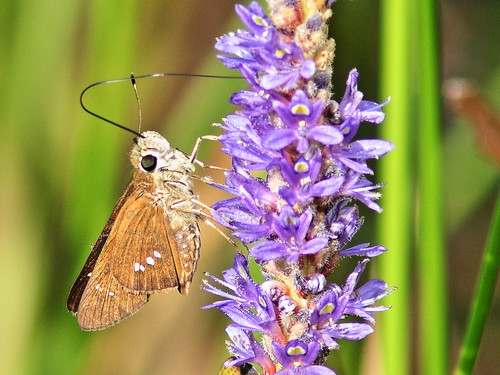
I learned that this plant serves as host to a particular butterfly species, the Brazilian Skipper, whose leaf-rolling caterpillars also inflict great damage to cultivated cannas and other members of the Arrowroot family:
= = = = = = = = = = = = = = = Linking to Misty's CAMERA CRITTERS,
On June 23, a half hour before sunrise, we walked out into the "Wounded Wetlands," a water conservation area near our home in southwestern Broward County, Florida.
Overhead, the sky was blue, but storm clouds were visible on all horizons. Like fingerprints and snowflakes, no two sunrises are the same.
Here, the sun illuminated the clouds and had not yet touched the lake, but the cloud formation took the shape of two firemen (or were they Daffy Ducks?) racing to extinguish a blaze:
I first encountered my neighbor Scott as he walked his dog in the Wounded Wetlands. He carried a camera and liked macro and landscape shots. As a retiree I can afford to spend more time out in the wild than he, but Scott is very good at finding things I have missed.
Early on, Scott discovered the heron rookery at the far end of the patch. He e-mailed me detailed instructions as to its location. It was a spot which I often walked by, but never had explored. I followed the directions and still could not find it.
He had to meet me there and point out the several Yellow-crowned Night Herons and their nests which I had been missing:
Then Scott and his daughter found the first Whooping Crane ever reported here in many years. He sent me a photo to confirm the identification and I hurried out to eventually find it accompanied by a second Whooping Crane.
(They were captive-reared and in a group released in Wisconsin to migrate to northern Florida with a group of Sandhill Cranes. One wore a radio locator which tracked them down to the southern tip of the Florida peninsula before they wandered up to our neighborhood. Amazingly, one eventually spent time in Scott's front yard!).
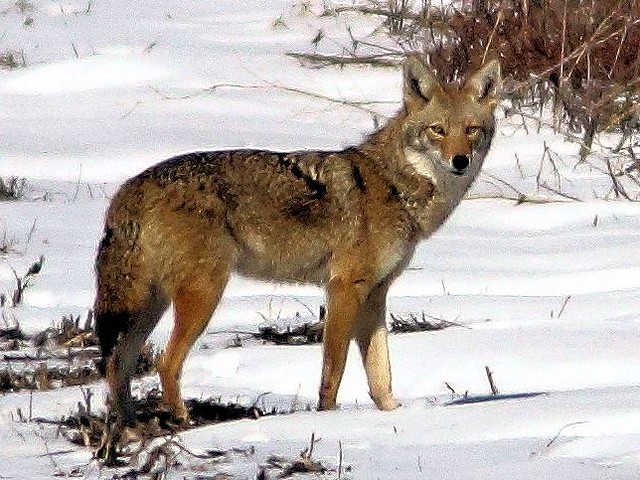
Once again, Scott has outdone me with a very rare find-- the first Coyote reported in this part of our county. He obtained great photos, but so far I have not been able to spot it on my own (Photos property of Scott McPherran and used with his permission):
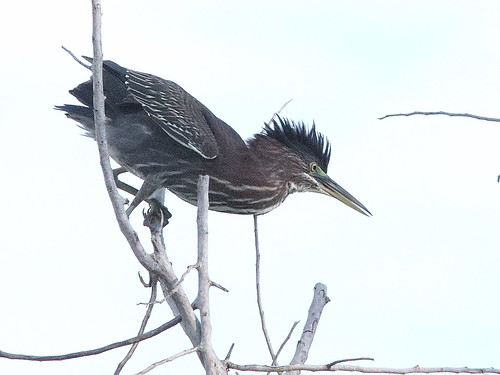
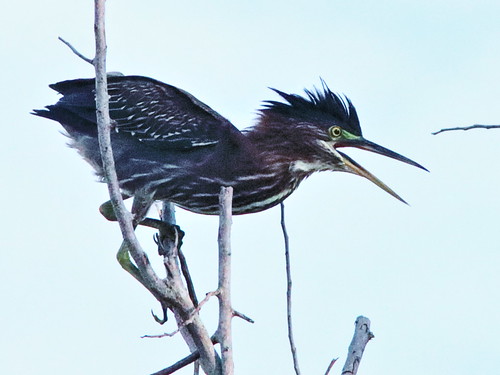
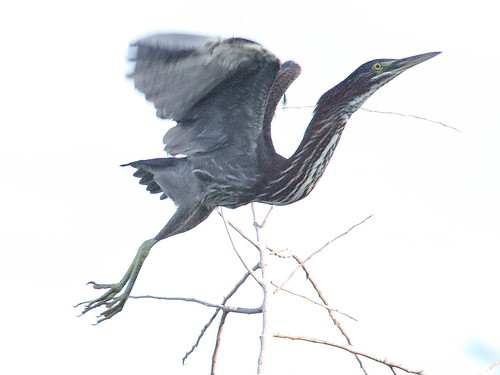
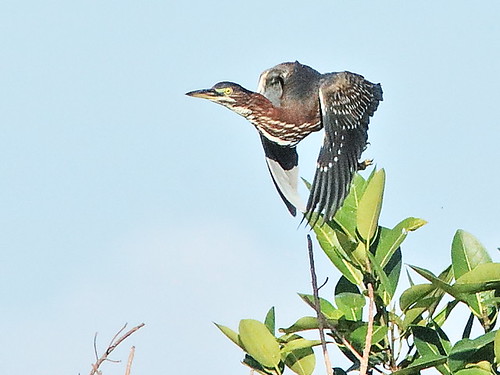
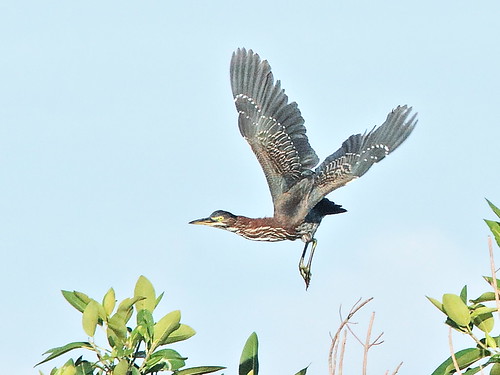
This immature Green Heron provided some dramatic poses in poor light:
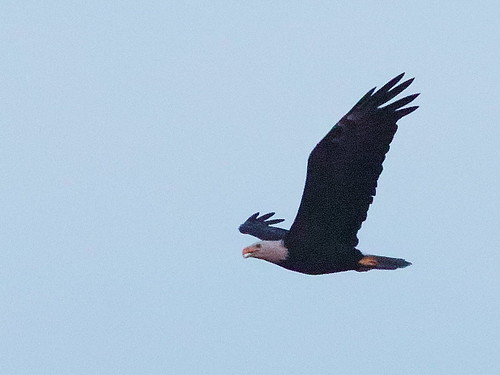
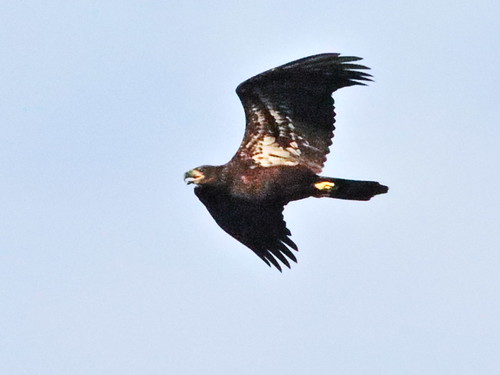
Twice this week I enjoyed seeing two Bald Eagles flying over. They are almost certainly residents from the nest about 1 1/2 miles away. The adult appeared at sunrise, while the juvenile followed about an hour later both days:
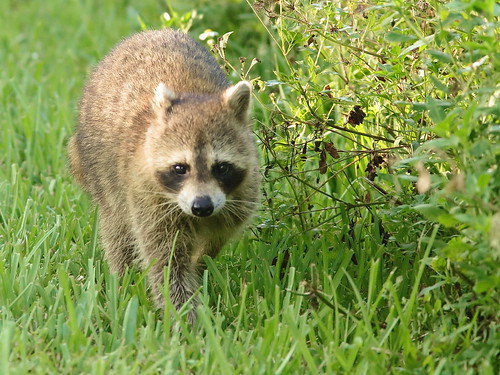
As I was photographing the juvenile eagle, a near-sighted Raccoon walked right up to me. I had to wave my arms to make him avoid me:
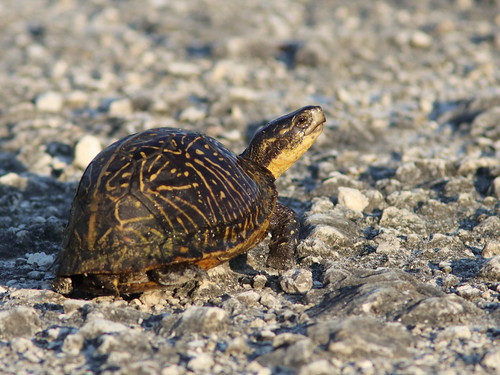
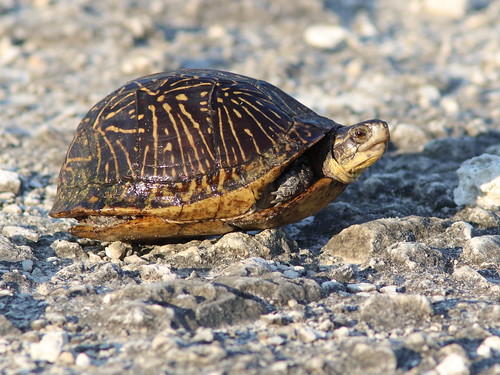
A female Florida Box Turtle ambled across the gravel track. She retracted into her shell when I approached, so I picked her up and deposited her safely on the other side of the road:
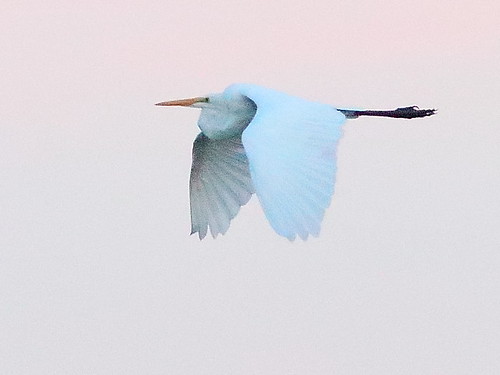
A Great Egret's plumage contrasted with the pastel sky. The pink tint suggests that dust may be blowing in from the Sahara Desert:
Later, in good light, another immature Green Heron launched from a treetop:
Its wing span is impressive:
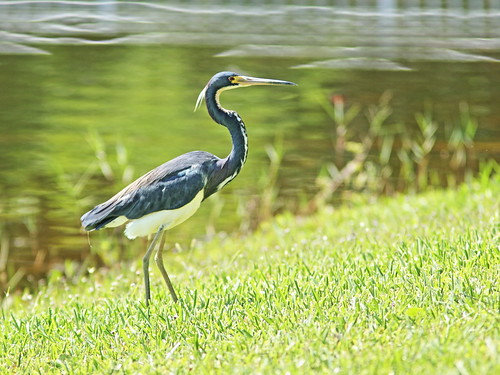
Back home, a Tricolored Heron visited our yard:
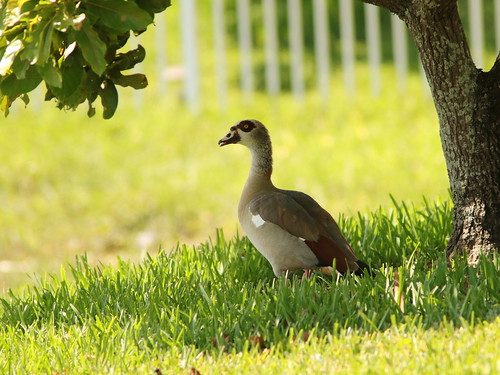
After harvesting all the mangoes we could reach, we left the highest ones for the birds, among them this Egyptian Goose resting in the shade with a neighbor's fence reflected in the background: = = = = = = = = = = = = = = = Linking to Misty's CAMERA CRITTERS,
Once again, this is a monthly reflection on past experiences, memories from three years ago. I will continue the "scavenger hunt" for photos which represent a few selected themes: Living CRITTERS of all kinds, beautiful SKIES and REFLECTIONS, as well as MACRO images and GOOD FENCES. I have met this challenge for the past 13 months in a row, so let's see how far I must travel into the month of February, 2013 to achieve my goal! We started the month of February back home in Florida, having returned from Illinois late on January 24th in order to host Mary Lou's brother and his daughter and her husband whom we had invited to stay with us before we had to run off in early January to care for our daughter's family when she broke her leg. We took our guests to Shark Valley in Everglades National Park, where this American Alligator was basking. I did not dare get close enough for a Macro: Although common throughout much of North America, American Robins visit the Florida peninsula only in winter. We see them infrequently, so they are a treat when they do appear. This one is feasting on exotic Brazilian Pepper: You may recall that on December 22, 2012, two captive-reared Whooping Crane colts overflew their migration route and appeared in our local wetlands. During our absence, the female ("Tussock" #12-13) injured her foot, became emaciated and had to be captured and transported to Wild Kingdom in Orlando for treatment and rehabilitation. The male (Cypress #12-15) was still here, flying about... ...and casting a fine reflection: Here is a brief slide show and video clip that tells more about the Whooping Cranes:
(if video does not appear in the space below, click on THIS LINK)
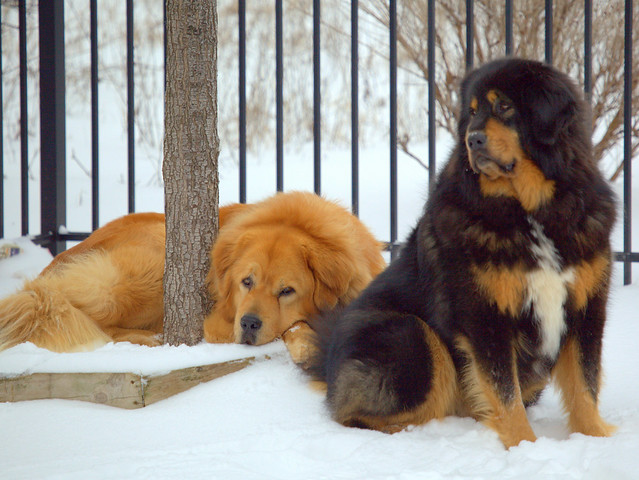
Although he had been captive-reared in Wisconsin where great pains had been taken to shield him from human contact, Cypress looked right at home in a small park just across the street from our neighbor Scott's house: Indeed, pedestrians and auto traffic seemed not to bother him a bit: This was cause for great concern as, after being left on his own, he seemed oblivious to the dangers of an urban environment. On February 10, two representatives of the Whooping Crane Eastern Partnership (WCEP) were dispatched to capture Cypress. They located him with telemetry and did a very professional job of safely retrieving the crane. He was malnourished, but soon recovered and was relocated to a ranch in the Lake Okeechobee area with others of his species. Shrouded in a white sheet and tempting him with grapes, Jeannette led the crane into an open area where a snare had been placed: The ruse worked, and the crane was trapped by the leg: Ricardo rushed to immobilize the great bird: He quickly placed a sock over the crane's head, which immediately quieted him (Photo property of Scott McPherran, used with permission): Within minutes, safely cradled in Jeannette's arms, Cypress was on his way to Orlando. I wish the story had a happy ending, but both cranes subsequently perished out in the wild during the harsh winter (Photo property of Scott McPherran, used with permission): The very next day we flew back to Illinois to permit our son-in-law's parents to return home after taking their turn at caring for the household. It was snowy and cold, and the two Tibetan Mastiffs just loved it: Another canid, this a Coyote, stopped to watch us as we looked for winter sparrows in a cornfield: Under gray skies, a bank of trees acted as a windbreak for the cropland: Among the cornstalk stubs we found American Tree Sparrows... ...Lapland Longspurs... ...and Horned Larks: In our daughter's back yard, we saw another robin, this time fluffed up against the cold and falling snow... ...and a hardy "Snowbird," a Dark-eyed Junco: I had to really search for a shot that could legitimately qualify as a MACRO. This is the only part of a Tricolored Heron that I could fit into the viewfinder as it roosted on the railing of the boardwalk at Everglades national Park: I got even closer to this Gray Squirrel as it refused to climb any higher in the tree in our front yard until it finished eating the acorn: In Illinois later in the month the snow had cleared. This is a better photo of the fence in our daughter's back yard. Behind it is a managed tall grass prairie which is very attractive to wildlife: Two Black-capped Chickadees race each other to the feeders: This old barn is one of my favored subjects:
Linking to SKYWATCH FRIDAY by Yogi, Sylvia and Sandy Linking to WEEKEND REFLECTIONS by James Linking to BirdD'Pot by Anni Linking to Wild Bird Wednesday by Stewart Linking to I Heart Macro by Laura ________________________________________________ Please visit the links to all these memes to see some excellent photos on display ________________________________________________