Showing posts with label herons. Show all posts

Thursday, November 4, 2021

Crops & Clips: Flashback to November , 2018

As I do each month, I enjoyed looking back over my archived photos, taken three years previously, to remember how things were then and maybe get some idea of what to expect this year. I processed 494 photos in November, 2018. As usual, I searched for images which reflected favorite memes: critters of all kinds (especially birds), skies and clouds, reflections, flowers and fences, as well as scenes which speak for themselves. We spent the entire year at home in south Florida. 

On November 1, our walk in the Wounded Wetlands rewarded us with an Eastern Phoebe...

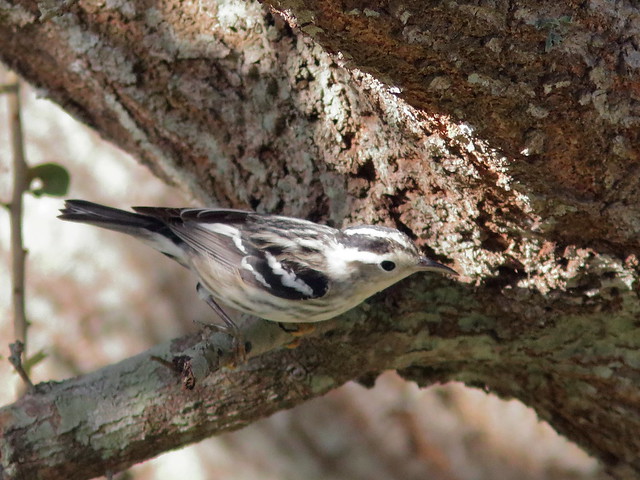
...an acrobatic female Black-and-White Warbler:

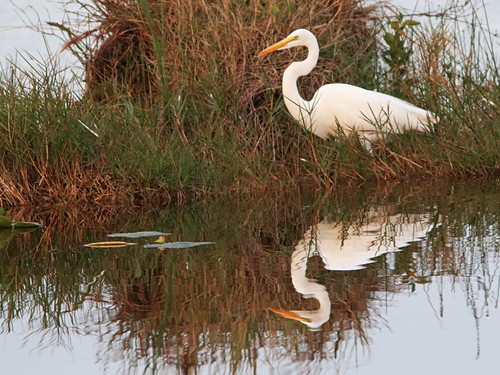
The next morning, several long-legged waders foraged in a slough created by off-road vehicles next to the wet prairie. Heavy rains had caused the lake to spill over, trapping fish in the surrounding area. They included a Little Blue and Tricolored Heron as well as a Great Egret:

A Snowy Egret and Wood Stork were out of the frame:

This is a nice size comparison between the egret and the Tricolored Heron:

The egret flew up to balance on some flimsy branches:

The heron rookery was about to be demolished. It harbored a secretive Black-crowned Night-Heron...

...and a drab Yellow-crowned Night-Heron:

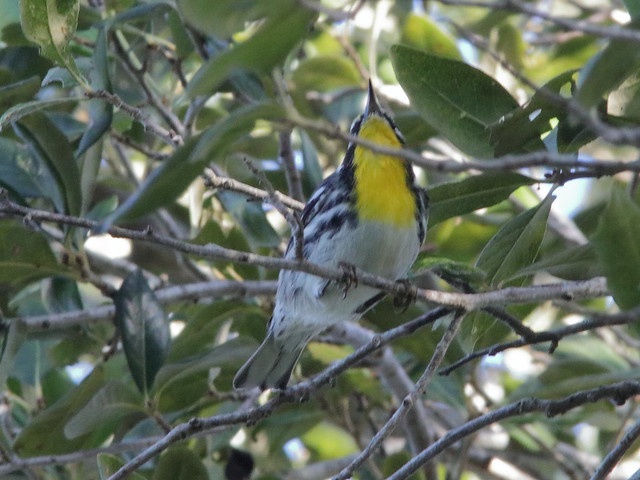
Before the end of the first week I saw a Yellow-throated Warbler...

...a female Blue Grosbeak in winter plumage...

...a male Northern Cardinal who had just completed molting into fresh plumage...

...a devoted pair of Black Vultures which had nested nearby for several years...

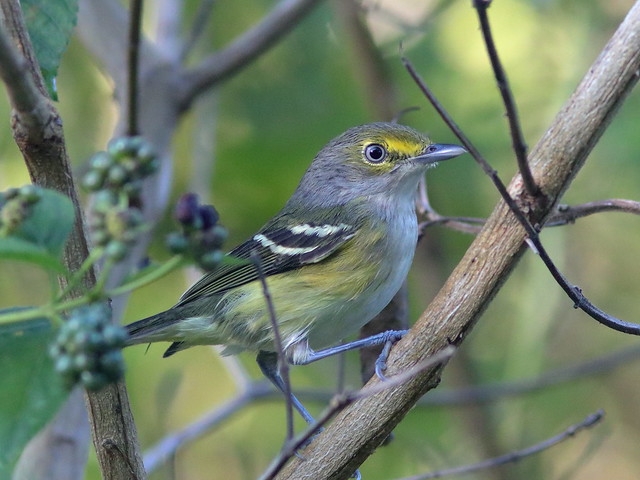
...a White-eyed Vireo...
...and Florida's State Butterfly, a Zebra heliconian on Firebush (Hamelia patens):

Although I should have been satisfied with such an auspicious start, other sightings that month included a Pileated Woodpecker...

...a female Red-bellied Woodpecker...

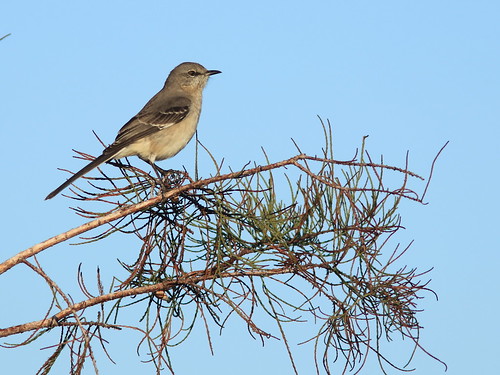
...Northern Mockingbird...

...female Painted Bunting...

...Gulf Fritillary on Lantana...

...Prairie Warbler...

...Blue-headed Vireo...

...White Ibises...

...immature Red-shouldered Hawk...

...and a male Scarlet Skimmer (Crocothemis servilia):

A male Bobcat strolled nonchalantly across the gravel track:

On November 24 the full Beaver Moon set over the lake:

The next morning it was quite high as the fog lifted:

There were buttermilk skies...

...brilliant reflections...

and fiery sunrises:

However, all was not good. The heron rookery was destroyed. This was the view of the rookery on November 20:

Heavy machinery was poised on a floating platform:

Two days later, hurricane debris had been removed and most of the shoreline vegetation which had hosted the heron nests had been clear-cut: 

On November 28, a lone night-heron rested on a broken branch near the missing tree which had contained one of eight nests that produced numerous young birds earlier that year:

This photo, taken at a pasture next to Chapel Trail Nature Preserve, is a somber reminder that now, three years later, the Longhorn cattle and Cattle Egrets are gone and the grassland is being paved over for a parking lot to store boats and RVs:

= = =  = = =  = = = =  = = = = =

Linking to:


Fences Around the World

Nature Thursday

Skywatch Friday

Weekend Reflections

Saturday's Critters

BirdD'Pot

Camera Critters

All Seasons

Wordless Wednesday (on Tuesday)

Natasha Musing

Our World Tuesday

________________________________________________

Please visit the links to all these posts to see some excellent photos on display
________________________________________________
Thursday, April 20, 2017

Wood Storks return south to breed

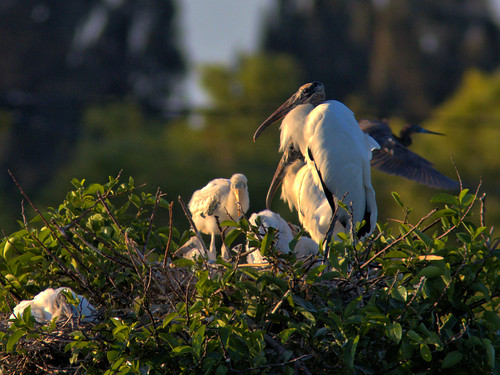
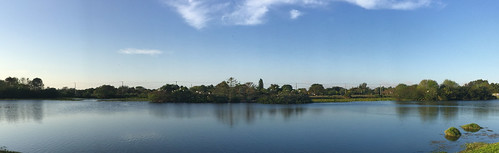
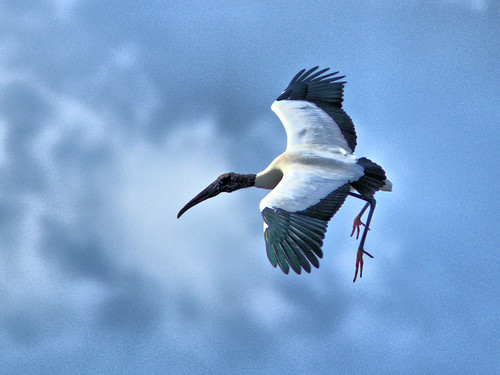
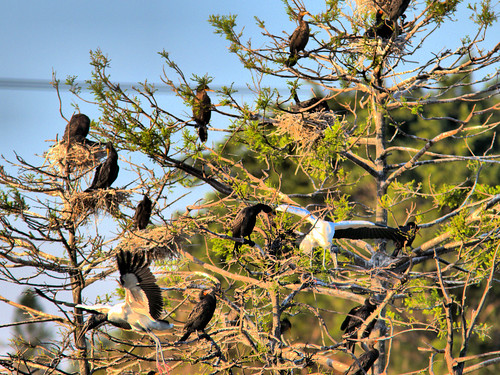
On a lake only a 20 minute drive from our south Florida home, an unexpected sight unfolded before our eyes. First a few and then scores of Wood Storks descended upon a rookery. They displaced some of the former resident egrets, other herons, cormorants and Anhingas.

Orange Road Rookery PANO


Wood Stork in flight 07-20170220


Wood Stork 05-20170408


Storks and cormorants 05-20170407


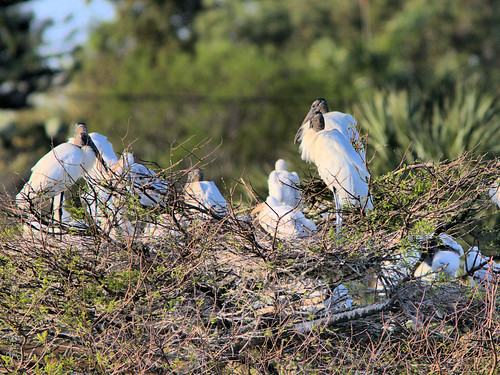
Eventually, 50 to 60 storks occupied 20 or more nests and my estimate is that they have produced over 30 young. 


Wood Storks and nestlings 09-20170408


Wood Storks and nestlings 01-20170408


According to Cornell Lab of Ornithology eBird reports, this was a milestone, the first time in over 10 years that more than a few had been seen together within miles of this location. 


When we moved to south Florida from New Mexico in 2004, Wood Storks were common breeders and visitors to our back yard lake. In my October, 2014 blog, "Wood Storks: Missing but not Endangered" I discussed the reason for the sharp decline in the Wood Stork population in south Florida: 


" Drainage, filling of sloughs and development have altered the natural cycle, and aberrant rainfall patterns have complicated this balance. Summer drought or early onset of the wet season produce adverse conditions. Prolonged drought kills off the fish and their populations may take more than a year to recover even if water conditions are favorable. The 2012 wet season had much greater rainfall than normal, which was very favorable, but heavy rains during late winter reversed the drying process and dispersed prey, accounting for their failure to produce young during 2013." 


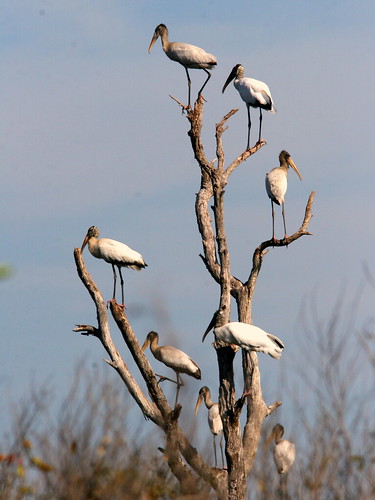
The post also contains this photo, taken in 2010, of juvenile Wood Storks in our local wetlands:


Stork Tree 20100118


In a 2012 update to an earlier blog, "Struggling Storks" (October 5, 2010)  I pointed out: 


"Although the number of Wood Stork nests outside of South Florida have increased from 1817 in the 1970s to 5491 in the 2000s, the number of nests in South Florida have not recovered, ranging from from 2406 to 2367 over the same period. Nationally the percentage of nests at Corkscrew Swamp declined from 34-37%  to only 8% of the US total. There has been total nesting failure at Corkscrew since 2010."


Despite the continuous decline and virtual disappearance of breeding Wood Storks in south Florida, in 2016 the US Fish and Wildlife Serve proceeded to remove the Wood Stork from the list of Endangered Species.


Thanks to more favorable weather conditions this past year (dryer in late summer which produced lower water levels), the local newcomers seem to be finding enough food for their youngsters. Tactile feeders, the storks depend upon lower water levels to concentrate their prey and shallow enough to allow them to keep their nostrils above the surface.


VIDEO (01:24): Wood Stork foraging in my back yard. If video fails to load, visit THIS VIMEO LINK


Wood Stork foraging from Ken Schneider on Vimeo.

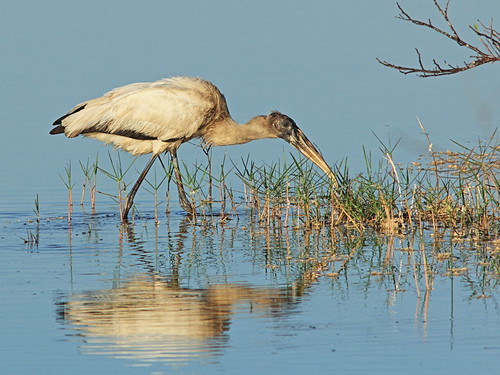
This immature Wood Stork has a light bill and its head is not yet completely bald:

Wood Stork immature 3-20150122


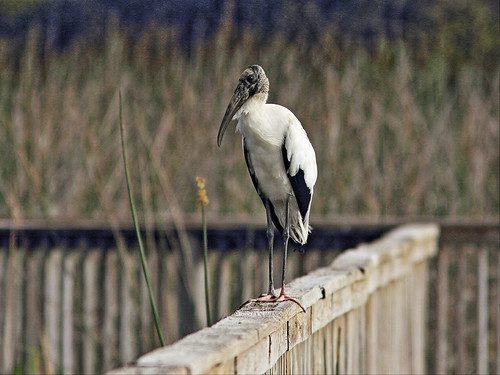
An adult stork rests along the boardwalk at the local Library wetlands:


Wood Stork 20150203


= = =  = = =  = = = =  = = = = =

Linking to Misty's  CAMERA CRITTERS,

Linking to Eileen's SATURDAY'S CRITTERS,

Linking to GOOD FENCES by Gosia

Linking to SKYWATCH FRIDAY by Yogi, Sylvia and Sandy

Linking to WEEKEND REFLECTIONS by James

Linking to BirdD'Pot by Anni

Linking to Wild Bird Wednesday by Stewart

Linking to Wordless Wednesday (on Tuesday) by NC Sue

Linking to ALL SEASONS by Jesh

________________________________________________

Please visit the links to all these memes to see some excellent photos on display

________________________________________________
Thursday, December 8, 2016

Birding under a mirrored sunrise

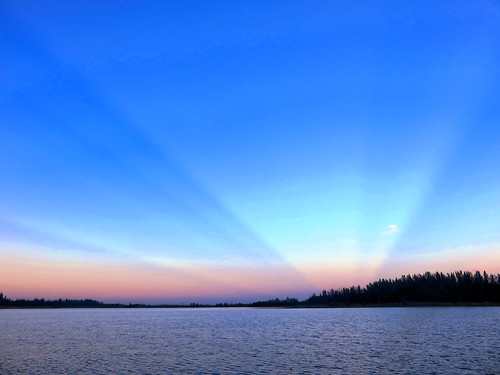
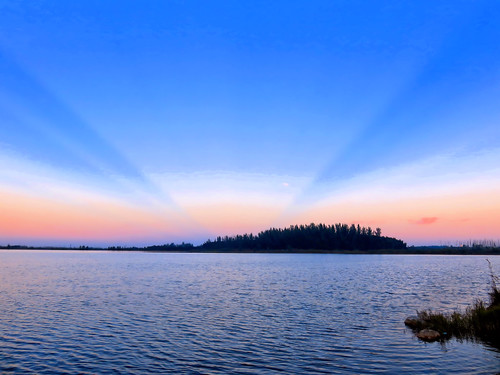
One  morning in late November, about 20 minutes before sunrise, the sky seemed to be setting up very nicely to produce a mirrored sunrise on the western horizon. I quickened my pace as I walked the half mile to the lake in the mitigation preserve. 

Almost all the ingredients were present: heavy thunderstorms to the the east over the Bahamas to break up the sun's light into rays; a clear sky overhead to transmit the rays; and a clear western horizon with minimal ground haze.

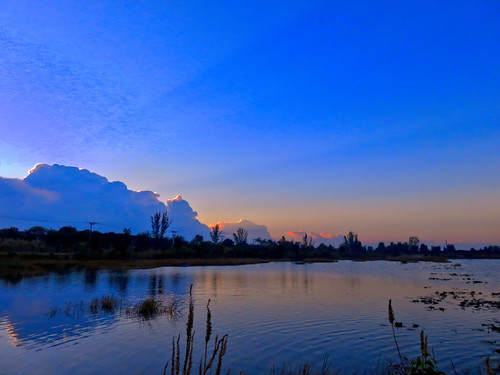
To the southeast, sunlight was just creeping up over the cloud tops:

Actual sunrise in east HDR 20161127

The only missing factors were humidity and Saharan dust to enhance the rays and provide color. Sure enough, a virtual sunrise was produced, strongest about 5 minutes after sunrise. 


Because of the line of clouds to the east, the light had not yet touched the opposite horizon, so the lake and the pine bank were still in shadow:

 Mirrored Sunrise HDR 20161127

Mirrored Sunrise HDR 02-20161127

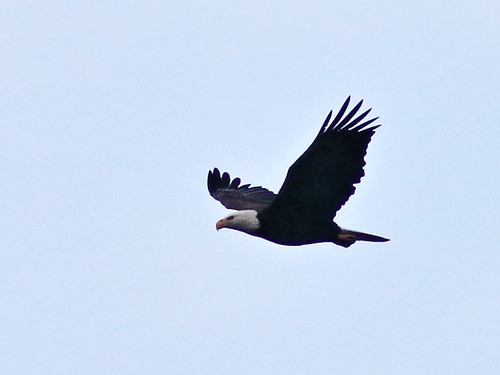
A few minutes later a Bald Eagle flew over from the direction of their nest site about 1 1/2 miles NW of our location:

Bald Eagle 20161126

A Northern Mockingbird kept watch from from a Pond Cypress::

Northern Mockingbird 20161127

A Great Egret foraged in the warm morning light:

Great Egret at first light 03-20161125

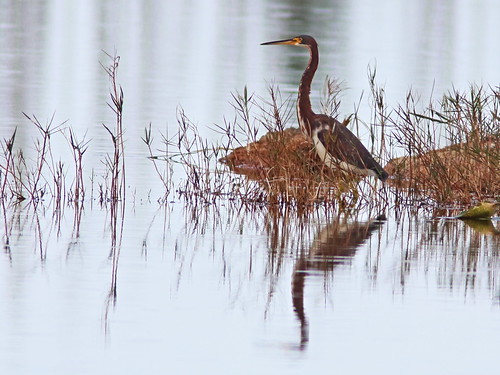
This immature Tricolored Heron cast a nice reflection:

 Tricolored Heron 20161125

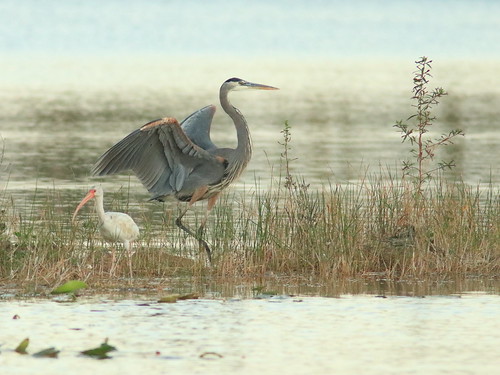
Later that week a Great Blue Heron flew in about 5 minutes after sunrise. Light was poor but I was very pleased with the soft image of the heron as it settled down with a White Ibis. Click on the photo for a larger view:

Great Blue Heron and White Ibis 20161130

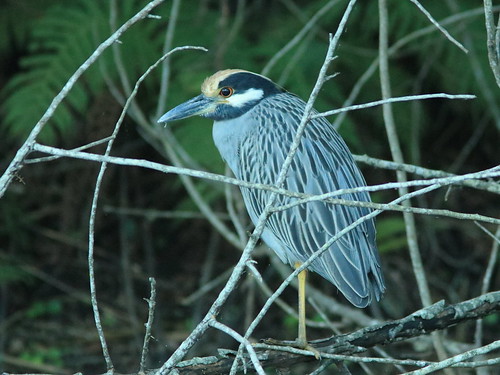
I found only one Yellow-crowned Night-Heron in the rookery:

Yellow-crowned Night-Heron 20161130

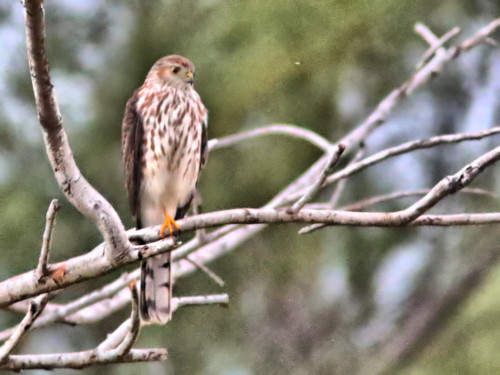
A Sharp-shinned Hawk posed on a dead tree along the path:

Sharp-shinned Hawk 01-20161125

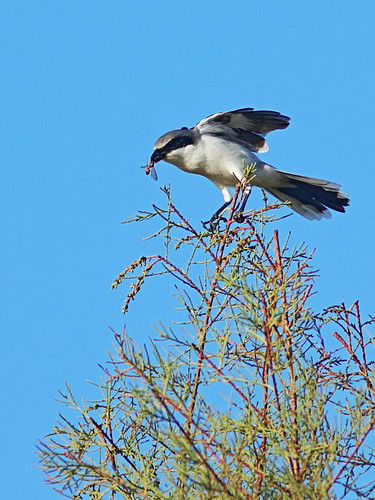
A Loggerhead Shrike caught a wasp and carried it back to its perch atop a Pond Cypress:

Loggerhead Shrike with waasp 20161130

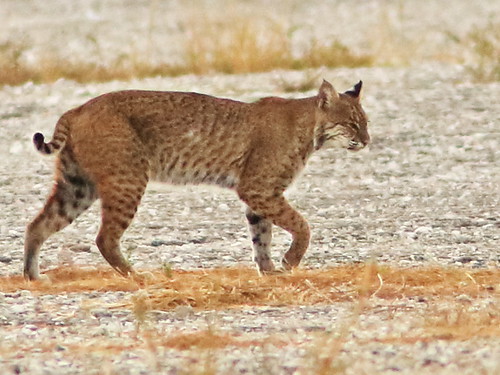
On the way out at 8:00 AM I was surprised to see a Bobcat cross the gravel road not too far away. It never looked towards me:

 Bobcat crop 01-20161123

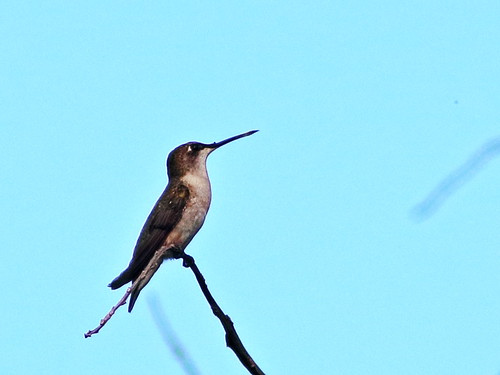
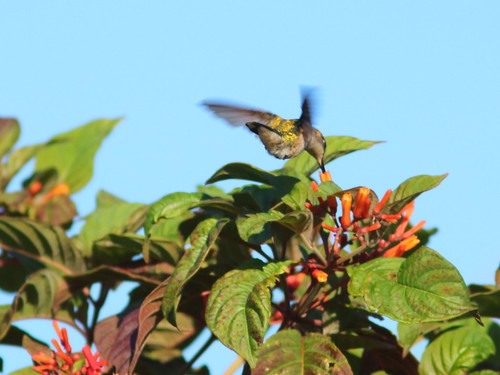
A female Ruby-throated Hummingbird guarded her favorite patch of Firebush (Hamelia patens):

Ruby-throated hummingbird 20161125

She favors the fresh orange-yellow tubular flowers over the older red ones in the clusters:

Ruby-throated Hummingbird 20161116

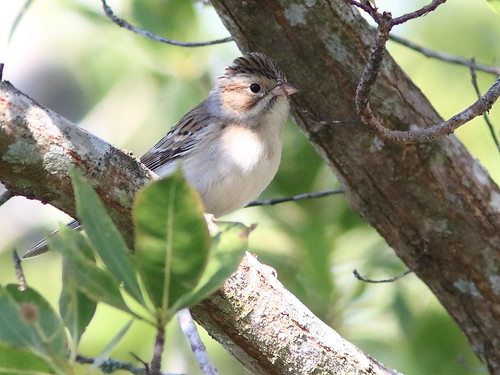
A couple of unusual bird species visited the patch. For the first time in the ten years I have patrolled the area, I sighted a single Clay-colored Sparrow. I got a bad shot but was astounded to see it (or another of its species) a few minutes later as I walked home. It was on a neighbor's lawn and flew up into a small tree just long enough for me to capture its image:

Clay-colored Sparrow 02-20161117

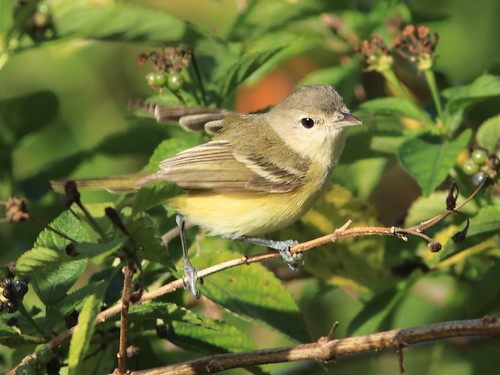
A Bell's Vireo, recorded only a few times in our county, has visited the same small area of fruiting Lantana and Brazilian Pepper four out of the past winter seasons. I have guided birders into the area several times each year and they usually have not been disappointed in their quest:

Bell's Vireo 02-20161130

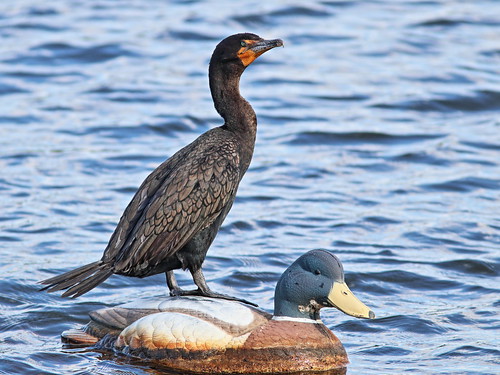
Back home, a Double-crested Cormorant rested on the decoy which supports the intake of our lawn sprinkler system:

Double-crested Cormorant 2-20161127

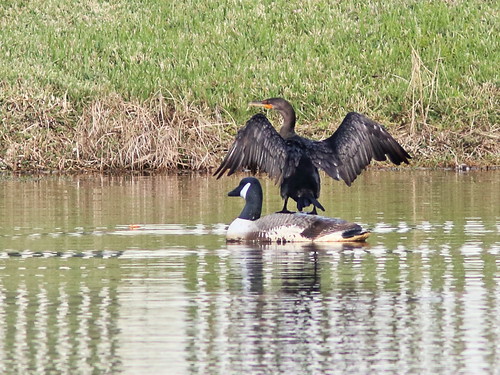
Across the lake, a second cormorant stood on a Canada Goose decoy. The owner's fence is reflected in the water:

Double-crested Cormorant 3-20161127

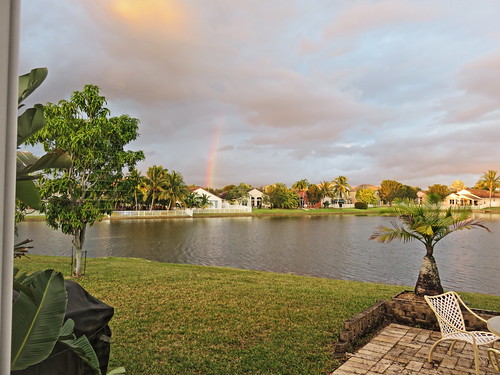
That same fence can be seen in this photo of a rainbow following a brief shower:
Rainbow from back patio 20161123


= = =  = = =  = = = =  = = = = =

Linking to Misty's  CAMERA CRITTERS,

Linking to Eileen's SATURDAY'S CRITTERS,

Linking to GOOD FENCES by Gosia

Linking to SKYWATCH FRIDAY by Yogi, Sylvia and Sandy

Linking to WEEKEND REFLECTIONS by James

Linking to BirdD'Pot by Anni

Linking to Wild Bird Wednesday by Stewart

Linking to Today's Flowers Friday by Denise

Linking to Wordless Wednesday (on Tuesday) by NC Sue
________________________________________________
Please visit the links to all these memes to see some excellent photos on display

________________________________________________