Showing posts with label Clay-colored Sparrow. Show all posts

Thursday, June 10, 2021

Listing bird species in the Wounded Wetlands

My list of bird species seen in our local south Florida birding patch (West Miramar Water Conservation Area aka the Wounded Wetlands) had reached 182 at the end of 2020. Over the years the productivity of the patch has followed the Law of Diminishing Returns. I began keeping my sightings records in eBird in 2009, when my yearly total for this location included 47 different species. 

The year 2010 began with a flourish, adding 6 new species on January 10, including my first Short-tailed Hawk. It was this light morph. Its tail looks red due to refraction of sunlight:

The year 2010 finally yielded 33 new species, which increased the patch's total output to 80 species, about 70% of the prior year's productivity. The pattern continued during the next 5 years (2011-2015), with new species numbering 27, 13, 14, 15 and 9, during which time the productivity rate gradually decreased to 49% (averaging about 10% per year) despite an increase in my total to 158 species.

Grasshopper Sparrow, February 2, 2011

Each of the next five years (2016-2020) added only single-digit new species counts, bringing my total to 182 with an average productivity rate of 13% (pitifully, only 2.6% annually).  

Clay-colored Sparrow, November 17, 2016:

Despite the pandemic, I added five new birds in 2020. Indeed, it was liberating to walk mask-less in the Wounded Wetlands. 

My highlight new species in 2020 was a Yellow Warbler (actually there were two), my only Florida sighting of this species, on August 18:

The Law of Diminishing Returns was working against me when 4 Semipalmated Sandpipers appeared at the edge of the lake on May 24, 2021. This species can be difficult to distinguish from the Western Sandpiper. 

Over the years I have seen small sandpipers, but never well enough to distinguish their species unless they had the yellow legs of a Least Sandpiper, another member of the Calidris genus. 

Yet I assumed that I must have reported the species earlier. Nope, it was always entered as a Semipalmated/Western Sandpiper, not "countable" by eBird. I had backed into a new species! 

Semipalmated Sandpiper #183 in the Wounded Wetlands, foraging in very early morning light. Note the webbing which covers only the base of its toes, hence its name:
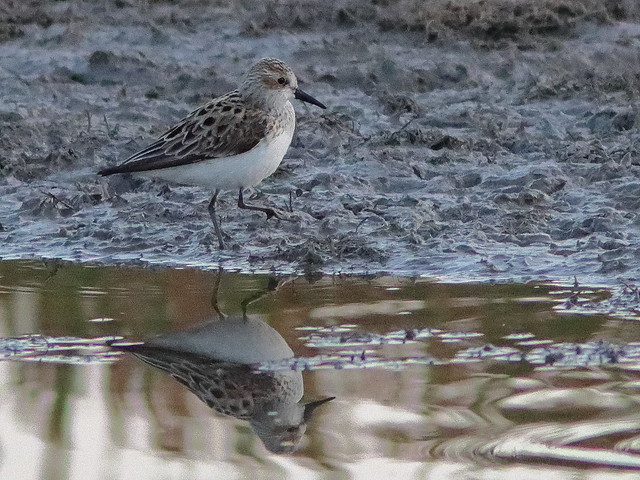


Here are Least and Semipalmated Sandpipers in much better light, feeding in a pond near our second home in Illinois, July 17, 2012. The Least Sandpiper displays its yellow legs:

Diminishing returns indeed. So far this year my addition of one species has raised my total count for this patch by only 0.54%. 

As my musing maysuggest, I have not been out in the field very often this past week.  Avian highlights were a Pileated Woodpecker...


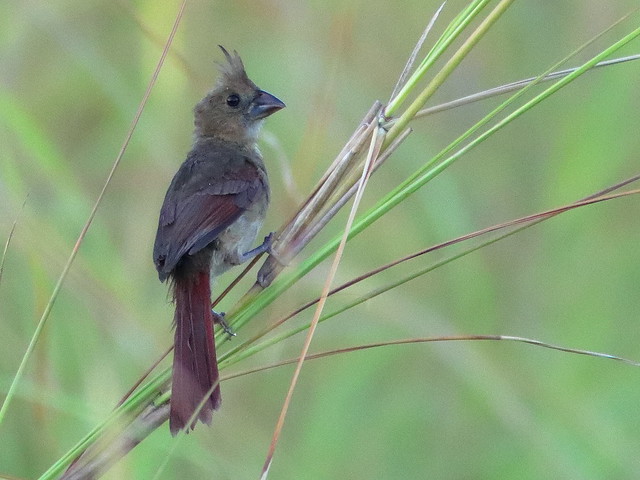
...and a juvenile female Northern Cardinal:


A young Raccoon silently watched me from behind a tree trunk:

In the lake, Longnose Gar:

The pilot of a motorized parachute was checking his phone:

Before sunrise on May 30, Jupiter and Saturn were lined up with the Moon in Aquarius (iPhone photo):

Hand-held DSLR photo of Jupiter and three of its moons, a bit jittery:

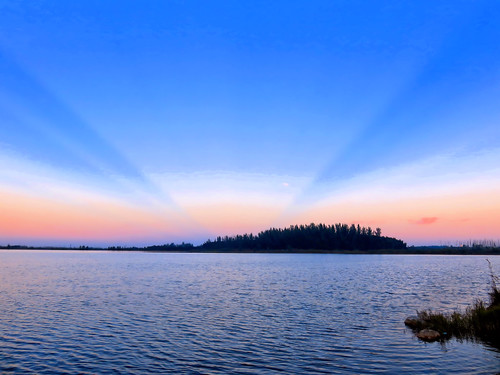
Storm clouds to the east  broke up the rays of the rising sun...

...which reflected on the smoke from several wildfires and converged on the western horizon:

= = =  = = =  = = = =  = = = = =

Linking to:


Skywatch Friday

Weekend Reflections

Saturday's Critters

BirdD'Pot

Camera Critters

All Seasons

Wordless Wednesday (on Tuesday)

Natasha Musing

Our World Tuesday

________________________________________________

Please visit the links to all these posts to see some excellent photos on display
________________________________________________
Thursday, December 8, 2016

Birding under a mirrored sunrise

One  morning in late November, about 20 minutes before sunrise, the sky seemed to be setting up very nicely to produce a mirrored sunrise on the western horizon. I quickened my pace as I walked the half mile to the lake in the mitigation preserve. 

Almost all the ingredients were present: heavy thunderstorms to the the east over the Bahamas to break up the sun's light into rays; a clear sky overhead to transmit the rays; and a clear western horizon with minimal ground haze.

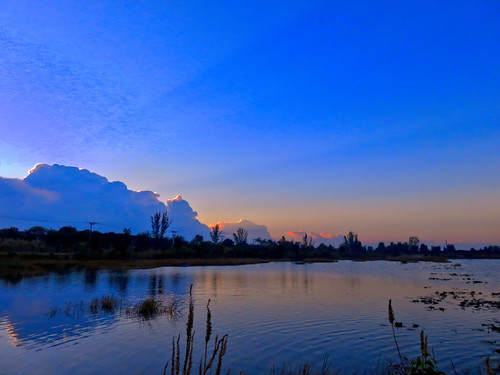
To the southeast, sunlight was just creeping up over the cloud tops:

Actual sunrise in east HDR 20161127

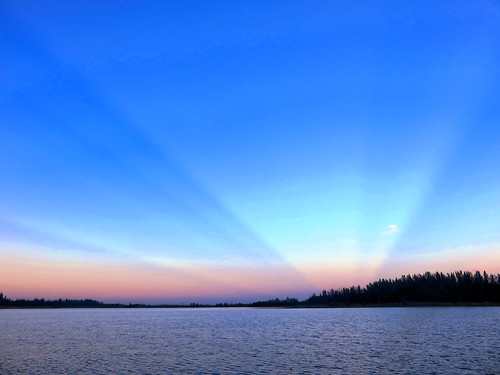
The only missing factors were humidity and Saharan dust to enhance the rays and provide color. Sure enough, a virtual sunrise was produced, strongest about 5 minutes after sunrise. 


Because of the line of clouds to the east, the light had not yet touched the opposite horizon, so the lake and the pine bank were still in shadow:

 Mirrored Sunrise HDR 20161127

Mirrored Sunrise HDR 02-20161127

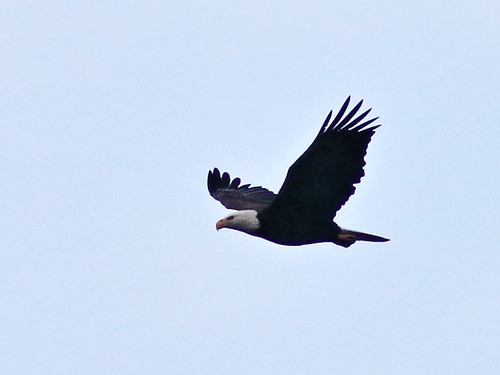
A few minutes later a Bald Eagle flew over from the direction of their nest site about 1 1/2 miles NW of our location:

Bald Eagle 20161126

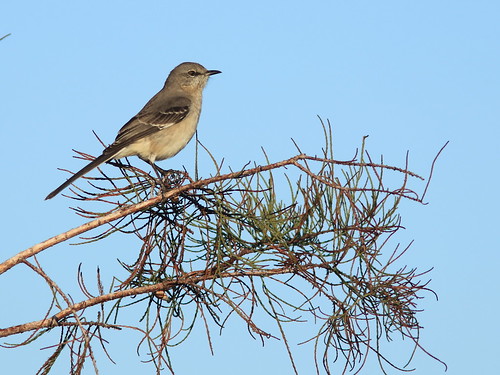
A Northern Mockingbird kept watch from from a Pond Cypress::

Northern Mockingbird 20161127

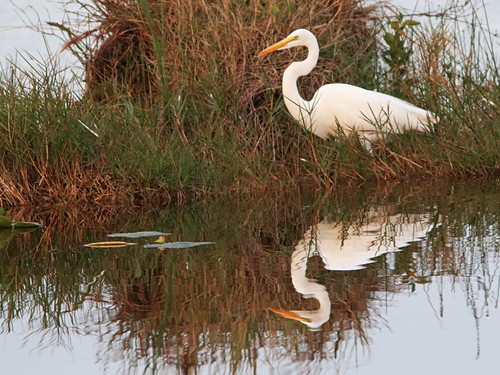
A Great Egret foraged in the warm morning light:

Great Egret at first light 03-20161125

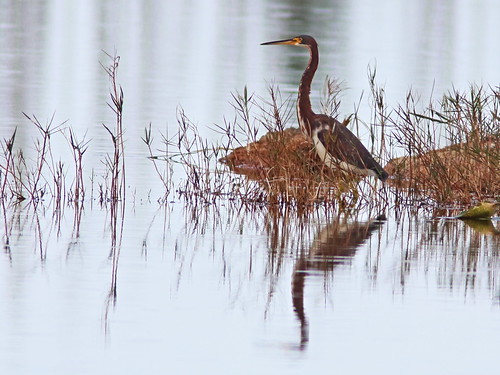
This immature Tricolored Heron cast a nice reflection:

 Tricolored Heron 20161125

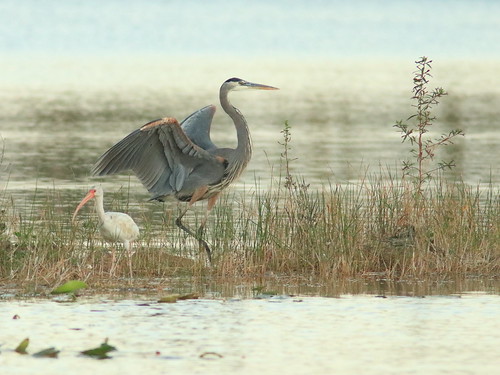
Later that week a Great Blue Heron flew in about 5 minutes after sunrise. Light was poor but I was very pleased with the soft image of the heron as it settled down with a White Ibis. Click on the photo for a larger view:

Great Blue Heron and White Ibis 20161130

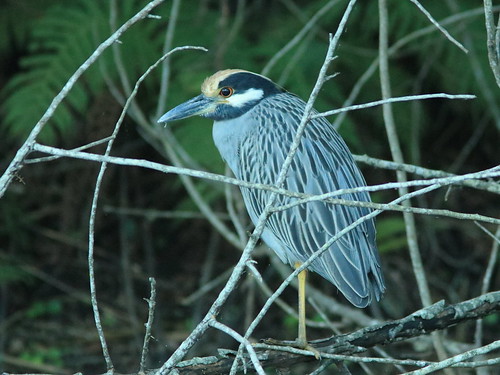
I found only one Yellow-crowned Night-Heron in the rookery:

Yellow-crowned Night-Heron 20161130

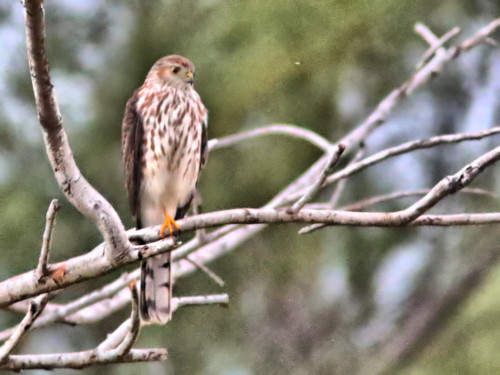
A Sharp-shinned Hawk posed on a dead tree along the path:

Sharp-shinned Hawk 01-20161125

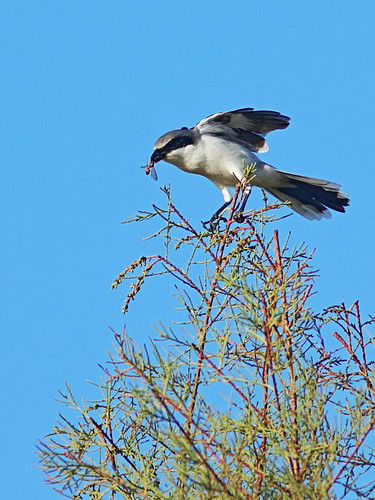
A Loggerhead Shrike caught a wasp and carried it back to its perch atop a Pond Cypress:

Loggerhead Shrike with waasp 20161130

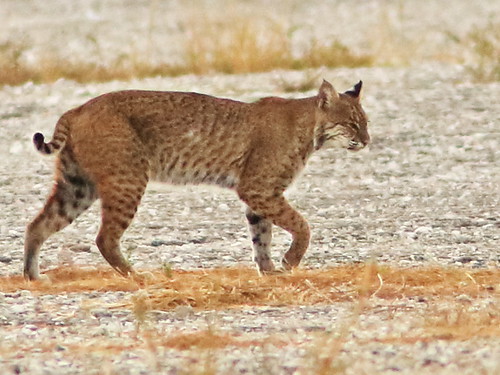
On the way out at 8:00 AM I was surprised to see a Bobcat cross the gravel road not too far away. It never looked towards me:

 Bobcat crop 01-20161123

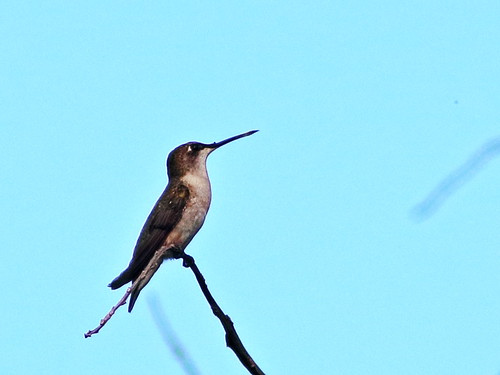
A female Ruby-throated Hummingbird guarded her favorite patch of Firebush (Hamelia patens):

Ruby-throated hummingbird 20161125

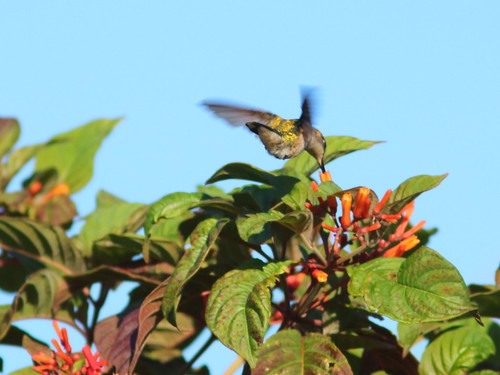
She favors the fresh orange-yellow tubular flowers over the older red ones in the clusters:

Ruby-throated Hummingbird 20161116

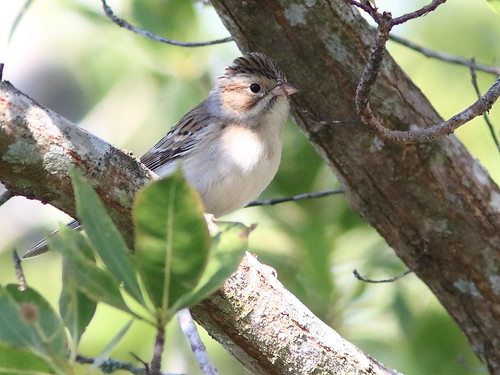
A couple of unusual bird species visited the patch. For the first time in the ten years I have patrolled the area, I sighted a single Clay-colored Sparrow. I got a bad shot but was astounded to see it (or another of its species) a few minutes later as I walked home. It was on a neighbor's lawn and flew up into a small tree just long enough for me to capture its image:

Clay-colored Sparrow 02-20161117

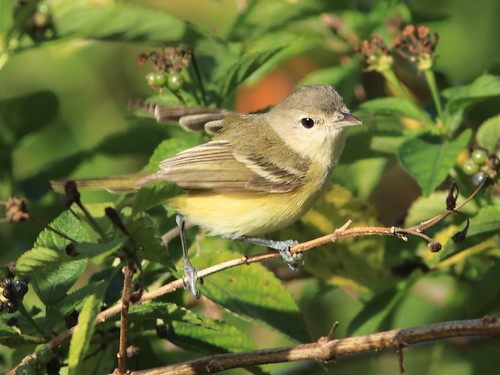
A Bell's Vireo, recorded only a few times in our county, has visited the same small area of fruiting Lantana and Brazilian Pepper four out of the past winter seasons. I have guided birders into the area several times each year and they usually have not been disappointed in their quest:

Bell's Vireo 02-20161130

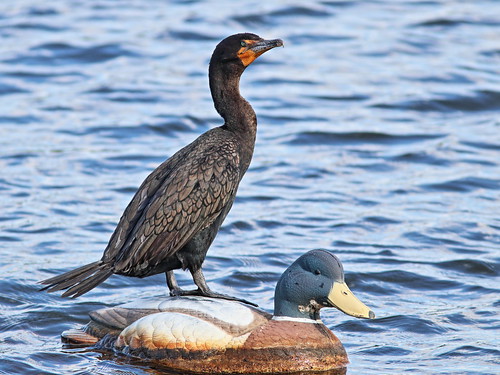
Back home, a Double-crested Cormorant rested on the decoy which supports the intake of our lawn sprinkler system:

Double-crested Cormorant 2-20161127

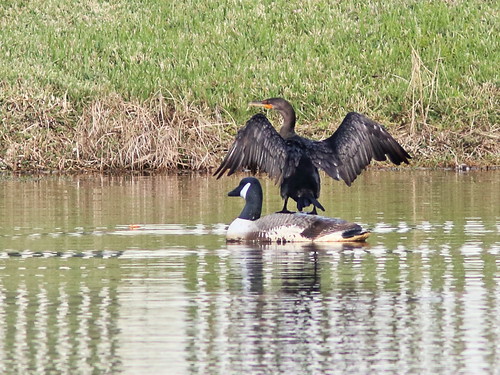
Across the lake, a second cormorant stood on a Canada Goose decoy. The owner's fence is reflected in the water:

Double-crested Cormorant 3-20161127

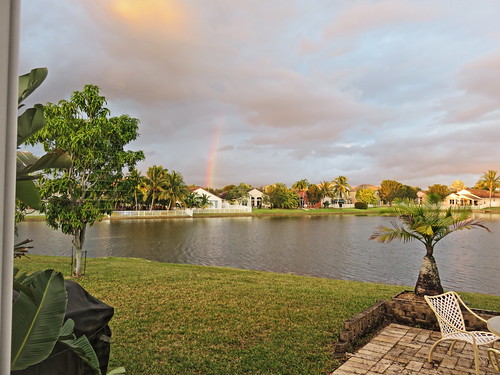
That same fence can be seen in this photo of a rainbow following a brief shower:
Rainbow from back patio 20161123


= = =  = = =  = = = =  = = = = =

Linking to Misty's  CAMERA CRITTERS,

Linking to Eileen's SATURDAY'S CRITTERS,

Linking to GOOD FENCES by Gosia

Linking to SKYWATCH FRIDAY by Yogi, Sylvia and Sandy

Linking to WEEKEND REFLECTIONS by James

Linking to BirdD'Pot by Anni

Linking to Wild Bird Wednesday by Stewart

Linking to Today's Flowers Friday by Denise

Linking to Wordless Wednesday (on Tuesday) by NC Sue
________________________________________________
Please visit the links to all these memes to see some excellent photos on display

________________________________________________