Our 11 year old Illinois granddaughter texted me from the Grand Canyon while her family was visiting Arizona. She attached a picture of a bird she correctly categorized as a titmouse.
After their trip we returned to our second home in Illinois and I asked Graciela how she knew about the titmouse.
She said she wanted to write a blog about her experience, as she did after her first visit to the Grand Canyon. Maybe she will get around to it despite all her other activities, but I pinned her down and interviewed her after she told me about this book she received as a gift from her parents.
Q. How did you know about the titmouse?
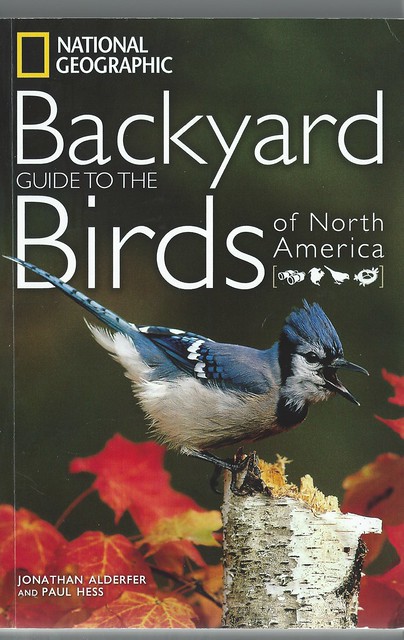
A. Because of a very helpful book called the Backyard Guide to Birds of North America.
Q. Isn't a backyard bird book about common birds like robins, starlings and pigeons?
A. No this isn't a simple book. It actually tells about many birds that you might never have heard of at all, like the Yellow-billed Cuckoo and even some types of hawks and vultures.
Q. I'm surprised! How many birds species does it describe?
A. There are 150 species of birds, all divided into different categories on 253 pages.
Q. Is it a field guide?
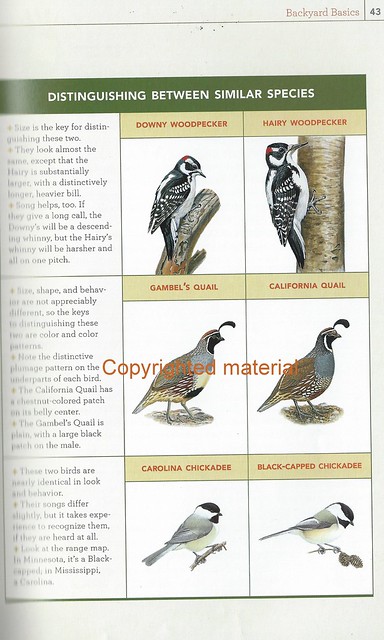
A. No, it is not a field guide because a field guide would list only certain things but this book includes basically everything. It does have hints about how to tell some birds apart, but that is not all.
Q. So it is not just about identifying birds?
A. It not only identifies birds by telling what they look like and similar species, but also their call, range maps, what they eat and where you could find a nest. These things are not usually in a field guide. For example, the Northern Flicker takes up two whole pages. One page has the red-shafted flicker and the other has the yellow-shafted flicker, along with paintings and photographs of each, the males and females, showing them flying, even though they are both classified as the Northern Flicker.
Q. What else might distinguish it from a field guide?
A. There are special sections like those about bird feeders, creating a bird-friendly yard, types of bird houses, and when and where you can find birds in each season. In between the bird species you can find some pages that tell about interesting things like irruptions, caching food and finding it, how long do birds live, and how they change colors and so forth. There is a gallery of warblers.
Q. When you were in the Grand Canyon you wrote to me about seeing a titmouse. Did you see it in your book?
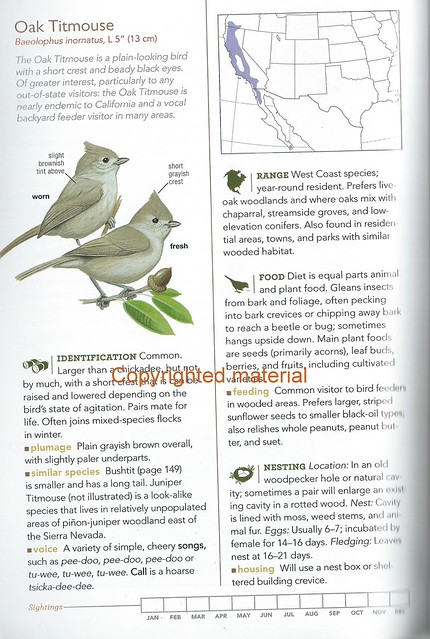
A. There are titmice in my book but it did not mention that certain species of titmous that I saw. It had the shape of a titmouse and looked like the Oak Titmouse. The book said that the Juniper Titmouse is a look-alike to the Oak Titmouse and you told me this is the titmouse species most likely found in the area of the Grand Canyon. The book shows where the Oak Titmouse lives, way out in California.
Q. You mentioned an irruption. I guess you know what that means?
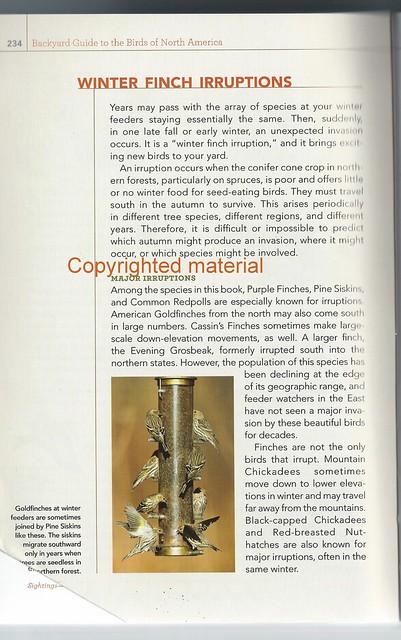
A. It is an event that happens occasionally around the fall or winter when all of a sudden a large number of birds from farther up north come to your feeders. Normally they are birds in the finch category.
Q. That is pretty informative. It does not sound like purely a children's book. What ages is it directed to?
A. This book is good for anyone whether kid or adult. A child maybe down to even a seven year old child.
Thanks, Graci. With your permission I will post this as a book review in my blog, but I must give you all the credit, and thanks for asking me to use photos from my archives to illustrate it.
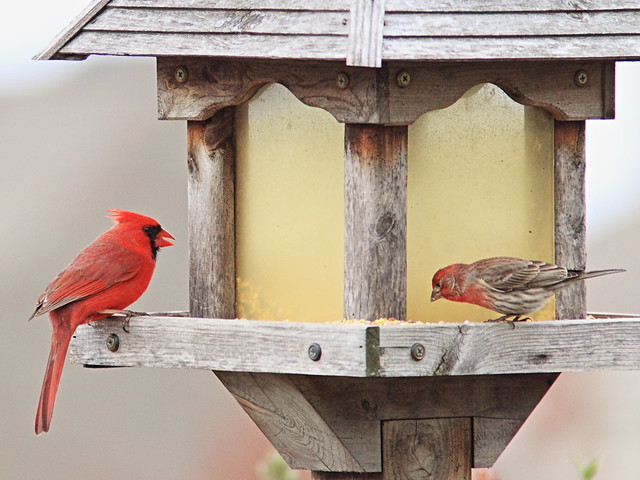
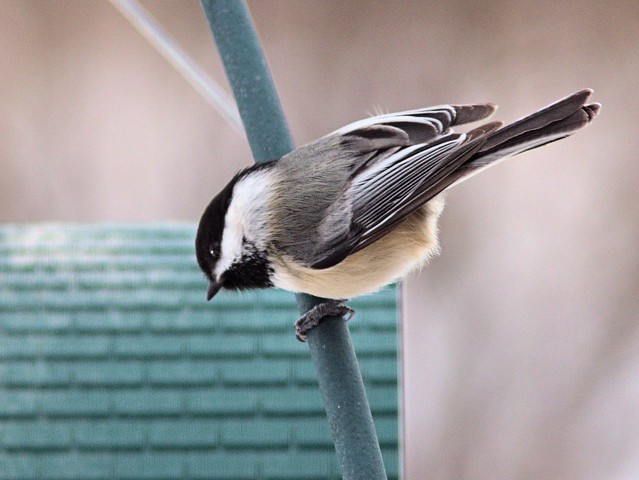
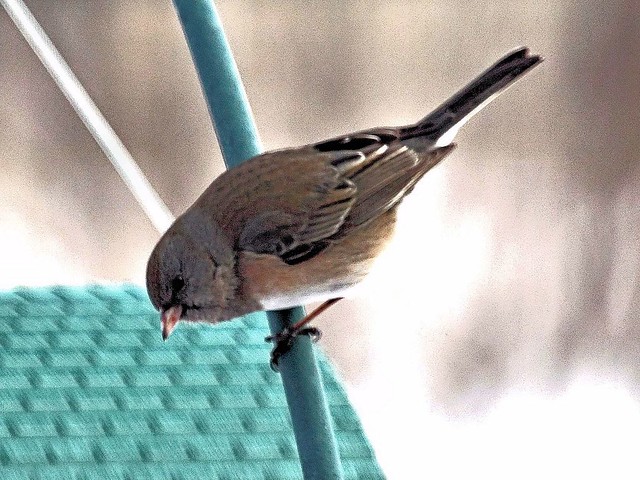
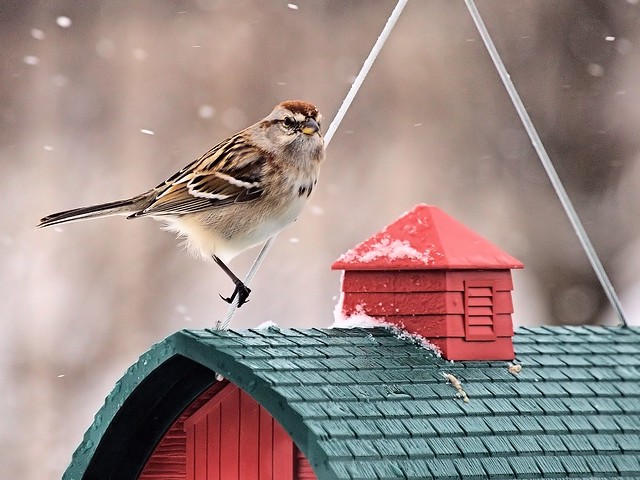
Here are some photos of birds in Graciela's back yard.
Males, Northern Cardinal and House Finch:
Common Grackle:

Black-capped Chickadee:
Female House Sparrow:

Chipping Sparrow:

Dark-eyed Junco:
American Tree Sparrow:
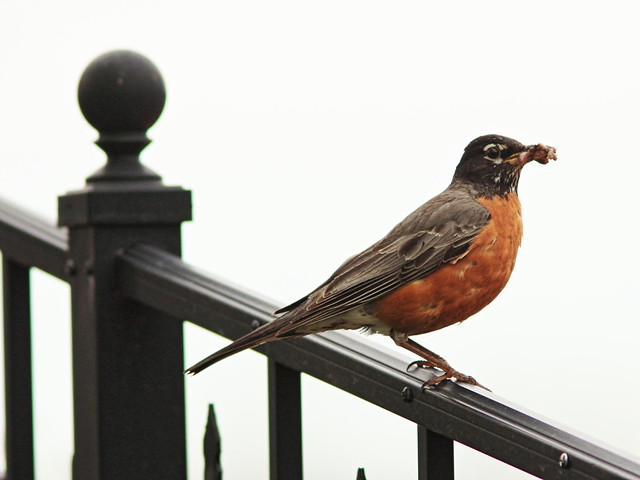
 Male American Robin:
National Geographic Backyard Guide to the Birds of North America (National Geographic Backyard Guides)
Paperback – March 15, 2011
by Jonathan Alderfer (Author), Paul Hess (Author)
AMAZON.COM -- $13.65
- - - - - - -- - - - - - - - - - - -
Linking to Wild Bird Wednesday by Stewart and
Bird and Wildlife Book and App Reviews by Ken
________________________________________________
Moving into August in south Florida, the dog days of summer have taken hold. If only to get exercise, Mary Lou and I set out into the local wetlands most mornings before sunrise.
In the past few days, dust from Africa has blown in over the Atlantic Ocean and is producing beautiful pink sunrises. Only two days ago I witnessed an extraordinary phenomenon. Over the lake in our neighborhood birding patch I saw the most vivid "mirrored" or "false" sunrise. This was at 6:50 AM, about 9 minutes after sunrise. There were thunderheads over the Atlantic to the east and the cloud tops were breaking up the rays of the sun into parallel lines, which converged on the opposite (WSW) horizon
 The rays of the sun are reflected off the dust, and the still surface of the lake produced stunning reflections. I could not fit the image into a single frame, so this is the view looking more to the left (SW):

Here, looking the opposite way (ENE) is the thunderstorm that is blocking the rising sun but creating the magnificent rays:
 Here is the sky a bit later the next morning:
 Last week, this was the view to the west across the lake, as the sunlight was just reaching the near shore. The clouds had already started reflecting some of the pink color:

The lake level had fallen low, exposing mud flats. You may remember the "Enchanted Island" where a Red-winged Blackbird posed so nicely this spring:
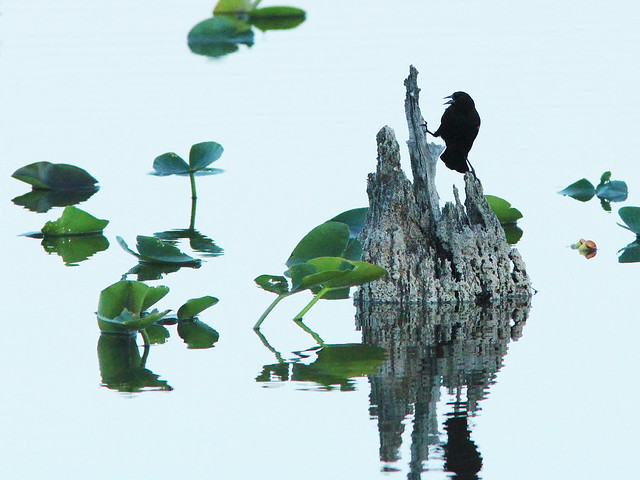
Now it sits high and dry, but has not lost its charm:
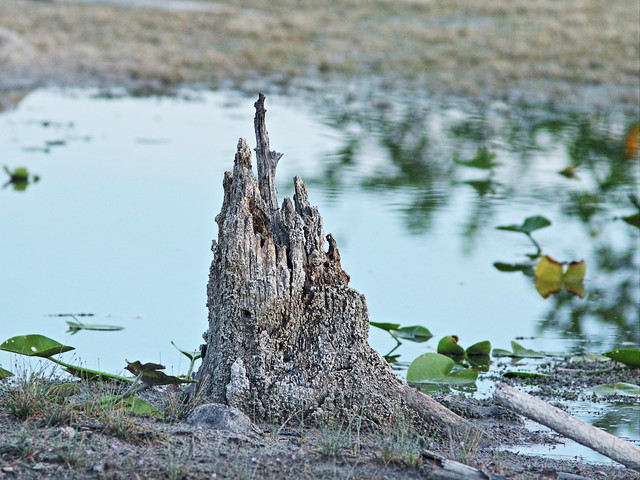
The mud flats looked so inviting, and we anticipated the arrival of shorebirds heading south. On July 29th a single Spotted Sandpiper appeared:


Two days earlier the first Belted Kingfisher of the "fall" season arrived, but it did not pose for any pictures. The week before, two active and inquisitive Blue-gray Gnatcatchers surprised me as they foraged in a tree next to the gravel road. Although some are believed to nest down this far south, these were the first to be reported in our county since last spring.


A few resident herons showed up on the lake in the wetlands. Among them a Green Heron, just arriving:

It crept furtively around the rocks:

The Little Blue Heron is another deliberative hunter. In typical fashion, it moved slowly along, often with its bill almost touching the water:

A Snowy Egret cast a delightful reflection. In foraging, it stirred the water with its foot, creating big bubbles:

The egret almost seemed to be proud of its reflection:

A male Northern Flicker (note his black mustache!) called from atop the spire of a Royal Palm:

A pair of Common Ground-Doves walked along in front of me on the gravel road:

Many birds were in various stages of post-breeding molt, such as this female Northern Cardinal:

This cardinal may be a young male, but its bright red bill and tan body feathers suggest it may be an adult female, molting even more visibly:

This young Boat-tailed Grackle looks shabby indeed, as it begins to acquire its adult coat:

A Snowy Egret flew by just after sunrise, offering me the opportunity for two quick clicks:


Especially when the birding is slow, I take note of the butterflies. Among them, this perfect specimen of a Gulf Fritillary:

This is a Phaeon Crescent, distinguished from the common Pearl Crescent by the cream-colored median band on its forewing:

I got a nice close look at a Needham's Skimmer:

In our back yard, the avocados and the delicious fruit of the annone (Custard Apples) are ready:

I had to dig through my older photos to find a fence for Tex's meme. This one was in front of the Fairmont Chalet, our hotel at Lake Louise in Alberta, Canada:

= = = = = = = = = = = = = = =
Linking to Misty's CAMERA CRITTERS,
Linking to Eileen's SATURDAY'S CRITTERS,
Linking to GOOD FENCES by Tex (Theresa).
Linking to SKYWATCH FRIDAY by Yogi, Sylvia and Sandy
Linking to WEEKEND REFLECTIONS by James
Linking to BirdD'Pot by Anni
Linking to Wild Bird Wednesday by Stewart
Linking to I Heart Macro by Laura
________________________________________________
Please visit the links to all these memes to see some excellent photos on display
________________________________________________