Looking back three years brings back some vivid memories of favorite memes: critters of all kinds, skies adorned with clouds and rainbows, reflections on calm waters, signs of the season, fences, and those images which speak for themselves. Now that we have sold our second home in Illinois, this exercise also reminds us of how much we gained by spending some of the warmer months "up north."
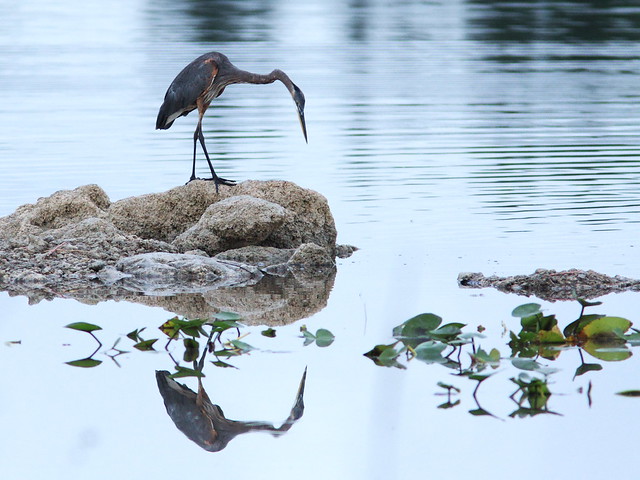
The month started out at our Florida home. In contrast with the present year, the water levels in the lake and surrounding wet prairie had dropped. This attracted wading birds to the shallows along the lake margins and exposed areas of mud flats. Fish were trapped or exposed in pools left by the receding water. A Great Blue Heron reflected nicely from a rock that is usually submerged at this time of year:
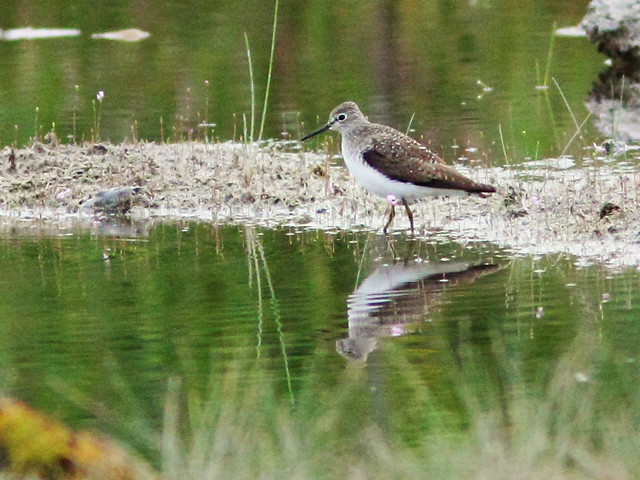
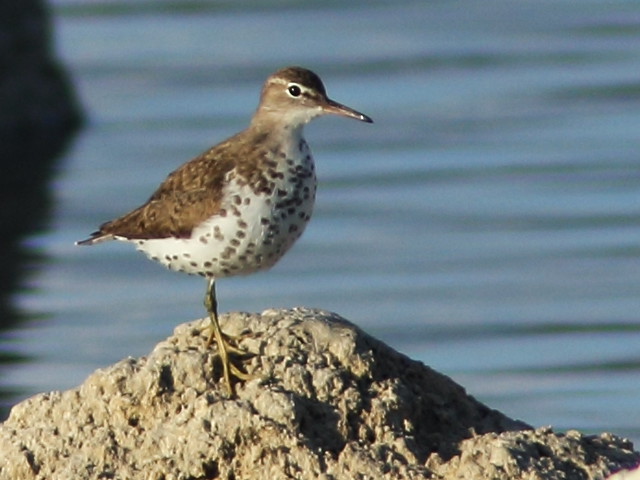
On August 1st a Solitary Sandpiper foraged along the shore:
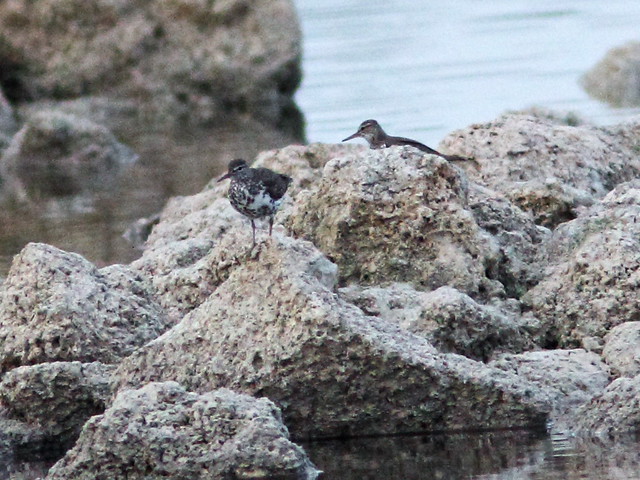
Spotted Sandpipers searched the crevices among the rocks:
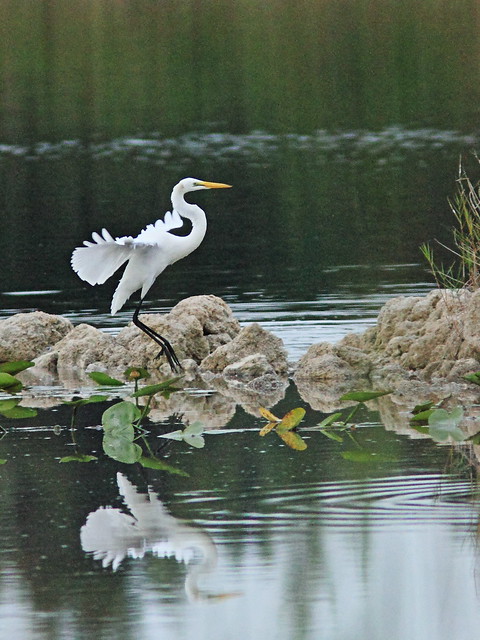
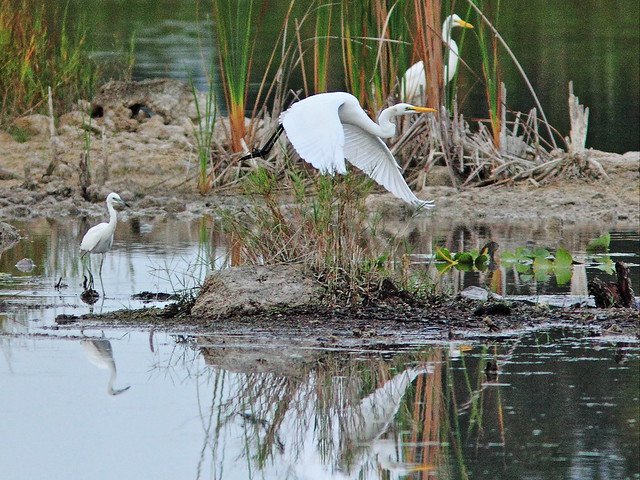
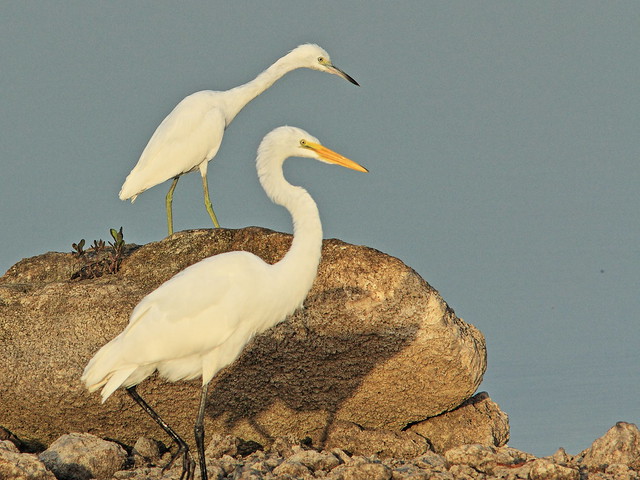
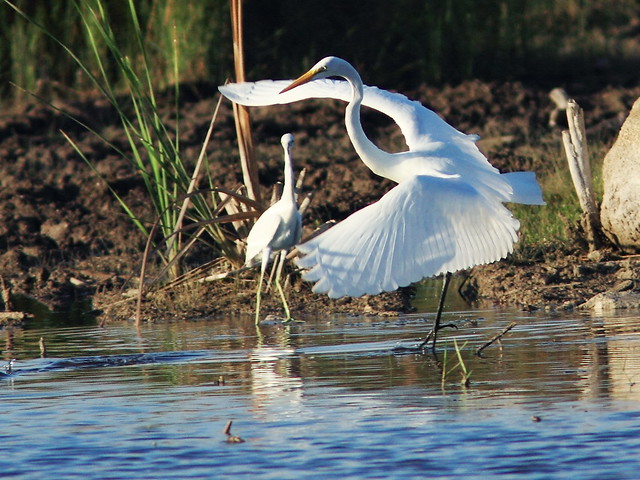
A Great Egret arrived to partake of the feast:
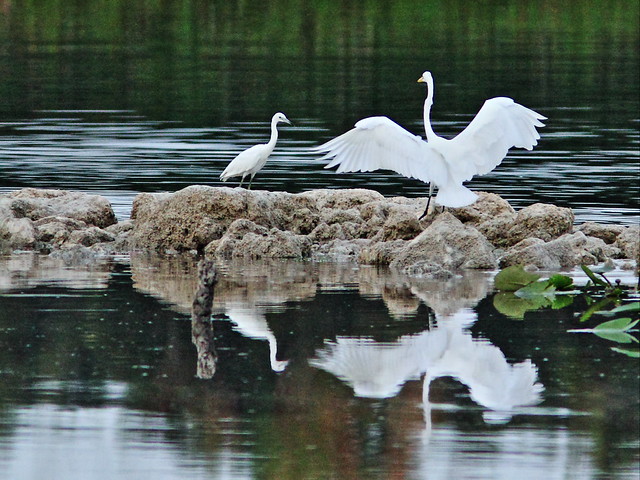
The egrets provided a nice comparison with a smaller white immature Little Blue Heron:
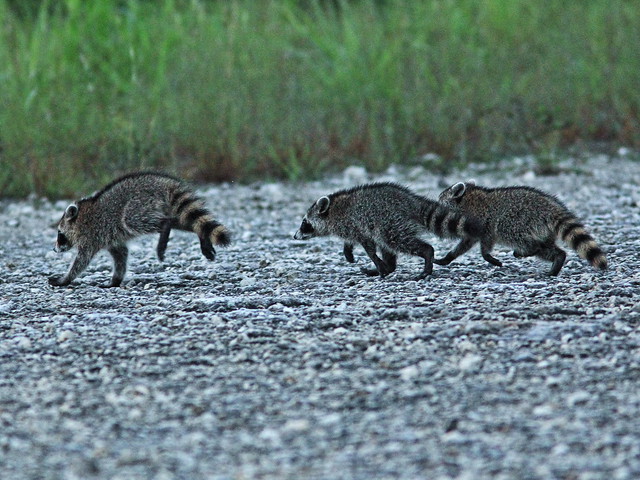
A mother Raccoon led her babies across the path in front of me:
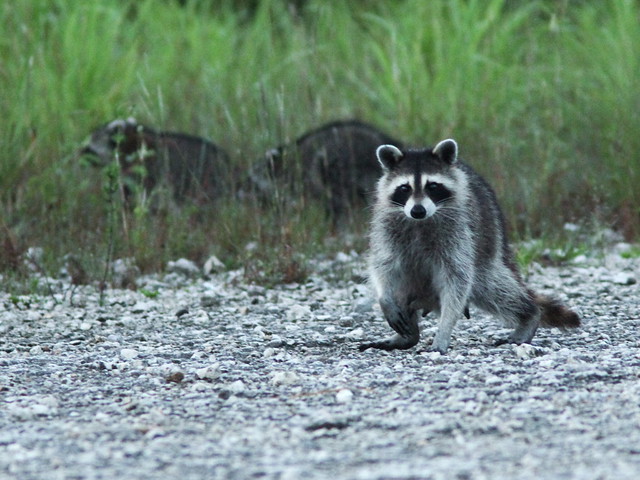
She took a defensive posture as they scrambled to safety:
Oh my! I'm only up to August 5th and have over 500 more photos to sift through!
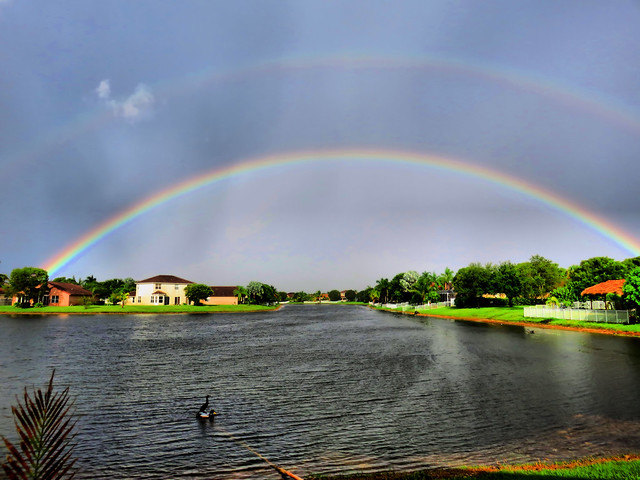
On August 7th a brief shower was followed by a double rainbow over the lake in back of our home (please pardon the deliberate over-saturation):
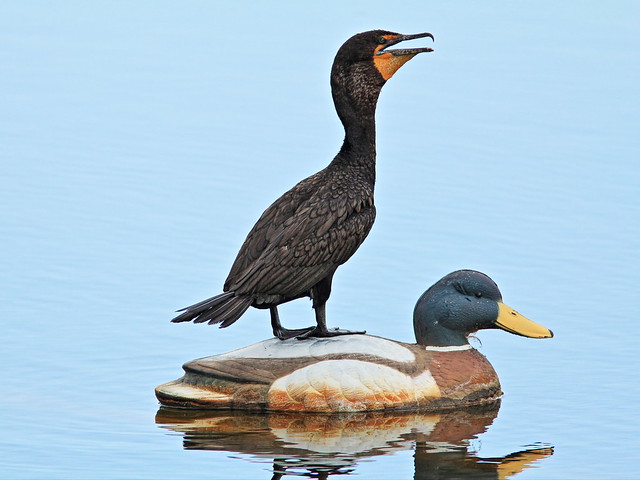
In case you missed it in the above photo, the Double-crested Cormorant returned the next day to perch on the decoy:
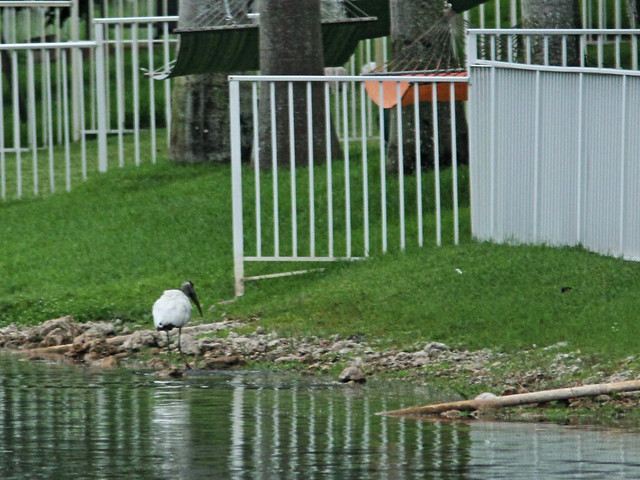
A welcome sight was this Wood Stork, the first we had seen on our lake in several months. They failed to breed in south Florida for the prior two or three years because of abnormal water conditions. It hunted along the shore near a neighbor's fence:
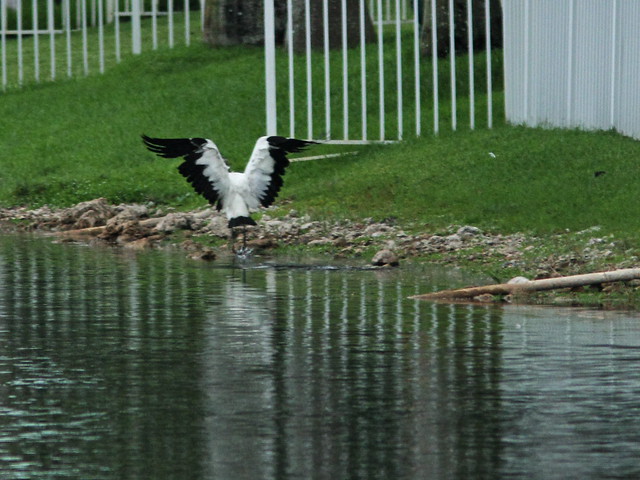
The stork opened its wings to reveal their feather pattern:
Just as we are experiencing this year (2018), dust blown across the Atlantic from the Sahara Desert produced beautiful pink sunrises. One good thing about the dust cloud is that it suppresses the development of hurricanes:
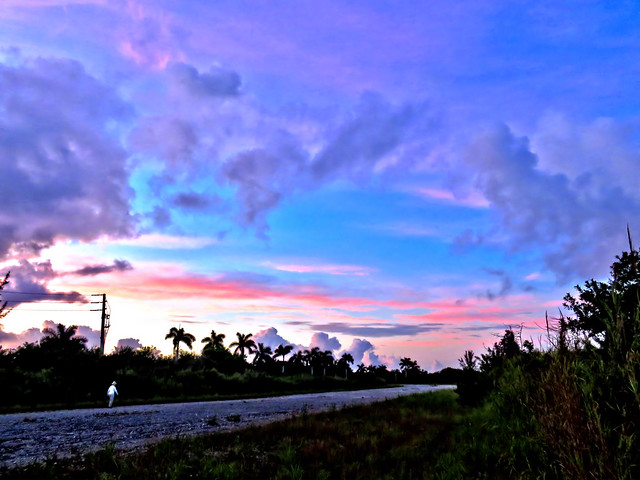
Here is Mary Lou walking home before sunrise under a colorful sky (I'm so slow that I am still going the other way. We started out very early to try to find the Barn Owl which I saw the previous day. No luck!):
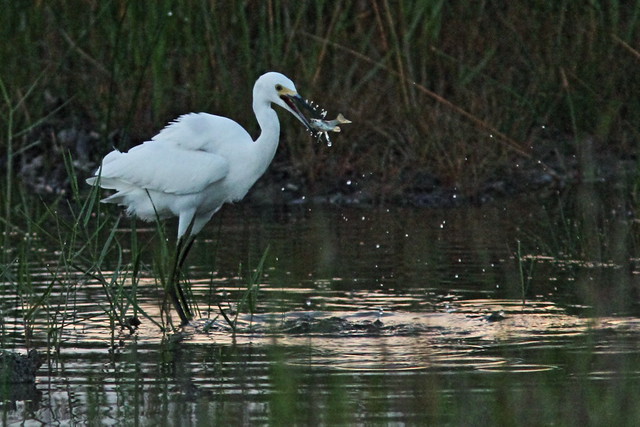
A struggling fish in the grasp of a Snowy Egret scatters water droplets:
Here is a video of the "dance" of this Snowy Egret as it chases after fish in one of the lakeside pools (WARNING: turn down the sound if you do not like the dance music):
If the video fails to load in the space above, please click HERE
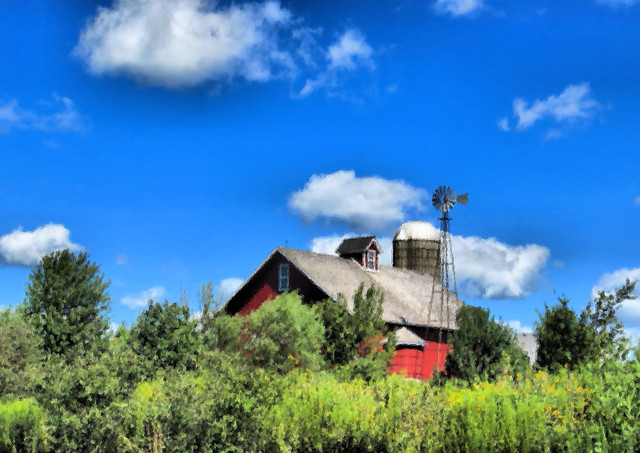
Fast forward to August 24, the day after we arrived at our second home in northeastern Illinois. We visited Hannaford Woods in Sugar Grove, Illinois. Across from the entrance is this barn, which I rendered as an oil painting (click on image to enlarge):
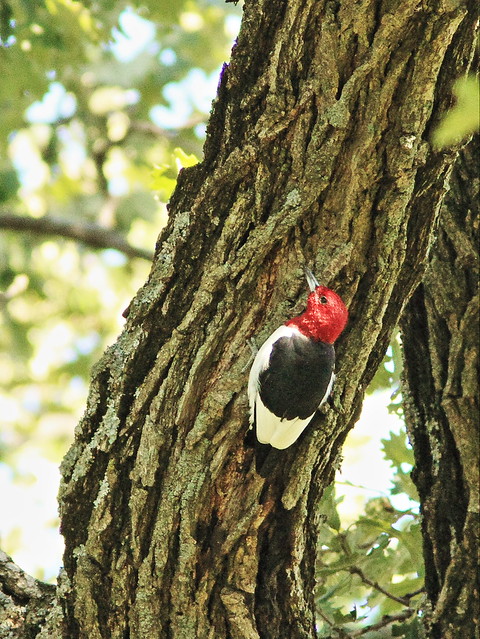
At Hannaford, we saw a favorite species, the Red-headed Woodpecker:
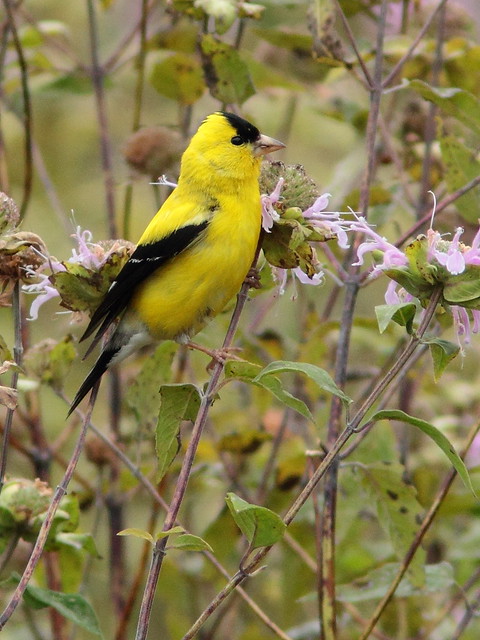
American Goldfinch at Lippold Park, near our condo in North Aurora:
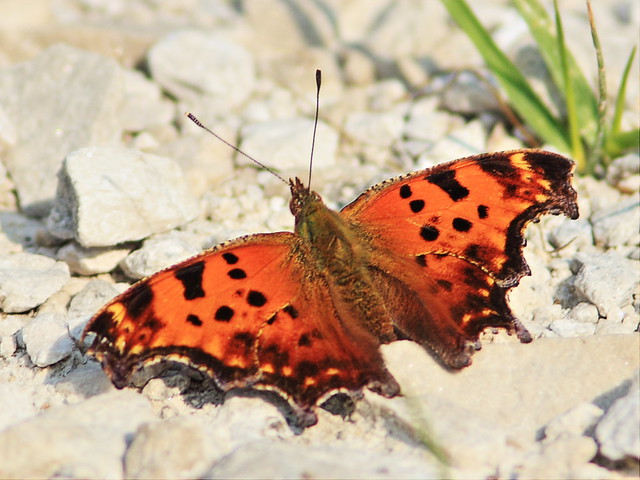
Butterflies at Aurora West preserve-- an Eastern Comma...
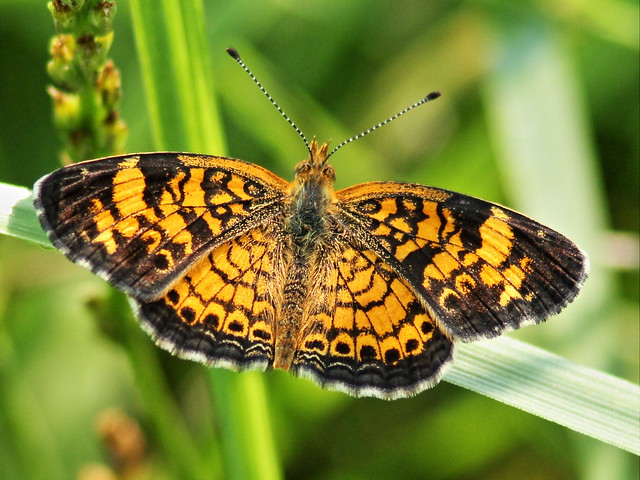
...and a Pearl Crescent:
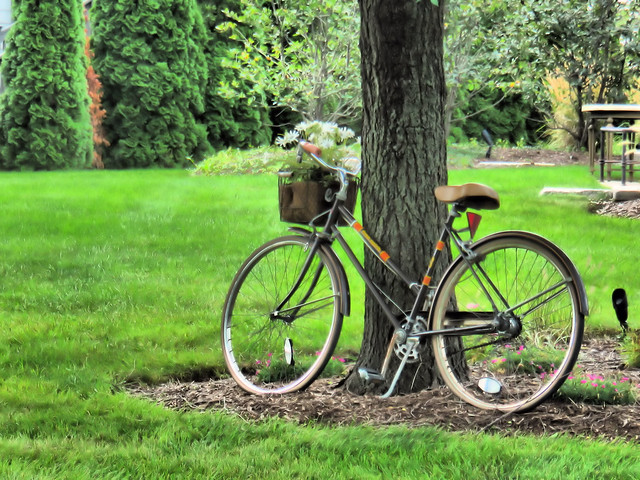
Visiting local Jones Meadow Park in North Aurora on July 31, I loved the way a neighbor had filled this bicycle's basket with flowers:
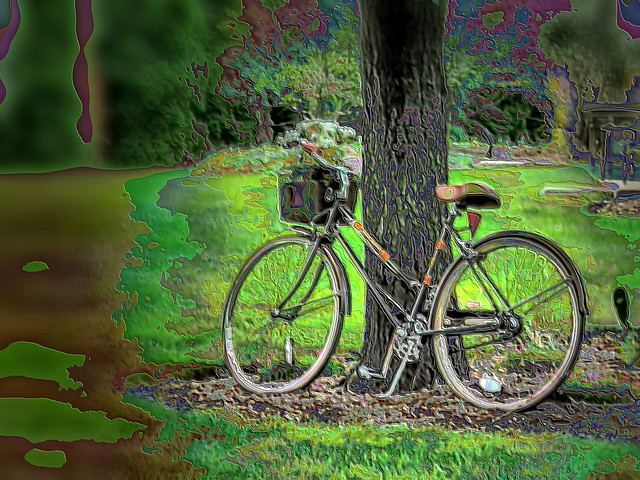
In fact, I textured the image with enamal:
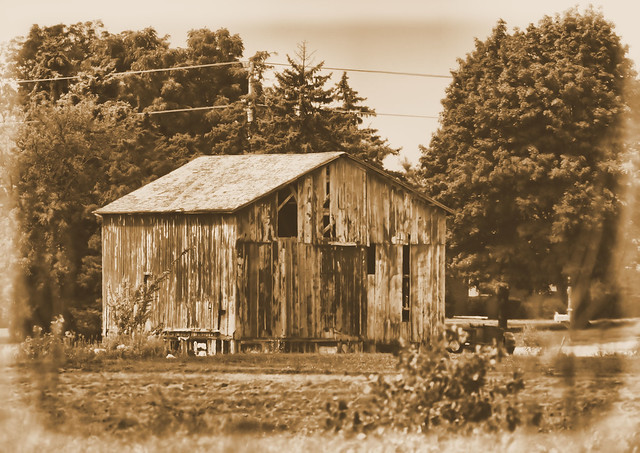
Also on the last day of the month, I took the final photo of one of my favorite subjects. Days later, this barn was torn down to make way for a prefabricated one made of metal and vinyl:
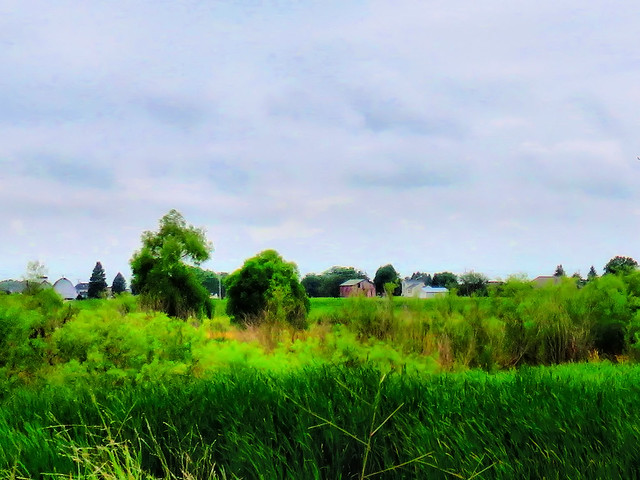
This barn was the focal point of a landscape I photographed only the month before, through the same opening in the trees at Jones Meadow Park. It lives in memory:
= = = = = = = = = = = = = = = Linking to Misty's CAMERA CRITTERS,
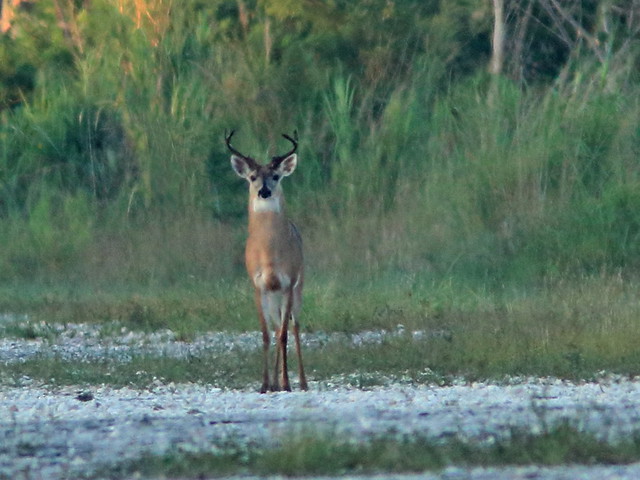
To beat the heat here in south Florida, Mary Lou and I set out on our daily 3 mile walk a half hour before sunrise. Temperatures are usually in the high 70s F (25-26 degrees C) but within two hours climb into the high 80s (31-32 degrees C). It is still quite dark at first, so I bird mostly by ear. A White-tailed Deer buck peers at me through the semi-darkness:
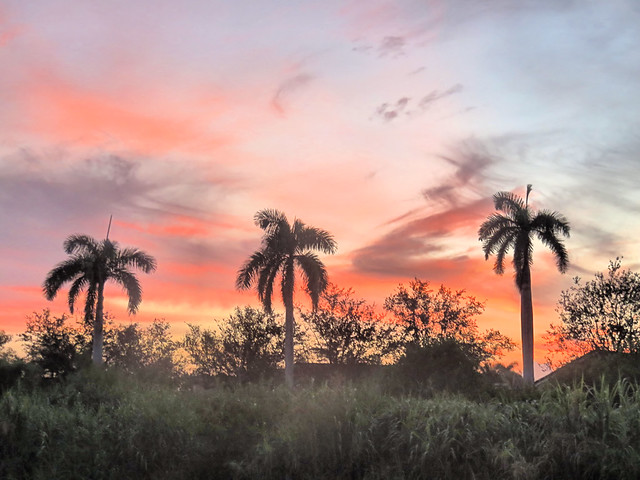
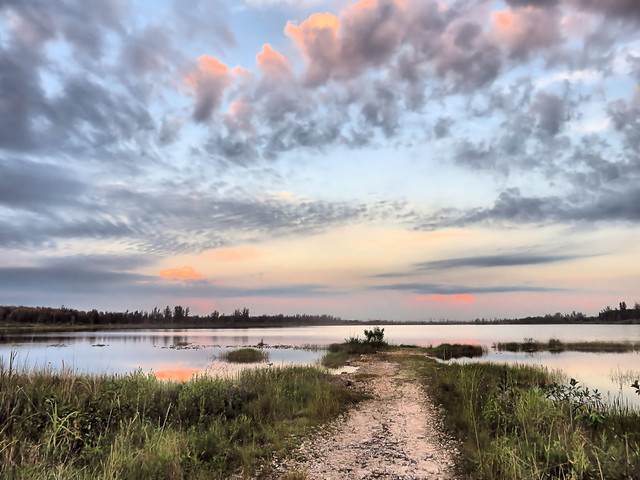
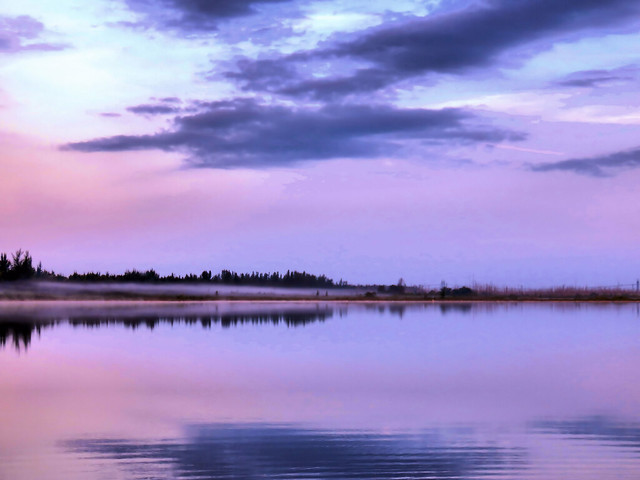
The sun is still well below the horizon, but its light reflects against the high clouds:
Not many birds are singing in late July. Many have raised their families and are undergoing an energy-consuming molt. While mockingbirds may sing even during the night during breeding season, they are now quite silent.
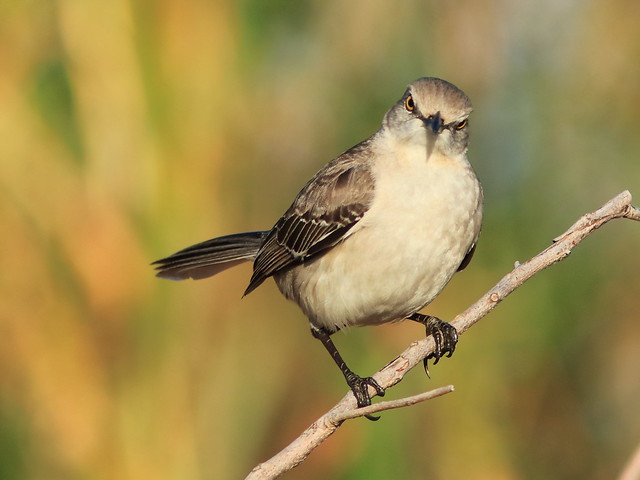
Adult Northern Mockingbird:
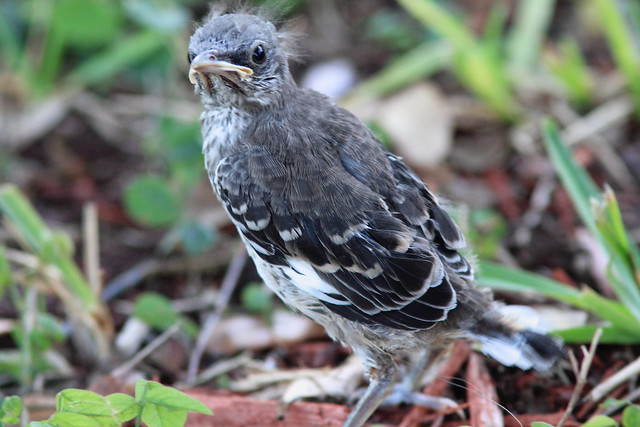
Fledgling mockingbird in June:
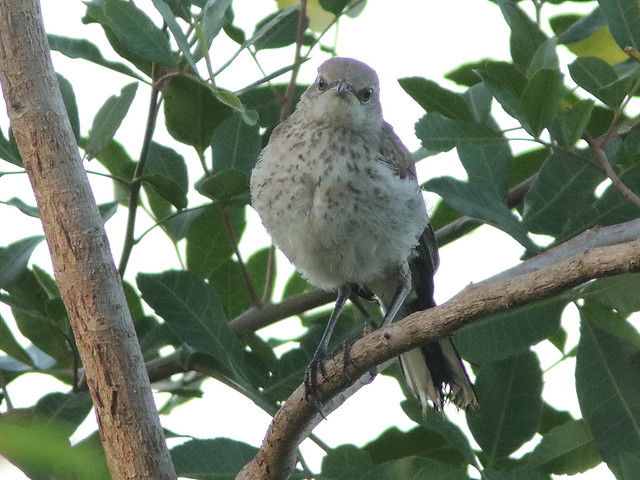
An older juvenile mockingbird exhibits a speckled breast:
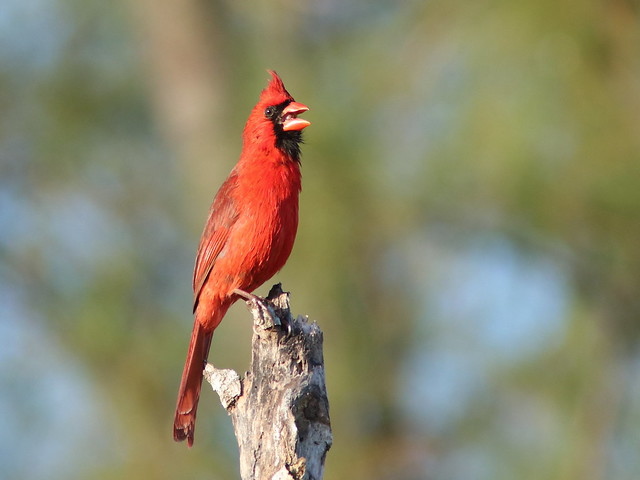
Northern Cardinals are a welcome exception. I can often count a half dozen singing males, some in duets with females, which also sing (as do female mockingbirds):
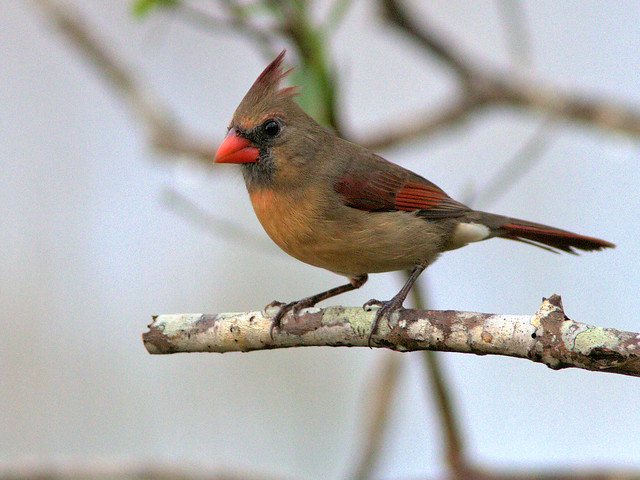
Female Northern Cardinal:
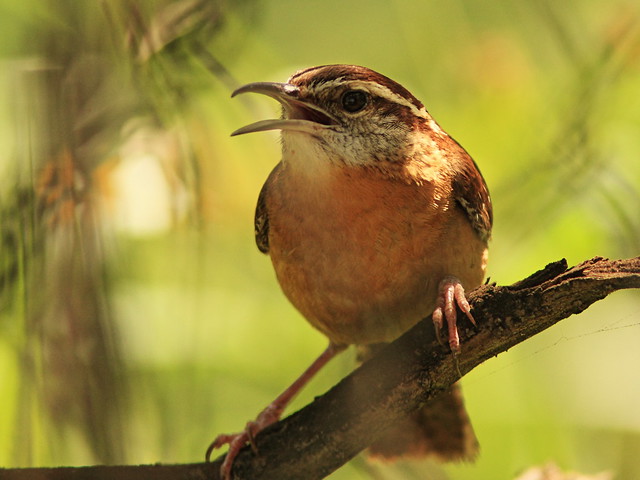
We may hear one or two Carolina Wrens singing despite the heat:
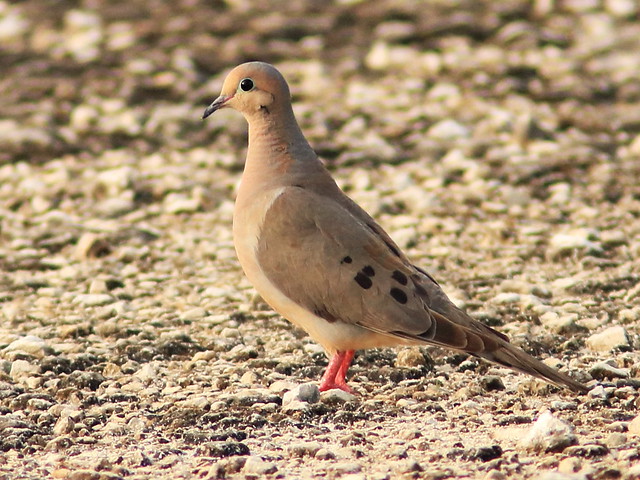
Mourning Doves coo persistently before sunrise...
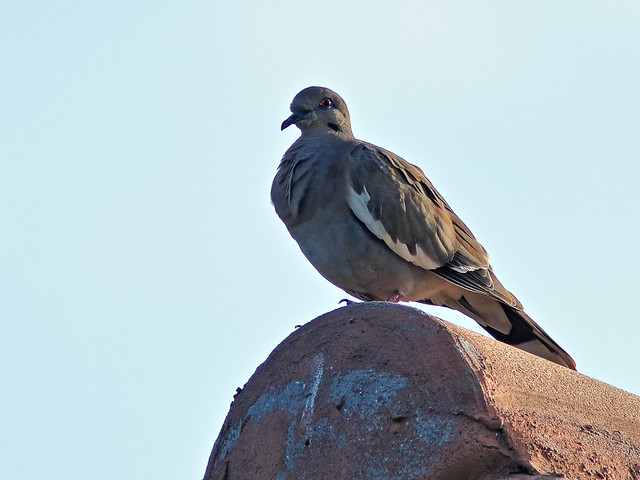
...as do White-Winged Doves. This one used the roof of our home for his performance:
I walk out on the little "peninsula" and just listen. Maybe I will hear a Pileated Woodpecker or a Red-Shouldered Hawk, but only the calls of Blue Jays and Red-bellied Woodpeckers pierce the silence:
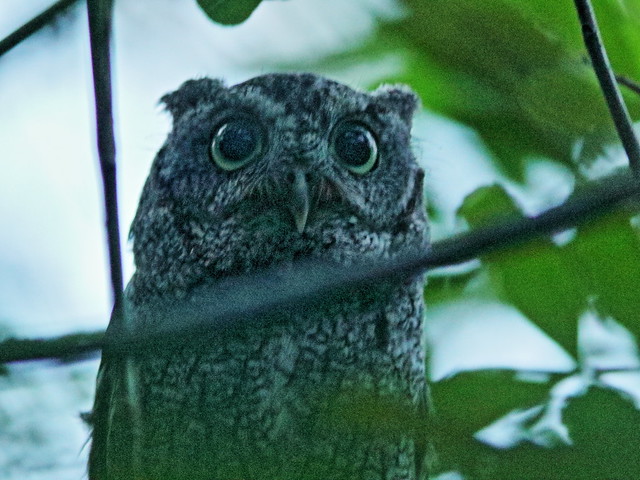
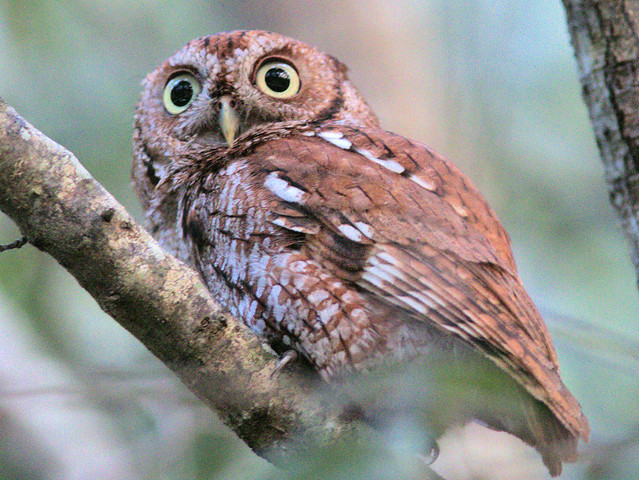
The monotone trill of an unseen Eastern Screech-Owl is like music to our ears and a reward for being out early. This week I heard two calling, about a mile into our walk. One had a more high-pitched voice. It may have belonged to the juvenile owl, which I briefly viewed through the branches of a thicket, about ten minutes before sunrise:
Here is an adult Screech-Owl which paused in better light very near this spot last year:
Seeing fewer than 20 species in a morning makes me feel "malnourished." If my list seems to be stuck at 18 or 19, I may delay my return home and risk heat stroke, hoping to see one or two more. It is especially frustrating when I fail to find one of the more common birds, such as a European Starling, or the sky does not contain any vultures or crows. High water discourages wading birds and one morning this week I saw no herons at all.
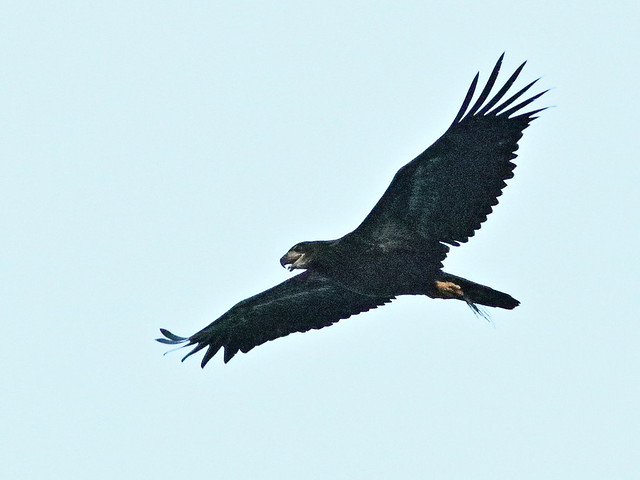
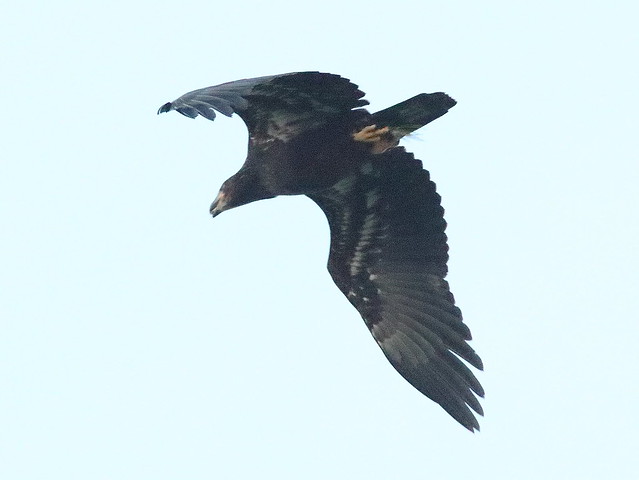
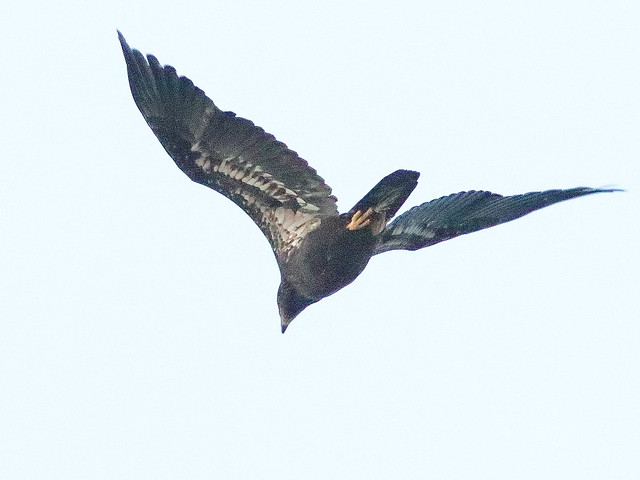
The fun of birding is not just about "body counts." There is so much to discover at any time of year. One day last week I saw only 15 species but had the thrill of seeing the eaglet from the local Bald Eagle nest suddenly pass low overhead. Why has she not wandered north, as is the habit of south Florida's younger eagles? By July, most of them are following the Atlantic coast up into the Carolinas and Chesapeake Bay, where waters are cooler and fish are easier to catch. Oddly, she is carrying some grass in her talons. Why?
We know she is a female by her bulk and the extension of the gape of her bill below her eye She exhibits first-year (juvenile) plumage: a dark body, dark beak, head and tail, along with white "armpits." Her set of fresh and longer wing and tail feathers cause her secondaries to bulge and add more than an inch to her length. She flies a direct line from the nest tree to a lake in our subdivision. Her lighter wing linings are also visible in these views as she moves away:
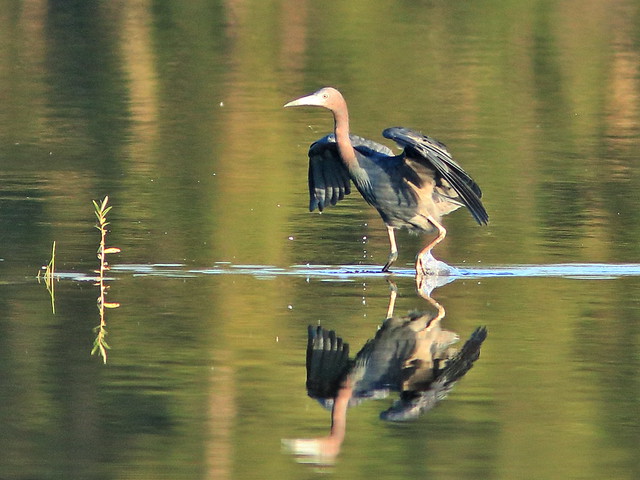
At the lake, the water is still. A Little Blue Heron dashes to find a better fishing spot:
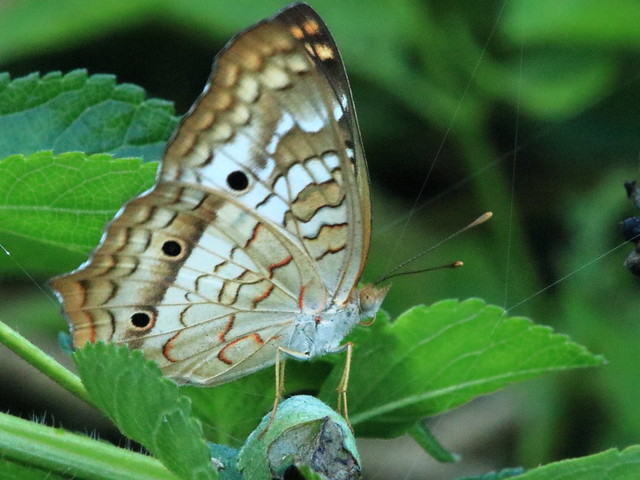
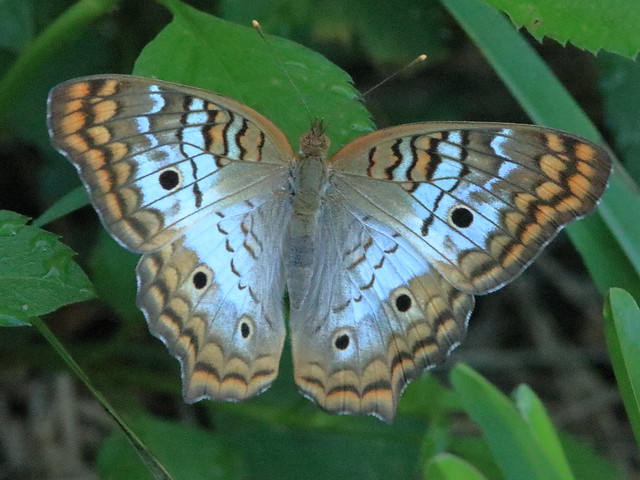
There has been a hatch of White Peacock butterflies. Many seem to be taking their first flights. By tomorrow their wings will be tattered from their constant struggle over territory and mates:
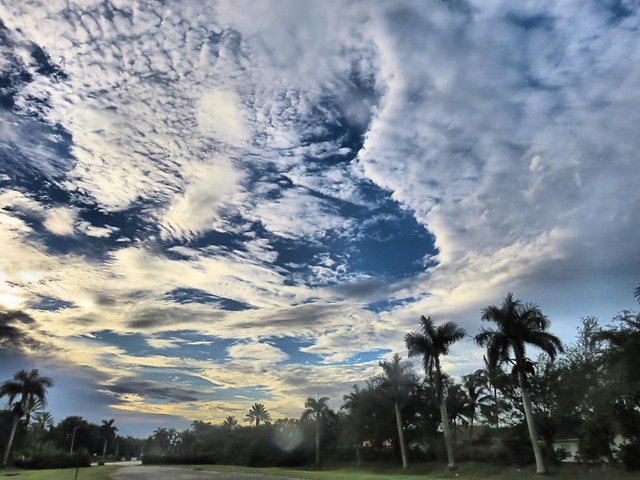
Walking home at 8:00 AM, the restless clouds portend the rain which is sure to arrive by noon:
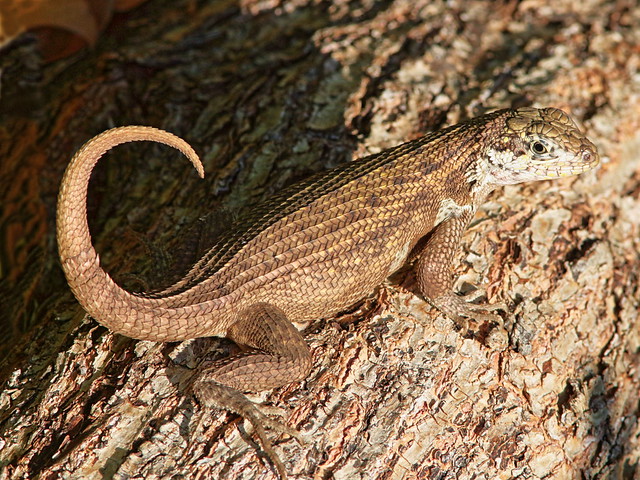
A Northern Curly-tailed Lizard appears at the base of a tree as I exit the wild area. This species, native to the Bahamas, was introduced into Palm Beach County to the north in hopes that it would control insect pests on the sugar cane. It has spread over the southern part of the State, although this was the first I have seen at this particular location. While invasive, they seem not to be a threat to native creatures:
= = = = = = = = = = = = = = = Linking to Misty's CAMERA CRITTERS,
 = = = = = = = = = = = = = = =