Showing posts with label White Peacock. Show all posts

Thursday, August 19, 2021

A quiet wet week with few butterflies

In early August, morning rain and some necessary appointments have limited and shortened my excursions into the Wounded Wetlands. Predictably, bird counts were low, averaging about 15 common species. We also escaped dual threats from tropical storms Fred and Grace. 

Most photos were taken in bad light due to cloud cover or very early observations.

This Belted Kingfisher was a surprise on August 5, the first County record for the fall migratory season. 


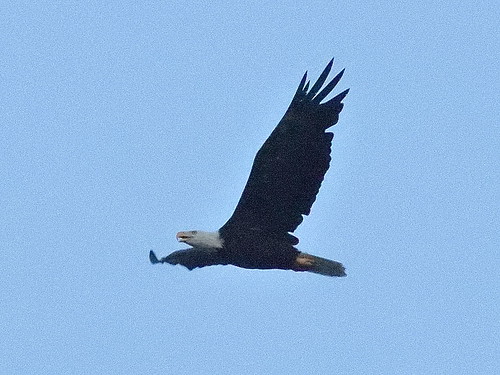
An adult Bald Eagle provided me with a distant early morning view:

In one frame it ventured into full sunlight:

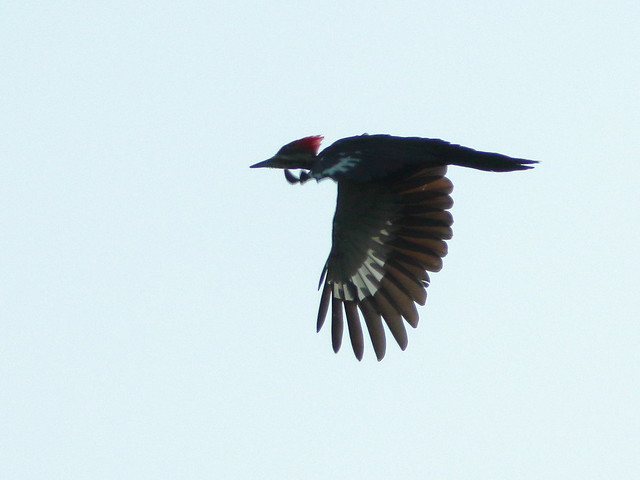
These pre-dawn fly-over shots of a Pileated Woodpecker barely revealed its red crest:

Some mornings I returned with no images at all, so I must reach back a few weeks for some photos not shared in earlier posts:

On August 2, a Great Egret settled into the grass along the path, probably hoping to capture insects and lizards:


The Northern Cardinals were reclusive and not singing, but a juvenile male peered out at me on August 5: 

A Mourning Dove foraged on the gravel track:

A Great Egret rested in a treetop:

I obtained a better flight shot of a female Pileated Woodpecker back in July:

Loggerhead Shrike on July 19:

Our local Wounded Wetlands are bordered by residential properties. I fear that insecticides are having an adverse effect upon butterfly populations. Many residents are utilizing automated  backyard "mosquito misting systems." They dispense aerosols into the air "a few times per day" around the clock. 

Advertisers of these multiple continuous dispersion devices emphasize the dangers of insects in Florida and push them as effective in preventing insect-borne diseases. Most claim to use only pyrethrin, touted as a "natural" or "organic" product derived from chrysanthemumsWhile non-toxic to humans and pets, pyrethrins can be deadly to bees, butterflies, caterpillars and other insects which commonly visit residential gardens. Pyrethrins are relatively safe when applied to individual plants, but it is also used as an aerosol to "knock down" flying insects. 

Alone, pyrethrins are not very potent when dispersed in this manner. To make them more effective they may be mixed with other ingredients to increase effectiveness. For example, a "pyrethrin" aerosol may contain piperonyl butoxide (PBO), a toxic non-organic ingredient which retards the breakdown of pyrethrins. Some mosquito control systems advertise that they utilize innocent-sounding combinations of natural oils and unspecified EPA-approved control products. (Then there is the fact that many home and residential insecticides contain neonicotinoids... but that is another story. End of rant)    

Butterflies have been unusually scarce in numbers and variety. This is a Zebra longwing, the State Butterfly of Florida:

White Peacock:

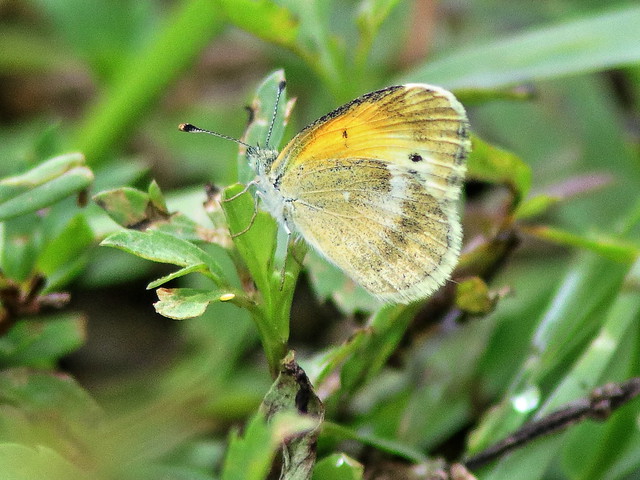
A tiny Dainty Sulphur:
This Orange-barred Sulphur (Phoebis philea) is a very large tropical species with a wingspan of 2 3/4 - 3 1/2 inches (7.0--8.9 cm). It is fairly common in south Florida, but its habits of flying erratically and usually high in the trees makes it difficult to identify and photograph. This was my first image of one from a distance, visiting a Firebush (Hamelia patens), heavily cropped and over-exposed:

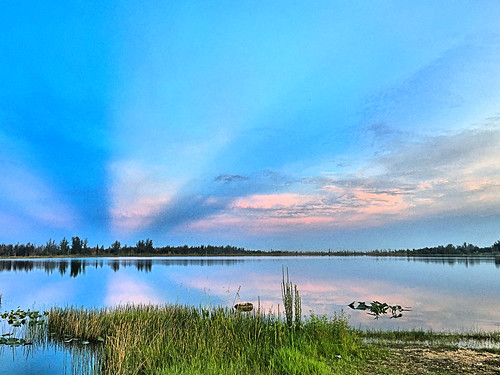
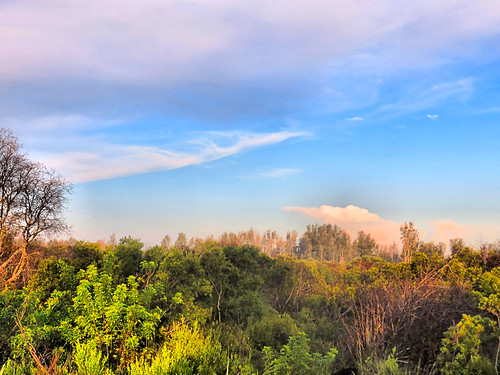
Often, before sunrise, I stop on a peninsula which thrusts out into the lake, listening for owls and nightjars and watching the morning light play over the clouds. It is interesting to see how the rising sun illuminates the clouds as it moves up towards the horizon. These two photos of the same clouds were taken 5 minutes apart, just before and after sunrise on August 11:


= = =  = = =  = = = =  = = = = =

Linking to:


Nature Thursday

Skywatch Friday

Weekend Reflections

Saturday's Critters

BirdD'Pot

Camera Critters

All Seasons

Wordless Wednesday (on Tuesday)

Natasha Musing

Our World Tuesday

________________________________________________

Please visit the links to all these posts to see some excellent photos on display
________________________________________________

Thursday, June 20, 2019

Summer Doldrums

With spring migration long over and the summer solstice approaching, I have found it a bit challenging to compile a list of twenty or more bird species sighted  or heard on each of our morning walks in the "Wounded Wetlands" of south Florida. Since we are about 18 miles inland from the Atlantic Ocean, we cannot expect to see the greater variety of species associated with tidal waters. 

As the duties of raising nestlings and feeding fledglings take priority, the morning chorus of bird song is diminished and birds are less evident. Long-legged waders are discouraged by unusually higher water levels which disperse their aquatic prey. 

Feathers are wearing down and soon will need to be replaced. By mid-summer many species will undergo a post-breeding molt, requiring them to expend much energy. Migration and reproduction are other energy-intensive phases in a bird's life cycle. In between, the birds rest and take advantage of abundant food supplies to fuel the next stage.

This shabby preening female Northern Cardinal seems to already be in need of fresh plumage, but the molt must be postponed until after she finishes rearing her brood:

Northern Cardinal female preening 20190612

Northern Cardinal female preening 2-20190612

Saharan dust is moving across south Florida, causing some haze but adding color to the sky before sunrise: 

Cloudy morning 02-JUN 15 2019_Localtone

Cloudy morning 01-JUN 15 2019_Localtone

On a clear morning, the the beams from the rising sun, enhanced by dust in the atmosphere, converge as anti-solar rays on the opposite horizon. They create a false or mirrored sunrise:

Mirrored Sunrise 02 JUN 15 2019

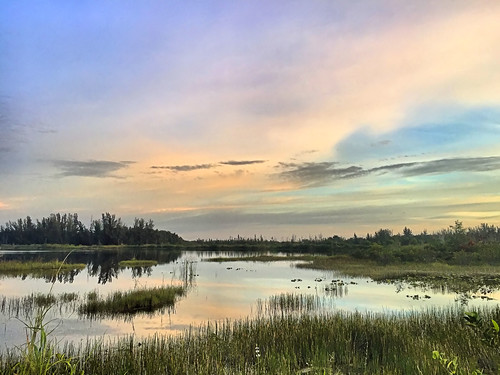
The colorful view from the levee shortly after sunrise:

View from levee to north JUN 12 2019

Setting out before sunrise on a typical late spring morning, here are some of the expected species--

Brown Thrasher:

Brown Thrasher 01-20190527

Brown Thrasher 02-20190527

Loggerhead Shrike:

Loggerhead Shrike 03-20190612

Loggerhead Shrike 01-20190518

Loggerhead Shrike 03-20190606

Northern Mockingbird:

Northern Mockingbird expelling pellet -1 20190203

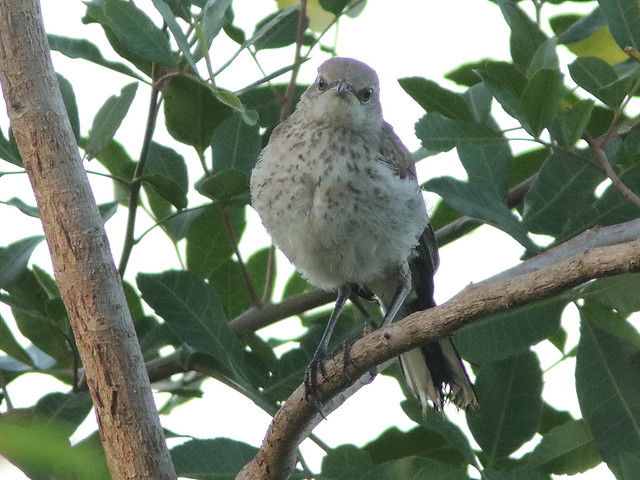
This is a juvenile mockingbird, as evidenced by its spotted breast and yellow corners of its mouth (gape):

Northern Mockingbird juvenile 01-20190522

A shrike and a mockingbird compete for insects together in a patch of gravel:

Northern Mockingbird and Loggerhead Shrike 02-20190528

Northern Mockingbird and Loggerhead Shrike 01-20190528

A White Ibis probes the turf:

White Ibis 02-20190530

White Ibis 01-20190530

A Killdeer sits on her eggs:

Killdeer incubating before sunrise 20190616

A Bald Eagle passes overhead before sunrise:

Bald Eagle 02-20190611

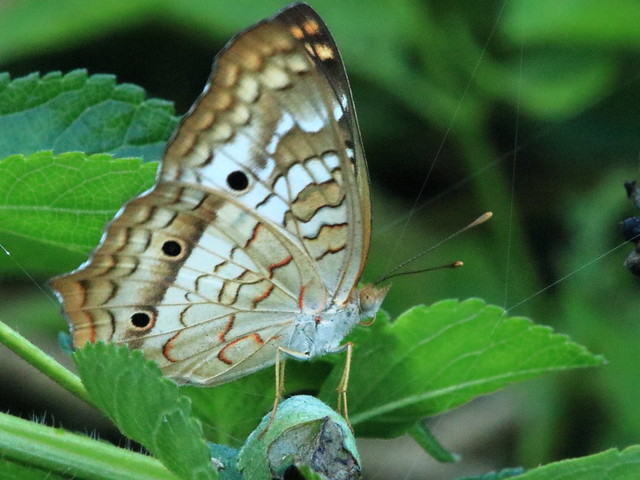
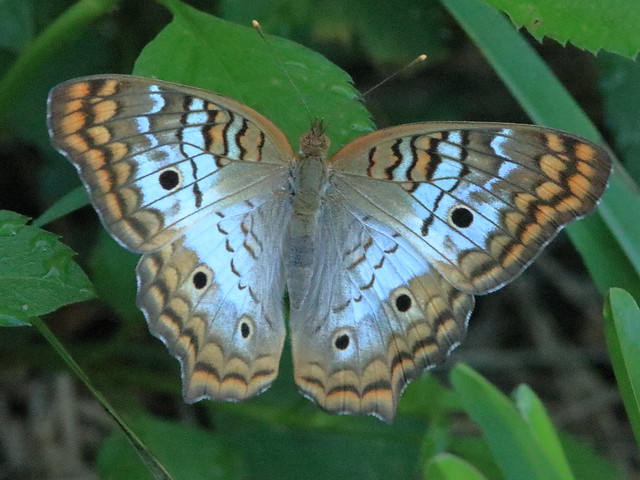
Butterflies are disturbingly scarce. One morning I found a newly emerged White Peacock in excellent condition. They fight over territory and mates, quickly damaging their wings:

White Peacock-  Anartia jatrophae-  20190609

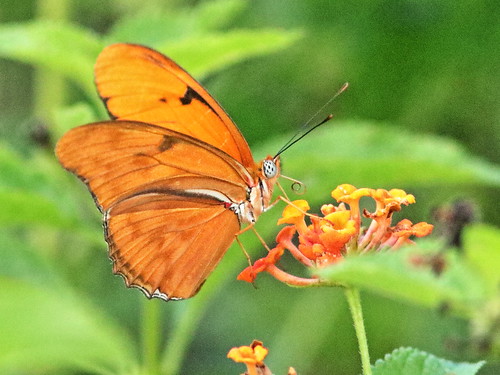
Julia heliconian butterflies were previously abundant, but almost disappeared after the autumn of 2017 when Hurricane Irma devastated the flowering and host plants and probably wiped out an entire generation of eggs and larvae. Now I often go several days without seeing any at all. This male gave me a nice photo opportunity as it sipped nectar from a Lantana flower:

Julia heliconian - Dryas iulia - male 01-20190603

Julia heliconian - Dryas iulia - male 03-20190603

Julia heliconian - Dryas iulia - male 02-20190603

We harvested well over 100 pounds of mangos and gave most of them away to neighbors and members of our choir. Those out of reach on the tree were left for the squirrels and birds. I scooped out the fruit and froze about 50 more of them and we still had these left over:

Leftover Mangos JUN 14 2019

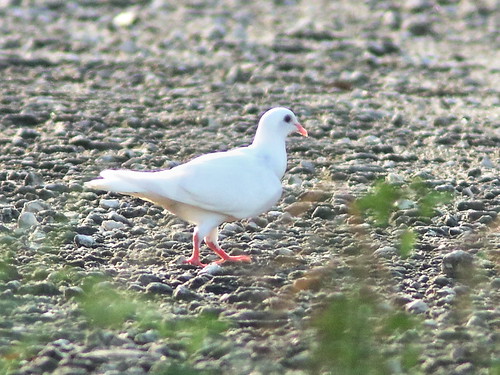
On the morning of our 59th Wedding Anniversary, a white dove (feral Rock Pigeon), the first I have ever seen in the wetlands patch, posed for a moment as if to celebrate the occasion:

White Dove on our anniversary 20190611 

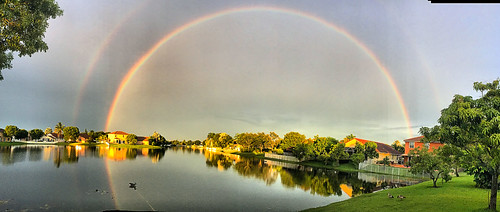
There is an upside to the rainy weather, as seen from our back patio on June 18:

Double Rainbow 01-20190618


= = =  = = =  = = = =  = = = = =

Linking to Misty's  CAMERA CRITTERS,

Linking to Eileen's SATURDAY'S CRITTERS,

Linking to SKYWATCH FRIDAY by Yogi, Sylvia and Sandy

Linking to WEEKEND REFLECTIONS by James

Linking to BirdD'Pot by Anni

Linking to Our World Tuesday by Lady Fi

Linking to Wild Bird Wednesday by Stewart

Linking to Wordless Wednesday (on Tuesday) by NC Sue

Linking to ALL SEASONS by Jesh

 Linking to Fences Around the World by Gosia
______________________________________________
_______________________________________________

Please visit the links to all these memes to see some excellent photos on display


________________________________________________
Thursday, July 26, 2018

Struggling to meet my Birder's RDA

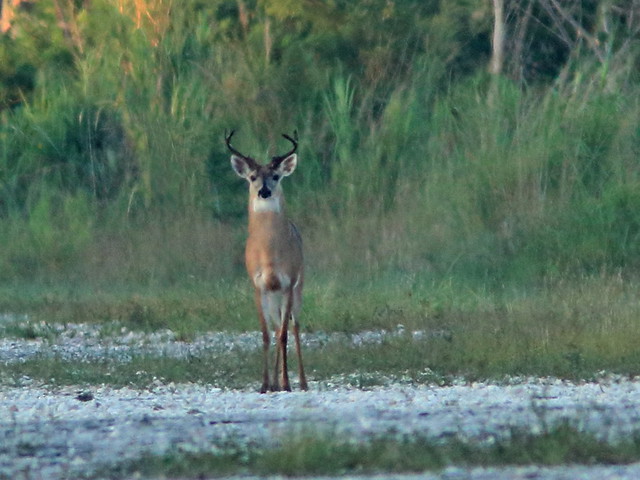
To beat the heat here in south Florida, Mary Lou and I set out on our daily 3 mile walk a half hour before sunrise. Temperatures are usually in the high 70s F (25-26 degrees C) but within two hours climb into the high 80s (31-32 degrees C). It is still quite dark at first, so I bird mostly by ear. A White-tailed Deer buck peers at me through the semi-darkness:

White-tail buck 03-20180715

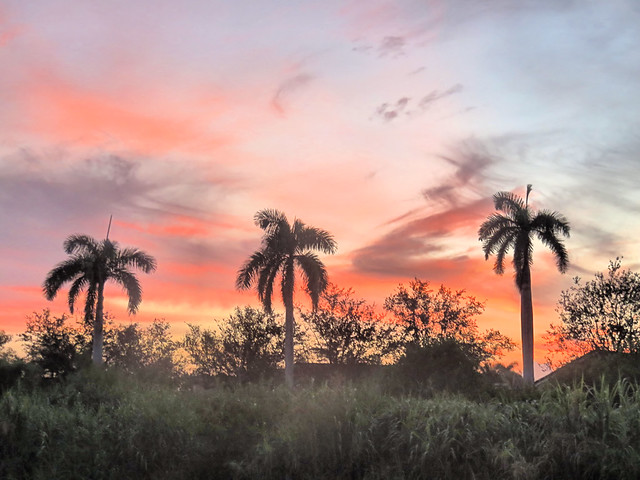
The sun is still well below the horizon, but its light reflects against the high clouds:

Before sunrise 02-20180721

Not many birds are singing in late July. Many have raised their families and are undergoing an energy-consuming molt. While mockingbirds may sing even during the night during breeding season, they are now quite silent.

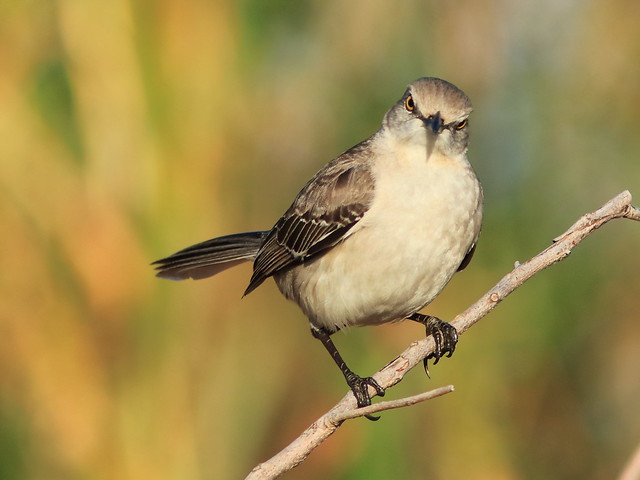
Adult Northern Mockingbird:

Northern Mockingbird 02-20180215

Fledgling mockingbird in June:

Northern Mockingbird fledgling 2-20150608

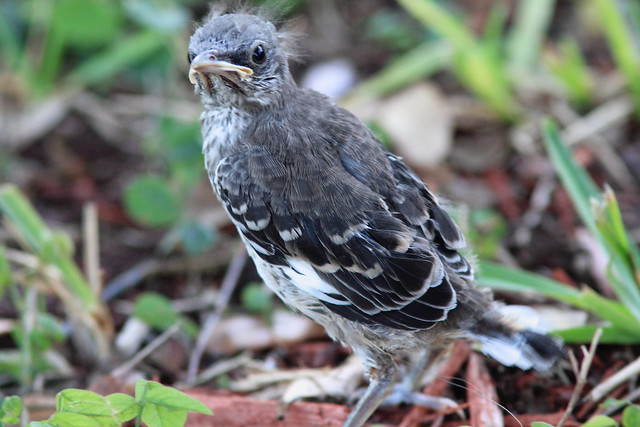
An older juvenile mockingbird exhibits a speckled breast:

Northern Mockingbird juvenile 20180627

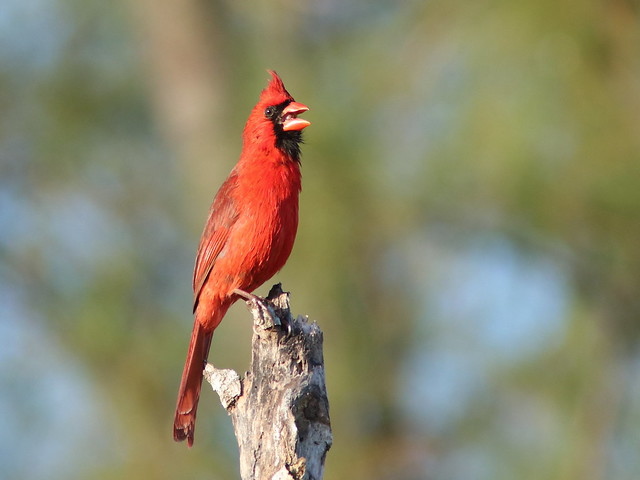
Northern Cardinals are a welcome exception. I can often count a half dozen singing males, some in duets with females, which also sing (as do female mockingbirds):

Northern Cardinal singing 05-20180228

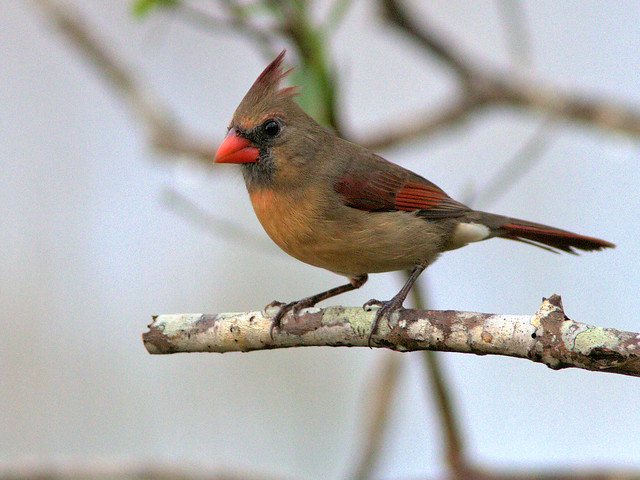
Female Northern Cardinal:

Northern Cardinal female 01-20171104

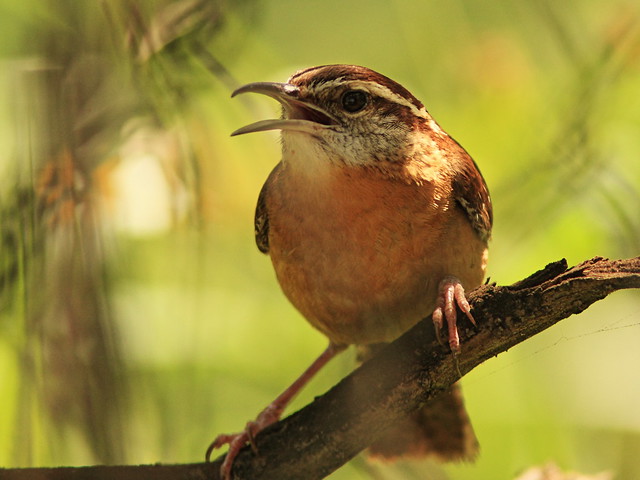
We may hear one or two Carolina Wrens singing despite the heat:

Carolina Wren 20150322

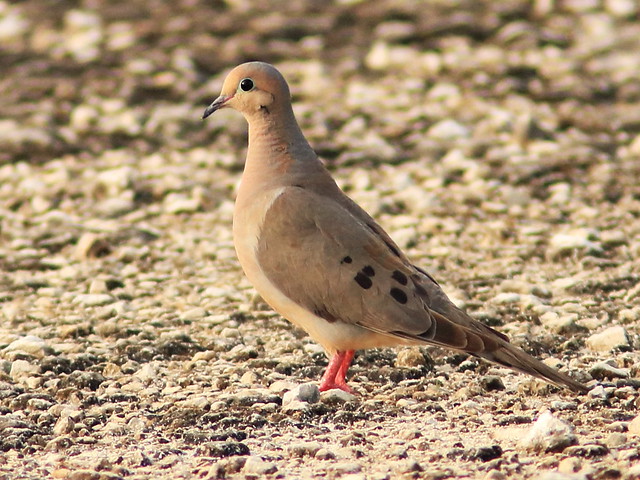
Mourning Doves coo persistently before sunrise...

Mourning Dove 20180612

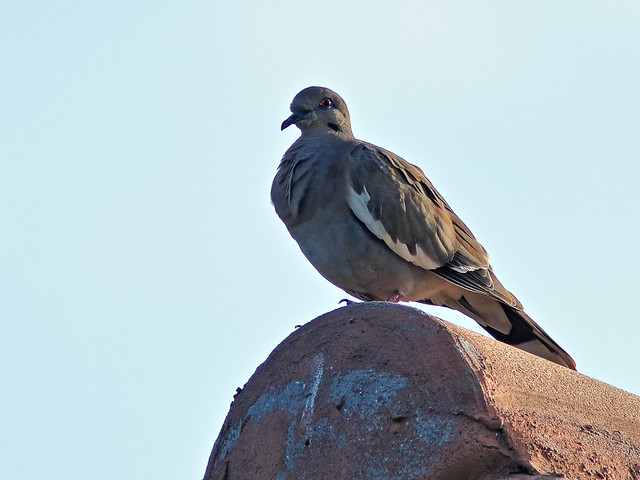
...as do White-Winged Doves. This one used the roof of our home for his performance:

White-winged Dove 20180716

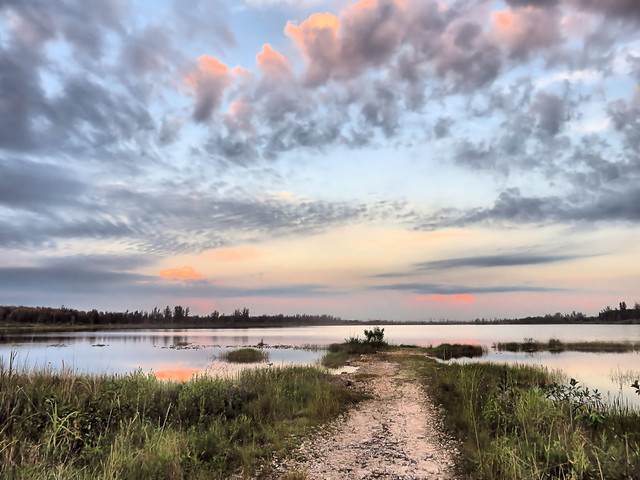
I walk out on the little "peninsula" and just listen. Maybe I will hear a Pileated Woodpecker or a Red-Shouldered Hawk, but only the calls of Blue Jays and Red-bellied Woodpeckers pierce the silence:

The peninsula 20180716

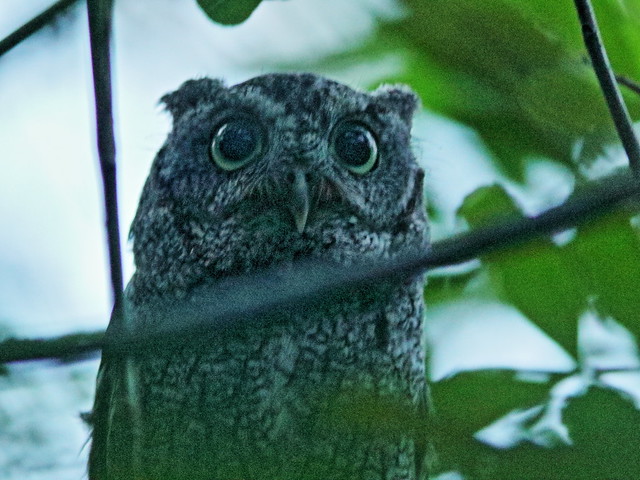
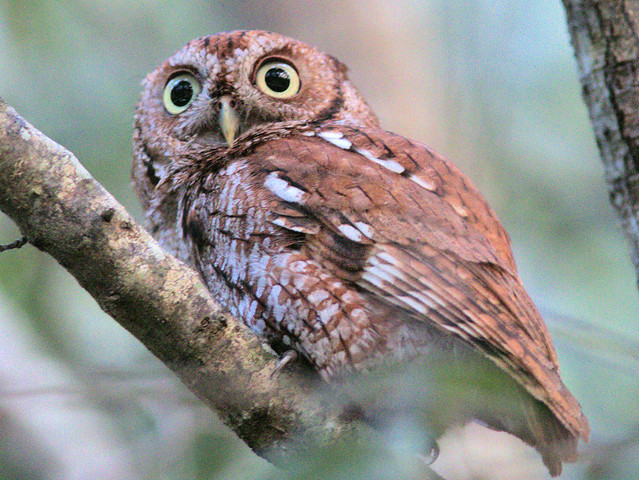
The monotone trill of an unseen Eastern Screech-Owl is like music to our ears and a reward for being out early. This week I heard two calling, about a mile into our walk. One had a more high-pitched voice. It may have belonged to the juvenile owl, which I briefly viewed through the branches of a thicket, about ten minutes before sunrise:

Eastern Screech-Owl 01-20180722

Here is an adult Screech-Owl which paused in better light very near this spot last year:

Eastern Screech-Owl 011-20170219

This is the time of year when I sometimes fall short of meeting Birdchaser's Recommended Daily Allowance (RDA) of 20 species

Seeing fewer than 20 species in a morning makes me feel "malnourished." If my list seems to be stuck at 18 or 19, I may delay my return home and risk heat stroke, hoping to see one or two more. It is especially frustrating when I fail to find one of the more common birds, such as a European Starling, or the sky does not contain any vultures or crows. High water discourages wading birds and one morning this week I saw no herons at all.

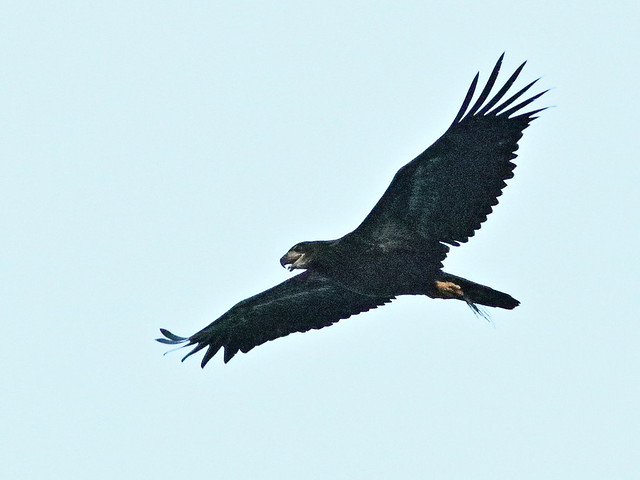
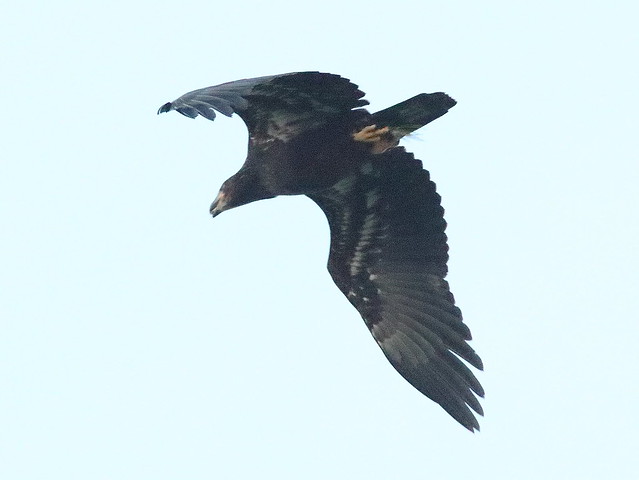
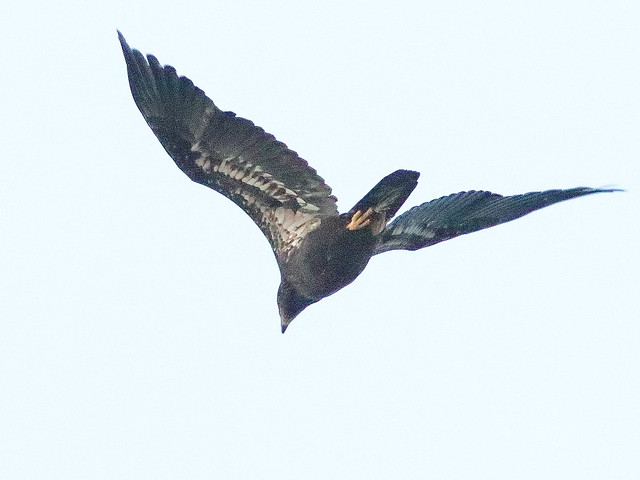
The fun of birding is not just about "body counts."  There is so much to discover at any time of year. One day last week I saw only 15 species but had the thrill of seeing the eaglet from the local Bald Eagle nest suddenly pass low overhead. Why has she not wandered north, as is the habit of south Florida's younger eagles? By July, most of them are following the Atlantic coast up into the Carolinas and Chesapeake Bay, where waters are cooler and fish are easier to catch. Oddly, she is carrying some grass in her talons. Why?

Bald Eagle immature 05-0646AM 20180718

We know she is a female by her bulk and the extension of the gape of her bill below her eye She exhibits first-year (juvenile) plumage: a dark body, dark beak, head and tail, along with white "armpits." Her set of fresh and longer wing and tail feathers cause her secondaries to bulge and add more than an inch to her length. She flies a direct line from the nest tree to a lake in our subdivision. Her lighter wing linings are also visible in these views as she moves away:

Bald Eagle immature 07-0646AM 20180718

Bald Eagle immature 08-0646AM 20180718

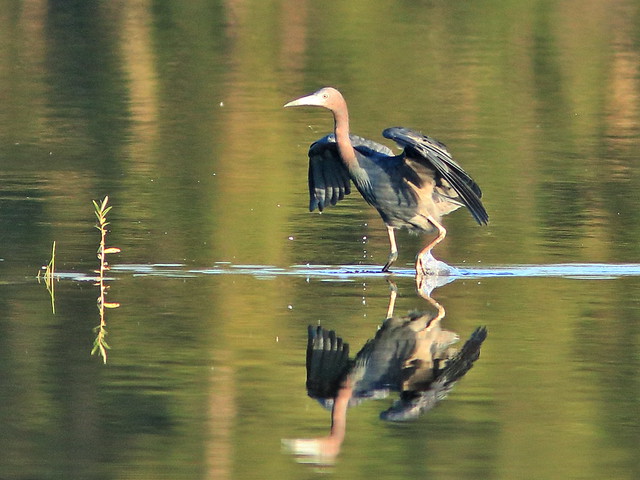
At the lake, the water is still. A Little Blue Heron dashes to find a better fishing spot:

Little Blue Heron 02-20180715

There has been a hatch of White Peacock butterflies. Many seem to be taking their first flights. By tomorrow their wings will be tattered from their constant struggle over territory and mates:

White Peacock 03-20180721

White Peacock 20180720

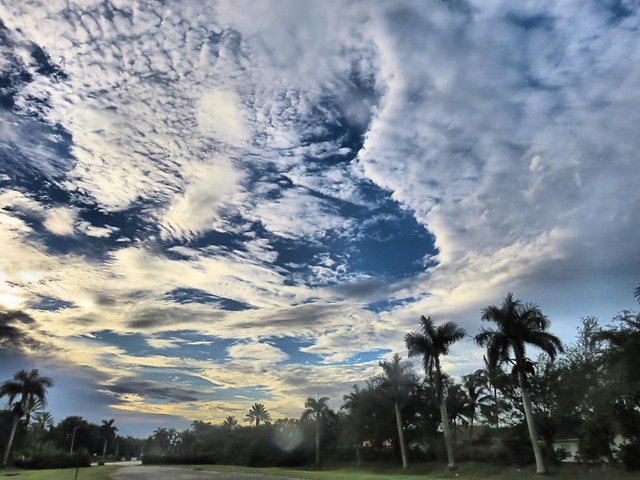
Walking home at 8:00 AM, the restless clouds portend the rain which is sure to arrive by noon:


Walking home at 8 AM 20180712

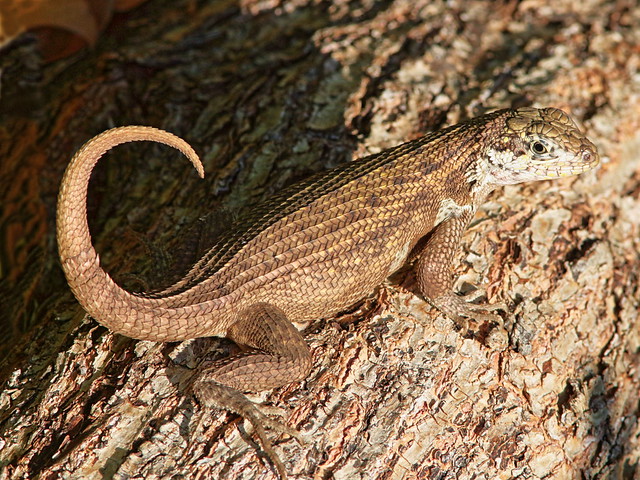
A Northern Curly-tailed Lizard appears at the base of a tree as I exit the wild area. This species, native to the Bahamas, was introduced into Palm Beach County to the north in hopes that it would control insect pests on the sugar cane. It has spread over the southern part of the State, although this was the first I have seen at this particular location. While invasive, they seem not to be a threat to native creatures:

Curly-tailed Lizard 01-20180715

= = =  = = =  = = = =  = = = = =

Linking to Misty's  CAMERA CRITTERS,

Linking to Eileen's SATURDAY'S CRITTERS,

Linking to SKYWATCH FRIDAY by Yogi, Sylvia and Sandy

Linking to WEEKEND REFLECTIONS by James

Linking to BirdD'Pot by Anni

Linking to Our World Tuesday by Lady Fi

Linking to Wild Bird Wednesday by Stewart

Linking to Wordless Wednesday (on Tuesday) by NC Sue

Linking to ALL SEASONS by Jesh


________________________________________________
Please visit the links to all these memes to see some excellent photos on display

________________________________________________