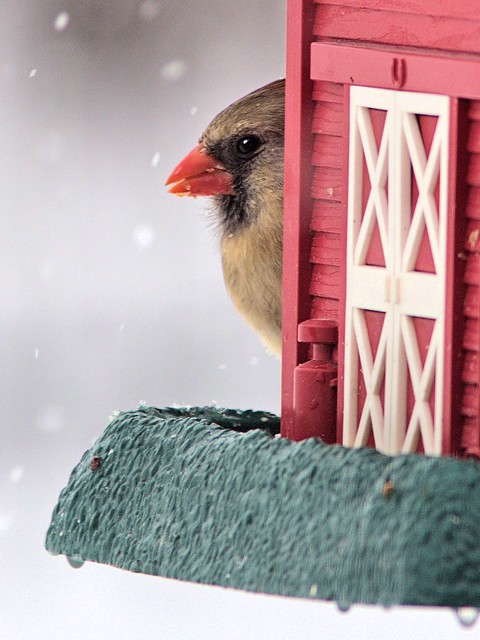
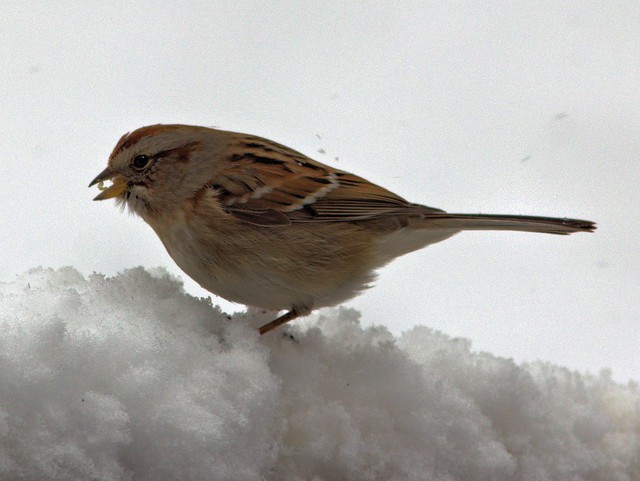
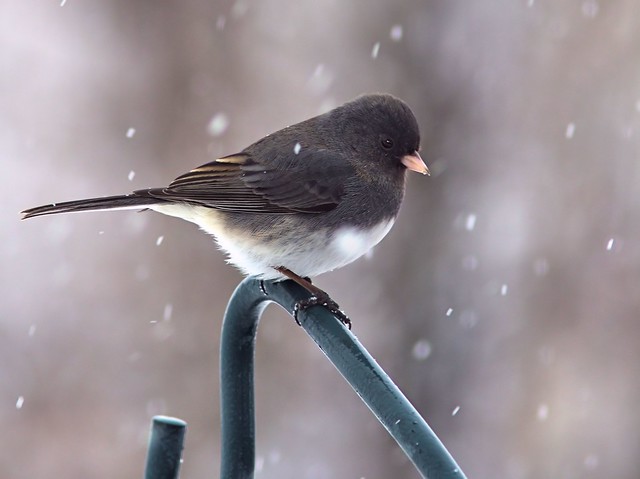
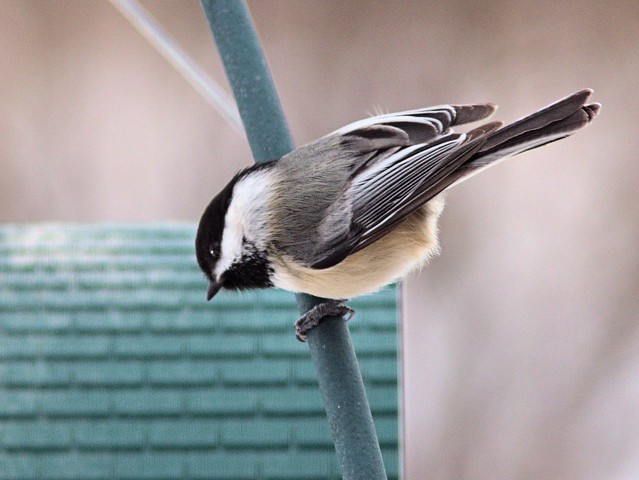
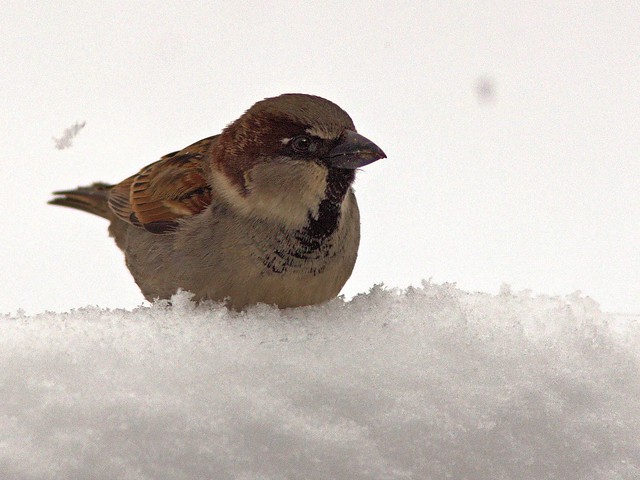
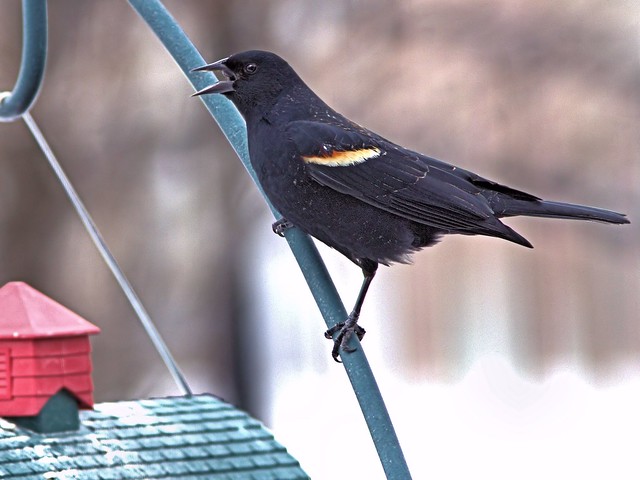
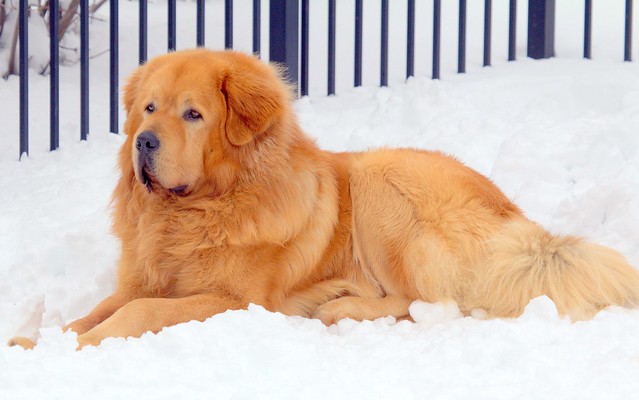
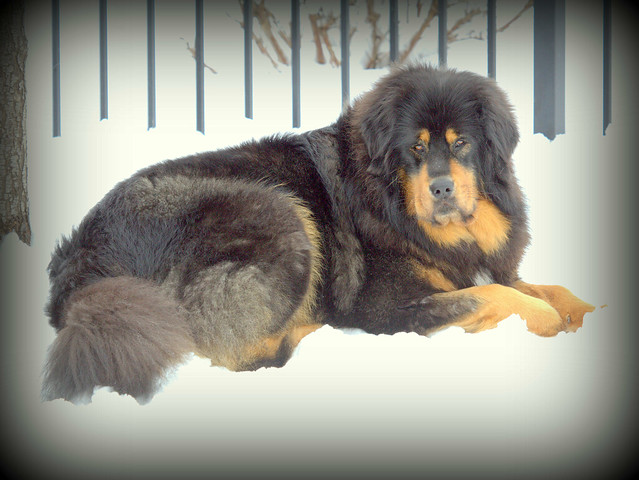
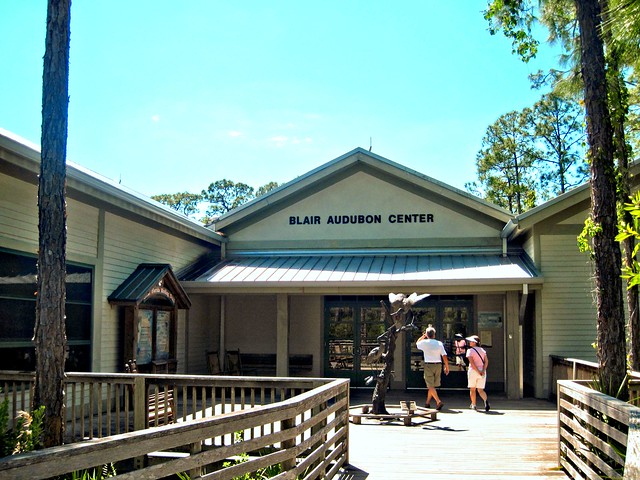
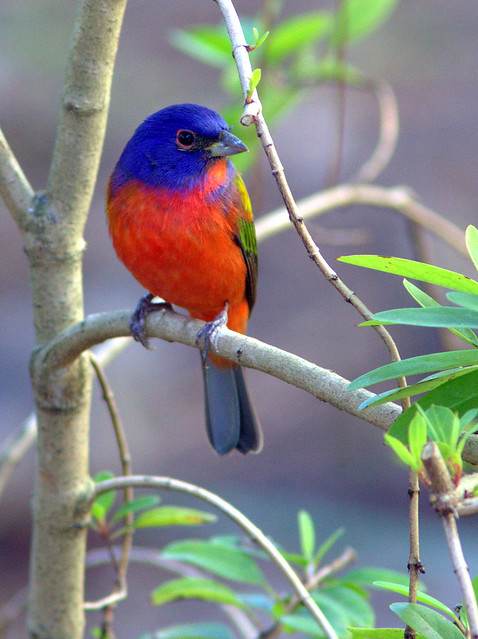
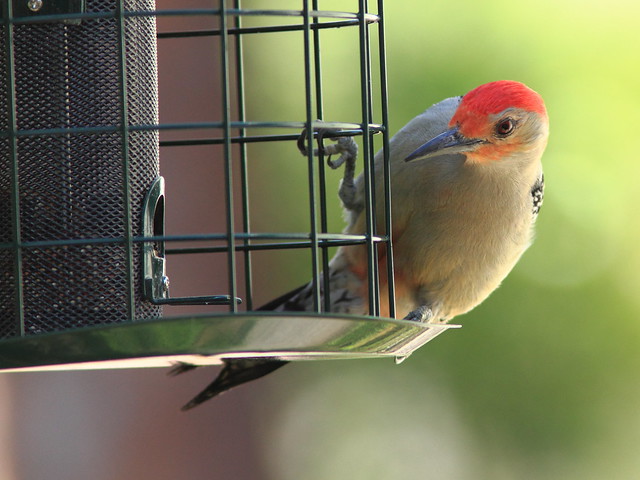
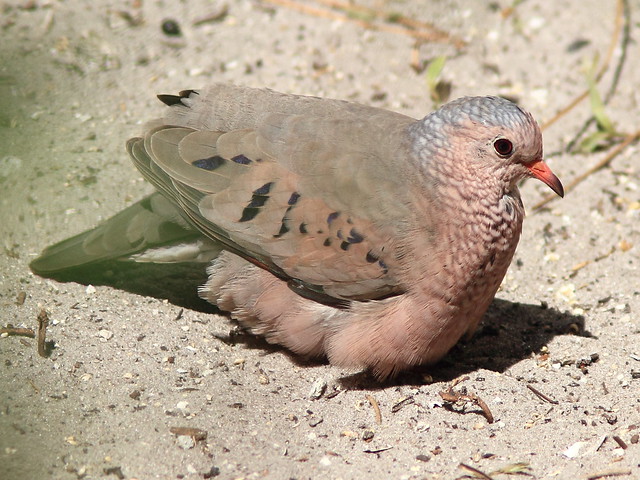
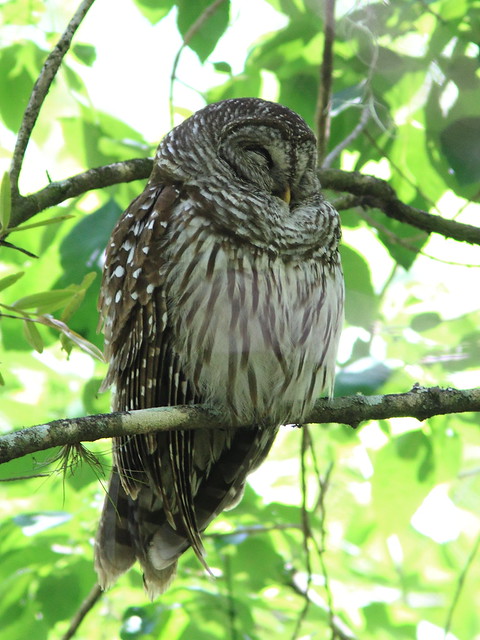
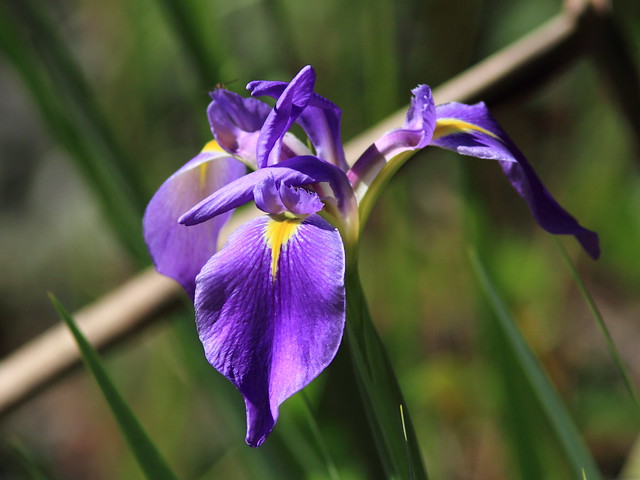
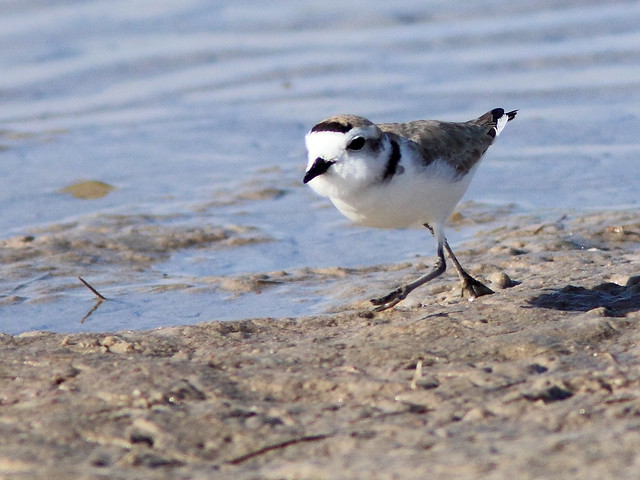
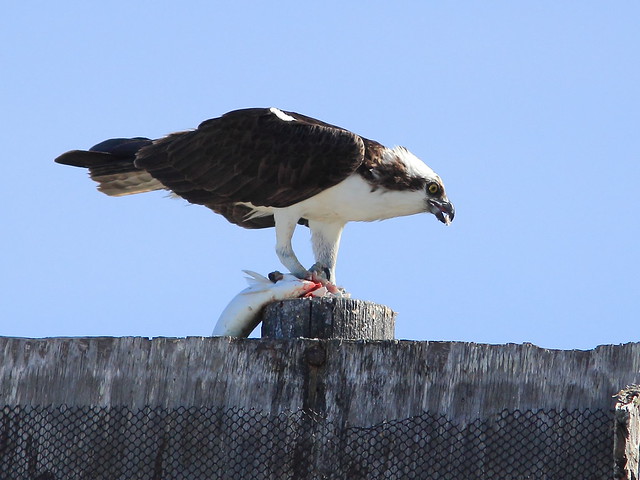
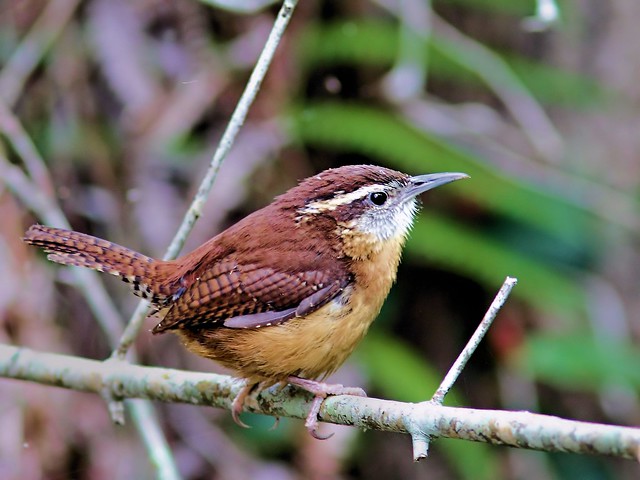
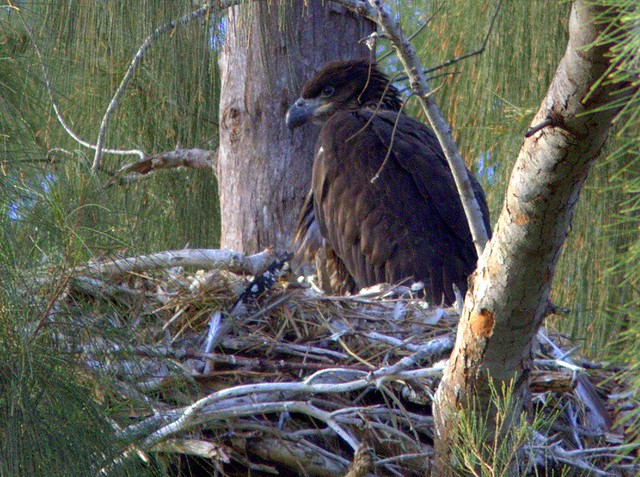
Once again, this is a monthly reflection on past experiences, memories from three years ago. I will continue the "scavenger hunt" for photos which represent a few selected themes: Living CRITTERS of all kinds, beautiful SKIES and REFLECTIONS, as well as MACRO images and GOOD FENCES. I have met this challenge for the past 14 months in a row, so let's see how far I must travel into the month of March, 2013 to achieve my goal! We began the month of March, 2013 in Illinois, helping our daughter and son-in-law as they each recuperated from independently acquired broken legs. Roly broke both legs in November and our daughter broke one of hers in January, so he is finally able to drive. They needed help caring for our two granddaughters. We were happy to oblige, but admittedly it had been a long cold month and another snowstorm rolled into Chicagoland. Their back yard was a winter wonderland for the birds. A female Northern Cardinal peered around the corner of the feeder: There were flocks of American Tree Sparrows: A Dark-eyed (Slate-colored) Junco perched on the feeder support: A Black-capped Chickadee and a male House Sparrow waited their turns: This first year male Red-winged Blackbird tried to dominate the gathering: Agramonte, the older Tibetan Mastiff, had grown a full mane and looked more like a lion than ever: Sagua, his little "sister" was also very much at home in the snow: Back in Florida, we soon traveled to enjoy a few nights in Marco Island on Florida's southern Gulf Coast. On the way out we visited National Audubon's Corkscrew Swamp Sanctuary : Seeking Painted Buntings, we were not disappointed: A Red-bellied Woodpecker visited the feeder: A Common Ground-Dove cleaned up any seed which spilled out: Another highlight of our Corkscrew visit was this Barred Owl: I've only reached March 10 and have found my MACRO of a wild Iris at Corkscrew: Marco Island was a delight, and quite a change from Illinois! On the beach we saw lots of birds, including Semipalmated plovers... ...a tiny Snowy Plover... ...Red Knots (this one wearing two bands, one with a blue flag which we later found had been applied in New Jersey back in 2005)... ...and an Osprey enjoying a fish: At Rookery Bay Preserve, this large Gopher Tortoise crossed the road in front of us: On the way home, a stop at Big Cypress Preserve yielded a nice shot of a Carolina Wren: Clearly visible from the Big Cypress boardwalk was this nest containing a juvenile Bald Eagle, ready to take its first flight:
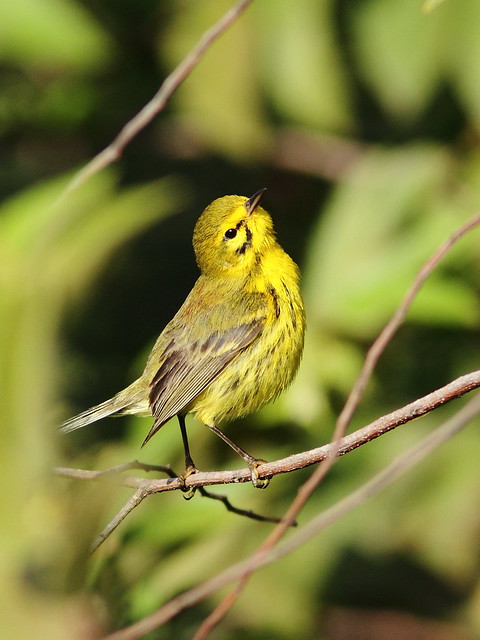
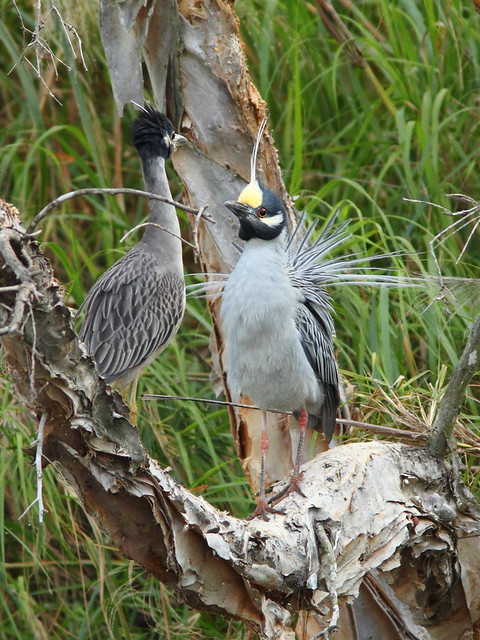
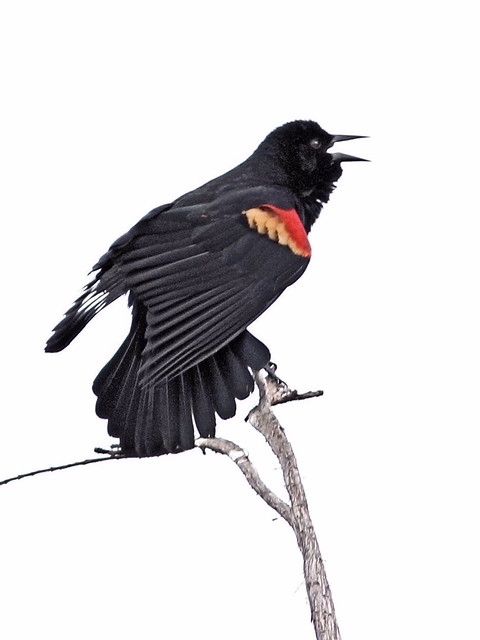
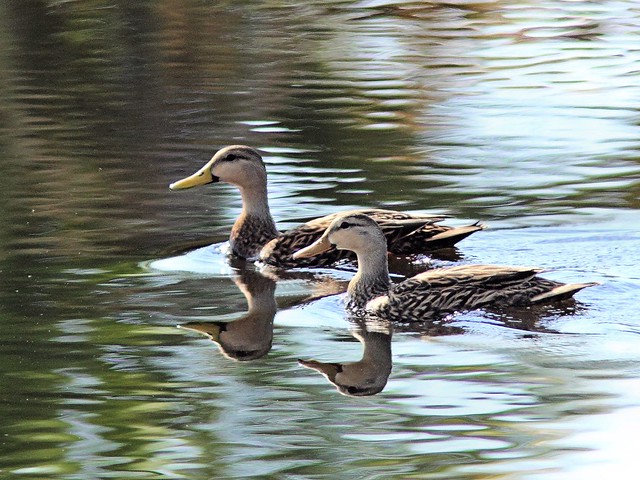
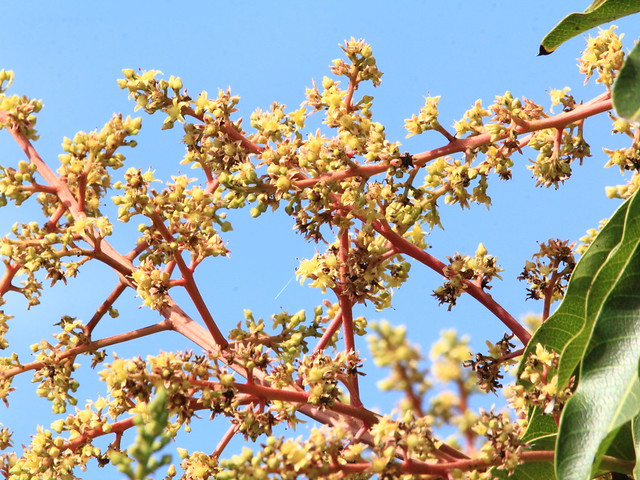
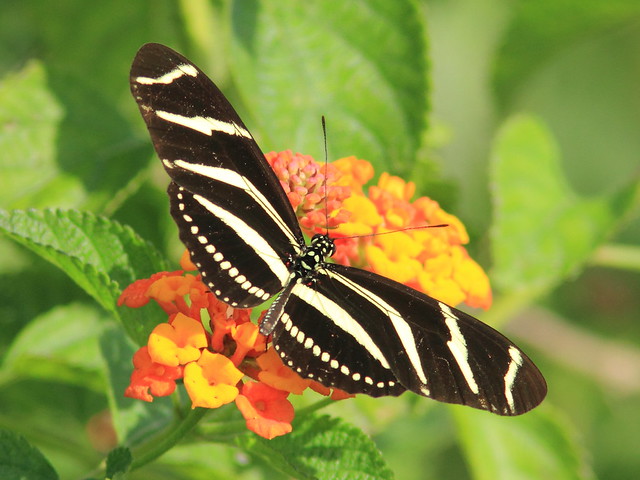
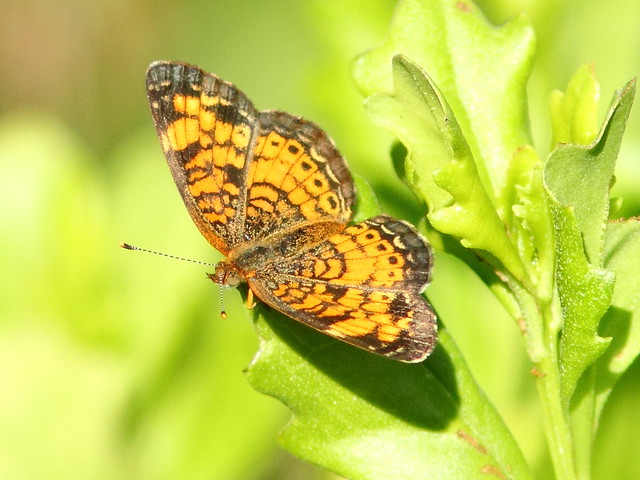
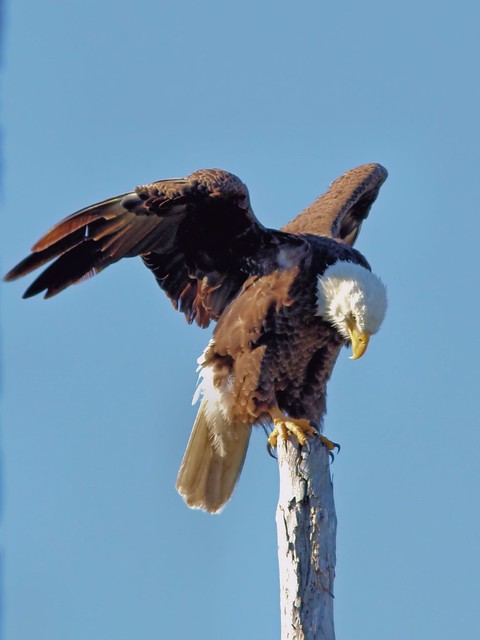
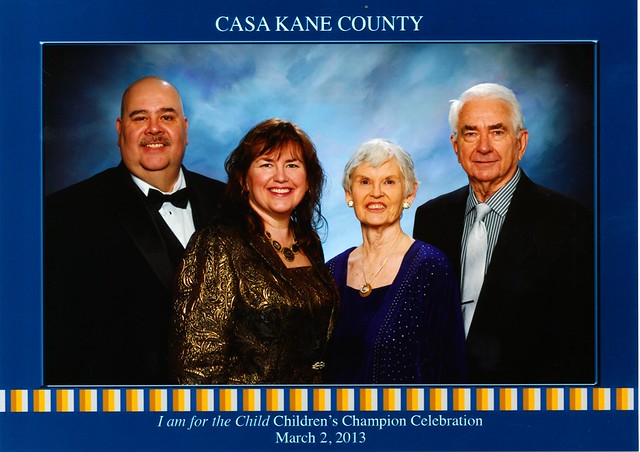
Back home I found a very photogenic Prairie Warbler, and Yellow-crowned Night-Herons were performing courtship displays in the local rookery: This Red-winged Blackbird was in full breeding plumage as it creaked its "song:" My first SKY photo was taken on March 18 in the local wetlands.. ...and on March 20 I captured a nice REFLECTION of a pair of Mottled Ducks: That day, our Mango tree was in bloom and the butterflies were out: Zebra heliconian: I still am not sure whether this is a Pearl, a Phaeon or a Cuban Crescent: The month ended with a bit of drama, as the lone eaglet in our local nest fledged on March 25 and went missing until it reappeared at the nest on April 2. The parents left food on the nest to entice it. Here a parent bird roosts, awaiting its return: Our Son-in-Law serves on the Board of CASA (Court-appointed Special Attorneys) of Kane County, Illinois. Mary Lou and I joined them at the annual Gala. This photo does not show the splints and casts on their legs or their canes. Thankfully they both healed very well! = = = = = = = = = = = = = = = Linking to Misty's CAMERA CRITTERS,
Linking to WEEKEND REFLECTIONS by James Linking to BirdD'Pot by Anni Linking to Wild Bird Wednesday by Stewart ________________________________________________ Please visit the links to all these memes to see some excellent photos on display ________________________________________________
Our daughter's family visited us from Illinois during the Easter recess, and our 10 year old granddaughter Graciela was once again very anxious to compose another blog post. (See links to her previous contributions here). It turned into more of a journal and was many pages long. Wishing not to interfere with the creative license I had bestowed, I simply got her permission to cut it off just into the main part of her story, which was our visit to Ding Darling National Refuge during our stay on Sanibel Island on the west (Gulf) coast of Florida. She selected her illustrations from my many RAW files, and it took me some time to get to a desktop computer to edit and convert her chosen ones. On Easter Sunday we received the sad news that Mary Lou's brother had passed away in Arizona. Larry was my classmate in high school and we attended college together. He introduced me to his sister and "fixed me up" with her for a couple of double dates. We did eventually hit it off and now Mary Lou and I have been married for nearly 54 years! We detoured to Phoenix for his funeral and then flew on to Illinois. Suffice it to say that between house guests and traveling I have fallen hopelessly behind in correspondence but will try to catch up. Ken The following is the excerpt in Graciela's own words. Click on photos for more views and more birds from Sanibel: When my family flew from our home in Illinois to Florida for spring break I had no idea of the adventure that was waiting for me. As soon as we got settled my Grandfather and I went out in the back yard to look for Mediterranean Geckos, but instead we found a Cane Toad. It was bigger than any toad I had ever seen before. Grandpa took a bit of dead palm leaf and played with the toad to make the poison come out, then took pictures of the toad's white poison dripping from special glands behind the eyes. Later Grandpa had me guess where the Cane Toad came from and I said "Cuba." He said "Right on first try." He also told me what Cane Toads are used for. Someone brought Cane Toads to America to kill bugs in the sugar cane and they ended up taking over, even killing some of the native toads. Two days later we went to Bass Pro Shop to get supplies for our trip to Sanibel Island. There were two big water tanks with Florida fish. The big one had a waterfall and the skins of animals that people killed, even a model of a Bald Eagle. There was also a snake that I identified as a Burmese Python but Grandpa first thought it was a rattlesnake with the tail broken off by someone. When he took a closer look he realized it was a Burmese Python! There were three kinds of gar: the biggest one was Florida Gar, and the smallest was the Long-nosed Gar and the one in the middle was the Alligator Gar. The neatest thing was when we went to the restaurant that had the second fish tank I spotted FOUR iguanas begging for food from people at the outdoor part of the restaurant. The next day we drove to Sanibel Island. We stopped at Ave Maria for lunch, then went to Corkscrew Swamp. That place had a nature hike that was two miles long along a boardwalk. We saw a family of Barred Owls. My Dad noticed that the father owl had something tied around its ankle. We figured it was only moss. The father owl did something that seriously surprised us. He got off his perch and flew real low right over our heads and some other tourists. I think he was just trying to lead us away from his baby and his wife. Maybe he didn't like us standing there taking pictures. Father: Mother: Baby:
After walking some more we came to Lettuce Lakes. We tried to find any alligators but didn't succeed at first. But we did notice dragonflies and little fish that were trying to eat them when they sat on the floating duckweed. As we passed by Lettuce Lakes my Dad noticed a stork that was fishing in a little clearing semi-hidden by some trees. At the right angle I could see it. Then three Wood Storks flew overhead. A little down the boardwalk we saw people standing very still. They were trying not to scare a Great Egret that was standing on the boardwalk railing. Nobody wanted to walk on because they wanted to get a picture of the bird without anyone scaring him. Then I heard some people say that they wanted to get a picture of the bird flying so I said that I would do it. I carefully crept up to him and crouched down so he would think that I would be ready to pounce on him like a bobcat who wanted a yummy bird for dinner. The egret flew and perched nearby. As I walked by the egret I heard him screaming at me. He wasn't too happy and I knew it so I said "Whether you like it or not!" Then we noticed a "teen-aged" alligator just stitting in some mud. He was two feet long and had just left the care of his mother, shown in this picture. There was also a little alligator that looked like a baby. One of the other tourists noticed some birds that were fishing behind some reeds in a large clearing a little ways up the boardwalk. This one was a Little Blue Heron. We saw a female Anhinga drying her wings in the sun. Some people thought she was fishing too. A male Anhinga was on the other side of the boardwalk doing the exact same thing as his mate. There was a little telescope set up to show the Anhinga nest. I could only see two babies, but Grandpa got three in the picture. A Black-crowned Night-Heron was roosting in the shadows. When we finished walking we were hot and thirsty. We got back to the car and continued driving to Sanibel Island. My father and I brought fishing poles and tackle to try and catch sharks along the beach. By the time we got there it was very dark and I couldn't see anything but when I looked up I saw the Big Dipper and Orion's belt. Dad didn't get any bites but I caught a sea anenome that ingested my bait and my hook! The next day we headed down to the beach again. My sister Carina and I brought our boogie boards with us. Our parents found lots of sand dollars. A girl asked where we got them and Mom showed her family and they found some too. Later my Mom noticed dolphins swimming and jumping near us. Our parents held our boogie boards for us to stand on. I fell on Dad's hat twice. I dented the front and the back.So he called me the "hat denter." Papi was able to get very close to this pelican before it flew away. When we were fishing again that day our Mom caught a piece of seaweed that had the strangest ever sea creature on it. It had the wings of a Sting Ray, a little tail and the head of a Hammerhead Shark. We dug a little pool and filled it with water to hold the creature. Mom took a video of it swimming on its back! After some research we found it was a kind of Sea Slug. *
On our last day, at the Ding Darling sanctuary we saw a family of Manatees, two parents and one child. Most of the time they were underwater and they rarely poked their noses above the water. Gramps really wanted me to see this bird called a Reddish Egret, and we saw one right away next to a cormorant. There were lots of White Pelicans and a flock of sandpipers with two Black-bellied Plovers in the mix. Willets and Black-bellied Plovers: There were also lots of fiddler crabs. * I later learned that the "hammerhead" appearance is created by the oral tentacles and that the eyes are posterior to the tentacles. It is swimming normally, not on its back, and the remnant of a shell is visible though its skin. This species of sea slug is actually named "sea hare" because of the supposed resemblance of its tentacles to a rabbit's ears. It expelled large quantities of purple ink when we captured it. The following is from the Web page of the Smithsonian Marine Station at Fort Pierce, Florida. Ken
"Sooty sea hares are perhaps the most commonly encountered sea hare in east central Florida. They are robust, soft-bodied mollusks that reach 8 - 10 inches in length. Body color is variable, but typically ranges from red-brown or red-purple to lighter shades of brown. Mottled white to yellowish splotches and spots cover the body surface. A pair of lateral, wing-like parapodia is used for swimming. Tentacle-like rhinophores, located on top of head, originate directly behind the eyes. Oral tentacles flare laterally at the terminal mouth. A flattened internal shell, partially embedded in the mantle, is visible along the dorsal surface over the visceral mass. Eye is small and dark, with the area around the eye generally white."