Once again, this is a monthly reflection on past experiences, memories from three years ago. I will continue the "scavenger hunt" for photos which represent a few selected themes: Living CRITTERS of all kinds, beautiful SKIES and REFLECTIONS, as well as MACRO images and GOOD FENCES. I have met this challenge for the past 14 months in a row, so let's see how far I must travel into the month of March, 2013 to achieve my goal!
We began the month of March, 2013 in Illinois, helping our daughter and son-in-law as they each recuperated from independently acquired broken legs. Roly broke both legs in November and our daughter broke one of hers in January, so he is finally able to drive. They needed help caring for our two granddaughters. We were happy to oblige, but admittedly it had been a long cold month and another snowstorm rolled into Chicagoland.
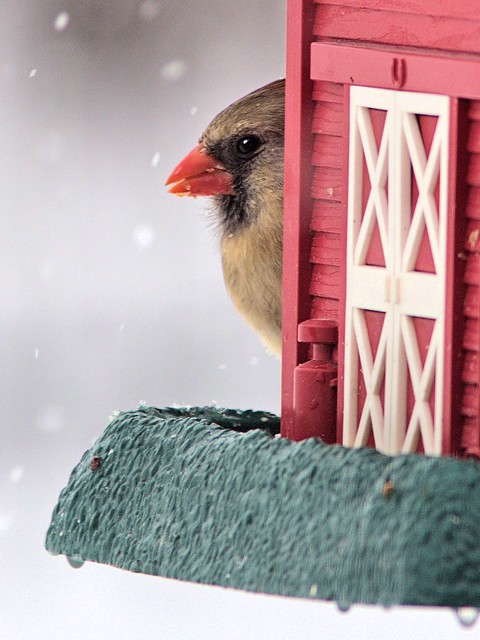
Their back yard was a winter wonderland for the birds. A female Northern Cardinal peered around the corner of the feeder:

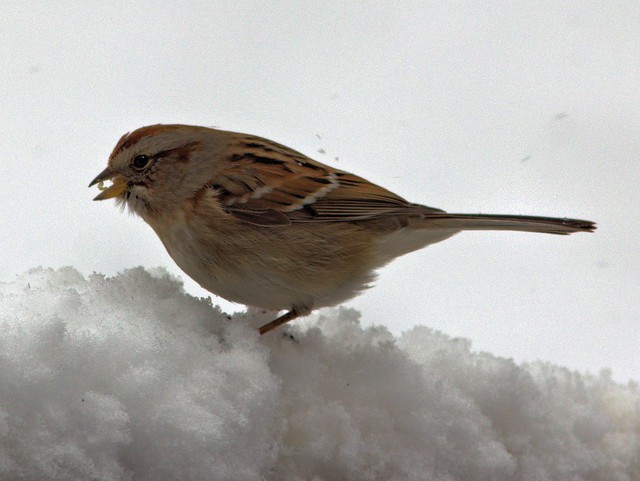
There were flocks of American Tree Sparrows:
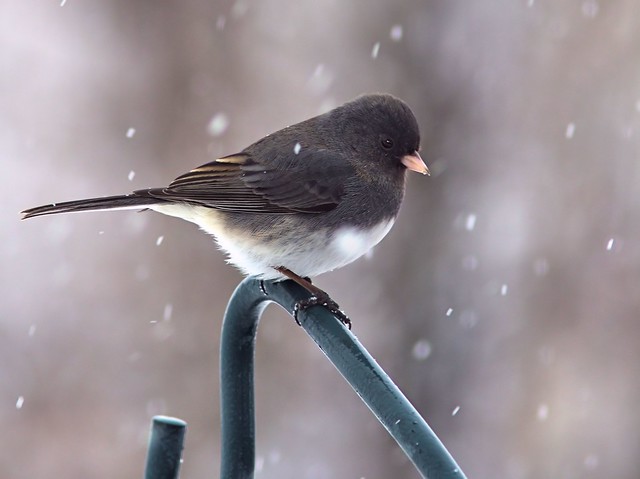
A Dark-eyed (Slate-colored) Junco perched on the feeder support:
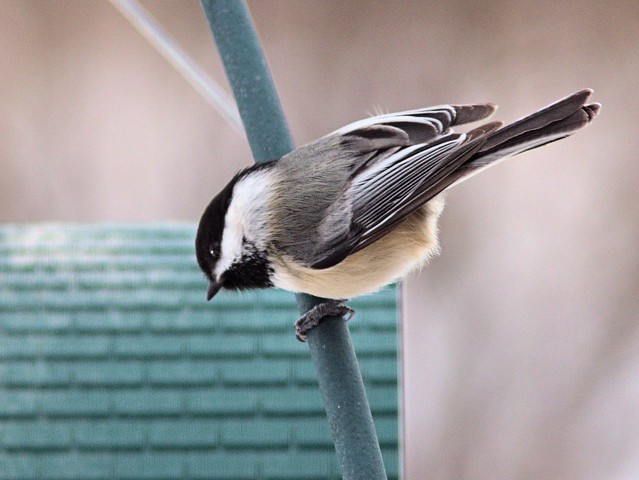
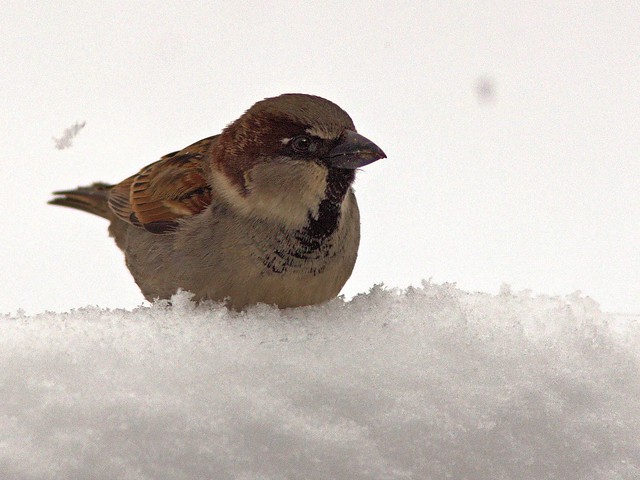
A Black-capped Chickadee and a male House Sparrow waited their turns:
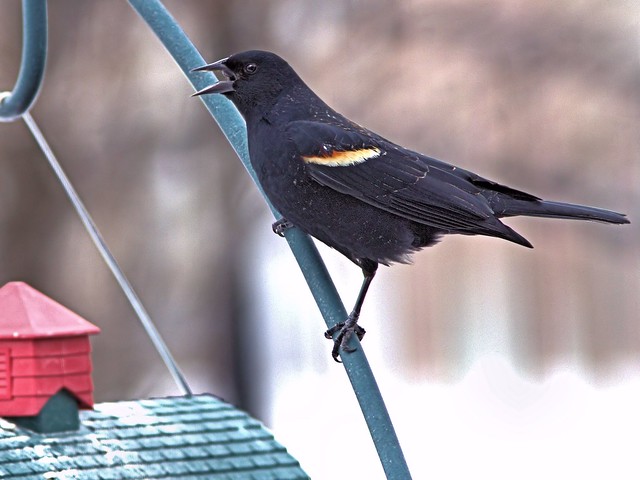
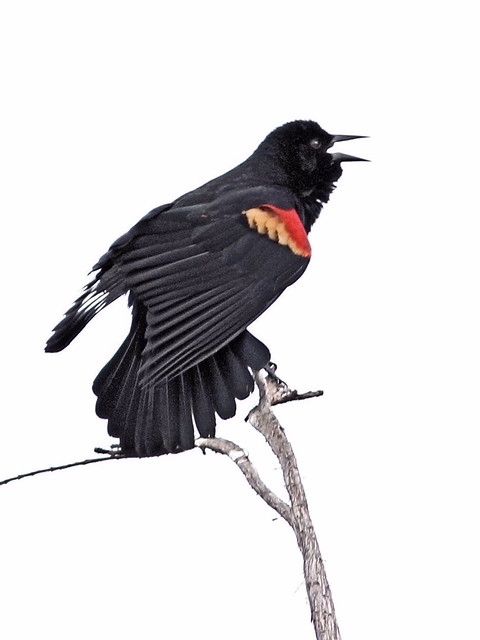
This first year male Red-winged Blackbird tried to dominate the gathering:
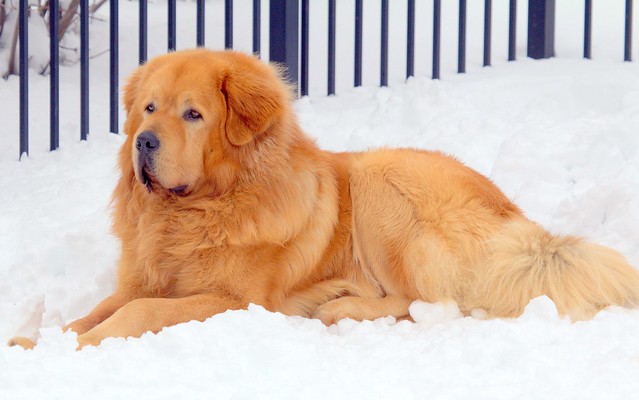
Agramonte, the older Tibetan Mastiff, had grown a full mane and looked more like a lion than ever:
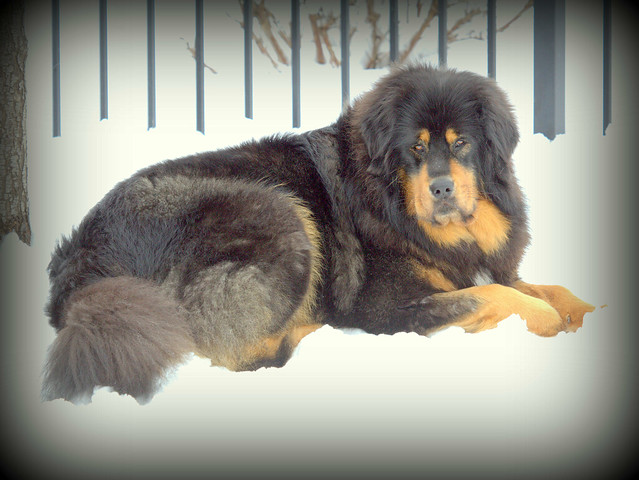
Sagua, his little "sister" was also very much at home in the snow:
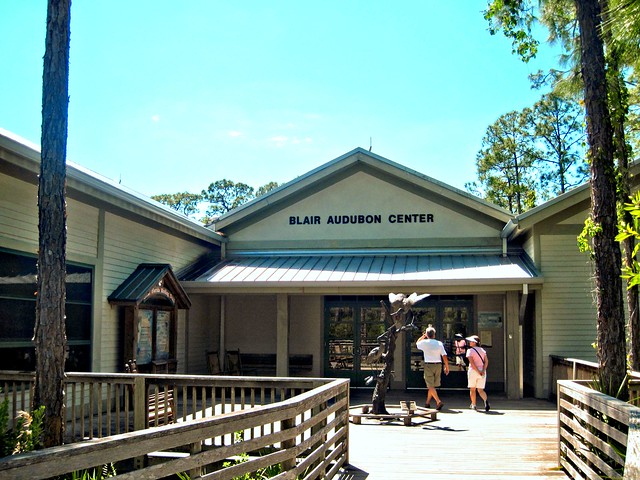
Back in Florida, we soon traveled to enjoy a few nights in Marco Island on Florida's southern Gulf Coast. On the way out we visited National Audubon's Corkscrew Swamp Sanctuary :

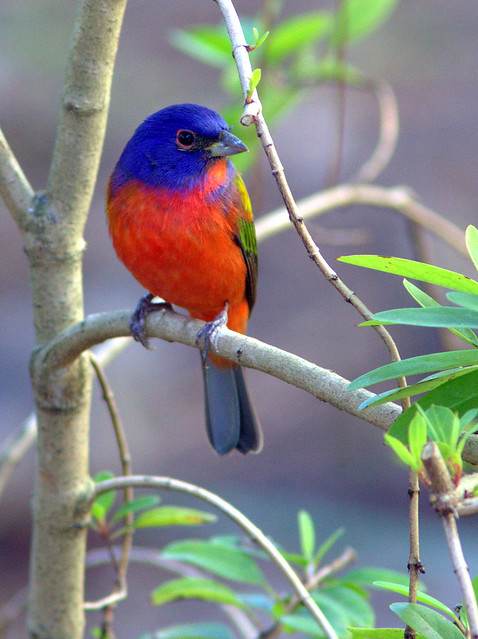
Seeking Painted Buntings, we were not disappointed:
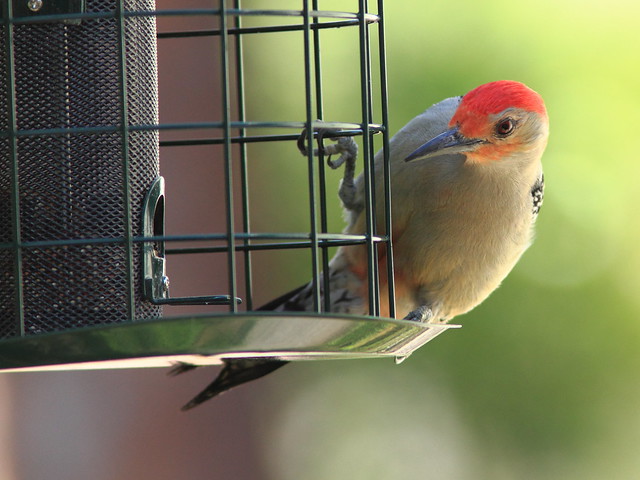
A Red-bellied Woodpecker visited the feeder:
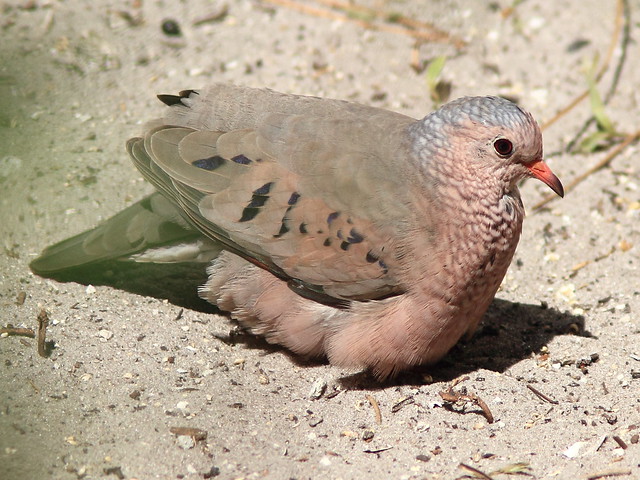
A Common Ground-Dove cleaned up any seed which spilled out:
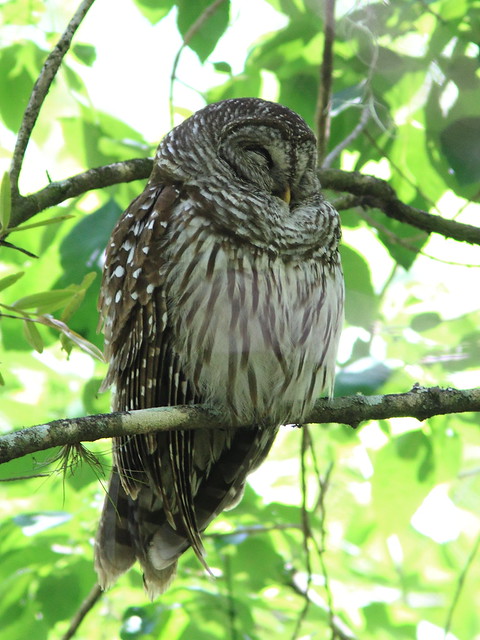
Another highlight of our Corkscrew visit was this Barred Owl:
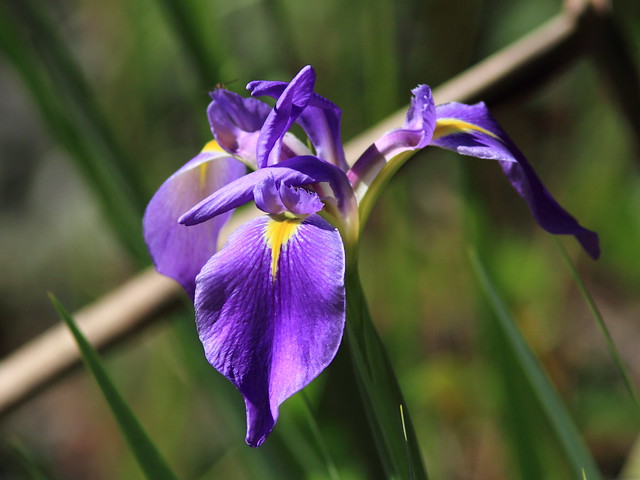
I've only reached March 10 and have found my MACRO of a wild Iris at Corkscrew:
Marco Island was a delight, and quite a change from Illinois! On the beach we saw lots of birds, including Semipalmated plovers...

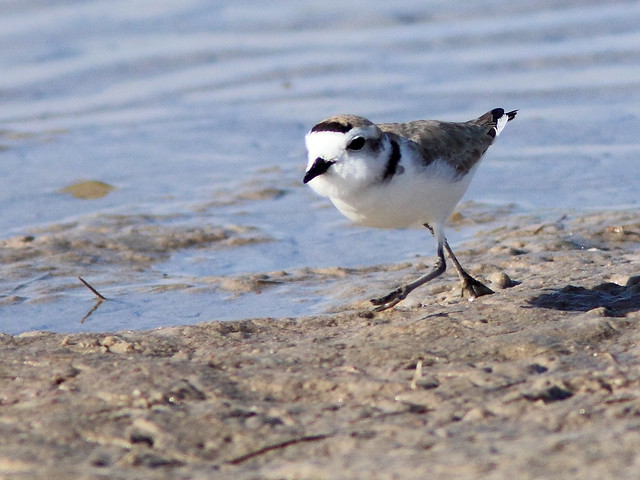
...a tiny Snowy Plover...
...Red Knots (this one wearing two bands, one with a blue flag which we later found had been applied in New Jersey back in 2005)...

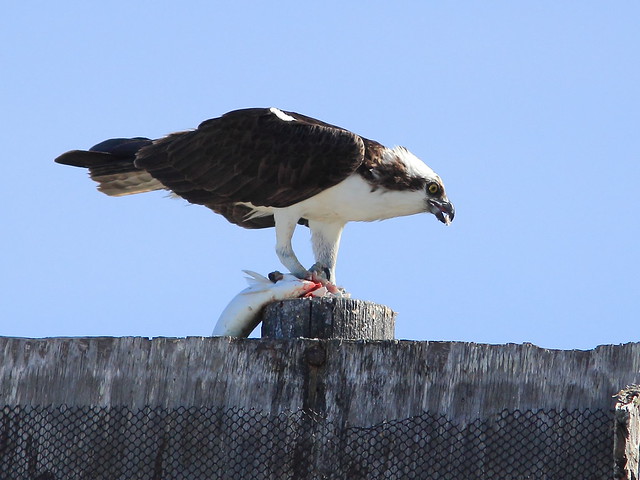
...and an Osprey enjoying a fish:
At Rookery Bay Preserve, this large Gopher Tortoise crossed the road in front of us:

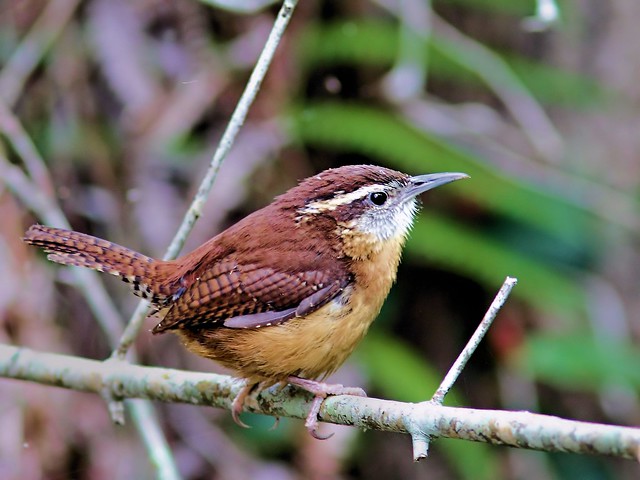
On the way home, a stop at Big Cypress Preserve yielded a nice shot of a Carolina Wren:
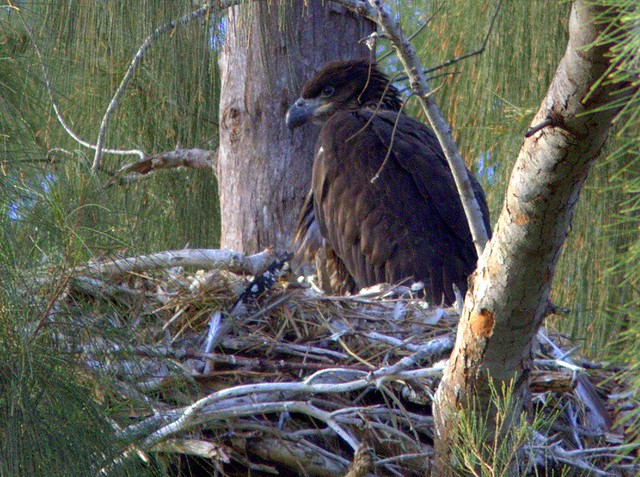
Clearly visible from the Big Cypress boardwalk was this nest containing a juvenile Bald Eagle, ready to take its first flight:
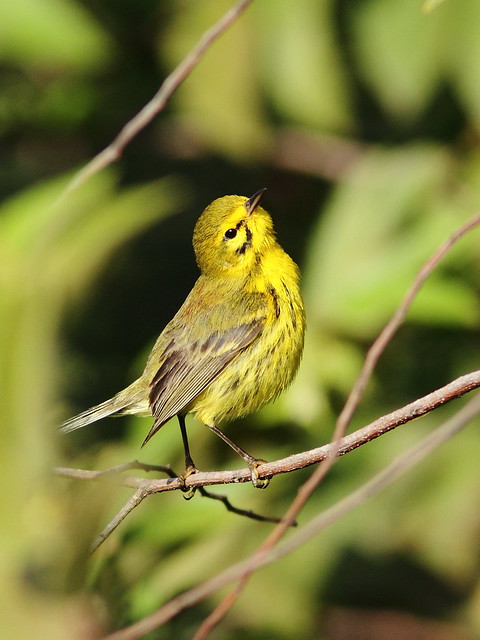
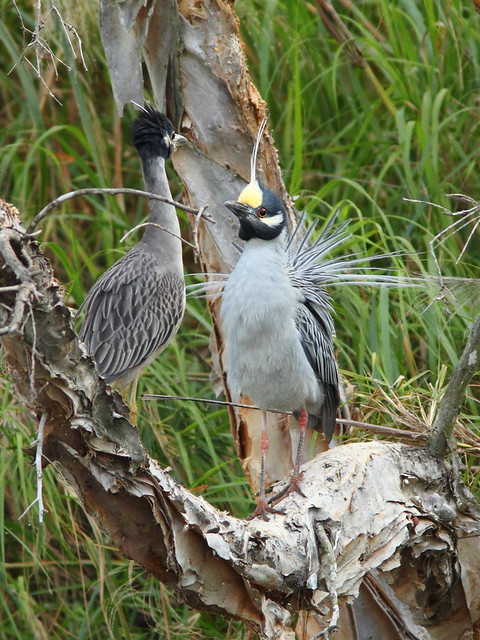
Back home I found a very photogenic Prairie Warbler, and Yellow-crowned Night-Herons were performing courtship displays in the local rookery:
This Red-winged Blackbird was in full breeding plumage as it creaked its "song:"
My first SKY photo was taken on March 18 in the local wetlands..

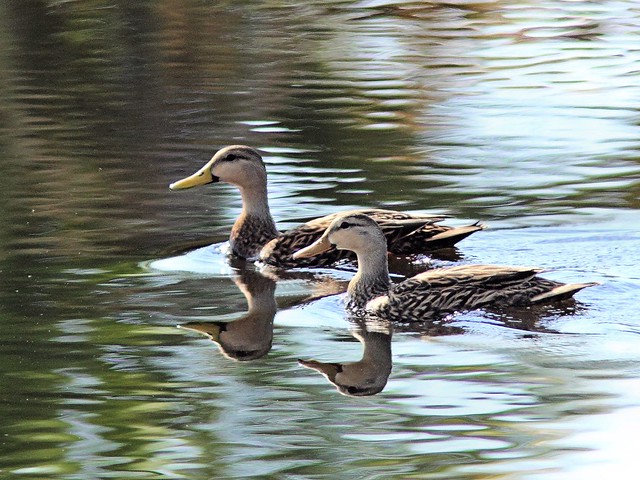
...and on March 20 I captured a nice REFLECTION of a pair of Mottled Ducks:
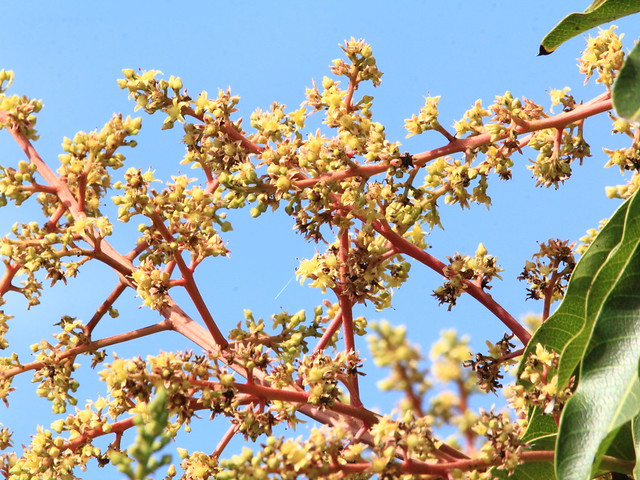
That day, our Mango tree was in bloom and the butterflies were out:
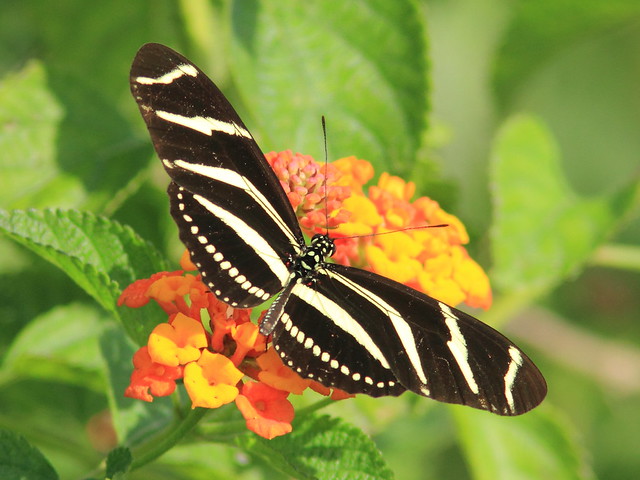
Zebra heliconian:
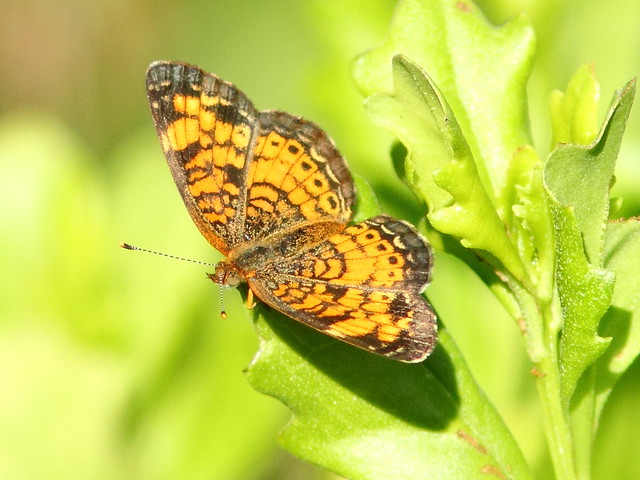
I still am not sure whether this is a Pearl, a Phaeon or a Cuban Crescent:
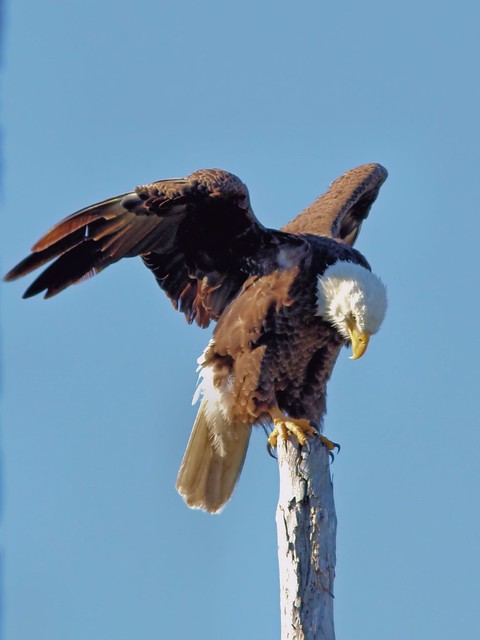
The month ended with a bit of drama, as the lone eaglet in our local nest fledged on March 25 and went missing until it reappeared at the nest on April 2. The parents left food on the nest to entice it. Here a parent bird roosts, awaiting its return:
Our Son-in-Law serves on the Board of CASA (Court-appointed Special Attorneys) of Kane County, Illinois. Mary Lou and I joined them at the annual Gala. This photo does not show the splints and casts on their legs or their canes. Thankfully they both healed very well!

= = = = = = = = = = = = = = =
Linking to Misty's CAMERA CRITTERS,
Linking to Eileen's SATURDAY'S CRITTERS,
Linking to GOOD FENCES by Tex (Theresa).
Linking to SKYWATCH FRIDAY by Yogi, Sylvia and Sandy
Linking to WEEKEND REFLECTIONS by James
Linking to BirdD'Pot by Anni
Linking to Wild Bird Wednesday by Stewart
________________________________________________
Please visit the links to all these memes to see some excellent photos on display
________________________________________________
While we were staying on Marco Island we briefly visited Shell Island Road in Rookery Bay National Estuarine Research Reserve. The former site of Briggs Nature Center has been closed and converted into an office of the Florida Fish and Wildlife Conservation Commission and houses law-enforcement personnel. However, there was a volunteer interpreter available at the overlook at the far end of the 0.5 mile boardwalk loop. Controlled burns were going on and this limited our exploration of the area.
Along the road we saw this Red-shouldered Hawk.
 An endangered Gopher Tortoise was crossing Shell Island Road in front of our car. An oncoming vehicle had already stopped. The tortoise wasted no time moving off the roadway and disappeared in the roadside brush.

 We walked a short nature trail at the far end of Shell Road and saw several Hermit Thrushes.
 There was also a poorly-maintained Catclaw Trail that yielded this close view of a Little Blue Heron
 On our way back home we stopped at Big Cypress Bend Boardwalk in Fakahatchee Strand Preserve State Park, an elongated strip of Bald Cypress forest about 20 miles long and five miles wide which is dotted by many lakes. Fakahatchee (which means "dark water") is the ancient name that was used by the indiginous people for the extensive swamp along the western border of the Everglades in southwestern Florida. "Strand" is defined as a beach, or the land bordering a body of water. Big Cypress National Preserve occupies over 1,100 square miles to the east of Fakahatchee Strand.
"Beneath a protective canopy of bald cypress trees is a slow-moving slough that shields the forest interior from extreme cold temperatures, and this fosters a high level of rare and endangered tropical plant species. The Strand is the only place in the world where bald cypress and royal palm trees share the forest canopy, and it also contains 44 native orchids and 14 native bromeliad species. It's a haven for wildlife as well, and Florida panthers, Florida black bears, Eastern indigo snakes, Everglades minks, and diamondback terrapins can still be found here. The migratory bird life is quite spectacular as well." Reference:http://www.floridastateparks.org/fakahatcheestrand/
On our last visit to Big Cypress Bend we encountered a Black Bear which ran ahead of Mary Lou on the boardwalk before jumping off and hiding in the brush only several yards away. We did not see any bears this time. Spring migration had not yet picked up, and there were remarkably few birds.
The boardwalk traverses a cypress forest with some trees that are over 1,000 years old.
 This old bald cypress had an interesting bark pattern.
 A Bald Eagle nest has been active every year since 1991. This year a single eaglet was reared. It was almost ready to fly, and roosted nearly out of sight on a branch in the nest tree. Here is the huge nest.
 We saw colorful Northern Cardinals...
 ...Great Crested Flycatchers...
 ...a Black-and-White Warbler...
 ...and a pair of Carolina Wrens that provided me with some of the best photos I have ever obtained of this species. They were courting, singing a duet and seemed to ignore our presence.


Back home, our local Bald Eagle youngster was preparing for free flight. Here she exercises her wings and is able to rise a few inches above the nest platform.
 On March 26, multiple observers reported that the eaglet was not seen at the nest. The next morning we arrived there around 9:30 AM and found the nest empty with no eagles in sight. At 9:50 an adult suddenly appeared on the nest, having flown into the wind from behind. It immediately began eating what looked like very fresh bloody prey. It was possibly the male adult, judging by the low forehead (little angle between beak and forehead). This is the expected behavior of the adults after the eaglet leaves the nest. Hunger will normally drive the youngster to return to the nest to be fed within 2-3 days-- at least that has been our experience. We heard no vocalizations to suggest the presence of the eaglet.

 At about 85 days of age, this eaglet was well prepared for flight, even though she did not appear to be as active and did not climb up on branches for 2-3 days before fledging, as we have seen in the past. Normally the newly fledged eaglet will climb up to the upper branches of one of the trees in the local wooded area, then travel back to the nest by taking short flights from one treetop to another.
The next day only the female parent was visible, roosting on a snag near the nest.
 Just as expected, after three days of anxious waiting on the part of the eagle watchers, the eaglet returned to the nest.
 We generally expect her to return there to be fed for another 4 to six weeks as she gains hunting skills and independence. The female parent was standing guard nearby.

She flew out in front of the nest and provided a great photo opportunity


Follow events and photos on my Bald Eagles of Broward County FORUM