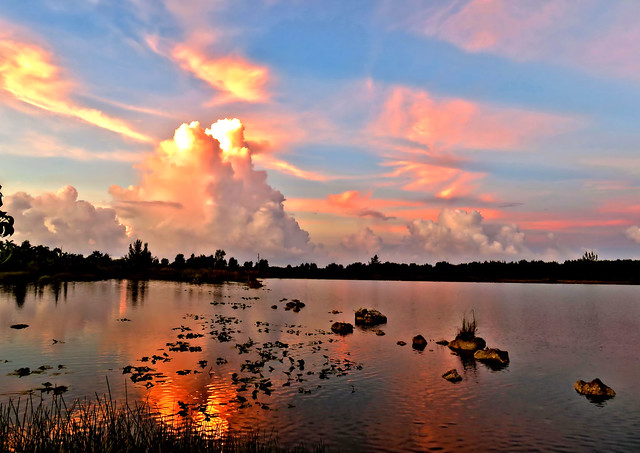
An anvil head looms over the Everglades, August 17, 2015:
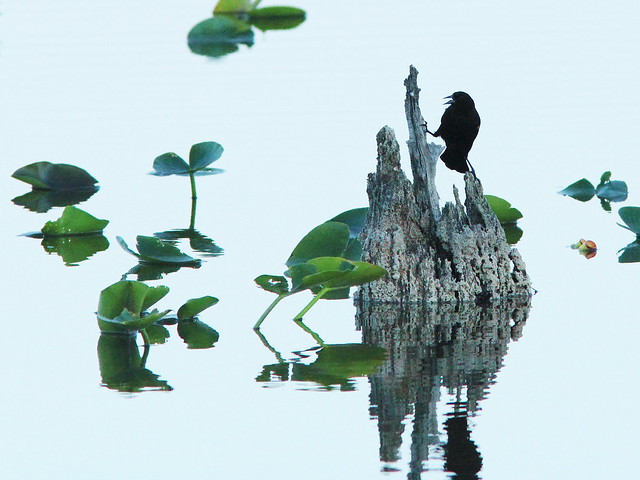
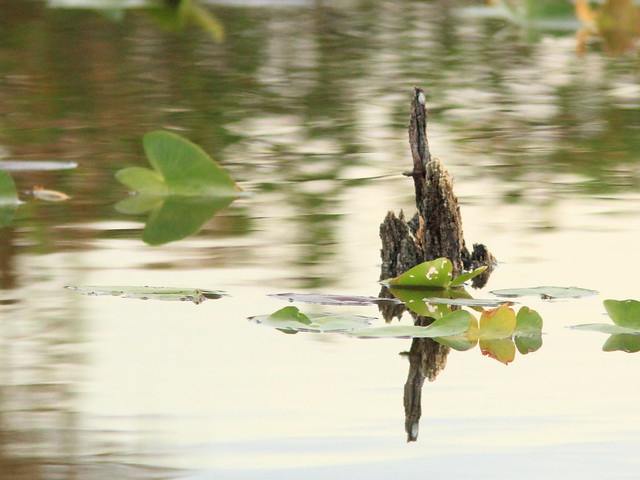
Our local wetlands are not directly connected to the adjacent Everglades preserve and are fed by seepage of ground water and storm water from local rainfall. Yet their cycle of water levels roughly parallels that of the Everglades. This year the wet season has persisted into early November, in what the weather forecasters call a "spring pattern" of almost daily rain showers and thunderstorms. An old cypress stump in the lake which I call the "Enchanted Island" serves as a convenient water gauge.
A Red-winged Blackbird casts a reflection as it perches on the "Enchanted Island," March 1, 2015:
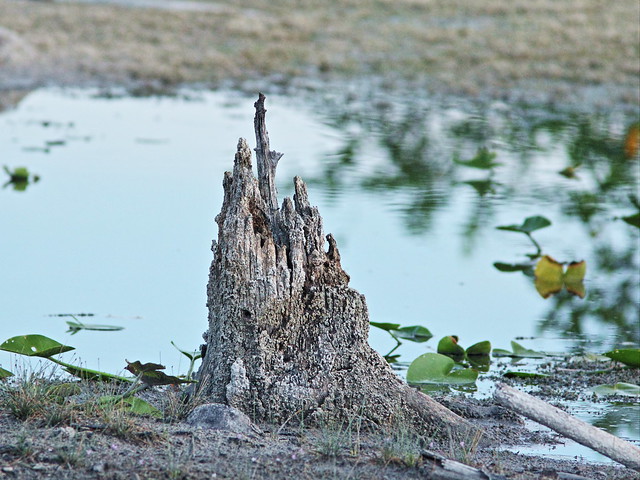
Water levels fell and rainfall was sparse into early summer. Only half the normal amount of rain fell from January through June. The Enchanted Island stump was landlocked, July 24, 2015:
As the lake receded it left isolated pools along the shoreline, trapping fish, to the delight of the herons (July 27, 2015):
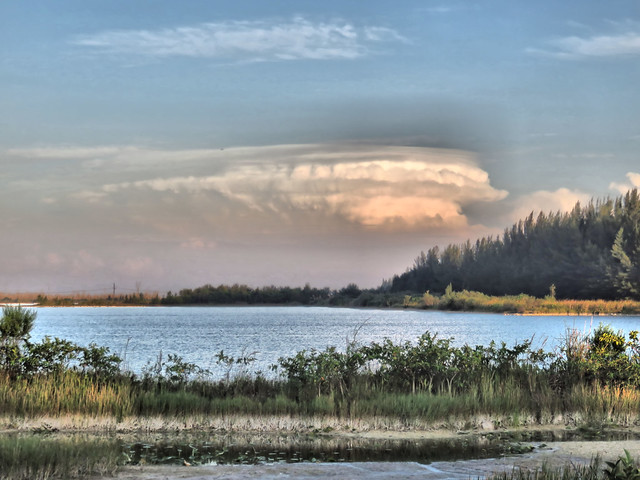
Heavy rains beginning in mid-summer brought the lake to its highest level. On October 26, 2015 only the tip of "Enchanted Island is visible.
The summer wet season normally peaks in August and September, often bringing floods, especially when the normal rainfall is augmented by hurricanes and tropical storm systems. While average annual rainfall is about 52 inches (133 cm) , summer rainfall averages 34-35 inches (88 cm) and has varied greatly from 23.4 to 53.5 inches (59-136 cm) in years between between 1918 and 1985. The dry season (which peaks between December and February) averaged 17-18 inches (44 cm) with annual extremes between 7.3 and 30.9 inches (19-78 cm).
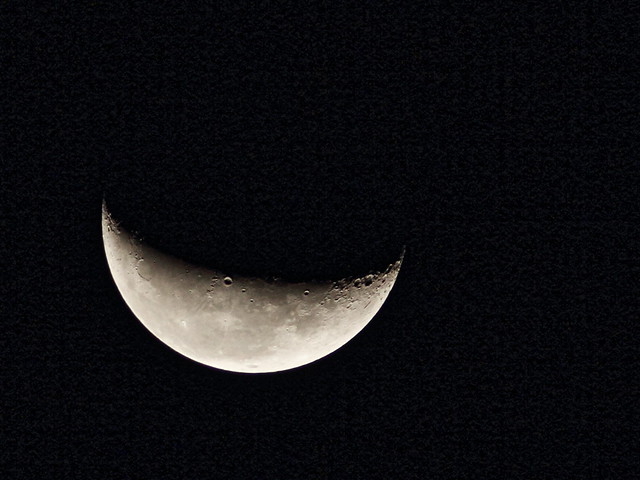
During the winter (dry) season in Florida the crescent moon is illuminated from the bottom, giving it a "U" shape. Legend has it that the cup-shaped moon is trapping the rain water and preventing it from reaching the ground (November 5, 2015):
Two general groups of long-legged waders are affected somewhat differently by the changes in water levels: the herons and egrets, which hunt by sight, and the ibises and storks, which are tactile feeders.
Normally, with the approach of the dry season, water levels diminish. If there has been a bountiful wet season, prey items then become concentrated, which is good for both groups of waders. Tactile feeders especially benefit from relatively shallow water as prey must wander into their waiting jaws. However, with drought the wet prairies may dry up completely, confining the water to creeks or channels (sloughs or "slews") where sight feeders have a competitive advantage. Drainage and development of vast portions of the Everglades have reduced the amount of prairie land and channeled the water into deep ditches and canals, further reducing the foraging areas of tactile feeders.
The best time for all of these birds to breed is around November, just as prey is becoming easier to find and standing water helps protect their nesting colonies from terrestrial predators. Ideally, the water will still be low and prey plentiful when nestlings have their greatest need for food.
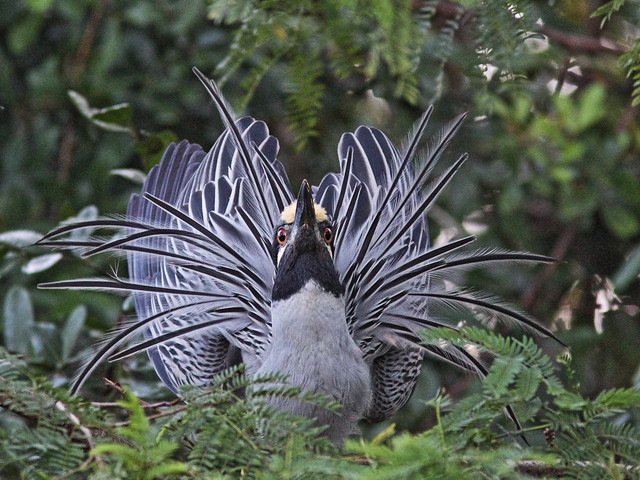
Herons have forward-facing binocular vision, as demonstrated by this displaying Yellow-crowned Night-Heron:
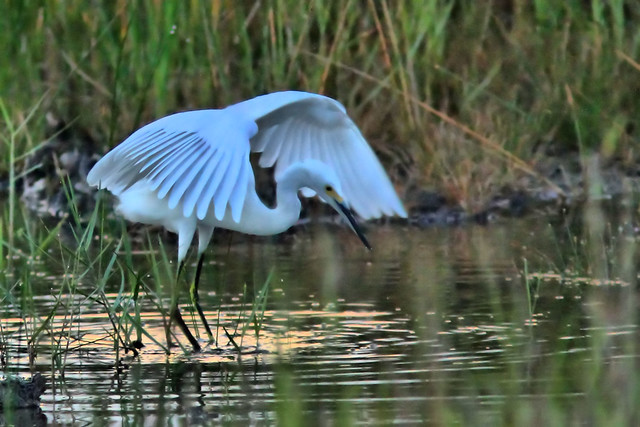
Herons, like this Snowy Egret, are also able to compensate for the shifting of the image of a fish caused by refraction at the surface of the water:
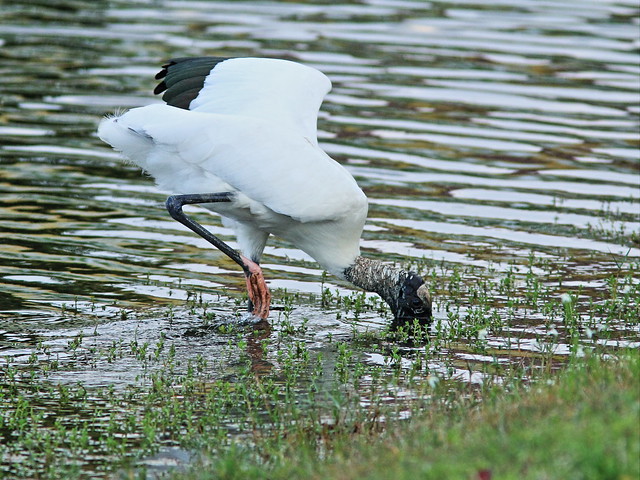
Water that is about 7-9 inches deep is ideal for this tactile feeder, as it allows the Wood Stork to keep its eyes above the surface to watch for predators as it feeds:
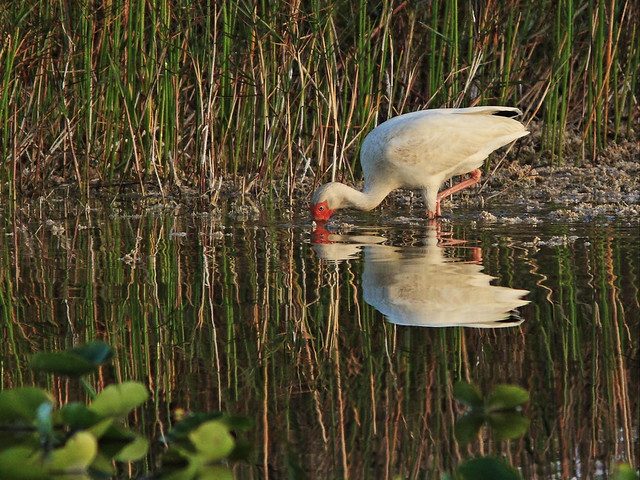
The White Ibis is an adaptable tactile feeder, probing for crustaceans in the mud and even for lizards, worms and other insects in grass turf:
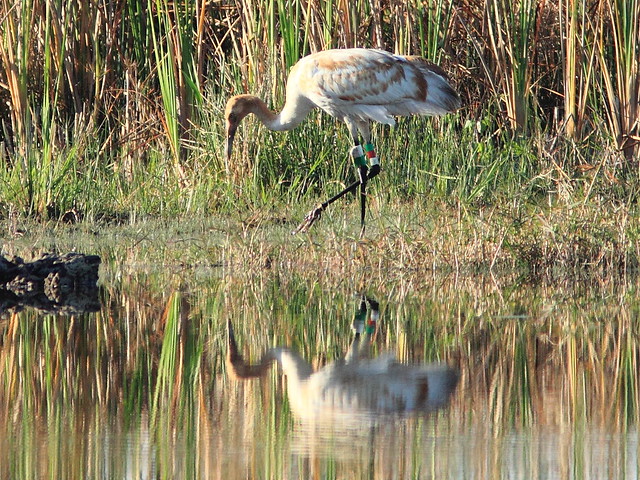
The Whooping Crane (a captive-bred wandering migrant from Wisconsin) captures prey by sight:
Ibises generally forage near their nests and may move their breeding colonies to take advantage of local conditions. Wood Storks forage more widely and tend to use permanent colonies. They may delay breeding until water levels fall to an acceptable level, sometimes into February or March. This introduces the danger that offspring may starve if the wet season begins early. In many years the storks may not breed at all (as has happened because of the erratic weather over the past several years), or the parents may need to fly so far to find food that their chicks are left unguarded or starve.
Only ten years ago, Wood Stork colonies in south Florida included hundreds and even thousands of individuals. Sadly, Wood Storks have now abandoned their historic breeding grounds because of the combination of the effects of a changing climate and human disturbance of their habitat. They now populate new colonies to the north, in Louisiana and up to North Carolina. Families of storks commonly visited our lake in late winter or early spring, following breeding season. I have seen none on our lake since February 2, 2015.
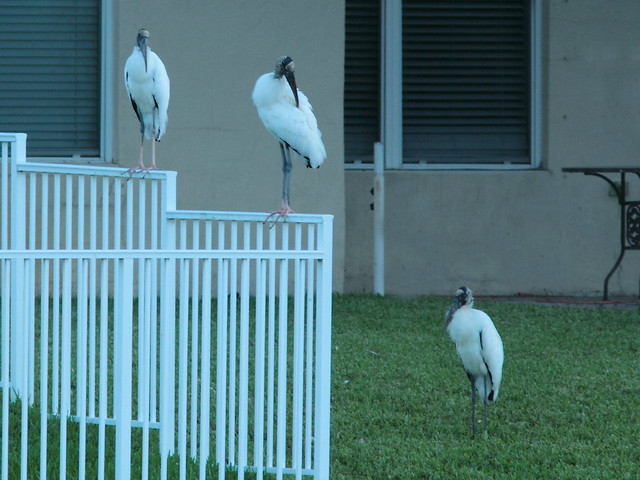
Six Wood Storks, representing two families, each with a single offspring, made a memorable visit to our back yard lake on January 23, 2012 and perched on a fence on the oopposite shore. The immature bird in this family portrait is the one on the left. Note its pale bill and legs and that unlike its parents, its head is not yet bald:
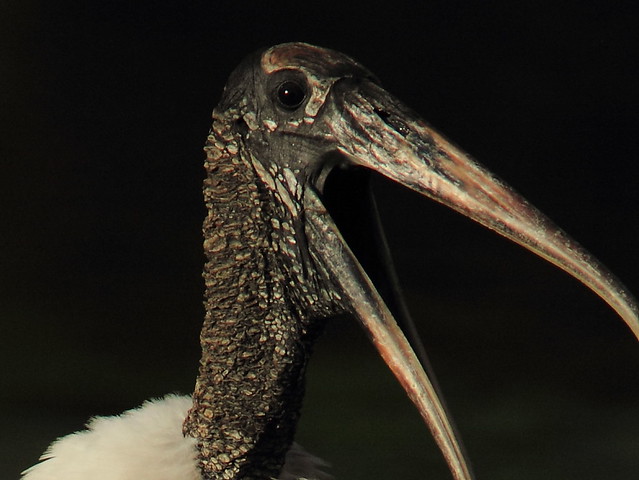
A Macro view of an adult stork:
= = = = = = = = = = = = = = =
Linking to Misty's CAMERA CRITTERS,
Linking to Eileen's SATURDAY'S CRITTERS,
Linking to GOOD FENCES by Tex (Theresa).
Linking to WEEKEND REFLECTIONS by James
Linking to BirdD'Pot by Anni
Linking to Wild Bird Wednesday by Stewart
Linking to I Heart Macro by Laura
________________________________________________
Please visit the links to all these memes to see some excellent photos on display
________________________________________________