Following five nights celebrating our family reunion in the Colorado Rocky Mountains, we joined our younger daughter's family on a road trip back to Illinois. We entered South Dakota by way of Wyoming en route to Blue Bell in the Black Hills of Custer State Park.
We occupied adjacent cabins in a Ponderosa woodland at Blue Bell Lodge, just off the famous Wildlife Loop:
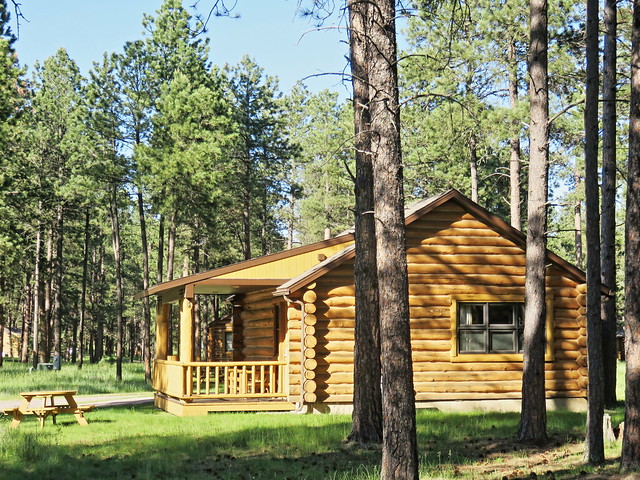
Anxious to tour the Loop before dark, we made 6:00 PM dinner reservations at the restaurant but waited over an hour before being served. The food was wonderful despite the terrible service. There was no time to drive the Loop's entire 18 miles, but the wildlife viewing was spectacular.
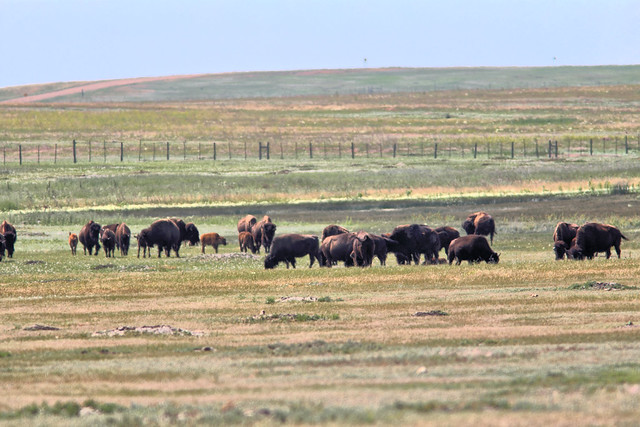
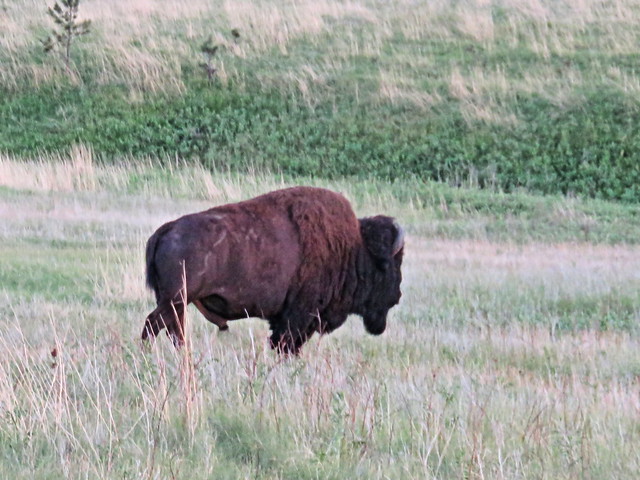
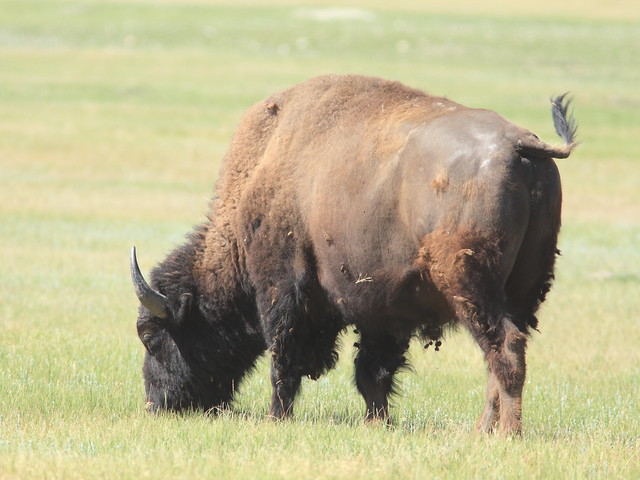
Hundreds of American Bison wandered freely along the road. Fences and cattle guards control their rotation between huge grazing grounds:
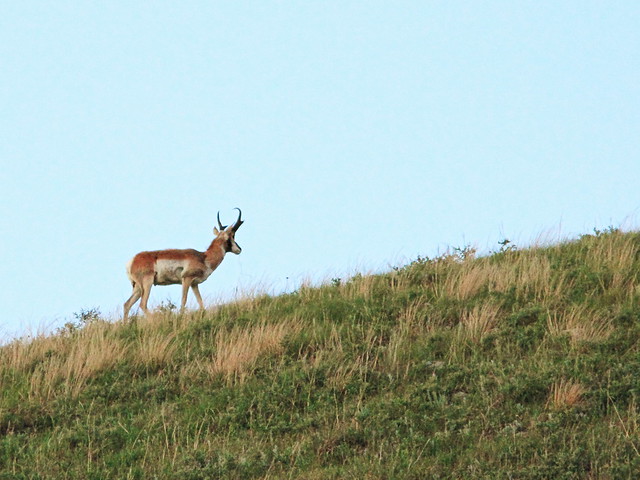
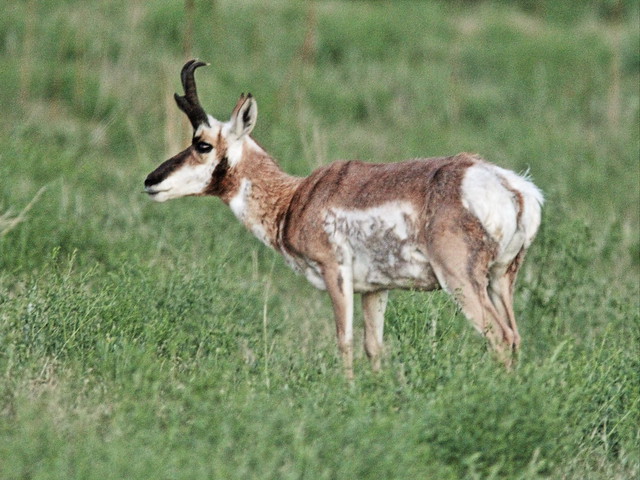
Pronghorn Antelopes abounded:
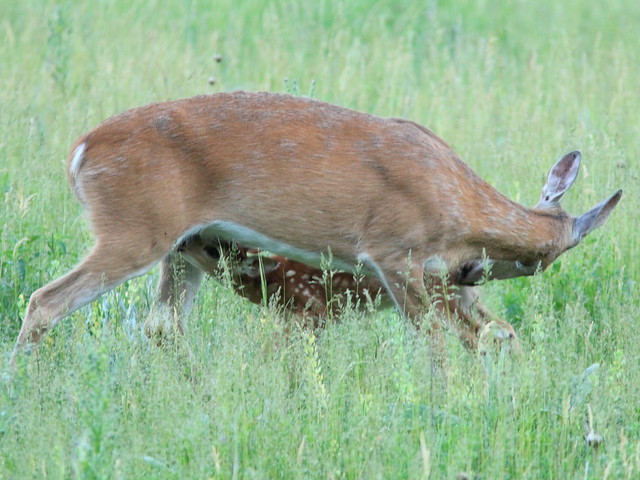
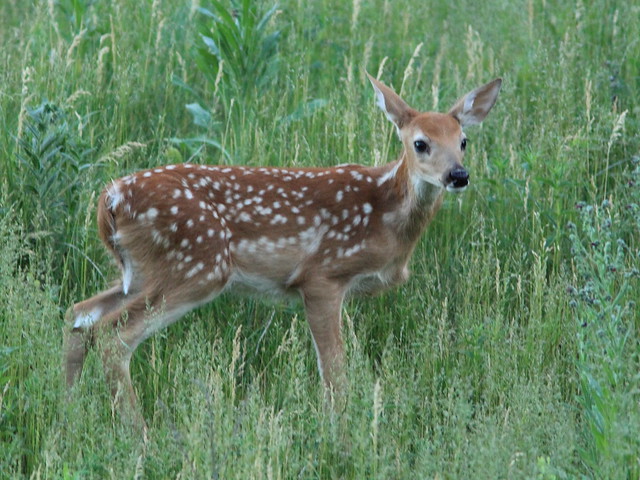
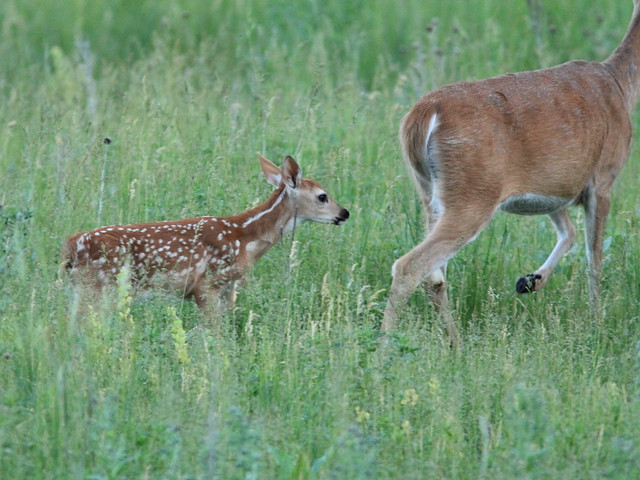
As dusk approached, White-tailed Deer became more numerous. Many of the does had fawns:
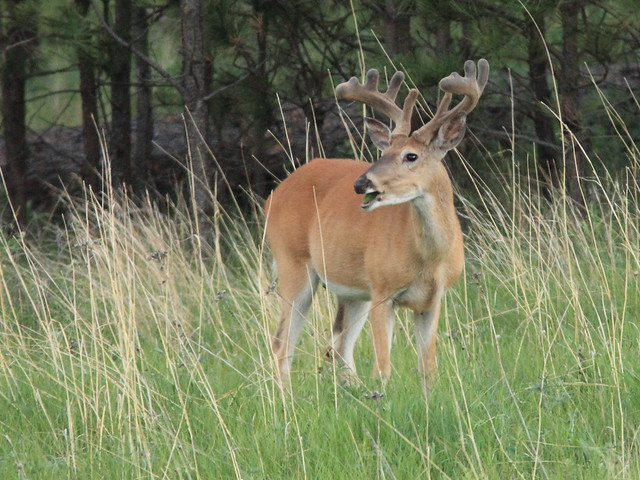
Ten-point buck in velvet:
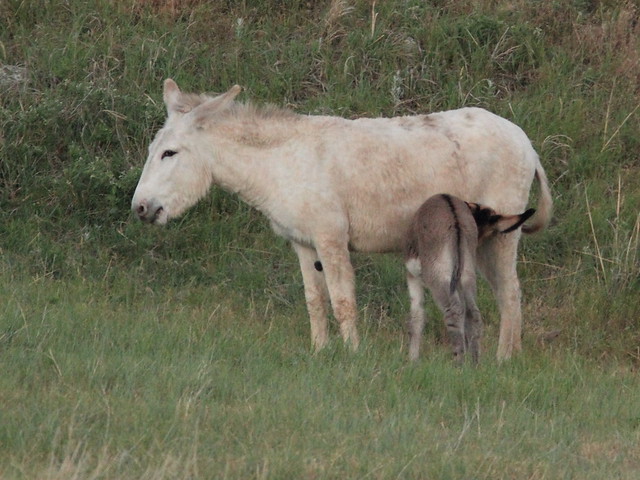
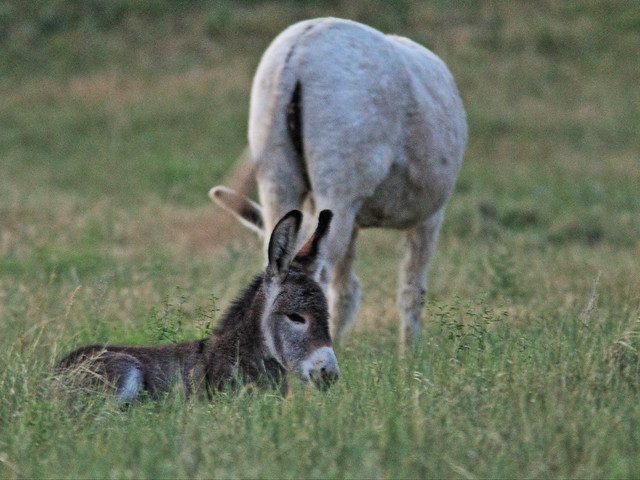
Feral Donkeys, descendants of Wild Asses released by early settlers, approached our auto, apparently looking for treats offered by tourists despite prohibitions against feeding the wildlife:
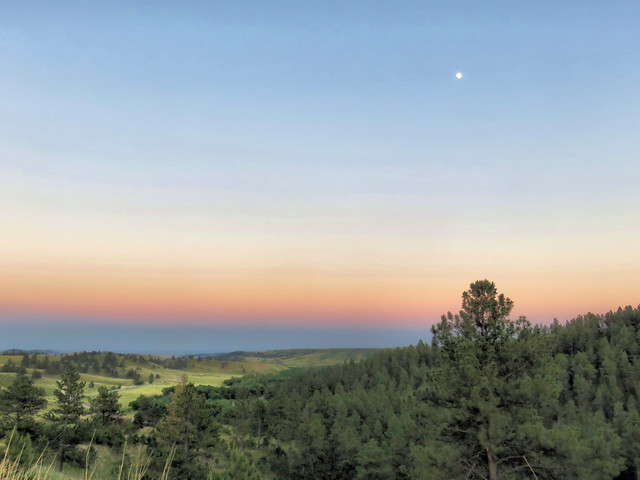
All too soon, darkness descended and we made our way back to the cabins. This was the scene a little after sunset, under a waxing Strawberry Moon. This is the Algonquin Indian name for the full Moon in June. This year it coincided with the Summer Solstice, a "once-in-a-lifetime" event. (Better make that "twice in my lifetime" as the last time this happened was in 1967 but the next will not occur until 2062):
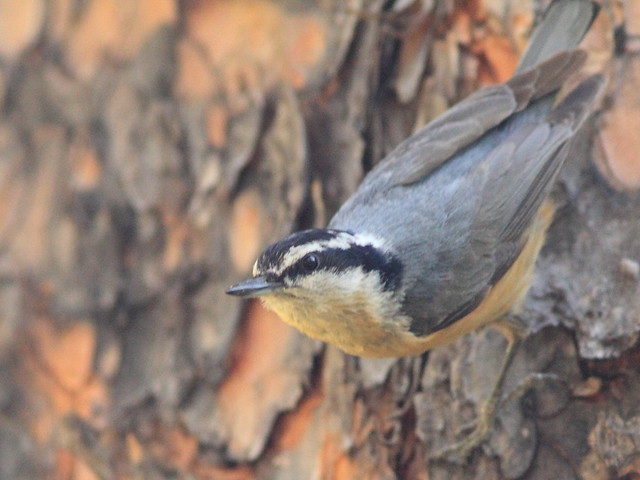
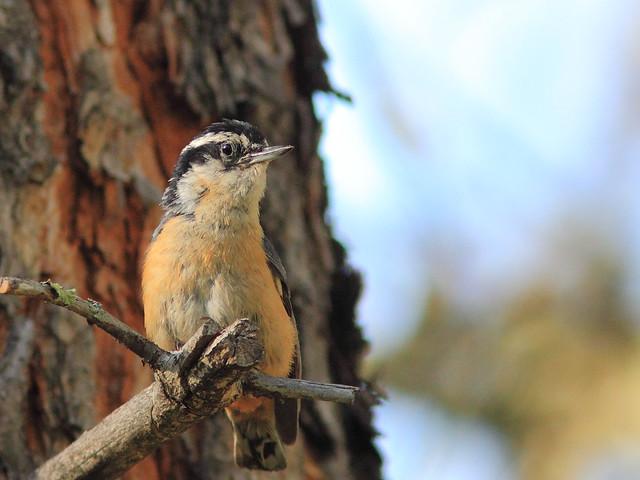
Birding was not a main pursuit, but during a brief walk around the cabins I found Red-breasted Nuthatches:
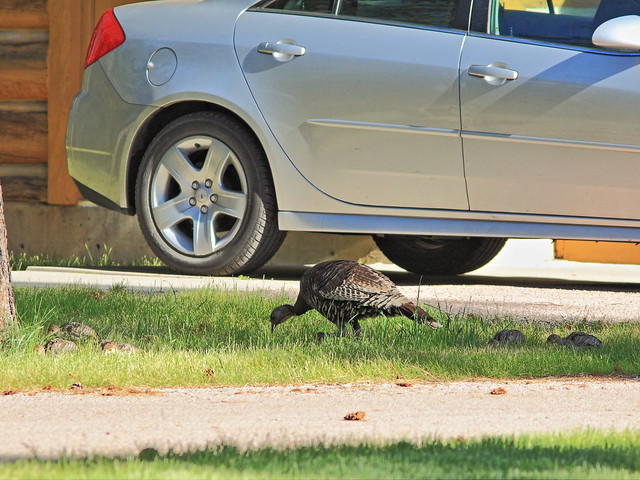
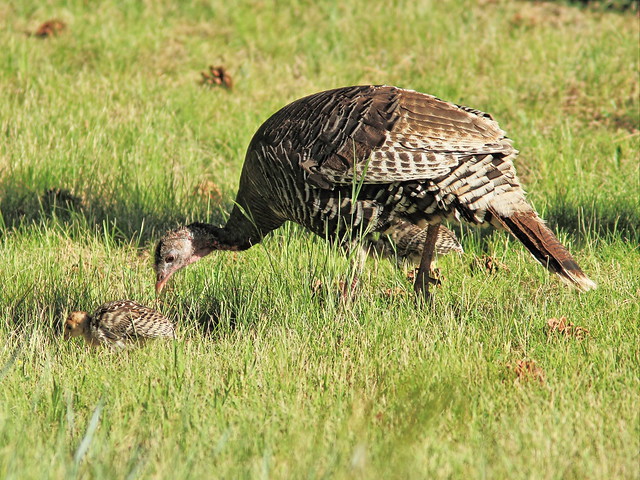
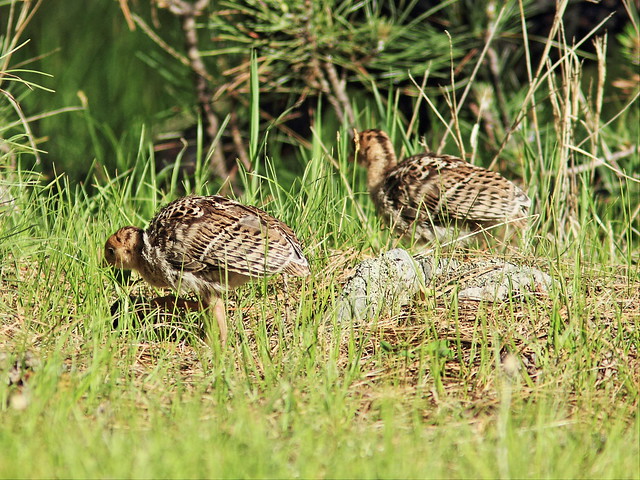
Early the nex morning, A Wild Turkey with five poults walked next to a neighboring cabin...
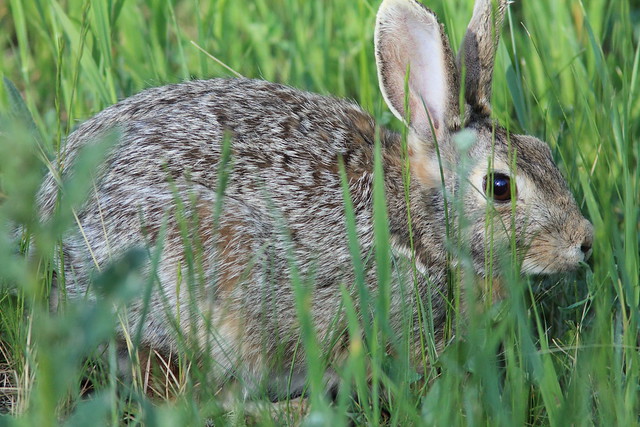
...and a Cottontail Rabbit huddled near the road, perhaps thinking I could not see it:
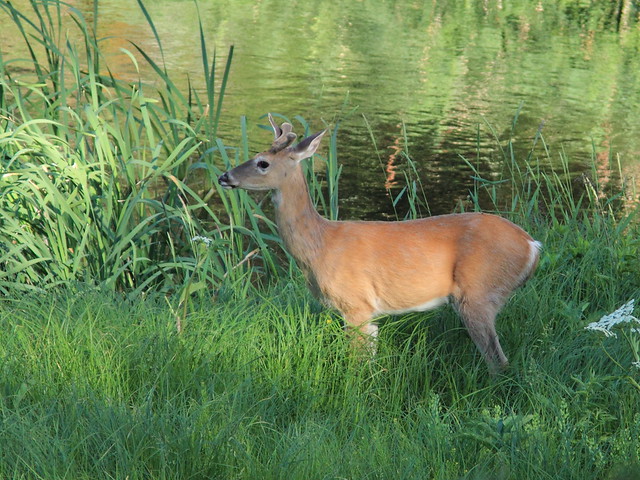
While I was taking in the beauty of a mountain stream which ran by the Lodge, a deer suddenly crossed the water towards me:
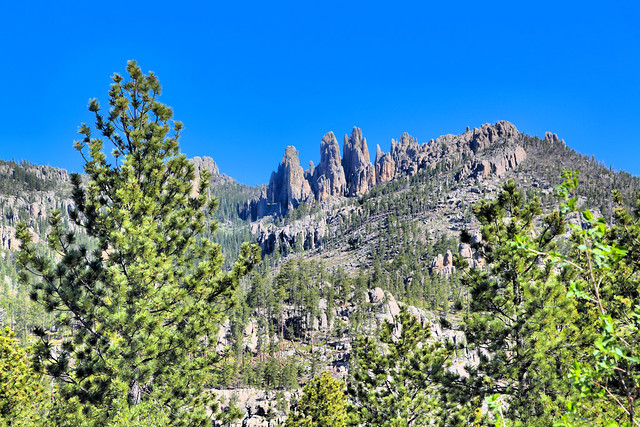
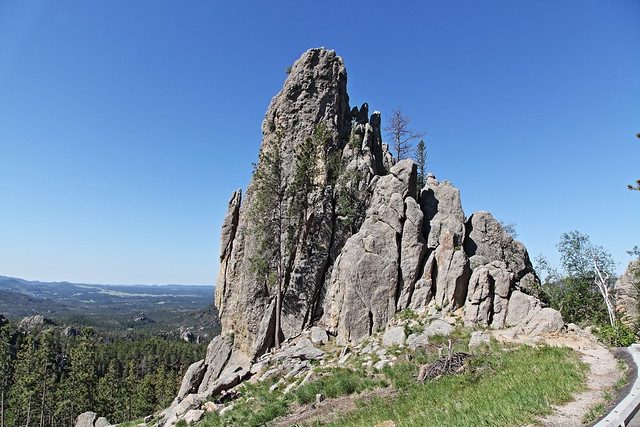
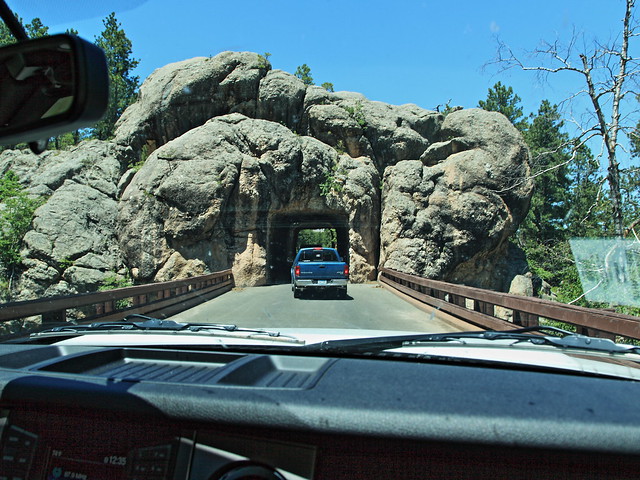
On the way to our next destination, we drove the length of Needles Highway, a winding road through magnificent rock formations and narrow tunnels:
We visited Crazy Horse Memorial, an ambitious granite statue being carved out of a mountain, billed to become world's largest sculpture, once it is completed. It honors the legendary war hero of the Lakota tribe, whose most famous victory against US troops was the Battle of the Little Bighorn (General Custer's Last Stand -click for more information. )
The carving was started in 1948 but has made slow progress. Only the warrior's face has been completed so far. His head will be 87 feet (27 m) high:
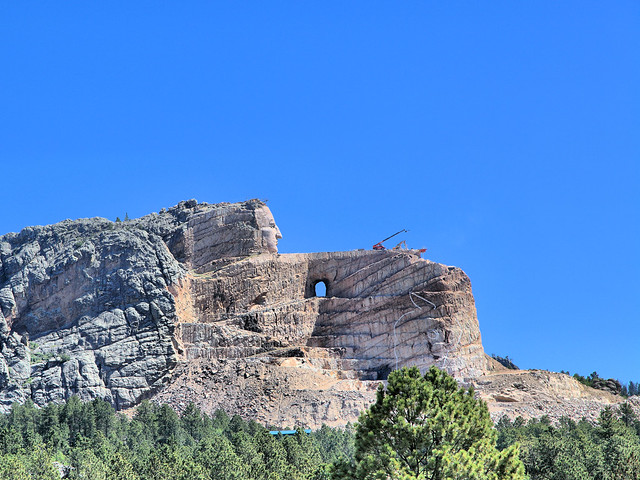
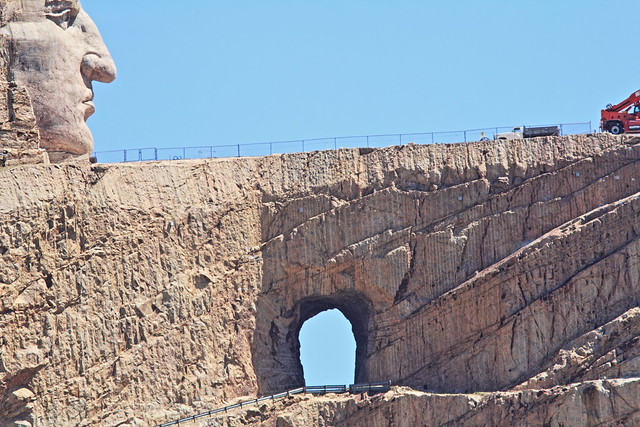
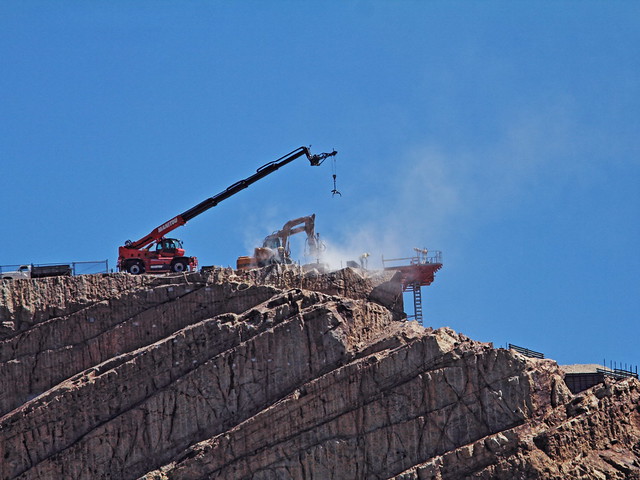
The smaller (60 ft/18 m high) faces of four US presidents are carved on Mount Rushmore, only 17 miles away. It is an awe-inspiring sight:
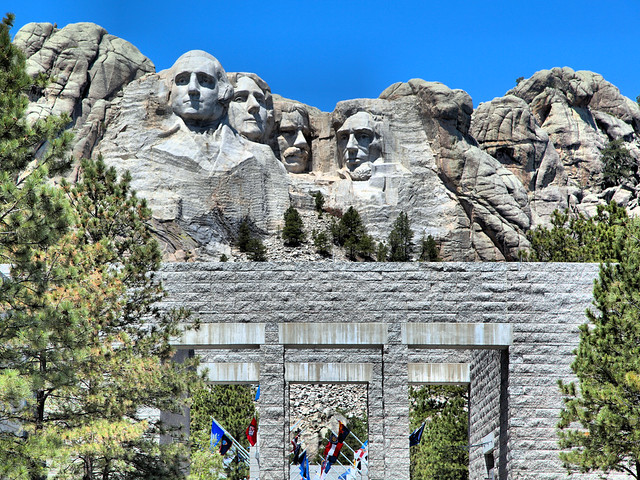
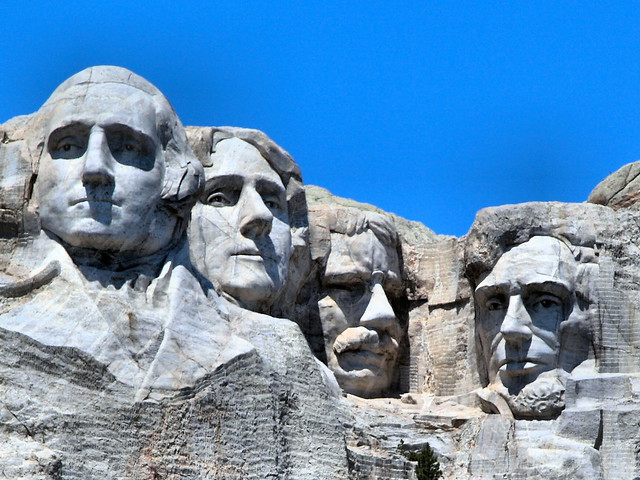
On our way to our next stop, Mount Rushmore could be seen in the distance:
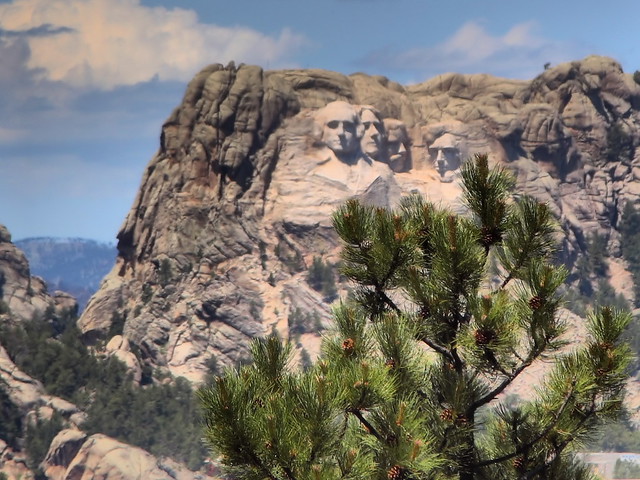
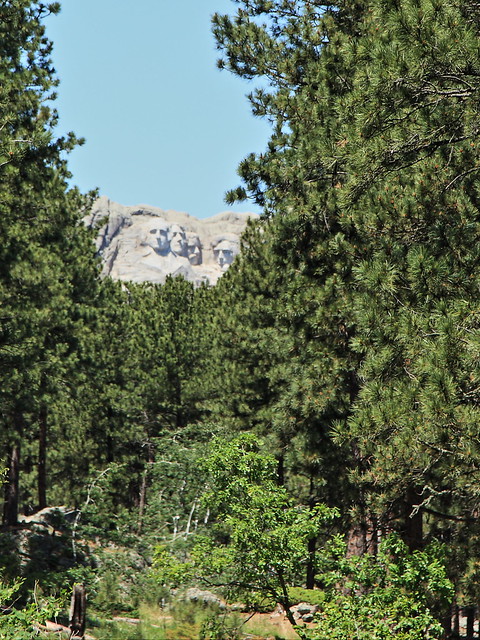
Our last glimpse of Mount Rushmore through a gap in the trees as we headed east towards the Badlands:
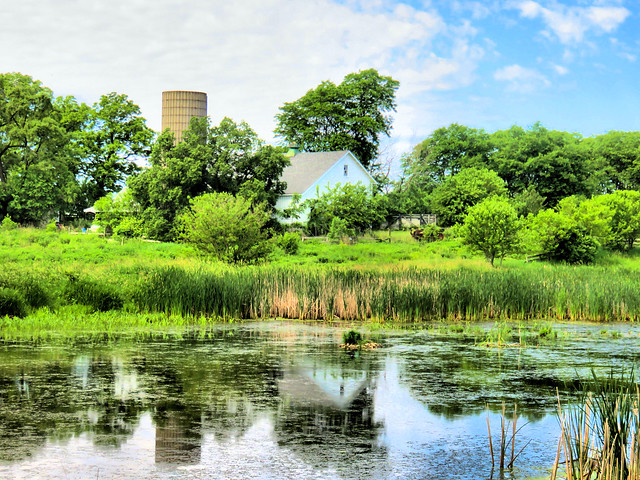
For the "reflection" meme I must hearken back to a photo I took before we flew to Colorado. A few doors from our daughter's home in Illinois, this silo cast its image on a small pond:
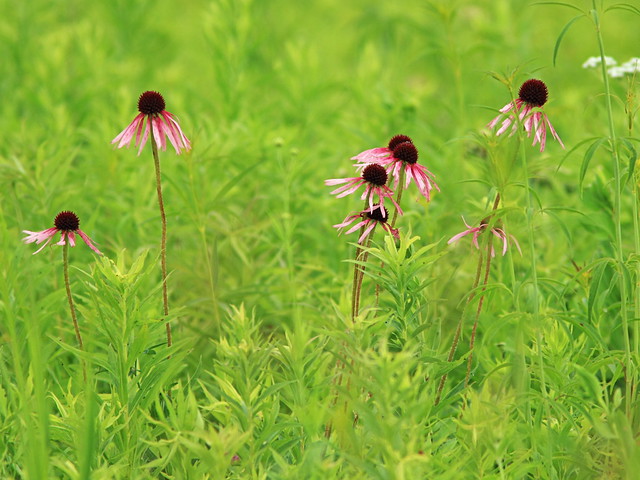
Pale Coneflowers bloomed on the Illinois prairie:
 = = = = = = = = = = = = = = =
Linking to Misty's CAMERA CRITTERS,
Linking to Eileen's SATURDAY'S CRITTERS,
Linking to GOOD FENCES by Tex (Theresa).
Linking to SKYWATCH FRIDAY by Yogi, Sylvia and Sandy
Linking to WEEKEND REFLECTIONS by James
Linking to BirdD'Pot by Anni
Linking to Wild Bird Wednesday by Stewart
Linking to Today's Flowers Friday by Denise
Linking to Wordless Wednesday (on Tuesday) by NC Sue
________________________________________________
Please visit the links to all these memes to see some excellent photos on display
________________________________________________
You may have been following the adventures of the two captive-reared juvenile Whooping Cranes that visited our local patch. They were among the six that were allowed to find their own way south from Wisconsin. Part of the International Crane Foundation's "Direct Autumn Release" experiment, they were not assisted by the "Operation Migration" ultralight aircraft. This year their journey was fraught with danger.
Five of the six departed from Horicon National Wildlife Refuge on the last day of October, 2012 and flew 1200 miles to Clay County, Florida in only six days. Only two days later, on November 8, the flock of 5 was tracked by satellite to Everglades National Park at the southern tip of Florida. The next day they had doubled back nearly 100 miles north to a ranch in Hendry County, Florida. The sixth crane finally migrated from Wisconsin with a flock of Sandhill Cranes in late November and on December 9 had settled down for the winter in Volusia County, Florida.
Three of the five cranes remained in Hendry County, but on December 22, two cranes (a female nicknamed Tussock and a male called Cypress) relocated to the wetlands adjacent to our home in Broward County, about 50 miles to the southeast. Unfortunately, two of the three remaining Hendry County cranes expired on the ranch during late December or early January. As related in an earlier post Tussock suffered an injured foot and had to be captured. After a week of treatment at Disney Animal Kingdom, she was released in Tennessee on February 9 to join a group of other Whooping and Sandhill Cranes. Cypress was subsequently captured on February 10 and released to rejoin the surviving crane "Fireweed" on the J-Seven Ranch in Hendry County.
The ranch owners invited several of us who had provided ground observations in Broward County to come up and see "our" crane, but before we got up there, we were disappointed to hear that Cypress migrated north in late February or early March. For a time Fireweed was also presumed to have died, as his satellite signal constantly pointed to one spot, and ground searches were not successful. Rhonda Roff and Margaret England from the Hendry-Glades Audubon Society joined four of us from South Broward Audubon. Minutes after we enjoyed coffee with John and Gretchen Ward, owners of J-Seven, we received a call that announced, to our great surprise, Fireweed had turned up on a neighboring ranch, Devil's Garden Bird Park (DGBP).
Doug and Catherine Zipperer, owners of DGBP, invited us all to come over. We headed there immediately.

Neighboring ranchers John Ward and Doug Zipperer chatted as we scoped out the first overgrown pasture.

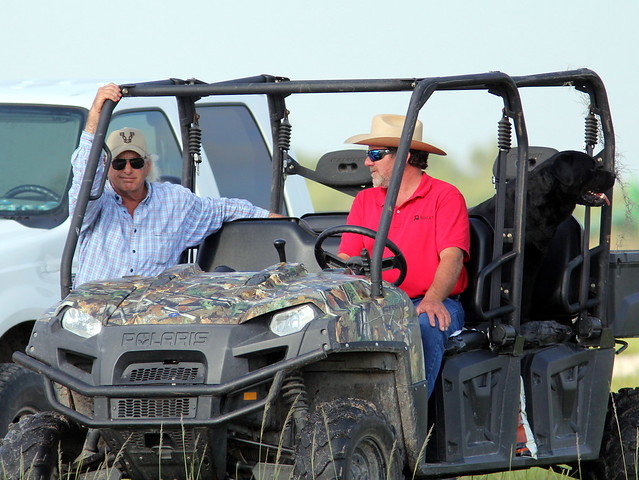
Devil's Garden Bird Park provides guided custom birding tours for the public, but the Zipperers extended us the courtesy of lending us an extra Ranger all-terrain vehicle so that we could travel cross-country if necessary.
 Fireweed was readily located, foraging with a flock of Sandhill Cranes near the entrance road.


A Crested Caracara posed on a fence post.

Many Eastern Meadowlarks sang in the prairie.

Red-shouldered Hawks were conspicuously present.

As we approached a beautiful native Cabbage Palm-Live Oak Hammock, Swallow-tailed Kites wheeled overhead.

Inside the hammock, a pair of Barred Owls flew towards us, most likely because their newly-fledged young were hidden deeper in the trees. We did not advance, but watched the owls as they called "Who cooks for you?".

We returned to J-Seven, where John Ward guided us on a tour of wonderfully varied habitats. Two newly-fledged Bald Eagles flew up in front of us.

A little while later they returned to their nest to feed.

An adult eagle flew high overhead.

In a well-concealed nest, two Red-shouldered Hawk chicks waited to be fed.


Several pairs of Burrowing Owls nested in berms on the grazing land.


Glossy Ibises foraged in the wet prairies.

In the wetlands, we had magnificent views of Roseate Spoonbills.


A flock of Wild Turkeys scurried in the tree groves.

A wild sow hurried away with her piglets as we approached.

Caracaras nested in the top of a Cabbage Palm.


We really worked up an appetite, and Gretchen spread out a delicious lunch for us in the chickee. Their hospitality was overwhelmingly warm! From left to right, Barry Heimlich, John Ward, Gretchen Ward, Helen Harringer, John Abbott, Margaret England, and Rhonda Roff.