Showing posts with label mango. Show all posts

Thursday, June 24, 2021

Cardinal meets the enemy and he is...

While observing the local Bald Eagles, nest watchers parked their cars in a grassy area adjacent to a woodland where Northern Cardinals maintained nesting territories. Often, even before the drivers completed parking and exited from their vehicles, a cardinal would attack a side mirror.

This behavior continued through the winter and up to the present.

January 18, 2021:

February 6, 2021. The scary image on the truck's mirror  did not dissuade this warrior:

On June 16, a male cardinal watched me as I walked away from the car:

His mate flew in to watch the battle:


A double reflection. His rivals have multiplied!

No amount of effort intimidated the enemy (* See note):


On the home front, the Mangos were ripening and we picked as many as we could reach, giving most of them away to neighbors. Those higher in the tree ripened on the tree and later fell to the ground, where we competed with the birds, squirrels and iguanas. Out early, we collected dozens more, ready to eat. We brought bags of them to church and neighbors who shared in our largesse:

A Green Iguana got to some Mangos before we did:

A Muscovy Duck mom brought her 9 ducklings to the feast. When she saw me she rushed to the edge of the lake with seven ducklings. Two were left behind as they were still eating the fallen Mangos:


Two drakes joined them. They had been competing for her attention and often try to mate with a hen even if she is tending to her young:

She gathered her ducklings together and then ran up to fetch the other two. All nine ducklings then rested together on our lawn. Some fell fast asleep:


I did not get out much this past week, but a visit to Chapel Trail Nature Preserve in nearby Pembroke Pines yielded sightings of four Great Egrets, a species which has been absent from our local wetlands for more than two weeks:


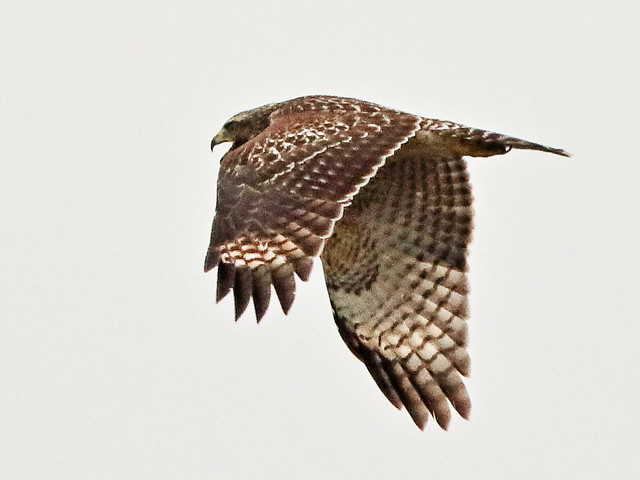
Overhead, an immature Red-shouldered Hawk screamed continuously:


Several recent downpours have increased water levels:

Rain was again threatening:

Swamp Lilies were flourishing:

In a dry patch, I found a pretty yellow flower with distinctive leaves, but am not sure of its identity and whether it is wild or an invasive alien:

= = = = =  = = =

* REF: "We have met the enemy and he is us." Pogo in Walt Kelly cartoon

= = =  = = =  = = = =  = = = = =

Linking to:


Skywatch Friday

Weekend Reflections

Saturday's Critters

BirdD'Pot

Camera Critters

All Seasons

Wordless Wednesday (on Tuesday)

Natasha Musing

Our World Tuesday

________________________________________________

Please visit the links to all these posts to see some excellent photos on display
________________________________________________

Thursday, June 20, 2019

Summer Doldrums

With spring migration long over and the summer solstice approaching, I have found it a bit challenging to compile a list of twenty or more bird species sighted  or heard on each of our morning walks in the "Wounded Wetlands" of south Florida. Since we are about 18 miles inland from the Atlantic Ocean, we cannot expect to see the greater variety of species associated with tidal waters. 

As the duties of raising nestlings and feeding fledglings take priority, the morning chorus of bird song is diminished and birds are less evident. Long-legged waders are discouraged by unusually higher water levels which disperse their aquatic prey. 

Feathers are wearing down and soon will need to be replaced. By mid-summer many species will undergo a post-breeding molt, requiring them to expend much energy. Migration and reproduction are other energy-intensive phases in a bird's life cycle. In between, the birds rest and take advantage of abundant food supplies to fuel the next stage.

This shabby preening female Northern Cardinal seems to already be in need of fresh plumage, but the molt must be postponed until after she finishes rearing her brood:

Northern Cardinal female preening 20190612

Northern Cardinal female preening 2-20190612

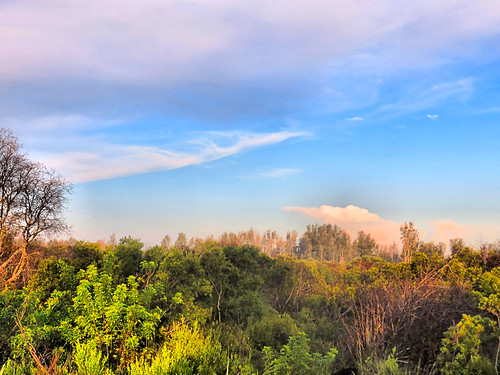
Saharan dust is moving across south Florida, causing some haze but adding color to the sky before sunrise: 

Cloudy morning 02-JUN 15 2019_Localtone

Cloudy morning 01-JUN 15 2019_Localtone

On a clear morning, the the beams from the rising sun, enhanced by dust in the atmosphere, converge as anti-solar rays on the opposite horizon. They create a false or mirrored sunrise:

Mirrored Sunrise 02 JUN 15 2019

The colorful view from the levee shortly after sunrise:

View from levee to north JUN 12 2019

Setting out before sunrise on a typical late spring morning, here are some of the expected species--

Brown Thrasher:

Brown Thrasher 01-20190527

Brown Thrasher 02-20190527

Loggerhead Shrike:

Loggerhead Shrike 03-20190612

Loggerhead Shrike 01-20190518

Loggerhead Shrike 03-20190606

Northern Mockingbird:

Northern Mockingbird expelling pellet -1 20190203

This is a juvenile mockingbird, as evidenced by its spotted breast and yellow corners of its mouth (gape):

Northern Mockingbird juvenile 01-20190522

A shrike and a mockingbird compete for insects together in a patch of gravel:

Northern Mockingbird and Loggerhead Shrike 02-20190528

Northern Mockingbird and Loggerhead Shrike 01-20190528

A White Ibis probes the turf:

White Ibis 02-20190530

White Ibis 01-20190530

A Killdeer sits on her eggs:

Killdeer incubating before sunrise 20190616

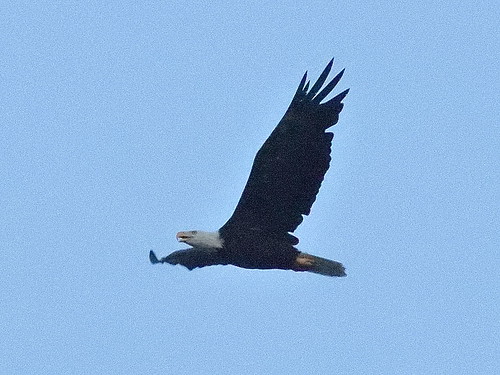
A Bald Eagle passes overhead before sunrise:

Bald Eagle 02-20190611

Butterflies are disturbingly scarce. One morning I found a newly emerged White Peacock in excellent condition. They fight over territory and mates, quickly damaging their wings:

White Peacock-  Anartia jatrophae-  20190609

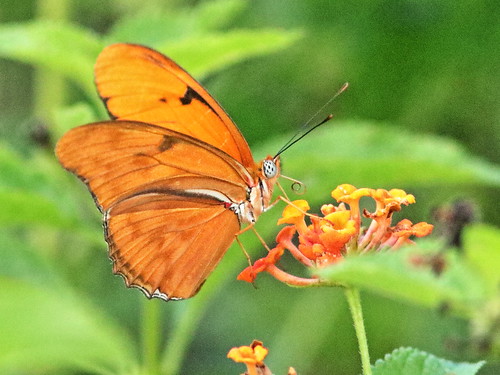
Julia heliconian butterflies were previously abundant, but almost disappeared after the autumn of 2017 when Hurricane Irma devastated the flowering and host plants and probably wiped out an entire generation of eggs and larvae. Now I often go several days without seeing any at all. This male gave me a nice photo opportunity as it sipped nectar from a Lantana flower:

Julia heliconian - Dryas iulia - male 01-20190603

Julia heliconian - Dryas iulia - male 03-20190603

Julia heliconian - Dryas iulia - male 02-20190603

We harvested well over 100 pounds of mangos and gave most of them away to neighbors and members of our choir. Those out of reach on the tree were left for the squirrels and birds. I scooped out the fruit and froze about 50 more of them and we still had these left over:

Leftover Mangos JUN 14 2019

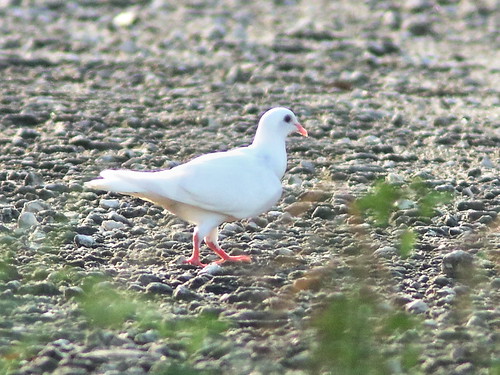
On the morning of our 59th Wedding Anniversary, a white dove (feral Rock Pigeon), the first I have ever seen in the wetlands patch, posed for a moment as if to celebrate the occasion:

White Dove on our anniversary 20190611 

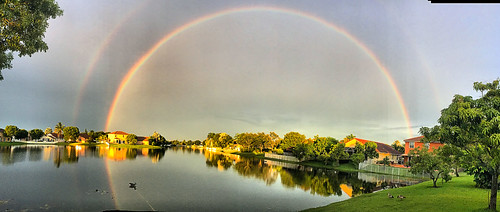
There is an upside to the rainy weather, as seen from our back patio on June 18:

Double Rainbow 01-20190618


= = =  = = =  = = = =  = = = = =

Linking to Misty's  CAMERA CRITTERS,

Linking to Eileen's SATURDAY'S CRITTERS,

Linking to SKYWATCH FRIDAY by Yogi, Sylvia and Sandy

Linking to WEEKEND REFLECTIONS by James

Linking to BirdD'Pot by Anni

Linking to Our World Tuesday by Lady Fi

Linking to Wild Bird Wednesday by Stewart

Linking to Wordless Wednesday (on Tuesday) by NC Sue

Linking to ALL SEASONS by Jesh

 Linking to Fences Around the World by Gosia
______________________________________________
_______________________________________________

Please visit the links to all these memes to see some excellent photos on display


________________________________________________