With spring migration long over and the summer solstice approaching, I have found it a bit challenging to compile a list of twenty or more bird species sighted or heard on each of our morning walks in the "Wounded Wetlands" of south Florida. Since we are about 18 miles inland from the Atlantic Ocean, we cannot expect to see the greater variety of species associated with tidal waters.
As the duties of raising nestlings and feeding fledglings take priority, the morning chorus of bird song is diminished and birds are less evident. Long-legged waders are discouraged by unusually higher water levels which disperse their aquatic prey.
Feathers are wearing down and soon will need to be replaced. By mid-summer many species will undergo a post-breeding molt, requiring them to expend much energy. Migration and reproduction are other energy-intensive phases in a bird's life cycle. In between, the birds rest and take advantage of abundant food supplies to fuel the next stage.
This shabby preening female Northern Cardinal seems to already be in need of fresh plumage, but the molt must be postponed until after she finishes rearing her brood:


Saharan dust is moving across south Florida, causing some haze but adding color to the sky before sunrise:
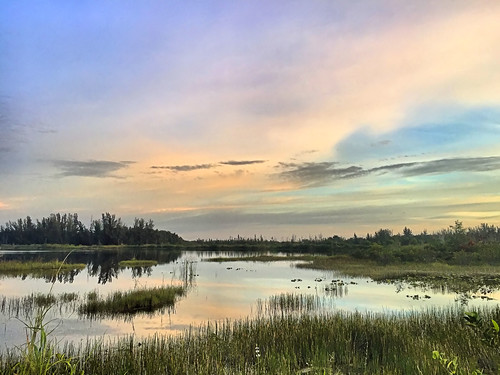

On a clear morning, the the beams from the rising sun, enhanced by dust in the atmosphere, converge as anti-solar rays on the opposite horizon. They create a false or mirrored sunrise:
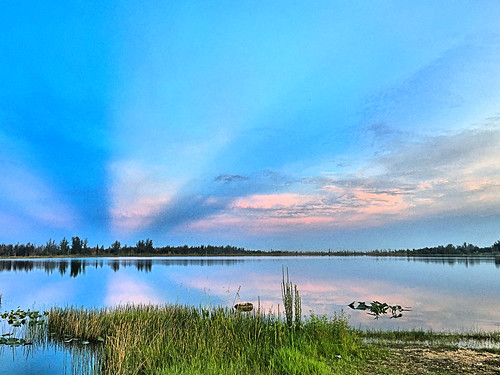
The colorful view from the levee shortly after sunrise:
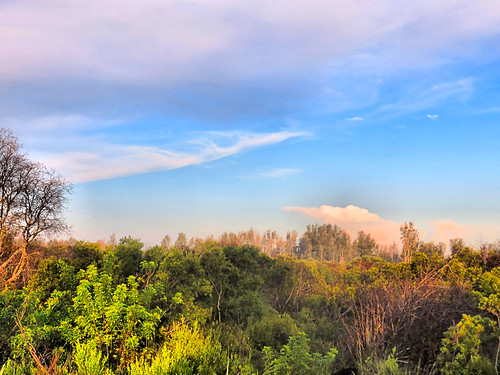
Setting out before sunrise on a typical late spring morning, here are some of the expected species--
Brown Thrasher:


Loggerhead Shrike:


Northern Mockingbird:

This is a juvenile mockingbird, as evidenced by its spotted breast and yellow corners of its mouth (gape):

A shrike and a mockingbird compete for insects together in a patch of gravel:


A White Ibis probes the turf:


A Killdeer sits on her eggs:

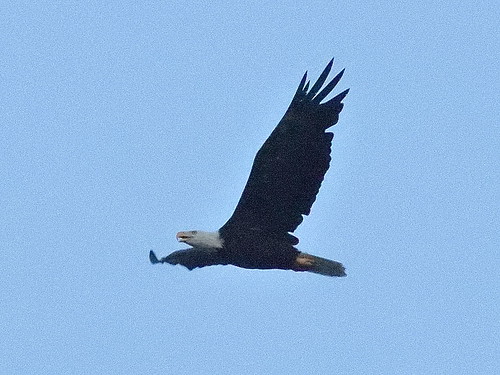
A Bald Eagle passes overhead before sunrise:
Butterflies are disturbingly scarce. One morning I found a newly emerged White Peacock in excellent condition. They fight over territory and mates, quickly damaging their wings:
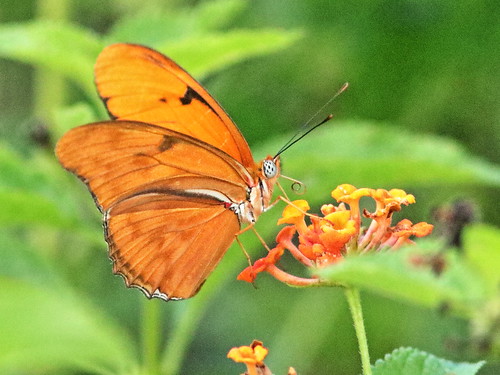
 Julia heliconian butterflies were previously abundant, but almost disappeared after the autumn of 2017 when Hurricane Irma devastated the flowering and host plants and probably wiped out an entire generation of eggs and larvae. Now I often go several days without seeing any at all. This male gave me a nice photo opportunity as it sipped nectar from a Lantana flower:


We harvested well over 100 pounds of mangos and gave most of them away to neighbors and members of our choir. Those out of reach on the tree were left for the squirrels and birds. I scooped out the fruit and froze about 50 more of them and we still had these left over:

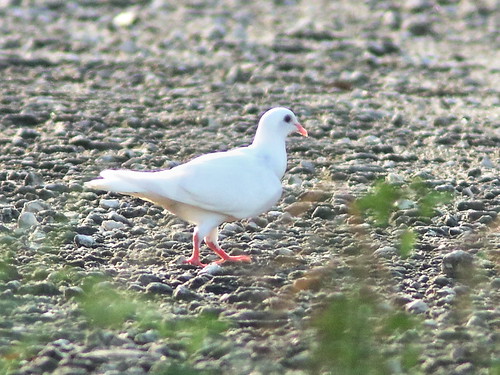
On the morning of our 59th Wedding Anniversary, a white dove (feral Rock Pigeon), the first I have ever seen in the wetlands patch, posed for a moment as if to celebrate the occasion:
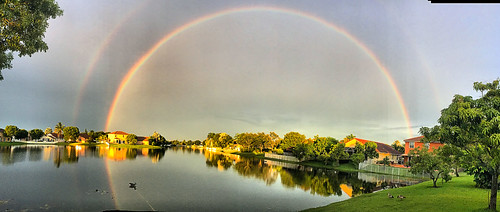
There is an upside to the rainy weather, as seen from our back patio on June 18:
= = = = = = = = = = = = = = =
Linking to Misty's CAMERA CRITTERS,
Linking to Eileen's SATURDAY'S CRITTERS,
Linking to SKYWATCH FRIDAY by Yogi, Sylvia and Sandy
Linking to WEEKEND REFLECTIONS by James
Linking to BirdD'Pot by Anni
Linking to Our World Tuesday by Lady Fi
Linking to Wild Bird Wednesday by Stewart
Linking to Wordless Wednesday (on Tuesday) by NC Sue
Linking to ALL SEASONS by Jesh
Linking to Fences Around the World by Gosia
______________________________________________
_______________________________________________
Please visit the links to all these memes to see some excellent photos on display
________________________________________________
It has been an eventful few days in our neighborhood Wounded Wetlands. Although spring migration has been slow, I added a (heard-only) Chuck-will's-widow to my patch list. A poor recording is my only documentation with no photos to share. It was quite near the trail about 40 minutes before sunrise. As has been the case with the Whip-poor-will, it stopped calling about a half hour before sunup.
An unusual visitor was this Black-whiskered Vireo. It was only my second sighting at this location, and one of only two recorded in Broward County so far this year.
I found the first one at almost this exact spot on April 20, 2011. Its namesake throat stripes are distinctive:
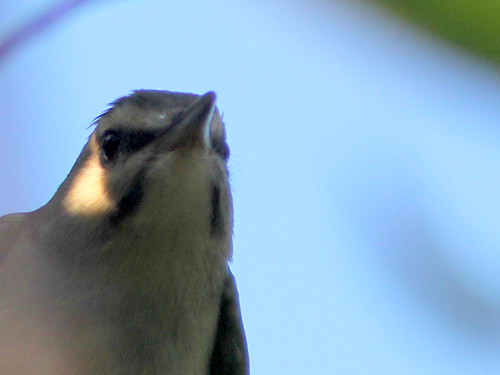
This time I got much better photos when, for a few seconds, it sat still out in the open after it ate Lantana berries (May 4, 2019):


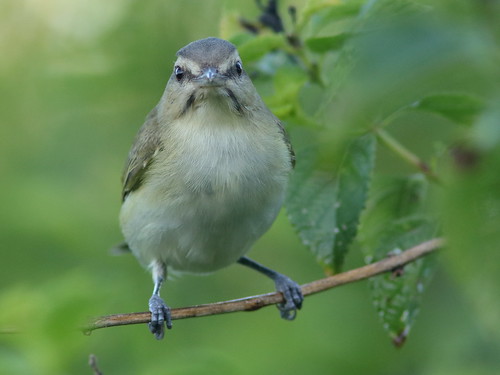
Black-whiskered Vireos breed in The Bahamas and Caribbean islands, but their US range is generally restricted to a migratory population in coastal mangroves of southern Florida. Their secretive habits make them hard to find as they glean for insects among the leaves. They are closely related to the similar Red-eyed Vireo. In fact, at first I misidentified it as the latter species. Close inspection reveals that, although its eyes have a reddish tint, it has a more massive bill and a duller brownish back:

Here is a Red-eyed Vireo for comparison (October 12, 2018):

Two different Bobcats showed up, only two days apart. The first was a small female which stared at me from the high grass on the left side of this trail:
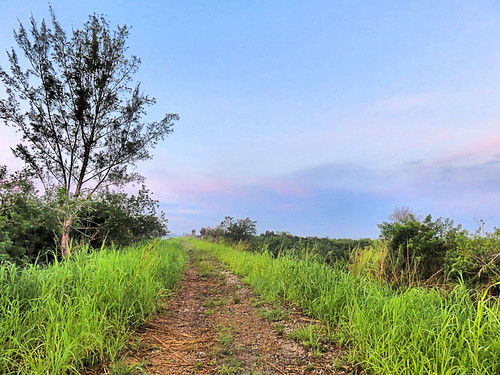
She jumped out and over the trail just as I raised my camera (May 3):

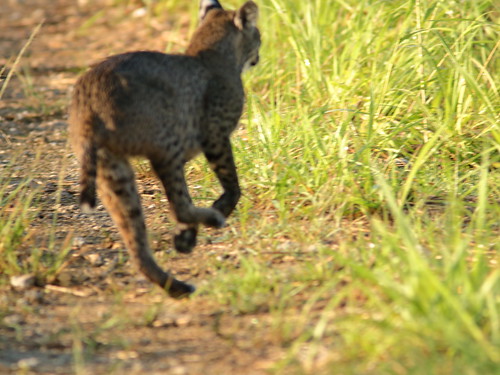
The other Bobcat was a large male, seen only about 100 yards away from where I saw the female. He walked leisurely across the gravel road (May 5):

He crouched down for a moment to check me out:

Male Bobcats usually occupy much larger territories than females. They seek out and mate with several but do not take part in rearing or defending the young. One of the local females appears to be quite pregnant (April 13, 2019):

We would expect her to avoid contact with the male and take such steps as covering feces and hiding in with her kits in a den. I can tell that a male is around when I find fresh Bobcat scat piles out in the open and close to each other, as this is one way they mark their territory.
A White-winged Dove peered out from the shadows (May 4):

Loggerhead Shrikes had disappeared for over two weeks, so I was happy when one posed in early morning sun on May 4:

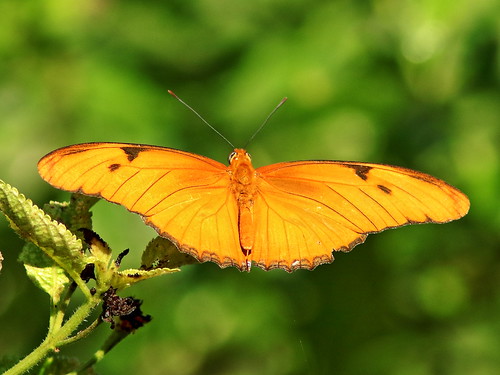
That same day I saw my first Julia longwing of the spring season. They have been very scarce since Hurricane Irma ravaged the area almost two years ago. This is a fresh male:
I had to get down on the ground to get a side view of a tiny but beautiful Dainty Sulphur:

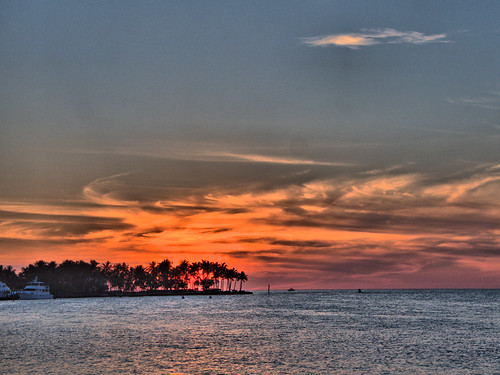
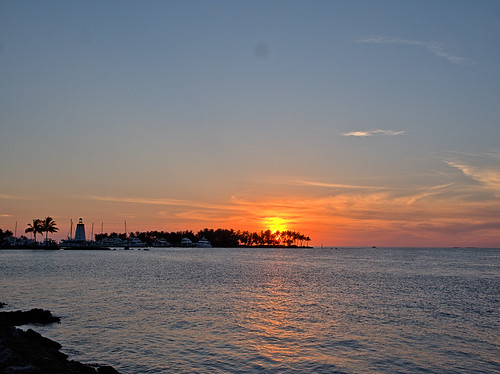
We spent the week after Easter at Tranquility Bay resort on the Florida Keys. These are views from the beach at sunset (April 22-25):

 = = = = = = = = = = = = = = =
Linking to Misty's CAMERA CRITTERS,
Linking to Eileen's SATURDAY'S CRITTERS,
Linking to SKYWATCH FRIDAY by Yogi, Sylvia and Sandy
Linking to WEEKEND REFLECTIONS by James
Linking to BirdD'Pot by Anni
Linking to Our World Tuesday by Lady Fi
Linking to Wild Bird Wednesday by Stewart
Linking to Wordless Wednesday (on Tuesday) by NC Sue
Linking to ALL SEASONS by Jesh
________________________________________________
Please visit the links to all these memes to see some excellent photos on display
________________________________________________
Once again I am looking back three years and remembering how it was then, and maybe what I might expect this time around. My archives contain 410 photos processed that month. As usual I will look for my favorite memes-- birds and other critters, beautiful skies and reflections, fences, signs of the season, and maybe a few shots which speak for themselves.
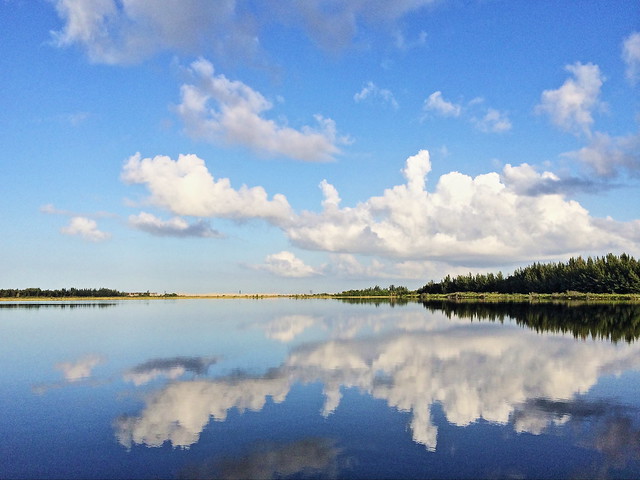
Back in 2014, we started the month at our permanent home in Florida but in mid-month returned to our second home, a condo in Illinois. A little after sunrise on September 1, the winds were calm and the skies fair over the lake in our local wetlands.
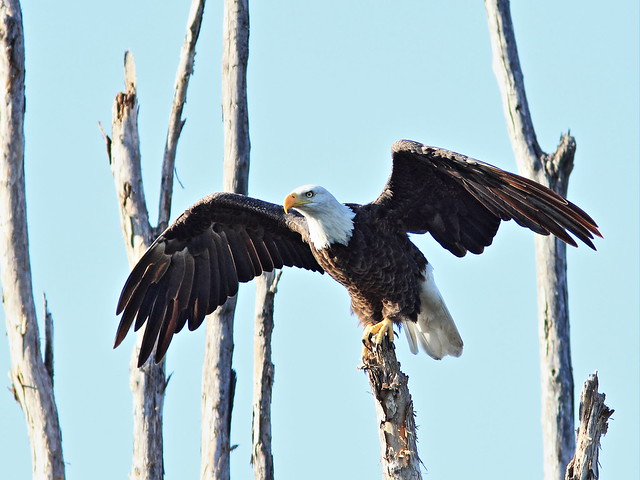
Later in the morning we stopped by the neighborhood Bald Eagle nest and found that both adults were at the nest and bringing in sticks to renovate it. Usually this activity begins later in the month or in early October. The female, whom the eagle watchers had named "Joy," perched atop a Melaleuca snag and spread her wings (click on photo for more and larger views):
This is the male, Pride (no, he is not really that close to the tree!):

Joy, whom we had been following for six years, was known to have produced at least 13 eaglets (11 of which survived to fly freely). Sadly, she would disappear at the end of October. We were never sure of her fate.
Pride was left without a partner. In early December a new and younger female appeared at the nest. Courtship and mating followed, but if "Jewel" deposited any eggs she never sat on the nest. For the first time since 2007 the entire breeding season would pass without any new eaglets.
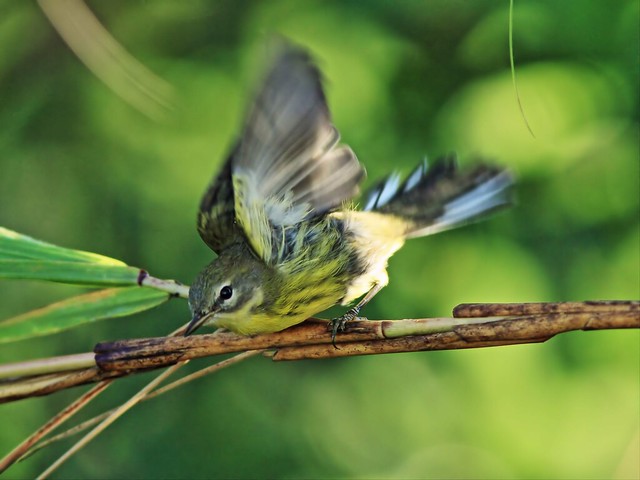
Two days later I caught a much smaller bird in the act of spreading his wings, a Prairie Warbler:
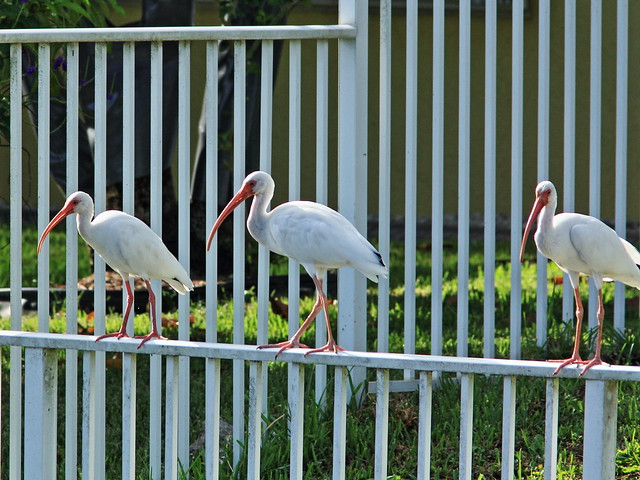
On September 5 a small flock of White Ibises roosted on a neighbor's fence:
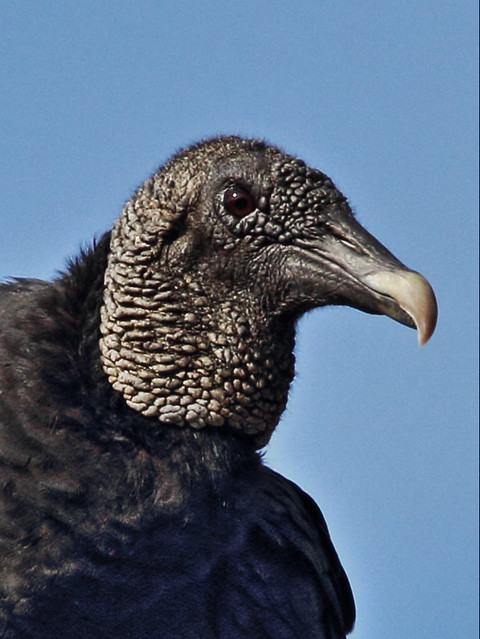
A Black Vulture posed for a portrait. Maybe he heard me say that he is not so ugly after all!
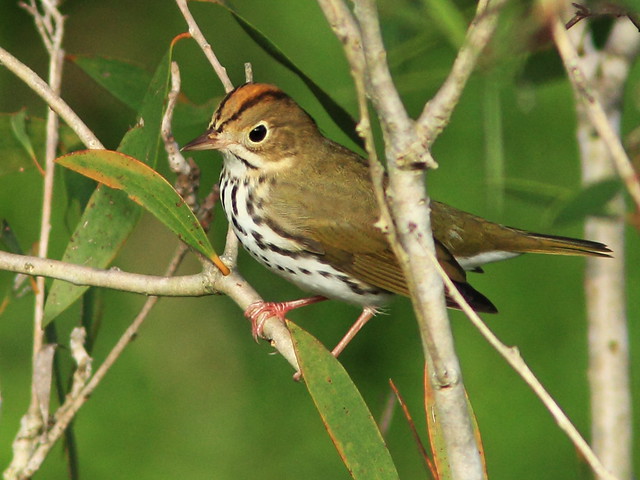
On September 15, just before we were to depart for Illinois, migrating Ovenbirds passed through:
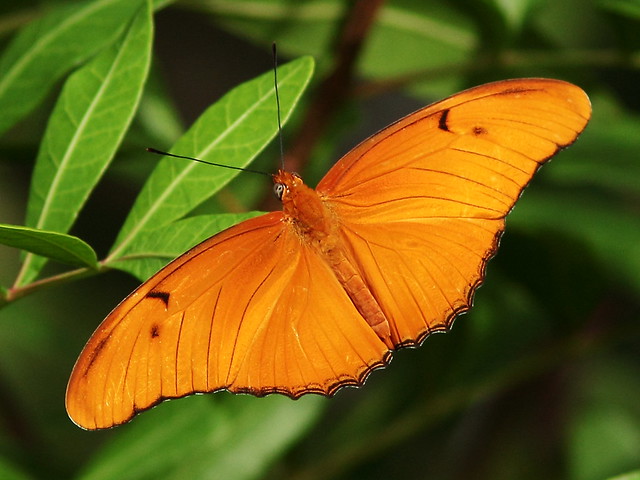
On the same day, parting shots at a pair of Florida butterflies, a male Julia longwing...
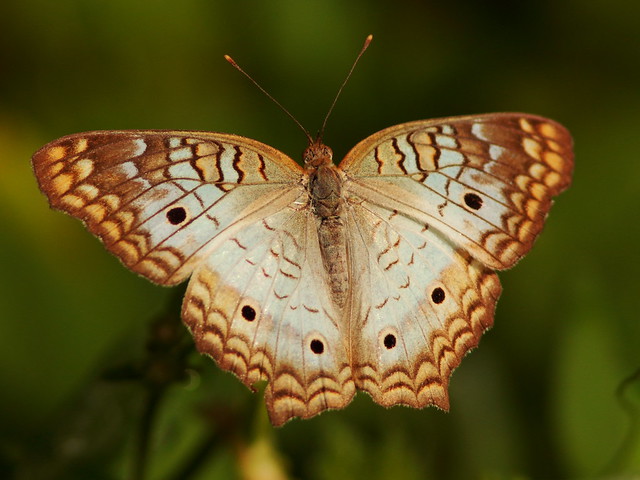
...and a White Peacock:
The Chicago skyline on the approach to Midway Airport on September 17:

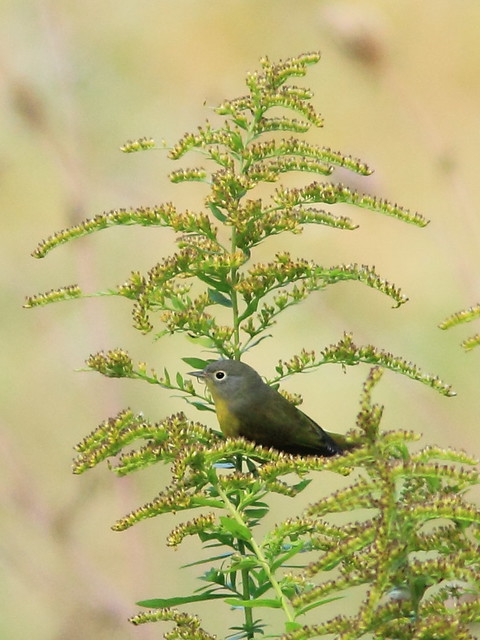
In Illinois, the air was crisp and the light a bit different. Though not a "field guide" illustration of the species, I liked the way this Nashville Warbler fit the frame:
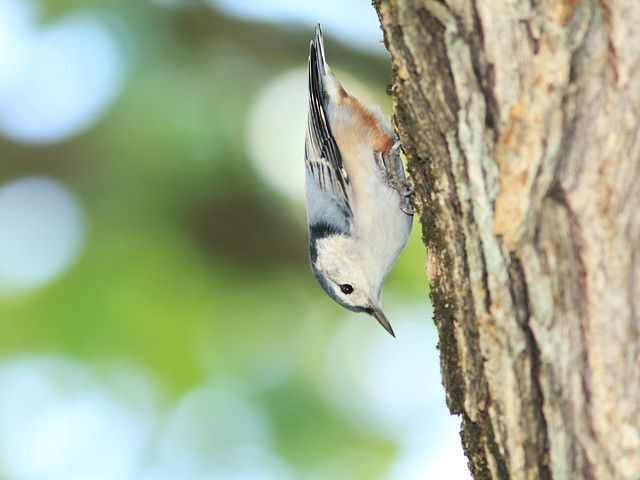
In a classic pose, a White-breasted Nuthatch took a different view of the world:
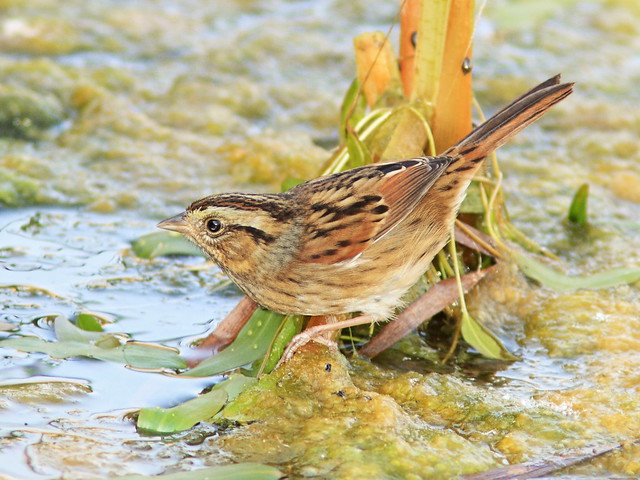
In a small marsh not far from our condo, I enjoyed the natural sepia tones of a Swamp Sparrow...
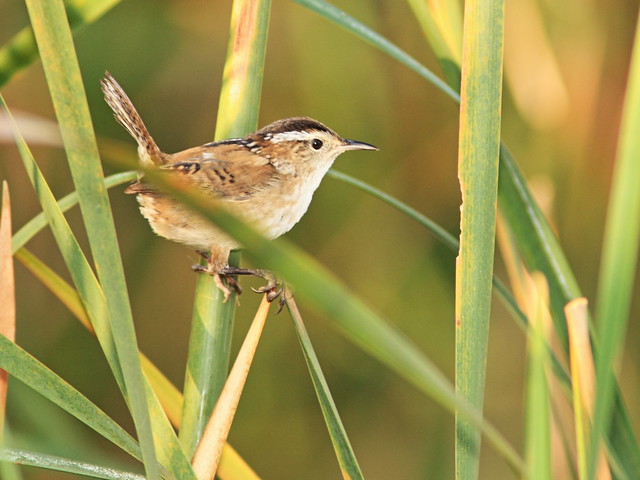
..and a Marsh Wren, ...
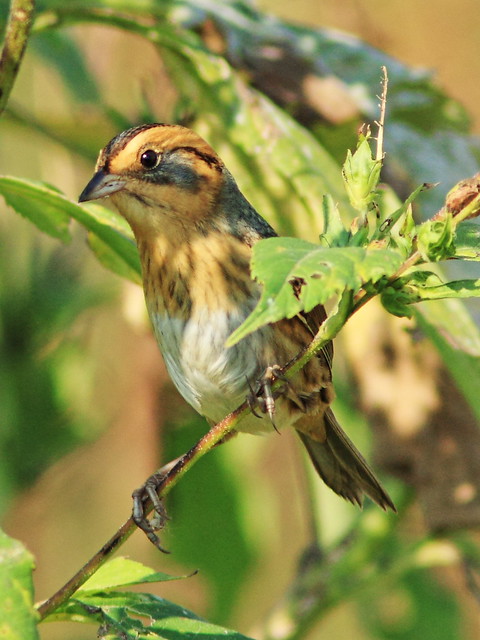
...but a Nelson's Sparrow was more elusive:
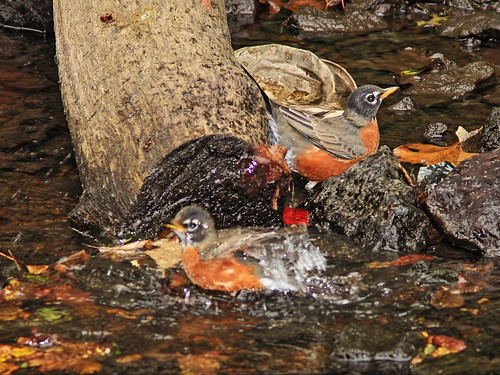
On the last day of September, the temperature had dropped 20 degrees. Hundreds of American Robins seemed to appear out of nowhere. Some bathed in a small stream:
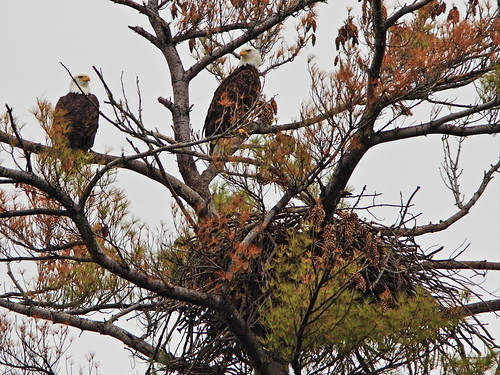
On the way home we stopped by a Bald Eagle nest only a mile away from our Illinois condo. As was the case with the one near our Florida home, it was the first in the county, having been established on the grounds of a residential boys' school only about 4 years previously.
The nest was built in a dying pine tree the middle of a sport stadium parking lot. I fear that the tree will need to be removed, as now, three years later, it is entirely dead and may present a hazard to public safety:
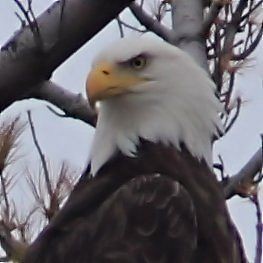
This cameo portrait was captured from a distance:
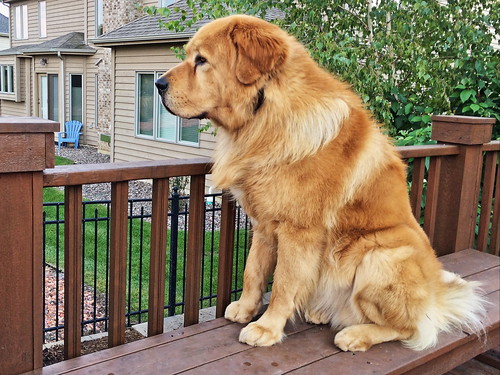
Agramonte, our daughter's Tibetan Mastiff, kept an eye on me as I barbecued steaks on their back deck:
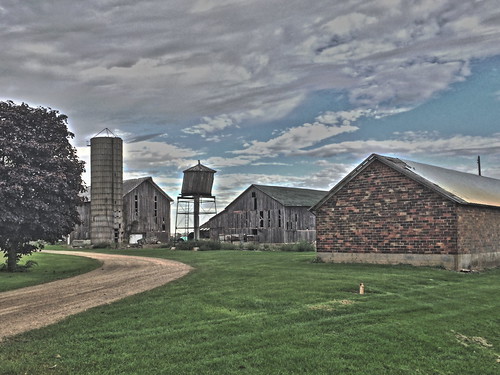
An old barnyard:
 I prepared this post in advance as the ferocious Hurricane Irma appeared to be on a collision course with south Florida. We shuttered our home and evacuated on short notice. Right now (September 6) Mary Lou and I are seeking refuge three time zones away in mile-high Albuquerque, New Mexico.
= = = = = = = = = = = = = = =
I prepared this post in advance as the ferocious Hurricane Irma appeared to be on a collision course with south Florida. We shuttered our home and evacuated on short notice. Right now (September 6) Mary Lou and I are seeking refuge three time zones away in mile-high Albuquerque, New Mexico.
= = = = = = = = = = = = = = =
Linking to Misty's CAMERA CRITTERS,
Linking to Eileen's SATURDAY'S CRITTERS,
Linking to FENCES AROUND THE WORLD by Gosia
Linking to SKYWATCH FRIDAY by Yogi, Sylvia and Sandy
Linking to WEEKEND REFLECTIONS by James
Linking to BirdD'Pot by Anni
Linking to Wild Bird Wednesday by Stewart
Linking to Wordless Wednesday (on Tuesday) by NC Sue
Linking to ALL SEASONS by Jesh
________________________________________________
Please visit the links to all these memes to see some excellent photos on display
________________________________________________