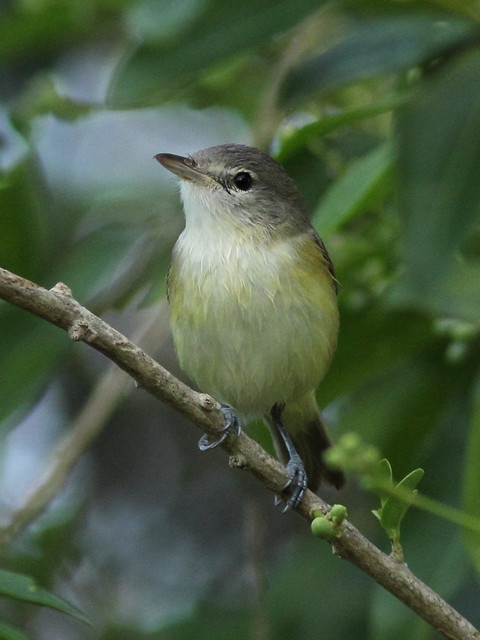
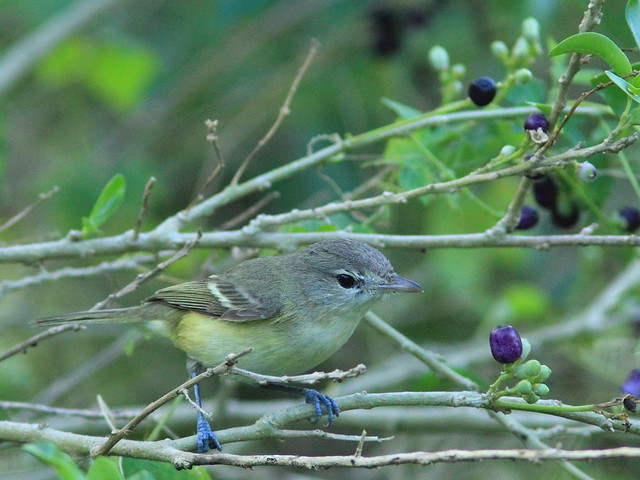
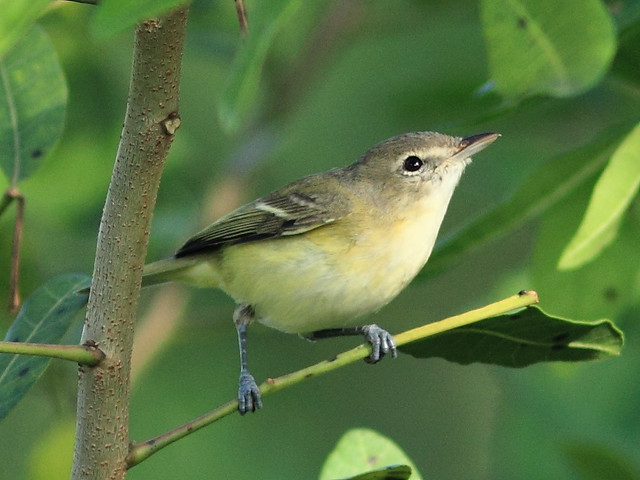
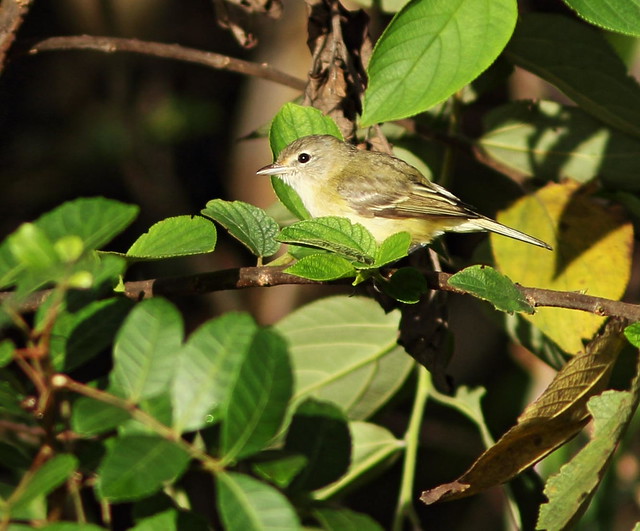
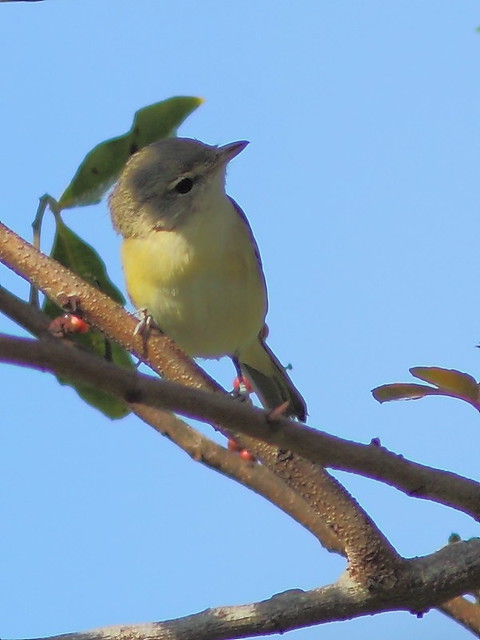
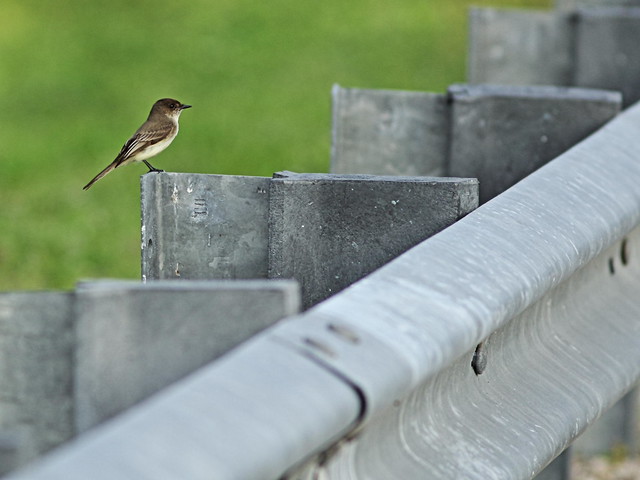
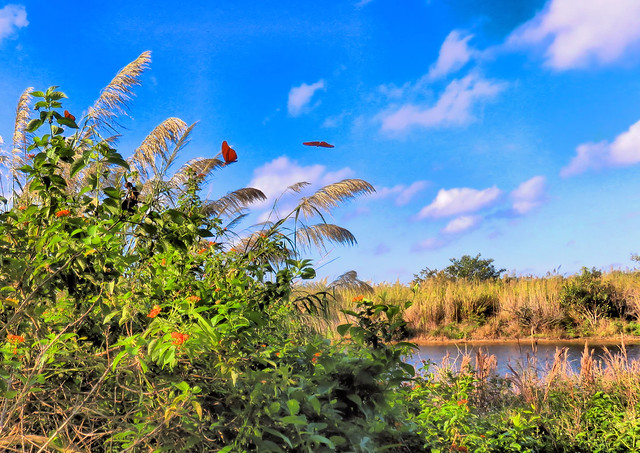
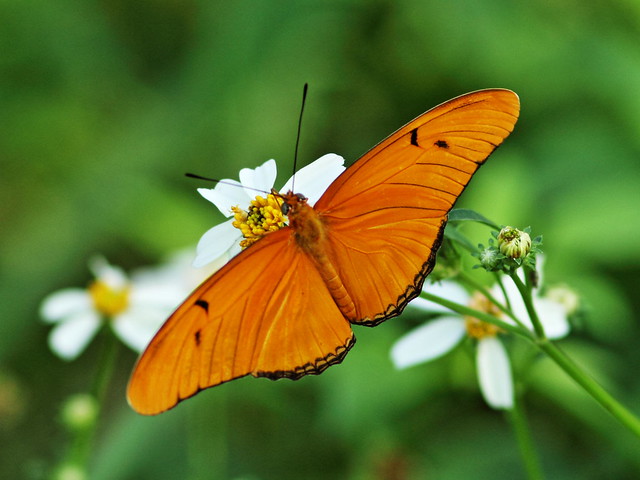
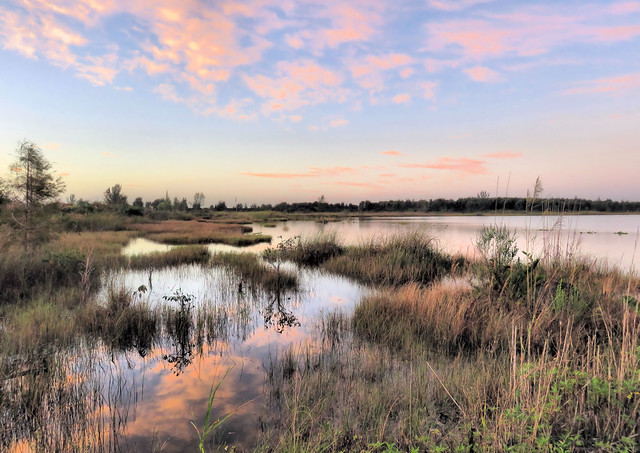
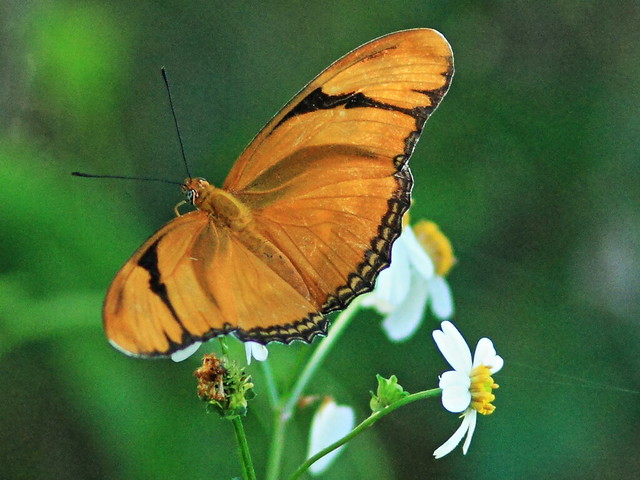
Summer-like conditions prevailed through the month of December-- heat, humidity and frequent rain. A Bell's Vireo persisted in our local wetlands, the only one of this species seen in our County so far this fall into winter. Bell's Vireo breeds in the Central and Southwest states and migrates south along the border of Mexico from Texas to California. Some fall migrants wander irregularly as far east as Florida. Although I have seen it here twice previously, in Octobers of 2009 and 2012, this time it first appeared on October 15 and stayed here at least until January 9th, 2016. It is a small and rather inconspicuous bird. Other birders came to see it, but only a few succeeded. Bell's vireo, October 15, 2015: Here it is on October 31. Note its bright blue legs: On December 22 I obtained a fairly close view: I saw the Bell's Vireo again on December 26, 2015. It had moved to a location about 100 yards away from the other sightings: My most recent sighting, again at the new location, was on January 9, 2016: On Christmas morning, an Eastern Phoebe watched for flying insects from a perch on a support for the guard rail (a really big fence for Tex's meme): On December 29 we had a huge emergence of Julia Heliconian butterflies. Singly or in groups of up to 5 or 6, they were literally dripping from the branches of the shrubs. "Butterflies and Blue Skies:" Male Julia: That same day I got a close shot of a Metallic Green Bee, hovering:
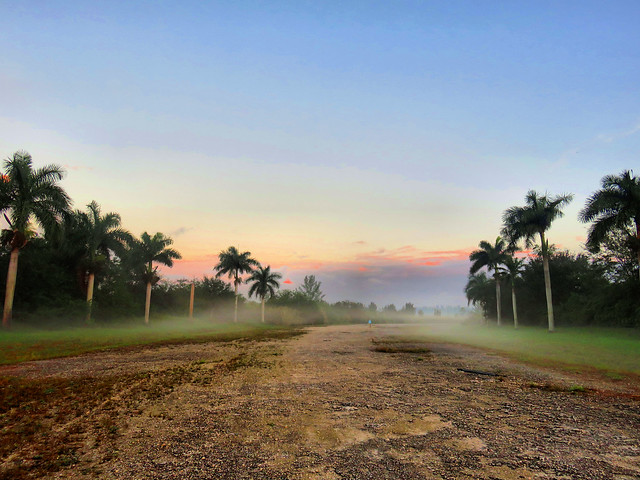
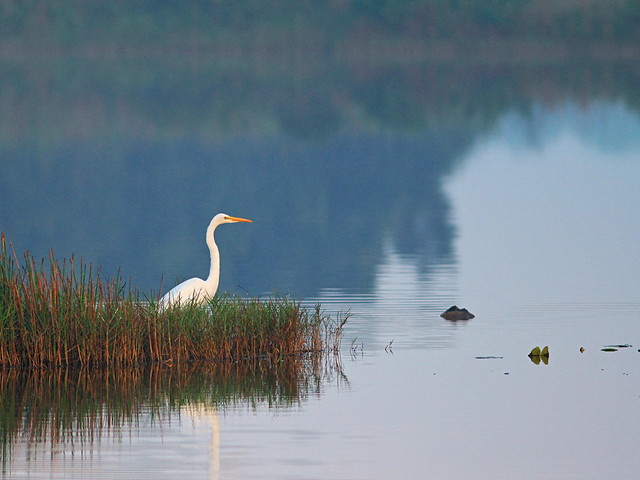
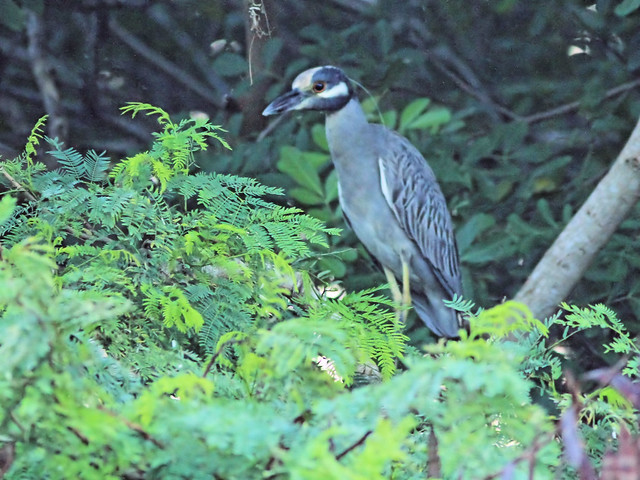
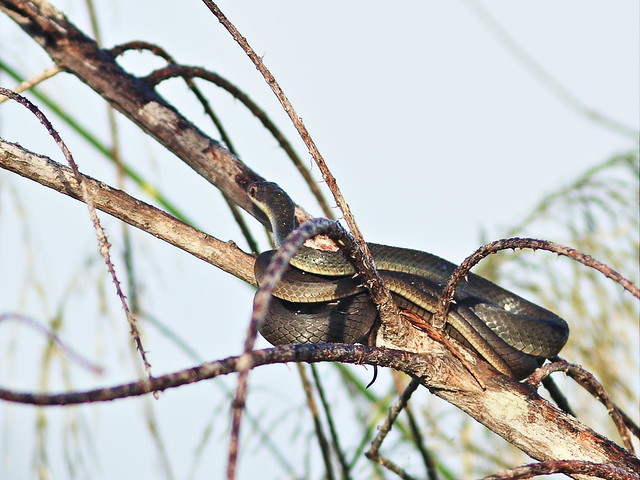
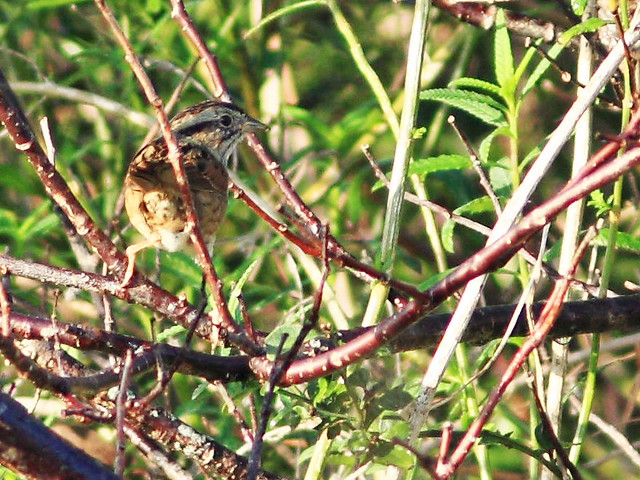
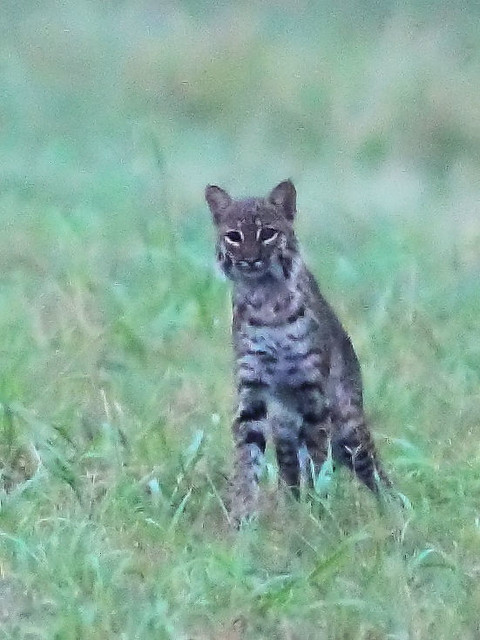
A Loggerhead Shrike called from an emerging Royal Palm leaf spike: Water levels remained high, not good for wading birds such as herons, egrete, storks and sandpipers. Normally, this area of the eastern shore of the lake would have contained extensive mud flats by mid-October: In early January we continued to have almost daily rainfall. This curtailed our outdoor activities. We ventured out on New Year's Day. The smell of spent gunpowder was in the air. Smog, a combination of fog and the smoke left over from the fireworks, somewhat limited our view. That little blue dot is Mary Lou, well ahead of me as usual, just beneath the layer of smog (click on photo for larger view). I reached the lake just as the sun was rising. A Great Egret was ready to fly off: The sunlight had not yet touched the ground or low clouds. In the sad remains of the destroyed rookery, a single Yellow-crowned Night-Heron was present. I am quite sure it is "Dirty-crown," a female which has nested at this particular spot for at least three seasons. Actually, last season she and a mate worked on a nest but soon abandoned it. She is in full adult plumage but has a number of dark streaks on the top of her head, as may also be seen in immature birds: A Black Racer coiled up in the branches of a small Pond Cypress along the road was an interesting find. This constrictor is usually very timid, so I was surprised that it let me approach so closely. Perhaps it had a prey item in its coils and was unwilling to depart without it: The beauty of a female Julia heliconian cut through the gloomy morning: A reclusive Swamp Sparrow peered out of the underbrush: On January 3 we got out into the wetlands about 30 minutes before sunrise, thinking there was a break in the rain showers. Mary Lou walked the entire mile in and was on her way out as I had only gotten about half way along the gravel road. The sky was dark and overcast. A few minutes later, concerned that a downpour was imminent, I turned around and immediately saw a Bobcat at the side of the road watching me. This has happened before. They seem to wait for people to pass by before coming out to watch their movements:
= = = = = = = = = = = = = = = Linking to Misty's CAMERA CRITTERS,
Linking to I Heart Macro by Laura ________________________________________________ Please visit the links to all these memes to see some excellent photos on display ________________________________________________
While checking for waterthrushes at this flooded hole (created by ORV drivers doing donuts) I spotted a venomous Cottonmouth Water Moccasin. While I was photographing it, a Northern Waterthrush suddenly appeared in the viewfinder. I focused on the waterthrush, expecting it to quickly fly away. Instead, the bird started walking towards the snake! It actually flew up a bit ahead of the snake as it swam towards the shore. The waterthrush flew down and approached the snake. It was only inches from the snake's head as the reptile moved up into the brush. The bird never showed any signs of being alarmed, as it watched the Cottonmouth disappear into the shrub. Was this just curiosity, or was the bird looking for invertebrate prey that may be stirred up by the snake? The waterthrush went on feeding as if nothing unusual had happened.
The weather eased up a bit before we returned to Illinois. This may have been partly due to the haze produced by dust that traveled 6,000 miles across the Atlantic from Africa's Sahara Desert. The dust arrives annually to south Florida in early summer and persists until autumn, when the tropical waves from Africa begin to deliver hurricanes. The dust cloud is believed to suppress cloud formation and is also blamed for an adverse effect on the coral in the eastern Atlantic, but is not known to harm humans. According to NASA, Saharan dust is made up of a mix of minerals including clay and iron, as well as organic material such as pollen and micro-organisms. It travels across the Atlantic at about 5,000 feet above the ocean and sometimes crosses the Gulf of Mexico all the way to the Texas coast. See NASA's 2013 Hurricane Mission to Delve into Saharan Dust
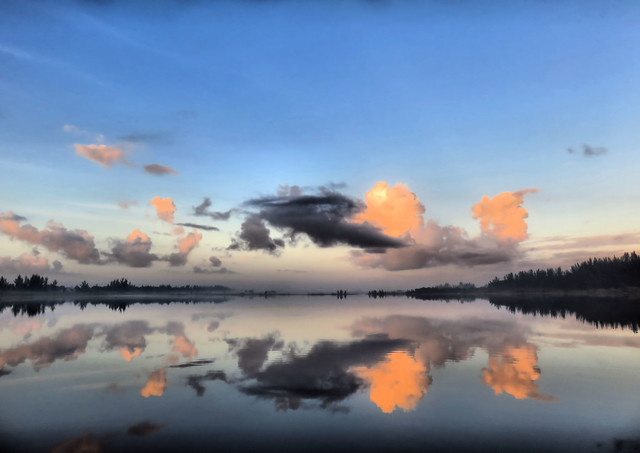
The amount of dust varies from year to year and can produce very colorful sunrises and sunsets. Last year our early morning skies turned bright pink, and I also witnessed an unusual "mirrored sunrise" directly west of the actual sunrise. See my blog that has photos of these events: Egrets under pink skies.
On August 4, minutes after a golden sunrise, I took this photo of the sky, looking west over the wetlands preserve next to our home. This viewpoint is almost the exact spot from which I witnessed last year's "mirrored sunrise." Falling water levels isolated a patch of water from the lake. The surface of the water rippled as small fish struggled to gape air. I frightened several herons that were feeding there. The soft morning light imparted a gentle glow that enhanced the stark white plumage of an adult Black-crowned Night-Heron as it alighted atop a shrub. The heron had piercing red eyes. Two Green Herons flew up from the area. An adult bird with solid rufous neck feathers is on the right, while a streaked immature is opposite it. A juvenile Red-shouldered Hawk occupied the top of a power pole. On the gravel road, a pair of Common Ground-Doves looked for breakfast. Ground-doves can be quite wary. I was lucky to get fairly close to this male who lingered on the path after his mate and one young bird flew into a nearby tree. Although the birding was not particularly good that morning, on my way back home I stopped again to snap a photo of the clouds from a muddy trail on a berm that covers a stormwater culvert leading out into the lake. The sky had a pink cast but the color did not show up well. I would not have posted this photo except for what I did NOT see. If you click on the photo you will see a larger image with a box in the lower edge of the image that shows where a poisonous Cottonmouth moccasin was hiding. I did not notice the snake until I took a couple of steps forward. That was when I caught the movement of its white gape in my peripheral vision. It was so well obscured by the sedge and grass stems that I would not have seen it at all. Note the triangular head, black mask and elliptical pupils. Like all poisonous pit vipers, it has a heat-sensing pit between its eye and nostril. Not planning to walk in high grass, I did not wear my snake boots that morning. The Cottonmouth was a good three feet away with most of its body in the water but it did coil and threaten when I maneuvered around to get a better photo. Then it bolted and swam away. It was a medium size, about 3-4 feet long. Characteristically, it swam with its head held above the water, unlike harmless water snakes. After this I started noticing every crooked branch or any curved shadow!
Later that afternoon, from the safety of my back patio, I enjoyed visits from a few long-legged waders, including a flock of White Ibises. I could not get a full-body shot of this Little Blue Heron before it bolted. This female Anhinga was an interesting visitor. She threatened me when I approached to take her picture, and engaged in a threat display before a grudging departure. Here is a brief clip of the Anhinga's display. If it does not show up, try this link: http://www.youtube.com/watch?v=4G62BcJ_B8c&feature=youtu.be