The month of November, 2016 started on a sad note. MaryLou's oldest brother who lived in Tucson, Arizona was recuperating from complications which followed a leg fracture. We planned to visit him and made flight reservations, also hoping to do some birding while out there. His condition suddenly deteriorated the day before our scheduled arrival. He had turned gravely ill with pneumonia and sepsis.
We flew out the first day of November and visited him that evening in a rehabilitation facility. He was very weak but alert and involved with events surrounding the World Series and the presidential election. We stayed at nearby Davis-Monthan Air Force Base and visited with him the next morning. We planned to spend more time with him, but he passed away that night.
We had reservations to return to Florida on November 4 and had time to briefly visit Sweetwater Wetlands and the Arizona-Sonora Desert Museum before flying home.
I had to pore over nearly 1,000 processed photos from November to highlight favorite memes, such as critters (plenty of birds!), skies, reflections, flowers, fences and scenes which speak for themselves.
My first images were from Sweetwater Wetlands. Our visit was much too brief, given the circumstances.
Yellow-headed Blackbirds flew overhead:


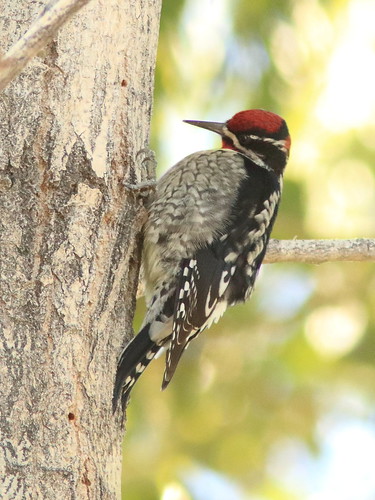
The Red-naped Sapsucker is the western counterpart of our Yellow-bellied Sapsucker:

The Verdin inhabits thorny shrubs in the arid lands of southern Arizona:

Long ears serve to dissipate body heat of the Desert Cottontail:

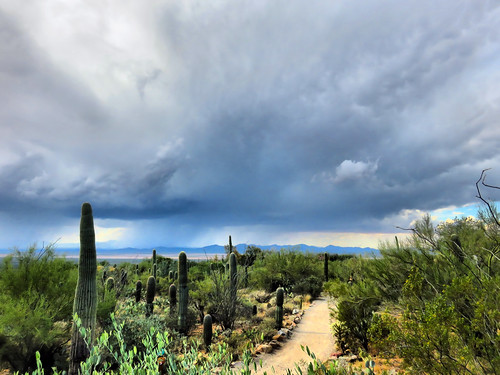
The next morning, rain was threatening when we visited the Arizona-Sonora Desert Museum, but most of it evaporated before reaching the ground:


Cactus Wrens were common:


Butterflies included a Common Checkered-Skipper:

Back home in Florida, our winter resident birds were settling in. Among them was a fairly rare Bell's Vireo:

Marsh Wrens appear irregularly during the winter months:

Eastern Phoebes stay for the winter:

This phoebe is dwarfed by the heavy guard rail fence along the "road to nowhere:"

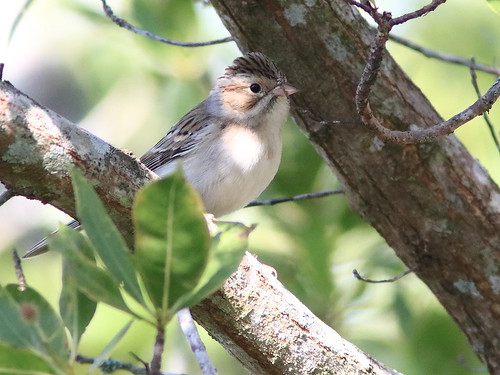
Clay-colored Sparrows made their first (and so far only) appearance in our local wetlands:

Wintering Palm Warblers were numerous:

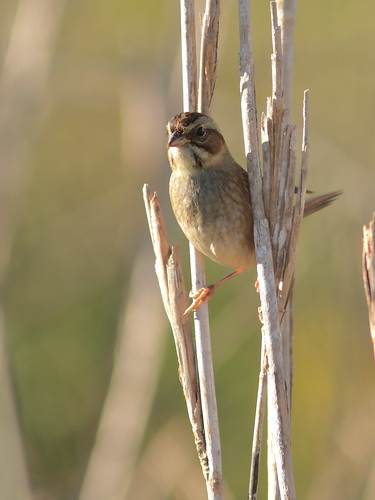
Swamp Sparrows were reliably present but few in number:

Female Ruby-throated Hummingbird:

Sharp-shinned Hawk:

Dark morph of a Short-tailed Hawk:

The local pair of Bald Eagles, after losing their first brood earlier in the year, had successfully reared one eaglet which remained dependent well into September. Now they were refurbishing their nest in preparation for the new season:

A large male Bobcat was visiting, probably meeting up with one of the resident females:

Zebra heliconian at the flower of a Firebush (Hamelia patens):

A "mirrored sunrise" on November 27 is an illusion caused by convergence of the parallel rays of the rising sun on the opposite (western) horizon. Conditions are best when the sky is clear overhead but the tops of storm clouds over the Atlantic Ocean break up the light to form the rays:

The sky was clearing up after a rain storm on November 28:
 = = = = = = = = = = = = = = =
Linking to Misty's CAMERA CRITTERS,
Linking to Eileen's SATURDAY'S CRITTERS,
Linking to SKYWATCH FRIDAY by Yogi, Sylvia and Sandy
Linking to WEEKEND REFLECTIONS by James
Linking to BirdD'Pot by Anni
Linking to Our World Tuesday by Lady Fi
Linking to Wild Bird Wednesday by Stewart
Linking to Wordless Wednesday (on Tuesday) by NC Sue
Linking to ALL SEASONS by Jesh
Linking to Fences Around the World by Gosia
________________________________________________
Please visit the links to all these memes to see some excellent photos on display
_______________________________________________
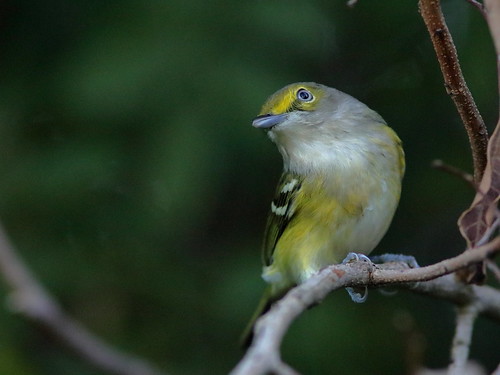
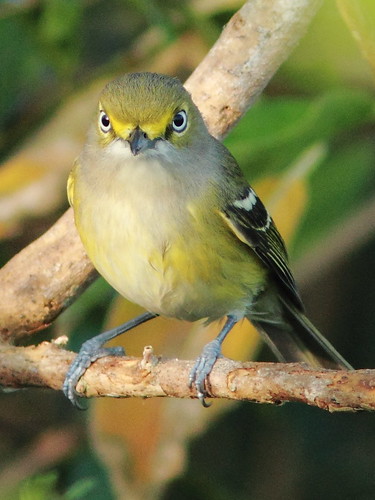
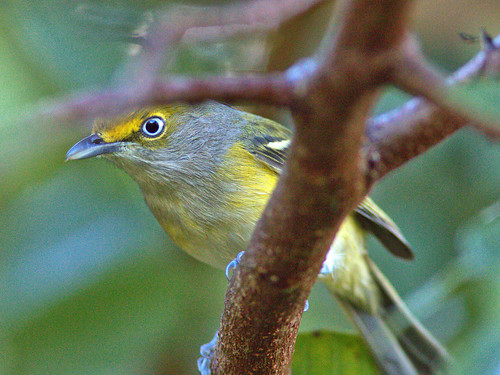
The White-eyed Vireo is a permanent resident in south Florida, although the winter population is supplemented by migrants from the eastern half of the US. I have heard it singing all year long, though the frequency and volume of its song is reduced during the winter months.
Although often shy and retiring, it is one of my favorite photographic subjects. Like all birds, it is incapable of changing its facial expressions, but it can assume some very interesting postures which seem to be communicating its thoughts.
Is it looking for a bug up there or wondering what I am doing here?
Is it angry?
Shy?
Proud?
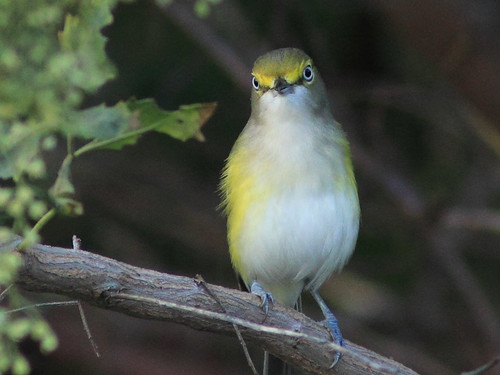
Or simply exuberant?
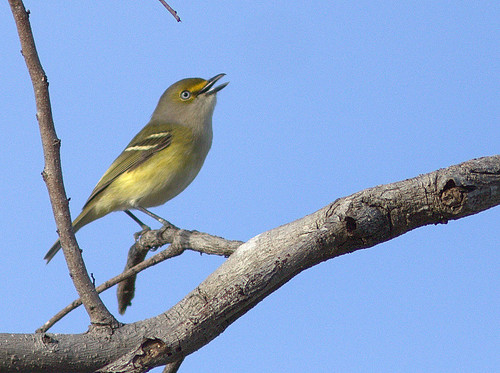
Vireos are small and rather inconspicuous birds, mostly native to the New World, with most species concentrated in Central America and northern South America. They eat insects and also fruit, especially during winter. About a dozen vireo species inhabit the US. Most are brown or greenish, and some show yellow tints. A vireo's bill is more stout than that of warblers and its upper mandible is slightly hooked.
A common visitor during migration is the Red-eyed Vireo:
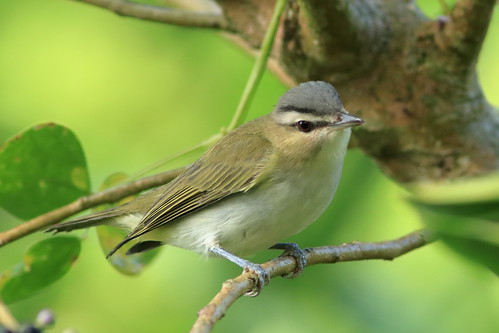
It is a common breeding bird in Canada and much of northern and eastern US. While it does nest down into Florida we do not find it breeding in the southern tip of the peninsula. Thus we wait for migration to hear them as they pass through and rarely stay for the winter. Most continue on to spend the winter in northern South America. They sing persistently up north, but we can hear their distinctive repetitive but varied 2-3 note slurred song during spring migration.
The Red-eyed Vireo is larger, about an inch longer (6 inches) than the White-eyed species. It can be very hard to find as it stalks among the leaves in search of insects:
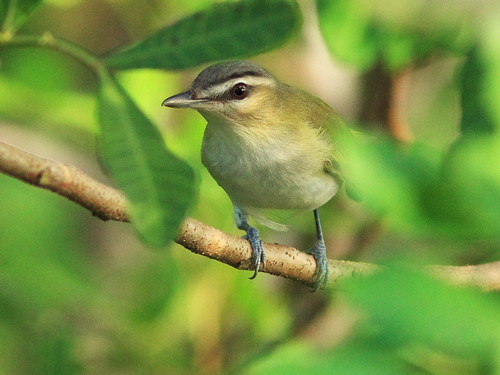
The light must be right to catch the red in its eyes:
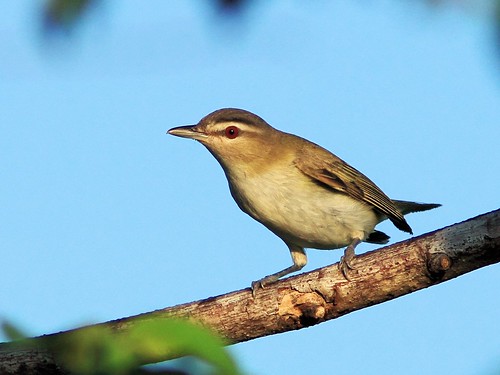
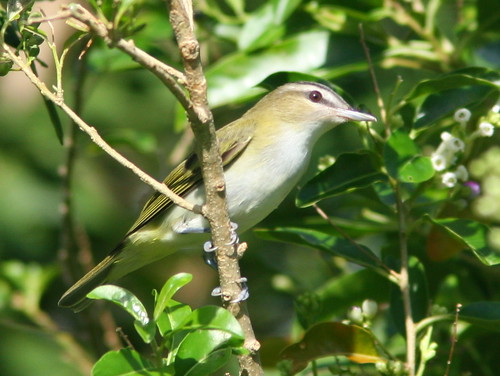
The plumage of the Black-whiskered Vireo is similar to that of the Red-eyed Vireo, but it sports its namesake "whiskers." It inhabits coastal mangroves in south Florida, but I was lucky to see it once in our local wetlands, 18 miles inland:
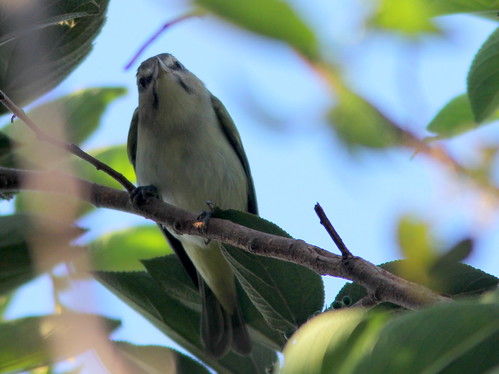
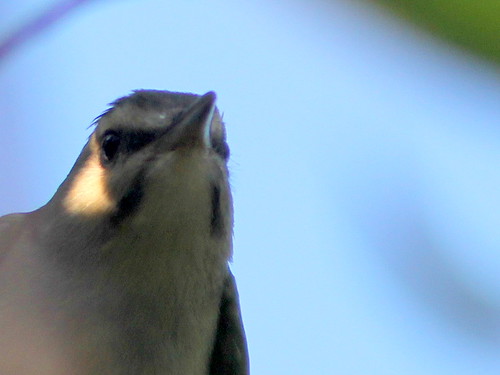
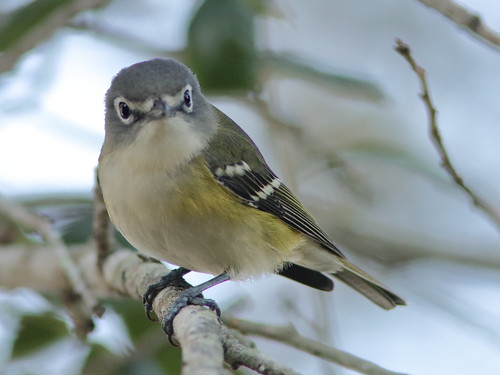
Another winter visitor which has been numerous this week is the Blue-headed Vireo. Its white "spectacles" contrast strikingly with its dark blue head:
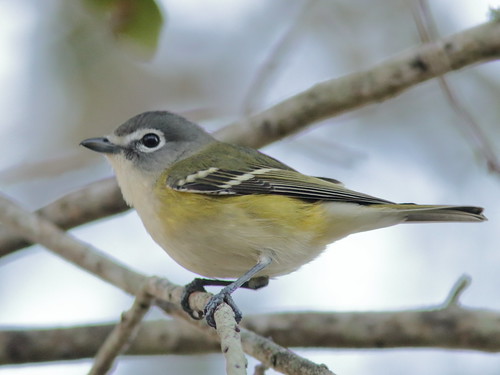
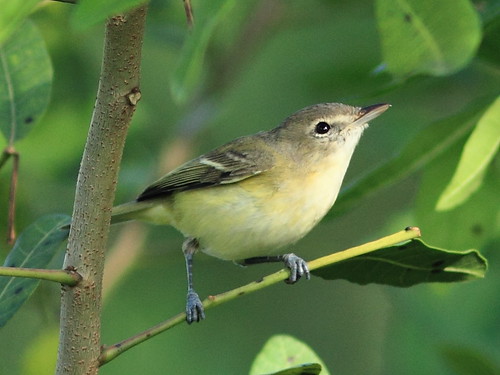
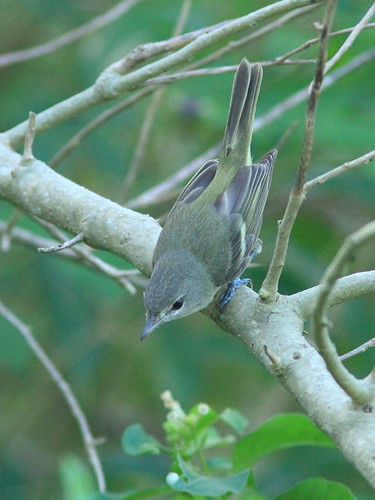
An unusual migrant visited us for four winters between 2009 and 2017. Bell's Vireo is about a half inch smaller than the White-eyed Vireo which often accompanied it. This species breeds to the west, in central and southwestern US. Normally, it migrates through Texas, New Mexico and Arizona to its wintering grounds on the Pacific coast of Mexico. Over the years a few vagrants have wintered in Florida. There were only 24 Florida records between 1947-1976, less than once a year!
Bell's Vireo is rather plain, and easily overlooked:
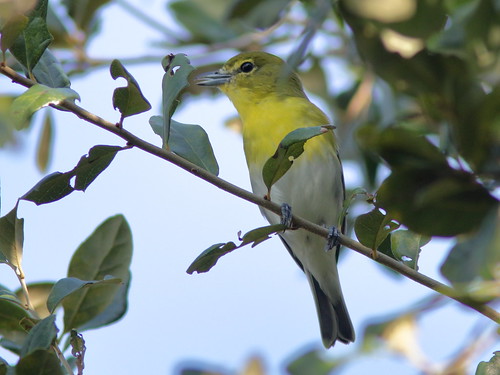
On of my most recent "first seen" birds in our local wetlands was this colorful Yellow-throated Vireo:
The Warbling Vireo has been present several times, but my best photos of it were those I took in Illinois, such as this one:
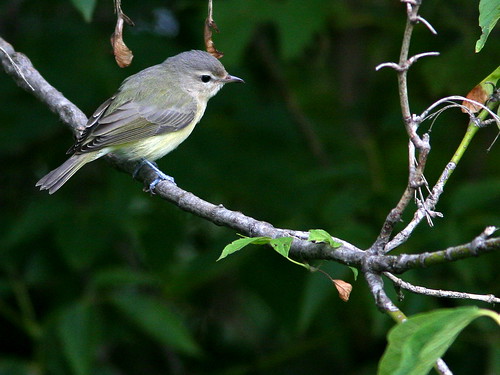
The Philadelphia Vireo is another unusual visitor to south Florida, but i did photograph it here on two occasions. Its voice is very similar to that of the Red-eyed Vireo. It usually migrates from its Canadian breeding grounds to Central America by way of the western coast of the Gulf of Mexico. It is quite colorful:
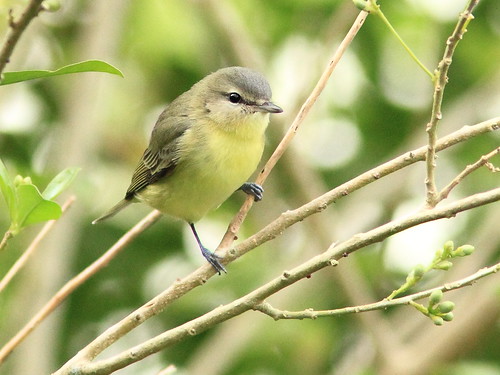
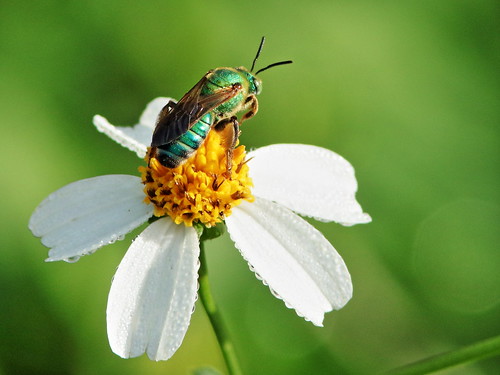
While I have seen other vireo species elsewhere, this covers all my Florida sightings. This week was not all about vireos. An Agapostemon Sweat Bee visited the flowers of Bidens alba:
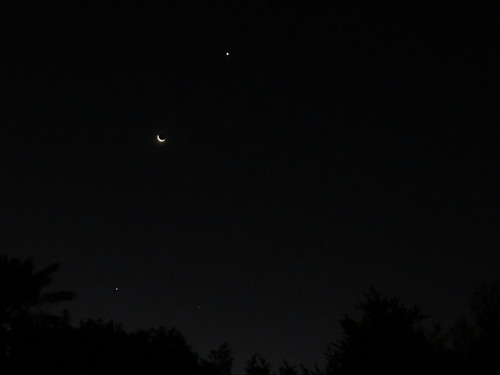
Venus, the Moon and Jupiter were aligned as we walked out 45 minutes before sunrise on January 3. I even saw Mercury closer to the horizon, the first time in my life!
Images of a very old Moon just before it disappeared into the sunrise on January 4th:

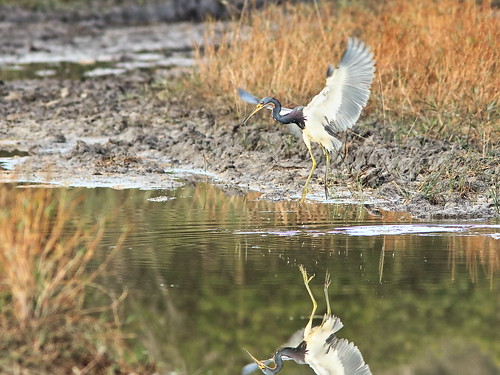
A Tricolored Heron danced with its reflection:
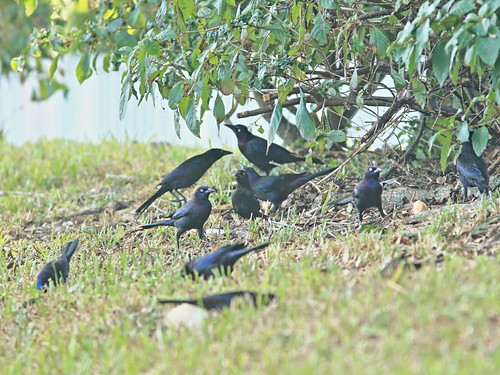
Common Grackles congregated along a neighbor's fence:
 = = = = = = = = = = = = = = =
Linking to Misty's CAMERA CRITTERS,
Linking to Eileen's SATURDAY'S CRITTERS,
Linking to SKYWATCH FRIDAY by Yogi, Sylvia and Sandy
Linking to WEEKEND REFLECTIONS by James
Linking to BirdD'Pot by Anni
Linking to Our World Tuesday by Lady Fi
Linking to Wild Bird Wednesday by Stewart
Linking to Wordless Wednesday (on Tuesday) by NC Sue
Linking to ALL SEASONS by Jesh
Linking to Fences Around the World by Gosia
________________________________________________
Please visit the links to all these memes to see some excellent photos on display
________________________________________________