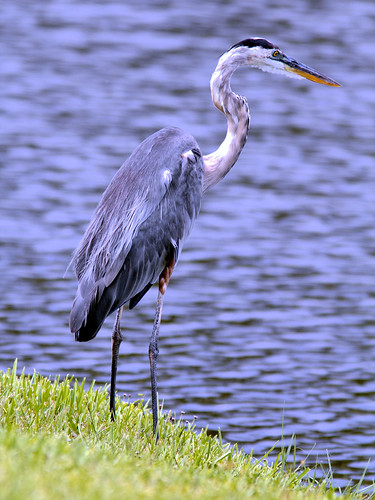
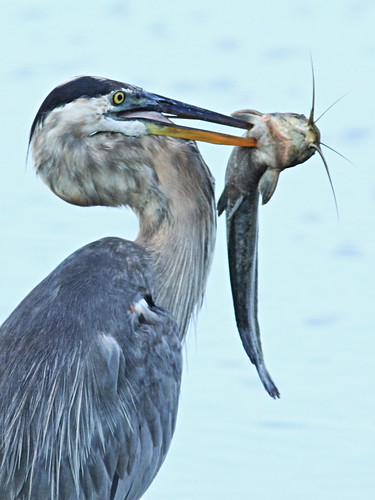
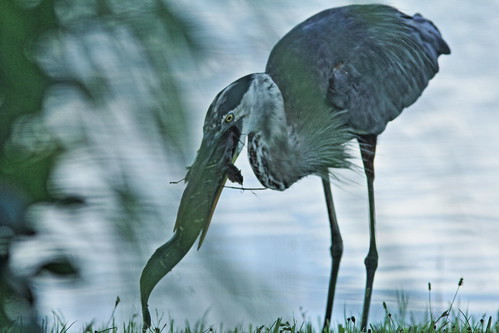
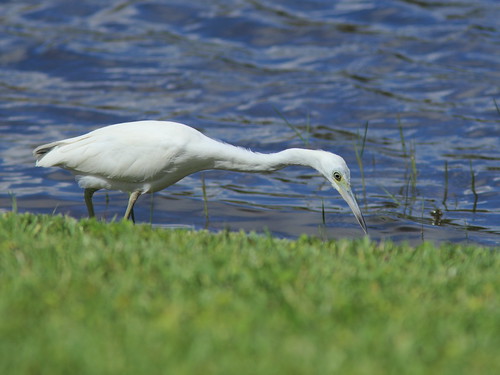
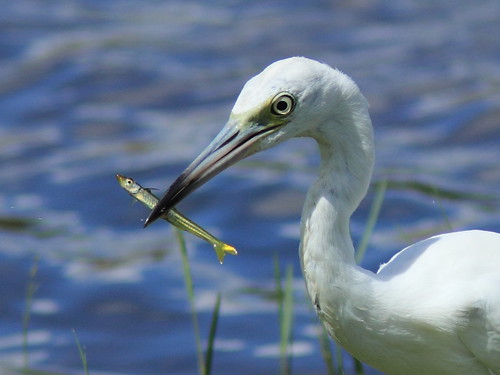
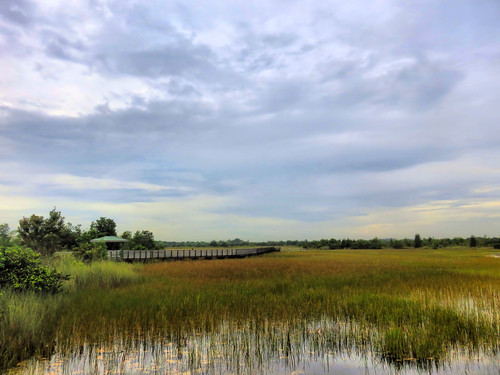
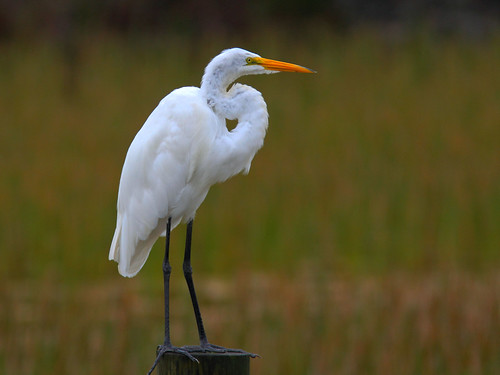
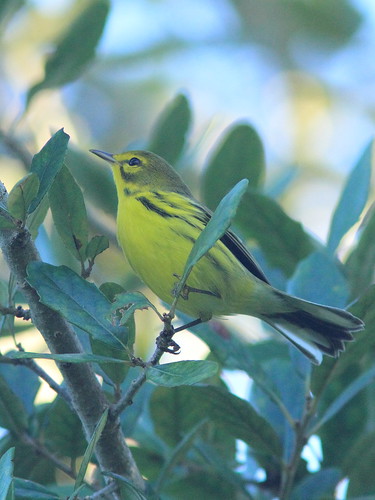
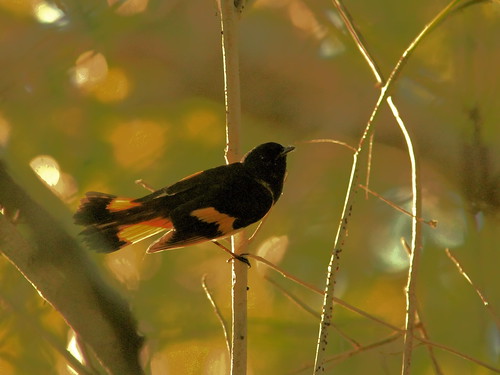
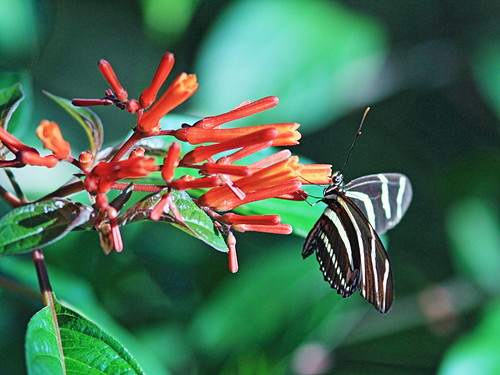
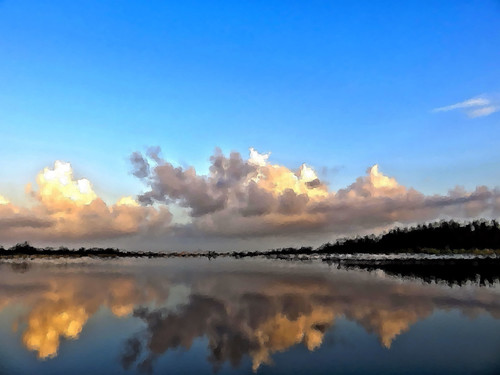
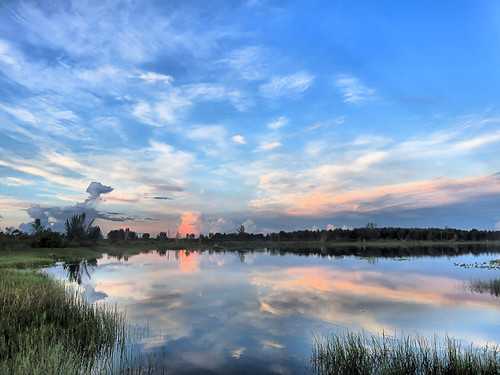
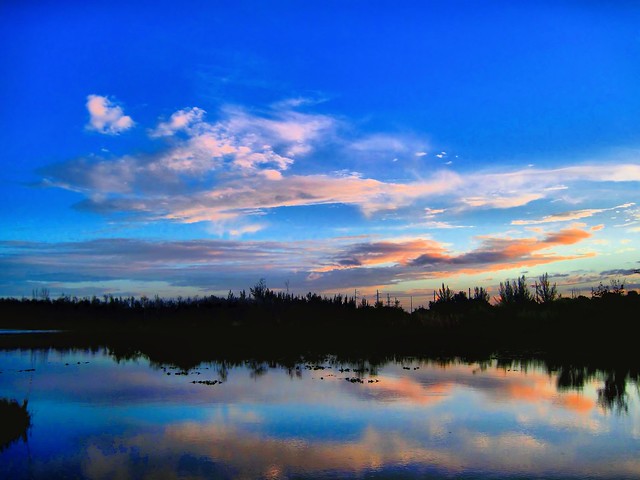
This month I am reviewing my photo archives from three years ago to look for scenes which depict favored memes: critters of all kinds (especially birds), skies and landscapes, reflections, flowers, fences and tranquil scenes which speak for themselves. We spent the entire month of August, 2016 at our permanent home in south Florida, a departure from our habit of retreating to Illinois during most of the summer. This exercise helps me appreciate some of the changes which have taken place in our local Wounded Wetlands over the past three years. Hurricane Irma was to strike in late August the next year, greatly altering the habitat and restricting our access to some of the places which provided the setting for several of these photos. Most bird species undergo a post-breeding molt. This Red-shouldered Hawk showed signs of feather loss and replacement in its wings and tail: A Snowy Egret foraged in the lakeside marsh : Some days were just too hot for trekking out with camera gear, so backyard birds received quite a bit of attention. This Great Blue Heron was fishing from the edge of our lawn on August 4: It captured an exotic Walking Catfish (Clarias batrachus). This species was introduced into the wilds of Florida in the 1960s when several escaped from a facility which was breeding them for the aquarium trade. It is named for its ability to travel over land, especially on rainy nights: Not wanting to disturb the heron, I had to shoot through a window to obtain a photo as the it struggled to swallow it: After succeeding to swallow the catfish whole, the heron spent quite a bit of time drinking water: A Tricolored Heron, its neck gracefully curved, strutted along our lake: An immature Little Blue Heron stalked and caught a small fish: We visited nearby Chapel Trail Nature Preserve: A walk along the boardwalk yielded some nice views of a Great Egret: Swamp Lily: A young Marsh Rabbit: As we walked westward into the Wounded Wetlands on August 19, we were greeted by an odd sight. Was the full Moon setting into a rising Sun? Impossible! Of course this is an illusion, caused by the convergence of rays from the sun which was rising behind us, a "mirrored sunrise:" Later in the month, warblers began appearing. The Prairie Warbler breeds mostly in coastal mangroves and may simply move inland as autumn approaches. This was the first I saw, on August 20, in an area which would later be devastated by Hurricane Irma: In the same small grove, also on August 20, I found a Yellow-throated Warbler... ...and a colorful female Northern Parula: On August 22 the first American Redstart appeared: Not to be overlooked among the "critters" this month, a Brown Basilisk... ...a Green Iguana... ...a Zebra heliconian, sipping the nectar of Firebush (Hamelia patens) flowers... ...and a Florida Box Turtle crossing the path: I rendered this photo of the lake in the wetlands as an oil painting (click on photo to enlarge it): A Great Egret closed out the month, walking past a neighbor's fence on August 31: = = = = = = = = = = = = = = = Linking to Misty's CAMERA CRITTERS,
On June 23, a half hour before sunrise, we walked out into the "Wounded Wetlands," a water conservation area near our home in southwestern Broward County, Florida.
Overhead, the sky was blue, but storm clouds were visible on all horizons. Like fingerprints and snowflakes, no two sunrises are the same.
Here, the sun illuminated the clouds and had not yet touched the lake, but the cloud formation took the shape of two firemen (or were they Daffy Ducks?) racing to extinguish a blaze:
I first encountered my neighbor Scott as he walked his dog in the Wounded Wetlands. He carried a camera and liked macro and landscape shots. As a retiree I can afford to spend more time out in the wild than he, but Scott is very good at finding things I have missed.
Early on, Scott discovered the heron rookery at the far end of the patch. He e-mailed me detailed instructions as to its location. It was a spot which I often walked by, but never had explored. I followed the directions and still could not find it.
He had to meet me there and point out the several Yellow-crowned Night Herons and their nests which I had been missing:
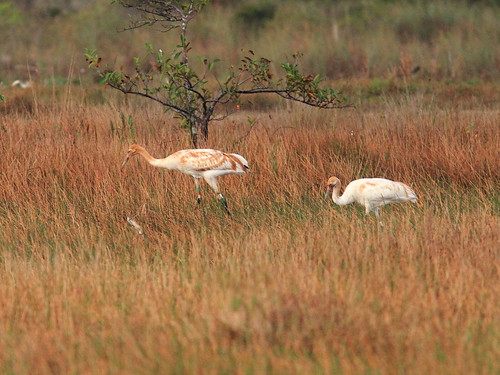
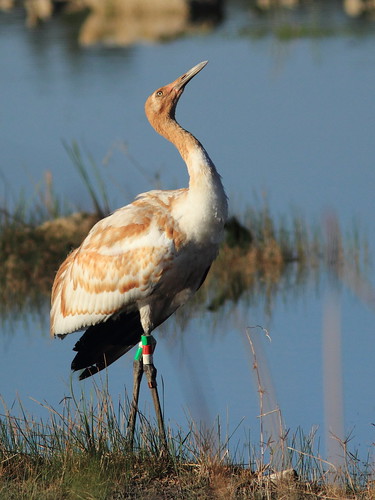
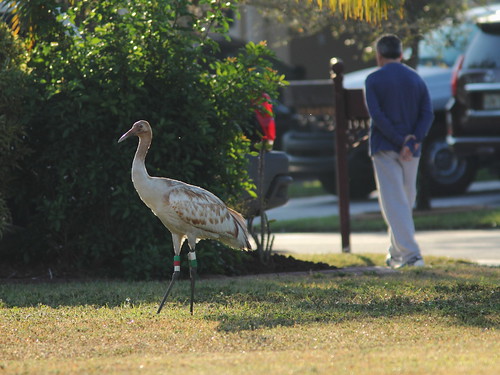
Then Scott and his daughter found the first Whooping Crane ever reported here in many years. He sent me a photo to confirm the identification and I hurried out to eventually find it accompanied by a second Whooping Crane.
(They were captive-reared and in a group released in Wisconsin to migrate to northern Florida with a group of Sandhill Cranes. One wore a radio locator which tracked them down to the southern tip of the Florida peninsula before they wandered up to our neighborhood. Amazingly, one eventually spent time in Scott's front yard!).
Once again, Scott has outdone me with a very rare find-- the first Coyote reported in this part of our county. He obtained great photos, but so far I have not been able to spot it on my own (Photos property of Scott McPherran and used with his permission):
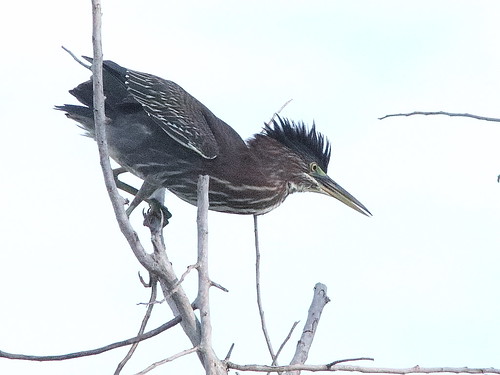
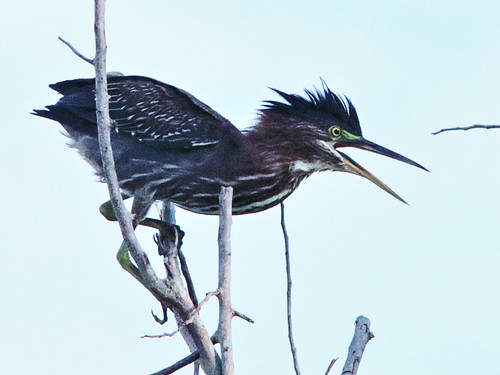
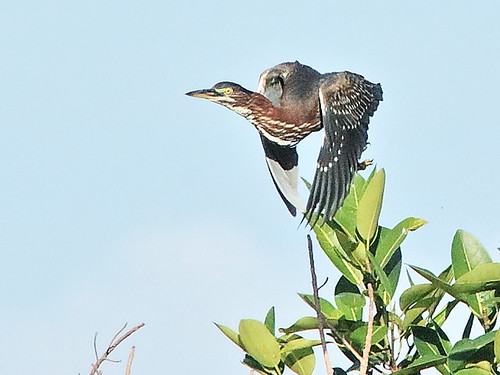
This immature Green Heron provided some dramatic poses in poor light:
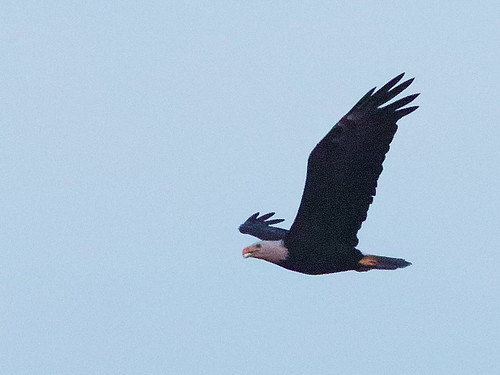
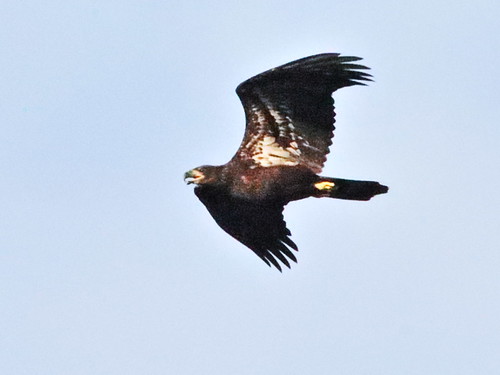
Twice this week I enjoyed seeing two Bald Eagles flying over. They are almost certainly residents from the nest about 1 1/2 miles away. The adult appeared at sunrise, while the juvenile followed about an hour later both days:
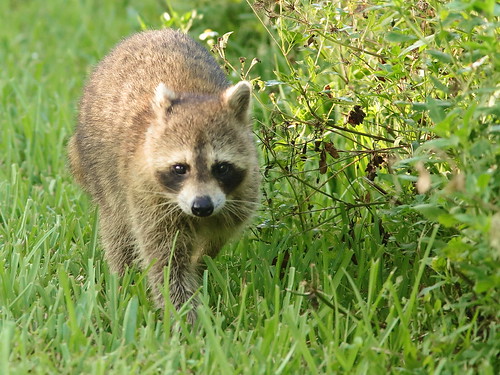
As I was photographing the juvenile eagle, a near-sighted Raccoon walked right up to me. I had to wave my arms to make him avoid me:
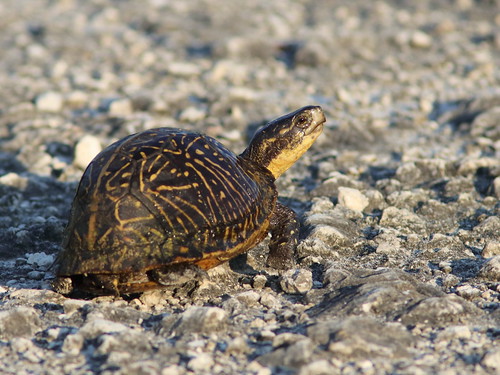
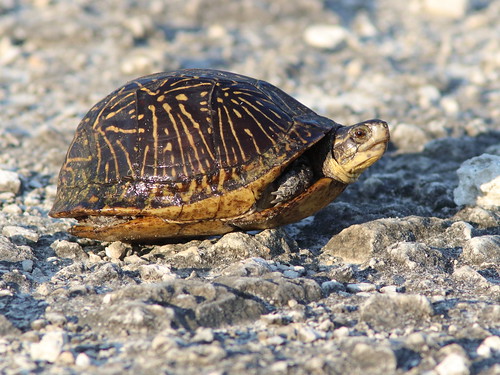
A female Florida Box Turtle ambled across the gravel track. She retracted into her shell when I approached, so I picked her up and deposited her safely on the other side of the road:
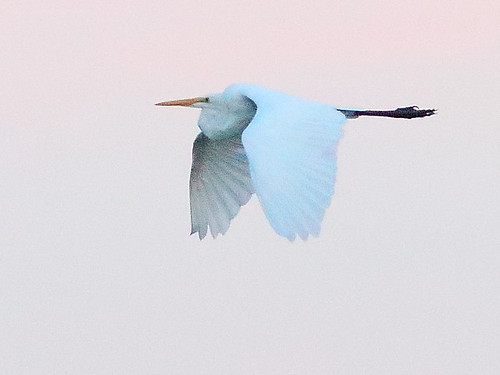
A Great Egret's plumage contrasted with the pastel sky. The pink tint suggests that dust may be blowing in from the Sahara Desert:
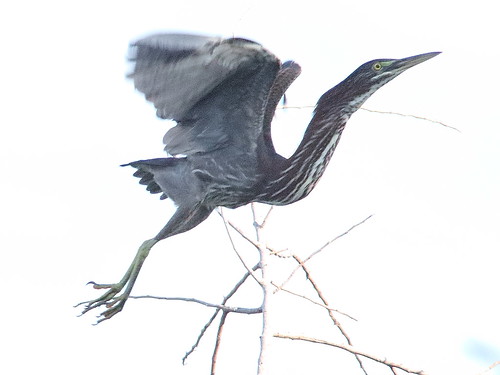
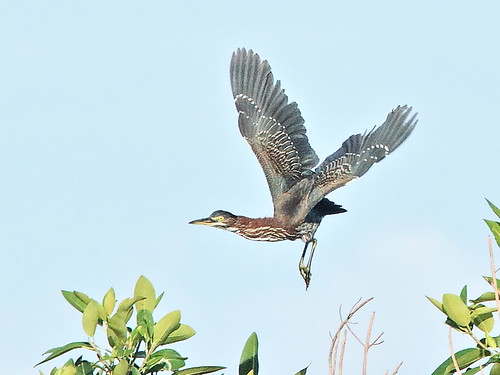
Later, in good light, another immature Green Heron launched from a treetop:
Its wing span is impressive:
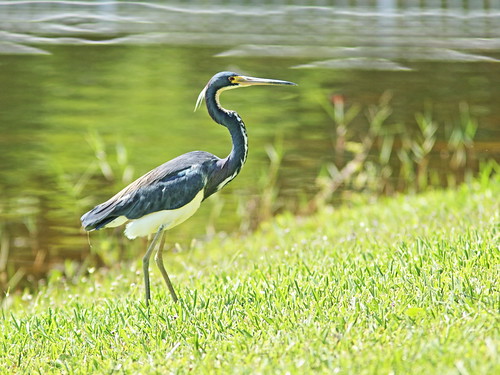
Back home, a Tricolored Heron visited our yard:
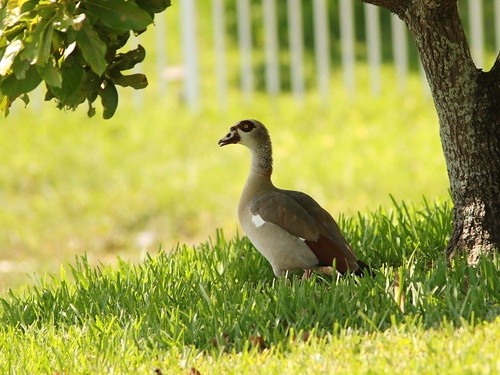
After harvesting all the mangoes we could reach, we left the highest ones for the birds, among them this Egyptian Goose resting in the shade with a neighbor's fence reflected in the background: = = = = = = = = = = = = = = = Linking to Misty's CAMERA CRITTERS,
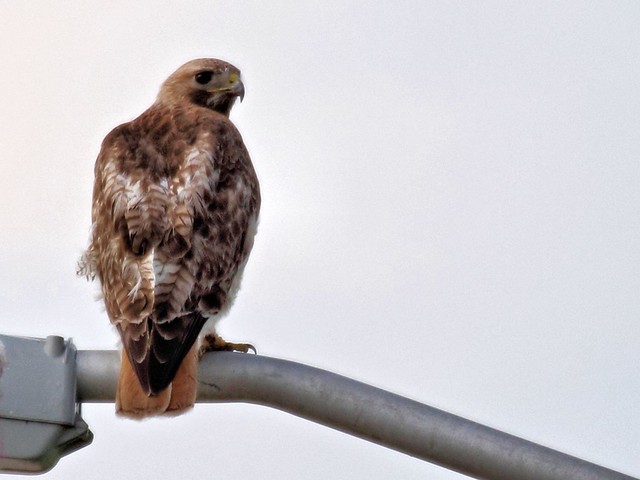
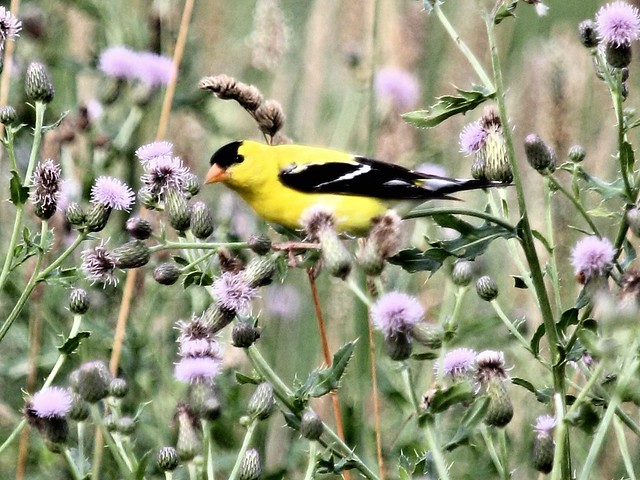
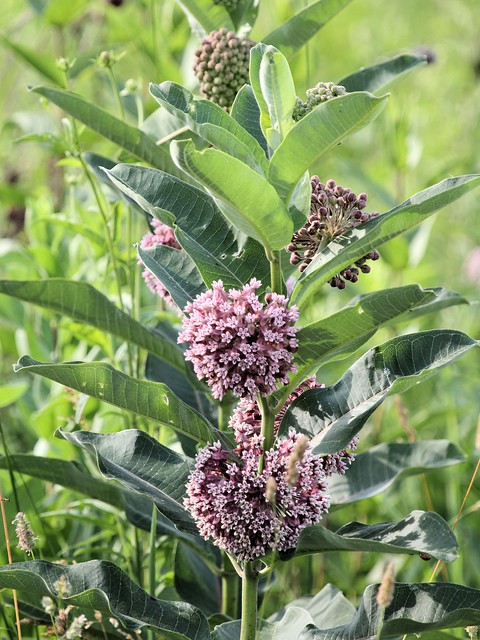
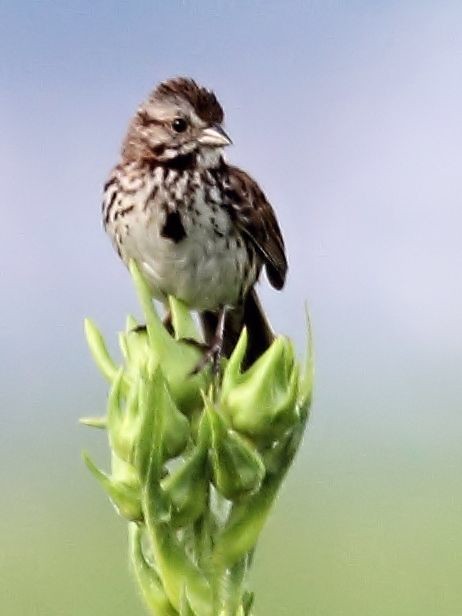
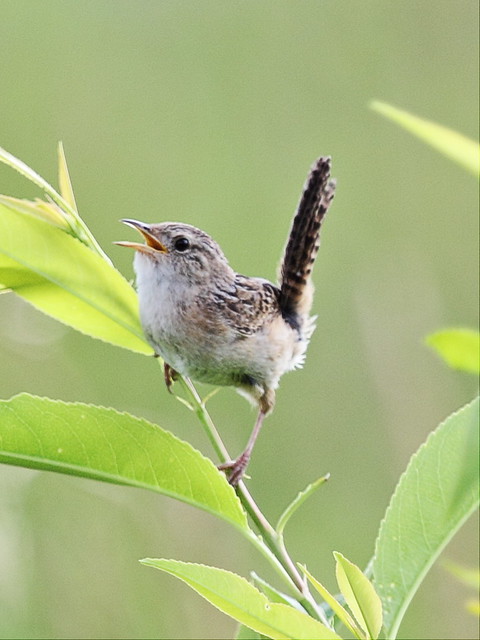
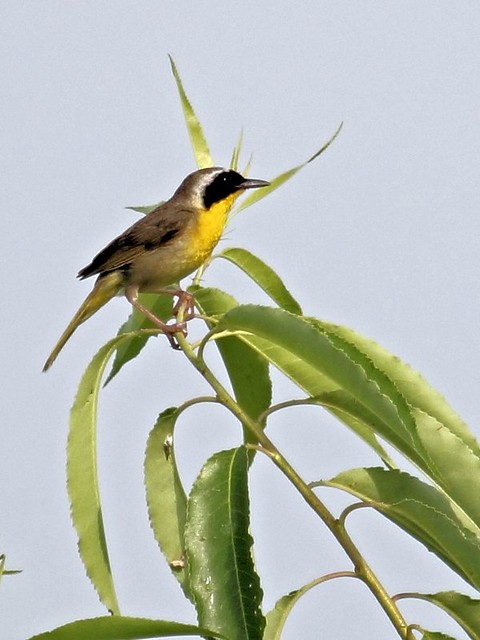
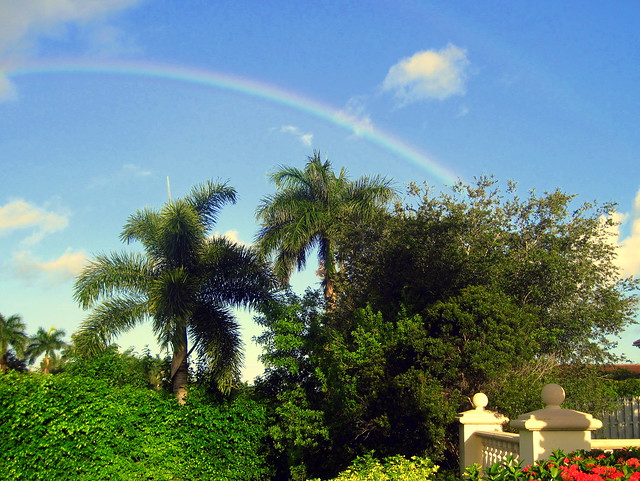
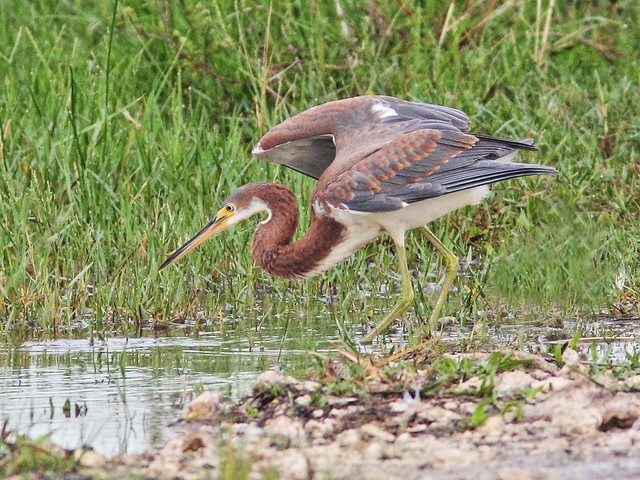
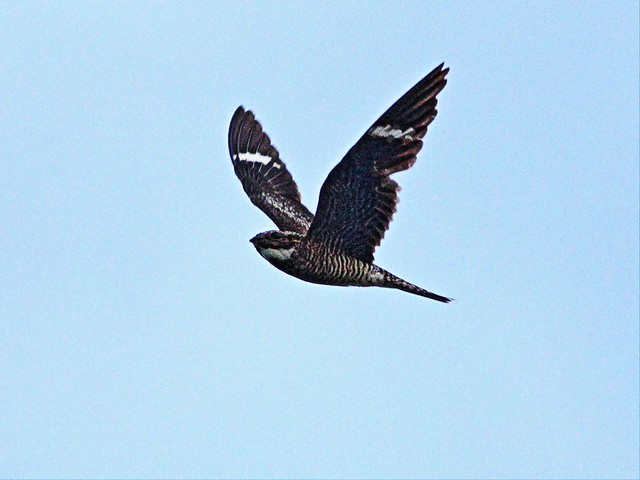
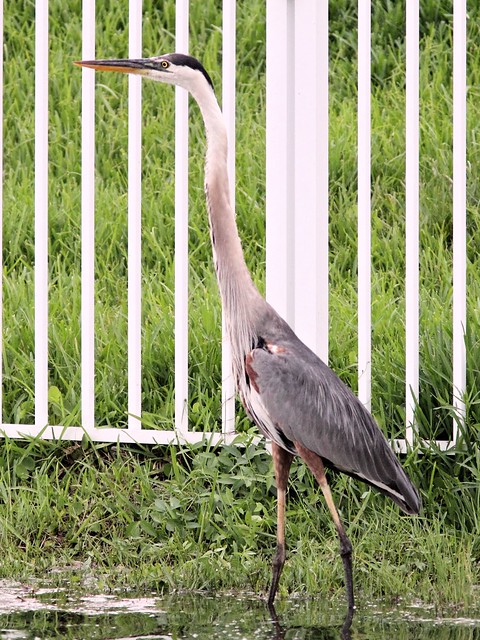
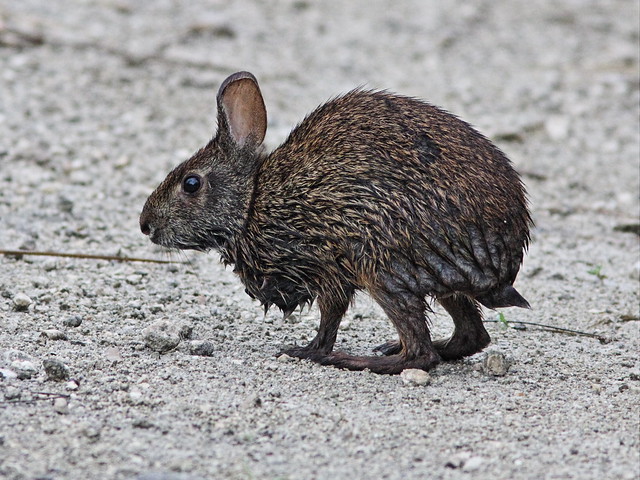
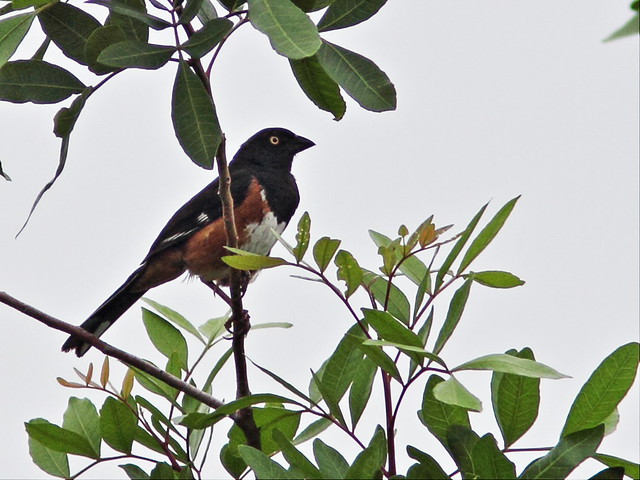
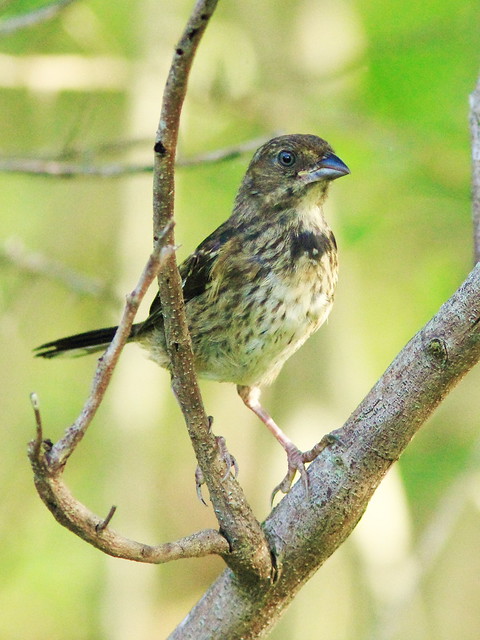
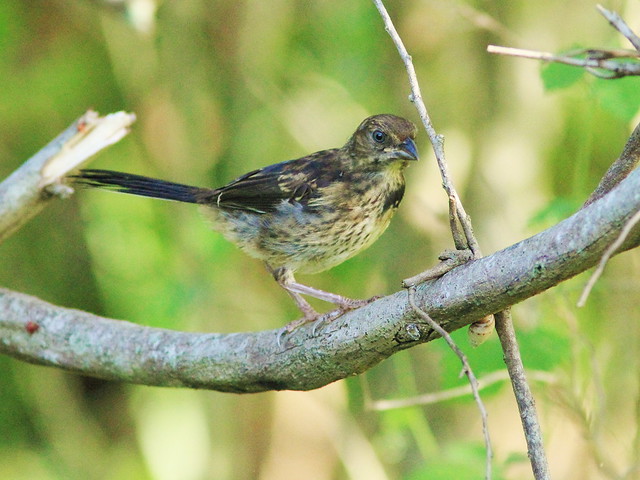
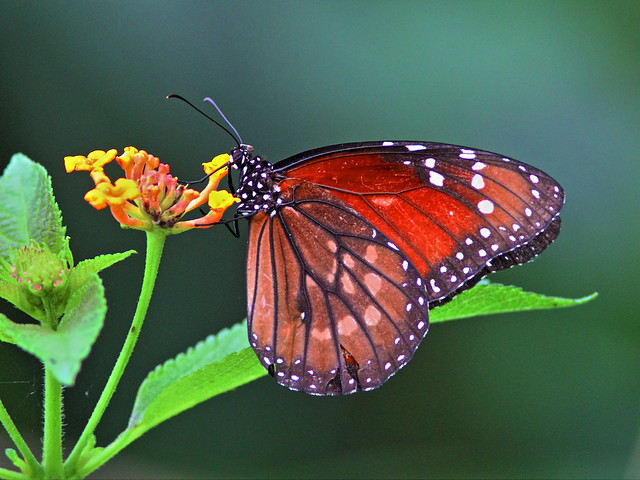
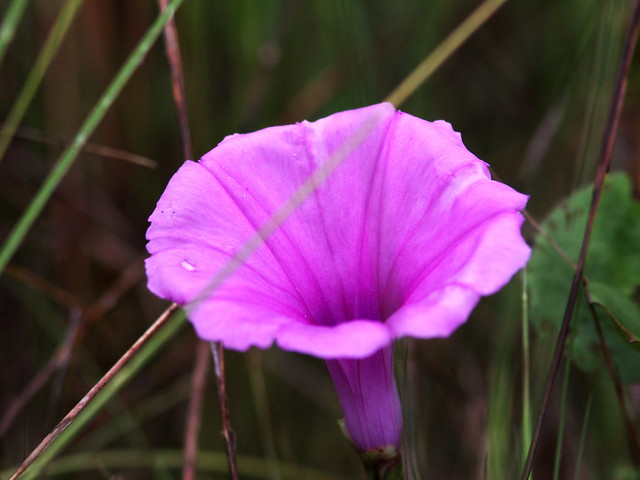
We started the month of July, 2013 at our second home in Illinois, having just returned from our RV trip through Arizona and Utah. Join me once again as we direct the Retrospectroscope and flash back to events three years ago. As usual I will look for photos in my archives to meet the themes of SKY, REFLECTION, FENCE, MACRO and CRITTERS. And, I will add FLOWERS for Denise's meme. I succeeded in finding examples of all! Construction on the new housing was proceeding at a fast pace. Yet this Red-tailed hawk roosted on a street light as if refusing to believe that our front yard was no longer a prairie rich with prey: At Nelson Lake preserve, milkweed was in bloom and thistles were going to seed, ideal conditions to begin the nesting season for the American Goldfinches: The Common Milkweed looked too healthy; there were no signs of Monarch butterfly larvae: A Song Sparrow perched on a Sunflower bud. In a few weeks the prairie will turn into mid-summer gold: Tiny energetic Sedge Wrens were in full song: Common Yellowthroats were, well, common: The songs of Red-winged Blackbirds resounded all along the path: Then, presto! We were back home in Florida, out early on the local wetlands as rain threatened: Rain began falling out of a blue sky and we were rewarded with a rainbow as we exited our birding patch: Florida Box Turtles manage to survive in the wounded wetlands. This one was crossing the path in front of us: An immature Tricolored Heron struck a pose reminiscent of one of John James Audubon's watercolors: Three Common Nighthawks flew together and one repeatedly "boomed" me-- diving down low and pulling up sharply. The sound is created by its wing feathers just as the bird starts to regain altitude: A Great Blue Heron on our lake posed in front of a neighbor's fence: During mid-month we had a rainy spell which persisted for over a week. One morning a Marsh Rabbit emerged from the water of a ditch along the path. Although a form a Cottontail, it is darker, has smaller ear, shorter lags, and lacks the white on its tail: Note the yellow eyes on this Eastern Towhee. Further north this species has red eyes: The female towhee has brown where her mate is black: This fledgling Eastern Towhee had me stumped as to its identity until a parent joined it: A male Soldier butterfly: A Morning Glory: At the end of the month a back yard Wood Stork let me capture a video about its foraging habits (If video fails to load, CLICK HERE):
________________________________________________
= = = = = = = = = = = = = = = Linking to Misty's CAMERA CRITTERS,
Linking to WEEKEND REFLECTIONS by James Linking to BirdD'Pot by Anni Linking to Wild Bird Wednesday by Stewart Linking to Today's Flowers Friday by Denise ________________________________________________ Please visit the links to all these memes to see some excellent photos on display ________________________________________________