Boat-tailed Grackles spend much of their non-breeding season in same-sex flocks which roost together in the wetlands as well as suburban parks and back yards. Males continuously compete for dominance which intensifies later in the winter as breeding season approaches.
The top alpha male will reign over a harem of a dozen or more females. They engage in displays which are mostly bluffing and bullying but may become violent. Older males usually are the ones challenging each other, while those younger than two years of age often gather around the competitors. Older adult males have iridescent plumage while younger birds may be dull black or even a bit brownish.
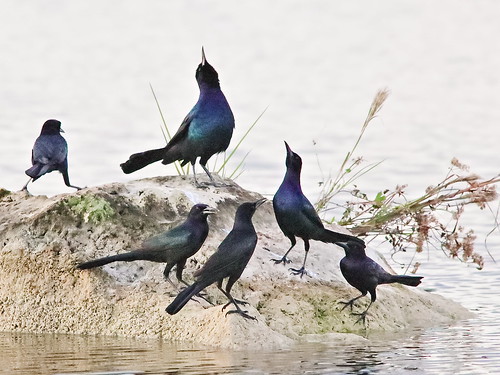
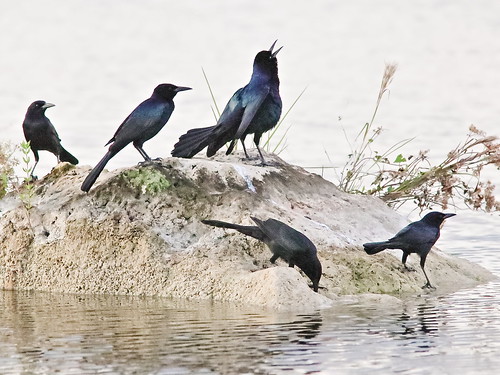
This past week I watched flocks fly in from the Everglades preserve. Many gathered along the shore of the lake in our local wetlands patch. Two groups of 8-10 formed on rock islands in the lake as the alpha males asserted their dominance:
Two rival males pointed their bills skyward while less aggressive adults and younger birds looked on::

The alpha male fluffed his feathers after his rival flew off:
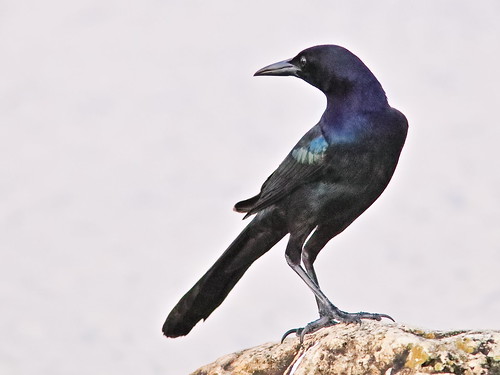
Long legs are an adaptation to the grackle's feeding style, as it often wades in the shallow water along the shore, probing the vegetation as it searches for invertebrates or anything edible:

Non-alpha males seem to get along with each other:
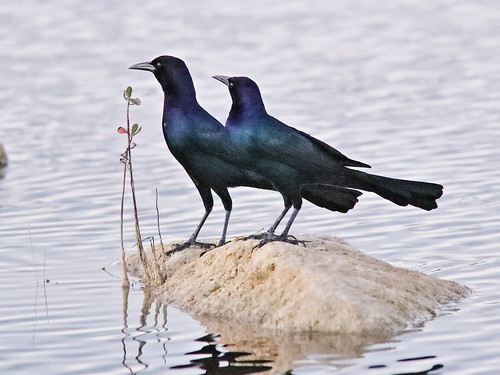
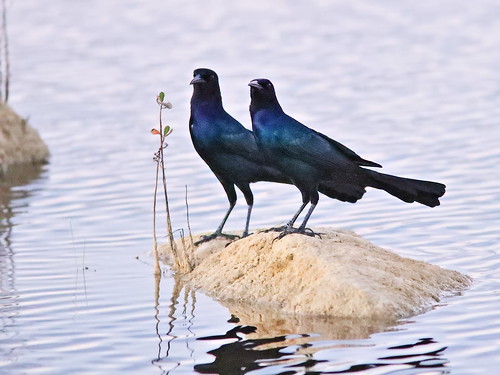
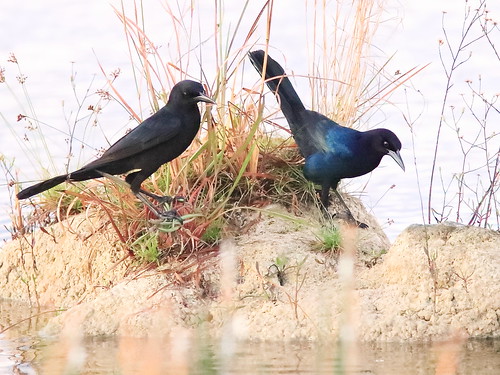
During breeding season the subservient males will gather around the periphery of the breeding colony which is guarded by one (or sometimes two or three) dominant males. They will follow females who leave the perimeter and often successfully mate with them if not detected by the harem master.
More lakeside confrontations, between two adults...

...and sometimes just to assert dominance over an immature male:

The Moon is backdrop for a singing male:

Female Boat-tailed Grackles are brown and smaller, looking almost like a different species:

This female has closed her nictitating membrane, or "third eyelid:"

We have had some beautiful sunrises. Our only open view is to the west, over the wetlands lake, so we see the play of light on the opposite horizon. This is the pine bank about 10 minutes before sunrise:

To the north, a Great Egret is foraging:
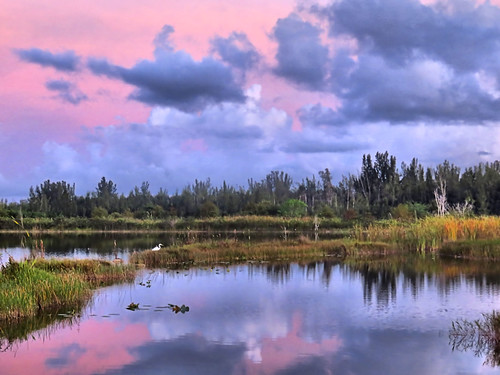
A closeup of the egret in poor light:

As we entered in darkness, a Tropical Orb Weaver was tending her web, illuminated by my flashlight:


Closeups with my pocket camera (Canon PowerShot SX700 HS with 30x Optical Zoom hand-held, which I also use for my landscape and habitat photos):

 This spider is nocturnal and it takes down its web before sunrise. I was amazed to see how quickly it gathered large sections of the web, winding the silken threads into a tight ball which it promptly ate. The web disappeared in less than one minute. Only the main supporting cable remained. It led from the ground up to a tree branch where the spider stores the prey it catches during the night. This practice conserves food and provides energy for the next night's work.
= = = = = = = = = = = = = = =
This spider is nocturnal and it takes down its web before sunrise. I was amazed to see how quickly it gathered large sections of the web, winding the silken threads into a tight ball which it promptly ate. The web disappeared in less than one minute. Only the main supporting cable remained. It led from the ground up to a tree branch where the spider stores the prey it catches during the night. This practice conserves food and provides energy for the next night's work.
= = = = = = = = = = = = = = =
Linking to Misty's CAMERA CRITTERS,
Linking to Eileen's SATURDAY'S CRITTERS,
Linking to SKYWATCH FRIDAY by Yogi, Sylvia and Sandy
Linking to WEEKEND REFLECTIONS by James
Linking to BirdD'Pot by Anni
Linking to Our World Tuesday by Lady Fi
Linking to Wild Bird Wednesday by Stewart
Linking to Wordless Wednesday (on Tuesday) by NC Sue
Linking to ALL SEASONS by Jesh
_______________________________________________
Please visit the links to all these memes to see some excellent photos on display
________________________________________________
The month of November, 2016 started on a sad note. MaryLou's oldest brother who lived in Tucson, Arizona was recuperating from complications which followed a leg fracture. We planned to visit him and made flight reservations, also hoping to do some birding while out there. His condition suddenly deteriorated the day before our scheduled arrival. He had turned gravely ill with pneumonia and sepsis.
We flew out the first day of November and visited him that evening in a rehabilitation facility. He was very weak but alert and involved with events surrounding the World Series and the presidential election. We stayed at nearby Davis-Monthan Air Force Base and visited with him the next morning. We planned to spend more time with him, but he passed away that night.
We had reservations to return to Florida on November 4 and had time to briefly visit Sweetwater Wetlands and the Arizona-Sonora Desert Museum before flying home.
I had to pore over nearly 1,000 processed photos from November to highlight favorite memes, such as critters (plenty of birds!), skies, reflections, flowers, fences and scenes which speak for themselves.
My first images were from Sweetwater Wetlands. Our visit was much too brief, given the circumstances.
Yellow-headed Blackbirds flew overhead:


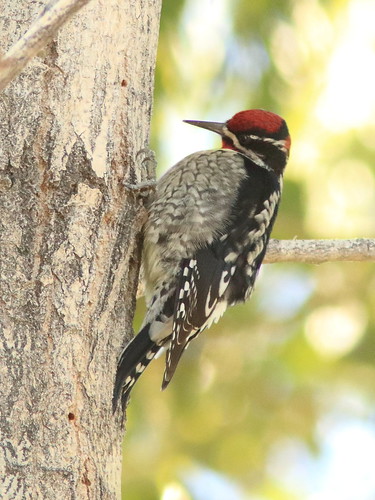
The Red-naped Sapsucker is the western counterpart of our Yellow-bellied Sapsucker:

The Verdin inhabits thorny shrubs in the arid lands of southern Arizona:

Long ears serve to dissipate body heat of the Desert Cottontail:

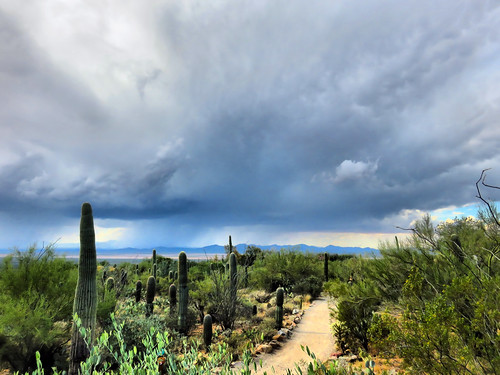
The next morning, rain was threatening when we visited the Arizona-Sonora Desert Museum, but most of it evaporated before reaching the ground:


Cactus Wrens were common:


Butterflies included a Common Checkered-Skipper:

Back home in Florida, our winter resident birds were settling in. Among them was a fairly rare Bell's Vireo:

Marsh Wrens appear irregularly during the winter months:

Eastern Phoebes stay for the winter:

This phoebe is dwarfed by the heavy guard rail fence along the "road to nowhere:"

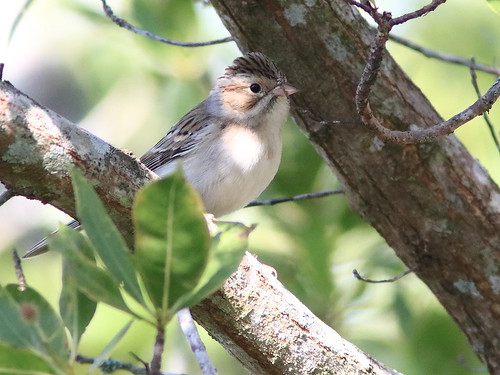
Clay-colored Sparrows made their first (and so far only) appearance in our local wetlands:

Wintering Palm Warblers were numerous:

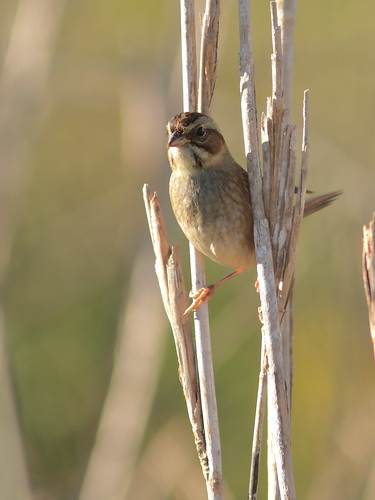
Swamp Sparrows were reliably present but few in number:

Female Ruby-throated Hummingbird:

Sharp-shinned Hawk:

Dark morph of a Short-tailed Hawk:

The local pair of Bald Eagles, after losing their first brood earlier in the year, had successfully reared one eaglet which remained dependent well into September. Now they were refurbishing their nest in preparation for the new season:

A large male Bobcat was visiting, probably meeting up with one of the resident females:

Zebra heliconian at the flower of a Firebush (Hamelia patens):

A "mirrored sunrise" on November 27 is an illusion caused by convergence of the parallel rays of the rising sun on the opposite (western) horizon. Conditions are best when the sky is clear overhead but the tops of storm clouds over the Atlantic Ocean break up the light to form the rays:

The sky was clearing up after a rain storm on November 28:
 = = = = = = = = = = = = = = =
Linking to Misty's CAMERA CRITTERS,
Linking to Eileen's SATURDAY'S CRITTERS,
Linking to SKYWATCH FRIDAY by Yogi, Sylvia and Sandy
Linking to WEEKEND REFLECTIONS by James
Linking to BirdD'Pot by Anni
Linking to Our World Tuesday by Lady Fi
Linking to Wild Bird Wednesday by Stewart
Linking to Wordless Wednesday (on Tuesday) by NC Sue
Linking to ALL SEASONS by Jesh
Linking to Fences Around the World by Gosia
________________________________________________
Please visit the links to all these memes to see some excellent photos on display
_______________________________________________