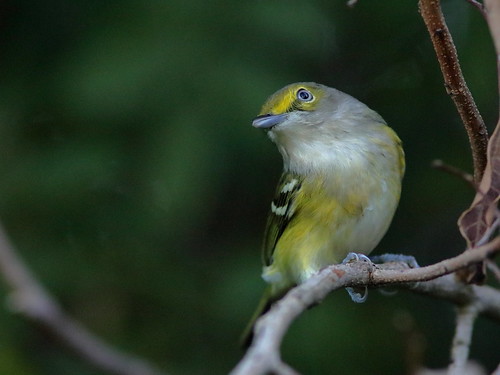
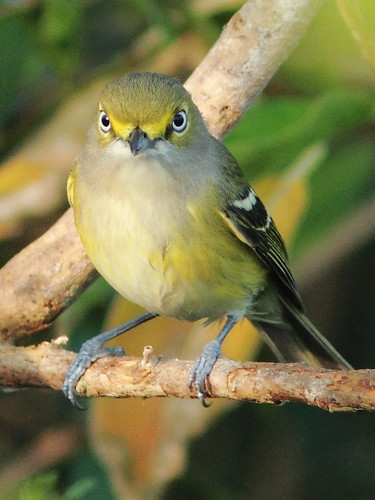
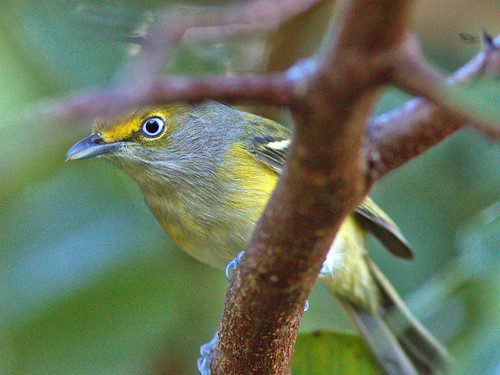
The White-eyed Vireo is a permanent resident in south Florida, although the winter population is supplemented by migrants from the eastern half of the US. I have heard it singing all year long, though the frequency and volume of its song is reduced during the winter months.
Although often shy and retiring, it is one of my favorite photographic subjects. Like all birds, it is incapable of changing its facial expressions, but it can assume some very interesting postures which seem to be communicating its thoughts.
Is it looking for a bug up there or wondering what I am doing here?
Is it angry?
Shy?
Proud?
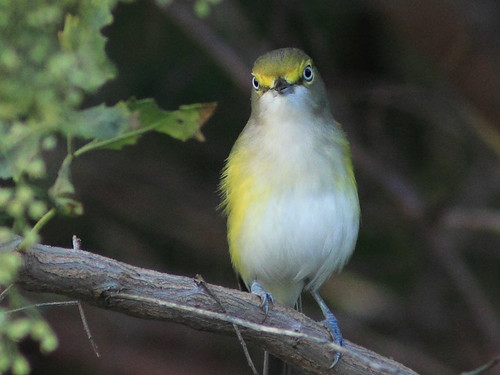
Or simply exuberant?
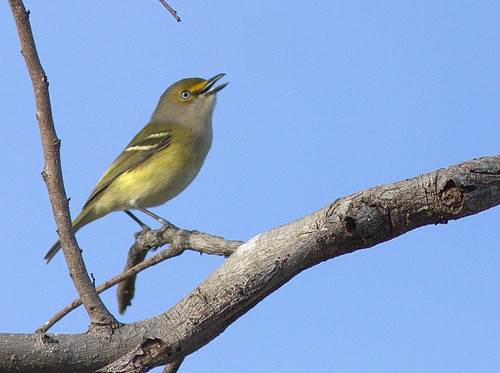
Vireos are small and rather inconspicuous birds, mostly native to the New World, with most species concentrated in Central America and northern South America. They eat insects and also fruit, especially during winter. About a dozen vireo species inhabit the US. Most are brown or greenish, and some show yellow tints. A vireo's bill is more stout than that of warblers and its upper mandible is slightly hooked.
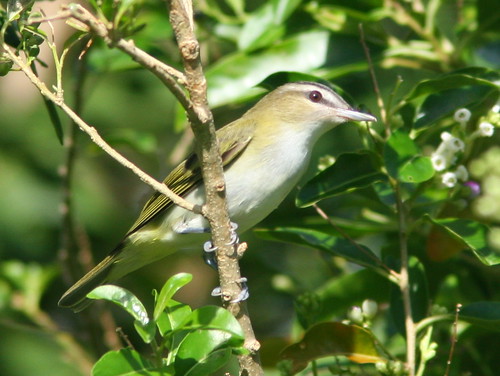
A common visitor during migration is the Red-eyed Vireo:
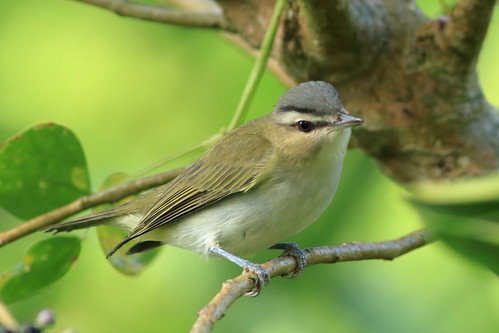
It is a common breeding bird in Canada and much of northern and eastern US. While it does nest down into Florida we do not find it breeding in the southern tip of the peninsula. Thus we wait for migration to hear them as they pass through and rarely stay for the winter. Most continue on to spend the winter in northern South America. They sing persistently up north, but we can hear their distinctive repetitive but varied 2-3 note slurred song during spring migration.
The Red-eyed Vireo is larger, about an inch longer (6 inches) than the White-eyed species. It can be very hard to find as it stalks among the leaves in search of insects:
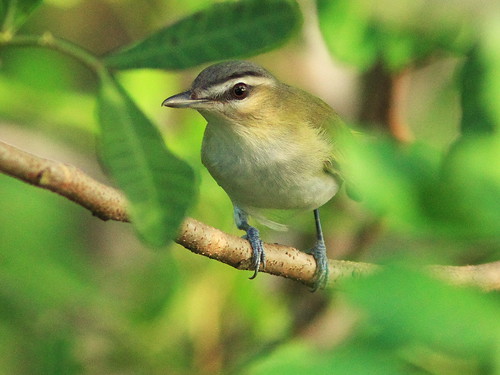
The light must be right to catch the red in its eyes:
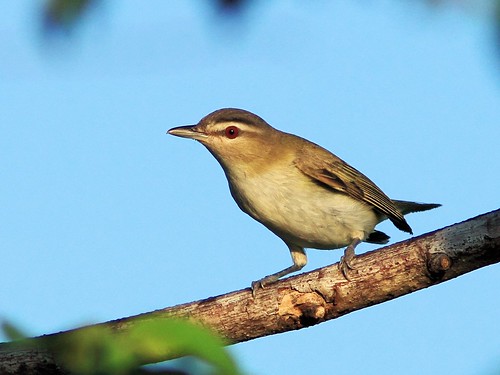
The plumage of the Black-whiskered Vireo is similar to that of the Red-eyed Vireo, but it sports its namesake "whiskers." It inhabits coastal mangroves in south Florida, but I was lucky to see it once in our local wetlands, 18 miles inland:
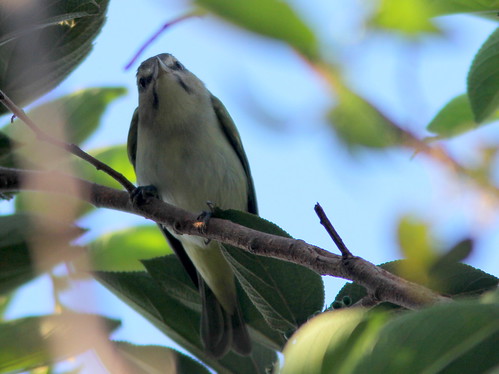
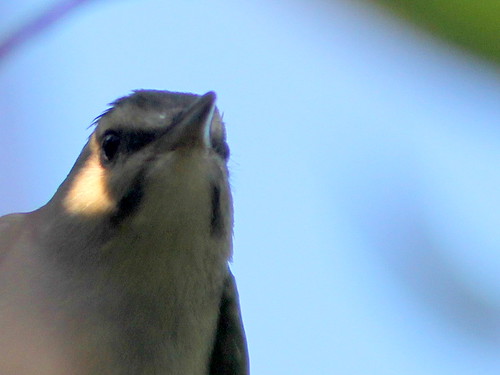
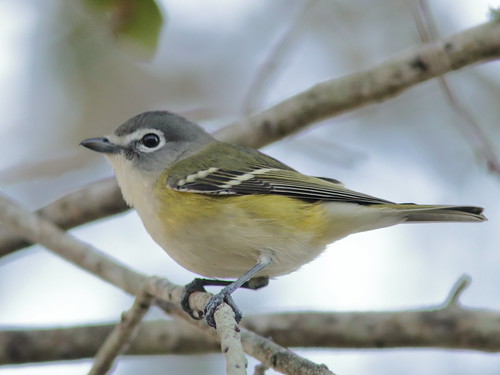
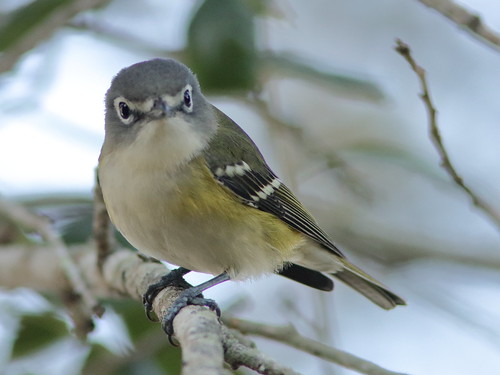
Another winter visitor which has been numerous this week is the Blue-headed Vireo. Its white "spectacles" contrast strikingly with its dark blue head:
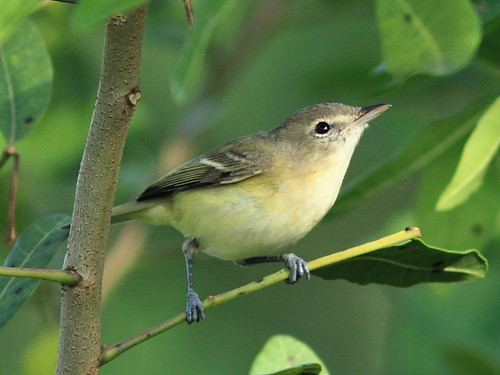
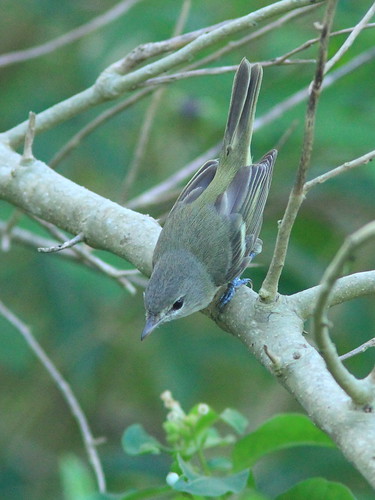
An unusual migrant visited us for four winters between 2009 and 2017. Bell's Vireo is about a half inch smaller than the White-eyed Vireo which often accompanied it. This species breeds to the west, in central and southwestern US. Normally, it migrates through Texas, New Mexico and Arizona to its wintering grounds on the Pacific coast of Mexico. Over the years a few vagrants have wintered in Florida. There were only 24 Florida records between 1947-1976, less than once a year!
Bell's Vireo is rather plain, and easily overlooked:
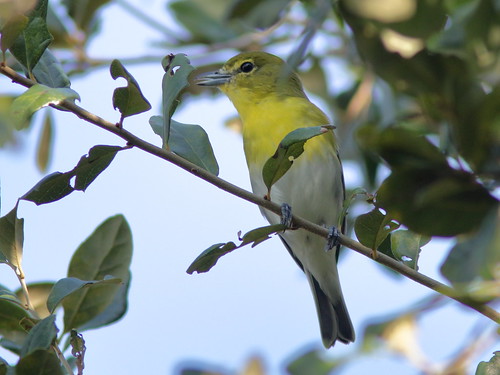
On of my most recent "first seen" birds in our local wetlands was this colorful Yellow-throated Vireo:
The Warbling Vireo has been present several times, but my best photos of it were those I took in Illinois, such as this one:
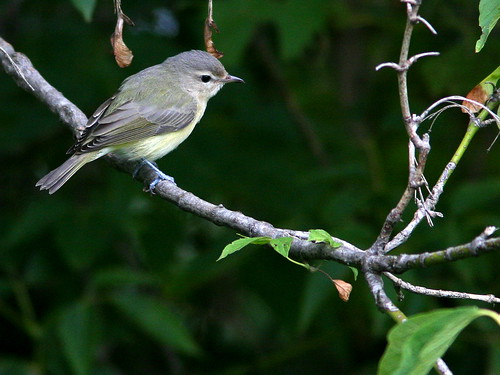
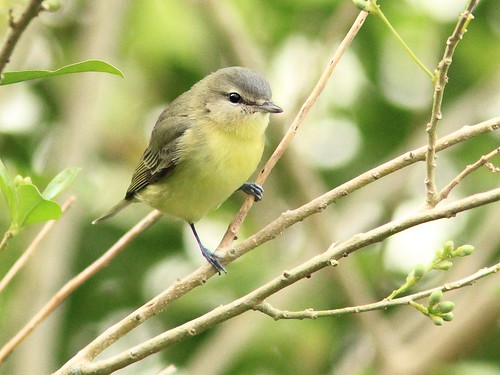
The Philadelphia Vireo is another unusual visitor to south Florida, but i did photograph it here on two occasions. Its voice is very similar to that of the Red-eyed Vireo. It usually migrates from its Canadian breeding grounds to Central America by way of the western coast of the Gulf of Mexico. It is quite colorful:
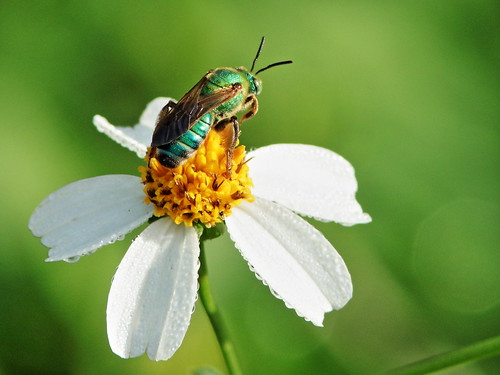
While I have seen other vireo species elsewhere, this covers all my Florida sightings. This week was not all about vireos. An Agapostemon Sweat Bee visited the flowers of Bidens alba:
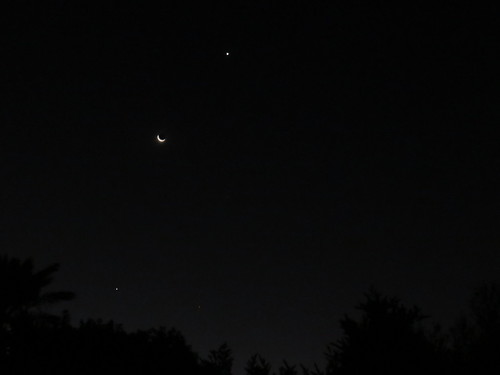
Venus, the Moon and Jupiter were aligned as we walked out 45 minutes before sunrise on January 3. I even saw Mercury closer to the horizon, the first time in my life!
Images of a very old Moon just before it disappeared into the sunrise on January 4th:

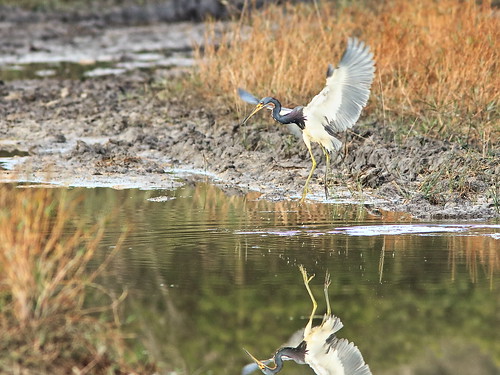
A Tricolored Heron danced with its reflection:
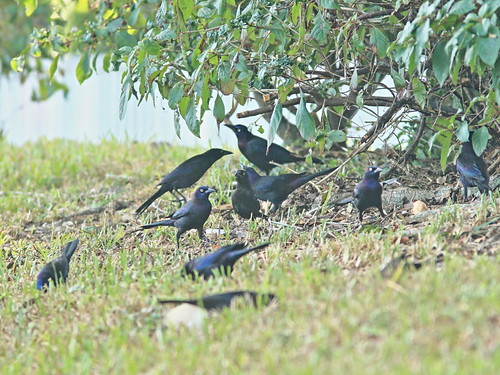
Common Grackles congregated along a neighbor's fence:
 = = = = = = = = = = = = = = =
Linking to Misty's CAMERA CRITTERS,
Linking to Eileen's SATURDAY'S CRITTERS,
Linking to SKYWATCH FRIDAY by Yogi, Sylvia and Sandy
Linking to WEEKEND REFLECTIONS by James
Linking to BirdD'Pot by Anni
Linking to Our World Tuesday by Lady Fi
Linking to Wild Bird Wednesday by Stewart
Linking to Wordless Wednesday (on Tuesday) by NC Sue
Linking to ALL SEASONS by Jesh
Linking to Fences Around the World by Gosia
________________________________________________
Please visit the links to all these memes to see some excellent photos on display
________________________________________________
To an outsider, our daily walks out into the wounded wetlands near our home must appear rather routine and uninteresting. What more can be seen after the first few times walking into that mosquito-infested place?
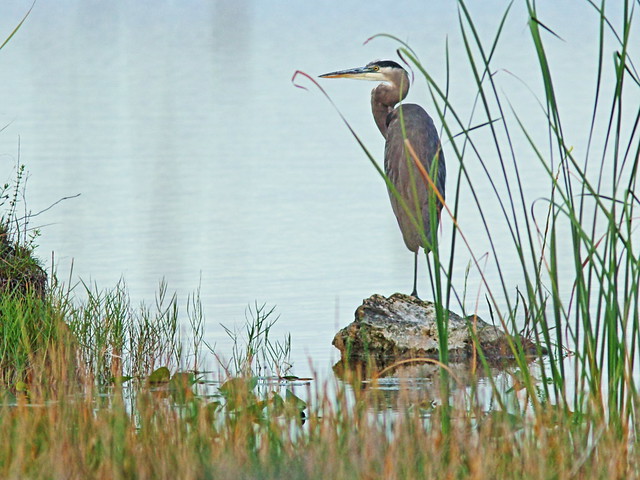
A Great Blue Heron is visible through the lakeside reeds:
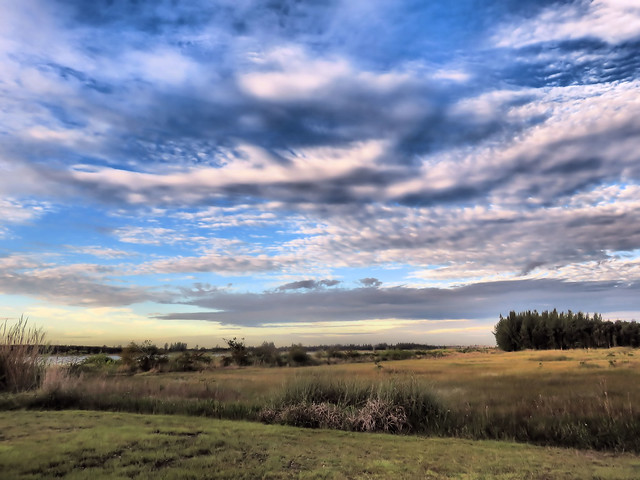
Buttermilk clouds crowd the sky:
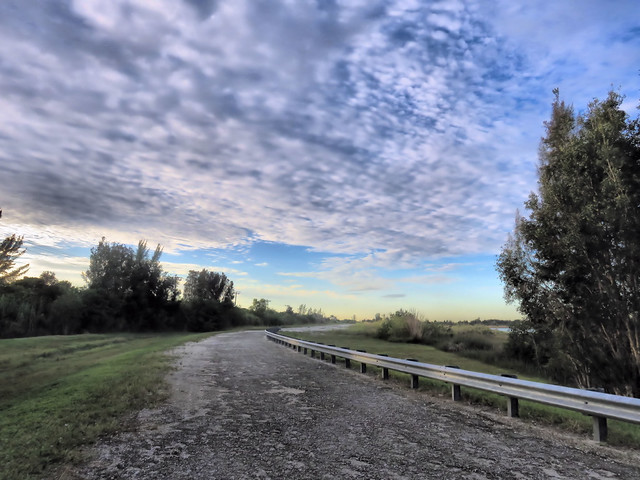
The lake overflows into the prairie:
In truth, depending upon the season, we see a predictable group of birds. Many are probably the same individuals who watch us in turn. Yet we greet each day with anticipation-- not simply to see a new bird or beast or bug, but to feel the joy of being outside and open to new discoveries. We greet the changes of season which bring with them new bird species, but day to day can also bring surprises. It's not just about birds or the occasional wild mammal we encounter. For example, over the past eleven years I have seen a particular butterfly species only three times out in our patch.
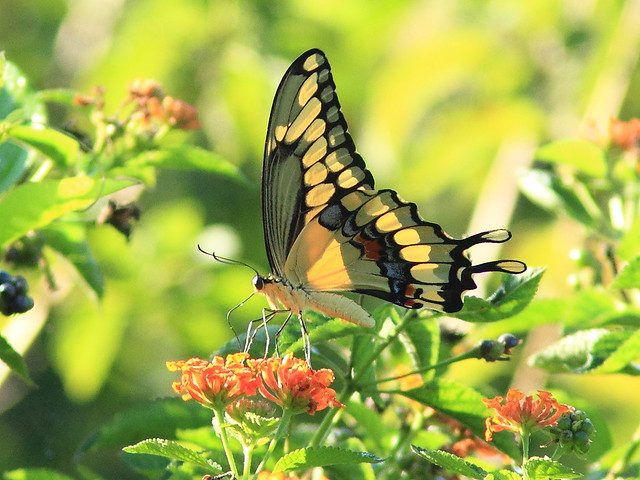
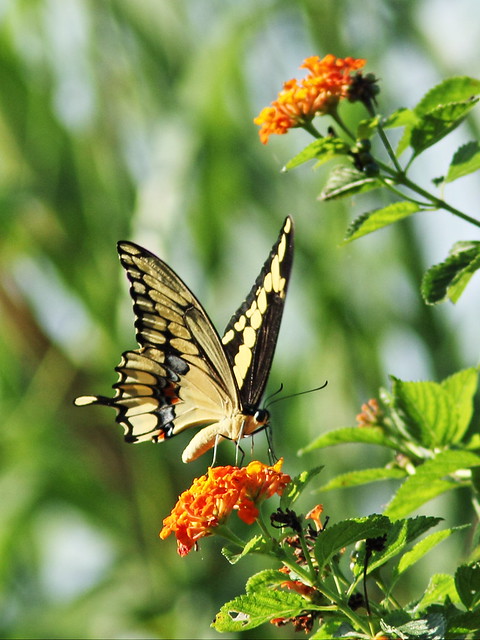
A Giant Swallowtail suddenly reappeared on the first day of November. Wings never stopped beating, it visited the Lantana flowers so briefly that I could barely keep it in the viewfinder of my camera. It stayed in one place for no longer than a second or two, wings constantly aflutter as it swiftly thrust its proboscis into the calyx of each flower. I chased it for about 10 minutes before it decided to spend a bit more time on a particular plant that was rich with blossoms:
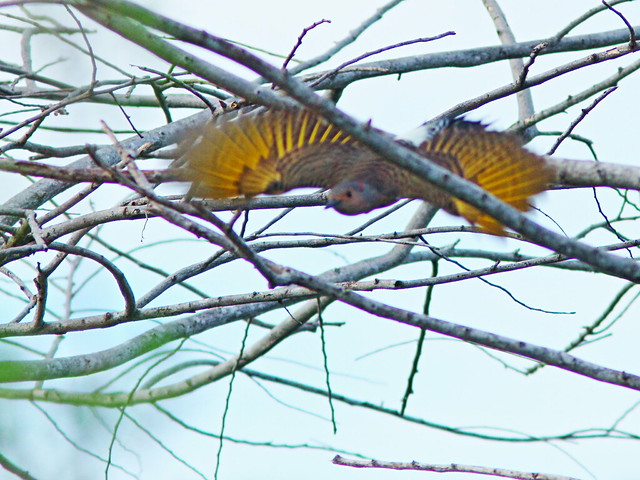
Common subjects provide sudden unexpected flashes of beauty, such as the gilded flight feathers of this Northern Flicker...
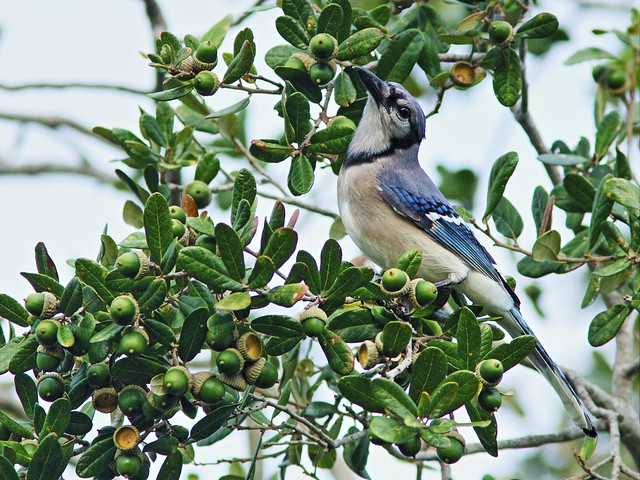
...a Blue Jay enjoying a bounty of acorns...
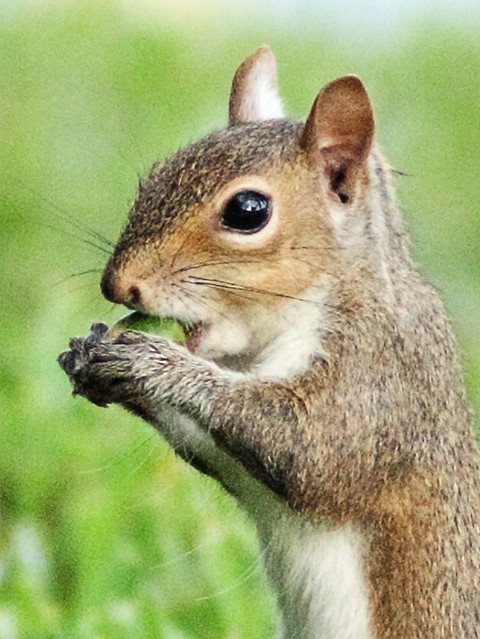
...a Gray Squirrel sharing the feast...
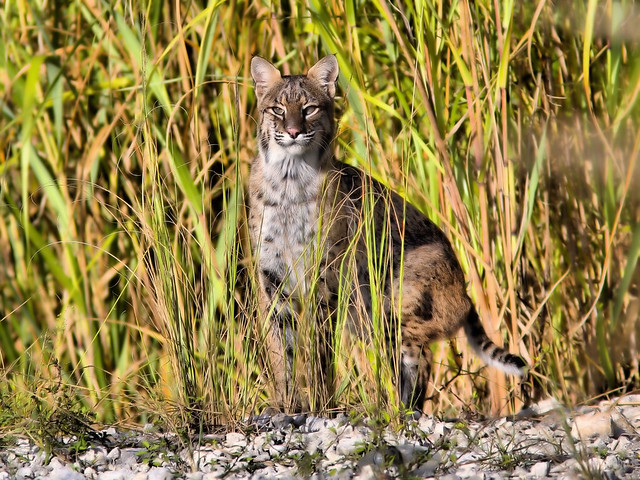
...the uneasy thrill of discovering that a Bobcat is watching me silently from only 30 yards...
...the placid beauty of a White-winged Dove bathed in shade...

...the unusual arrival of a Philadelphia Vireo, the first I have ever seen on this patch (October 18, 2015):
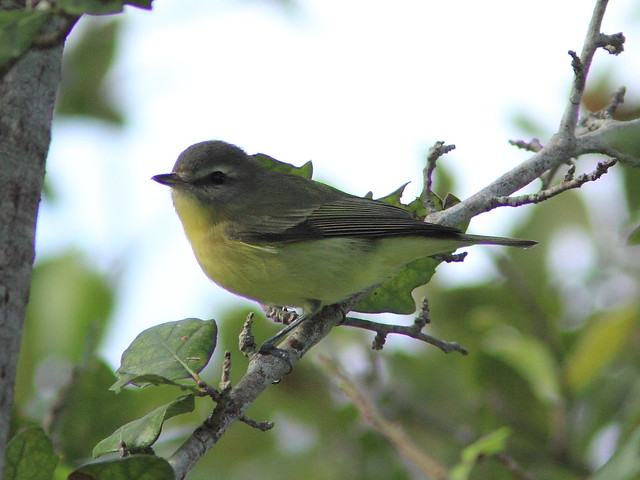
Remarkably, I have seen and photographed a Bell's Vireo during three fall seasons, in October of 2009 and 2012, and again this October, 2015. Breeding in Central USA, it normally migrates to Mexico via west Texas and rarely wanders into Florida, where it has been reported in Florida an average of only once every fall. It lingered here over a two week period in late October--
October 15, 2015:
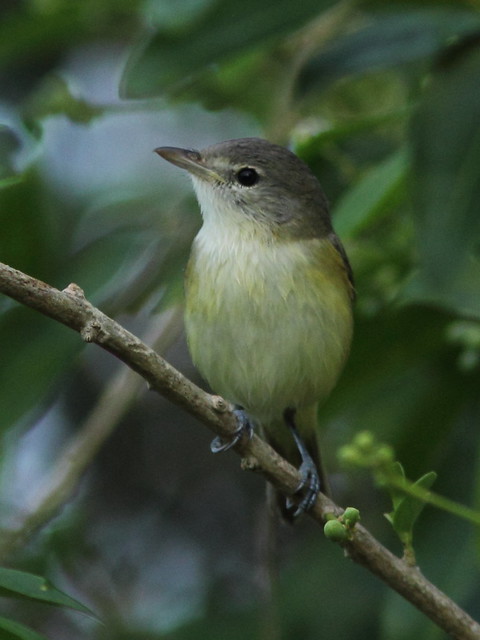
October 31, 2015 (check out those bright blue legs!):
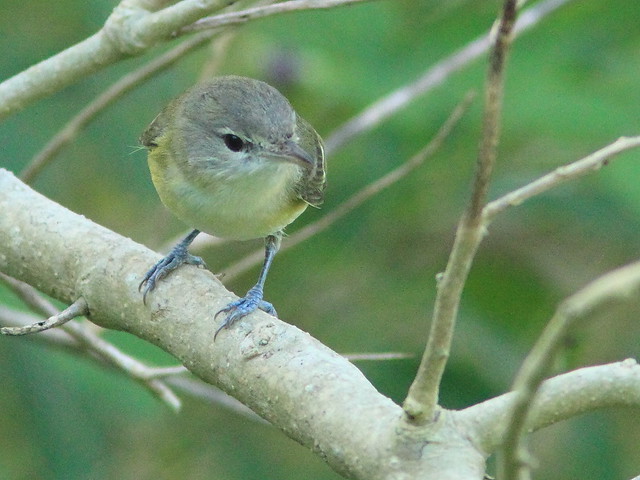
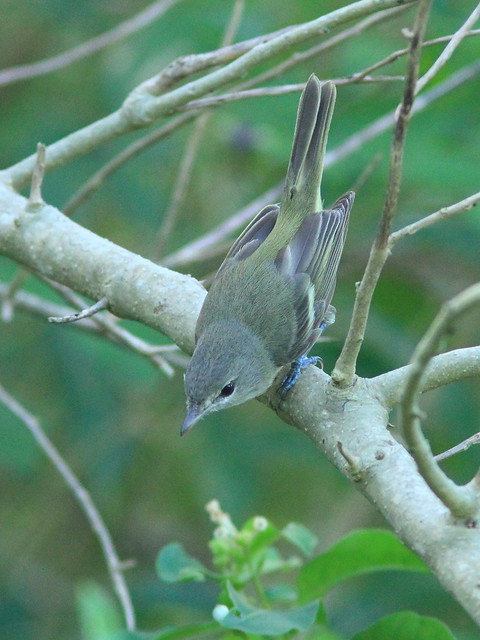
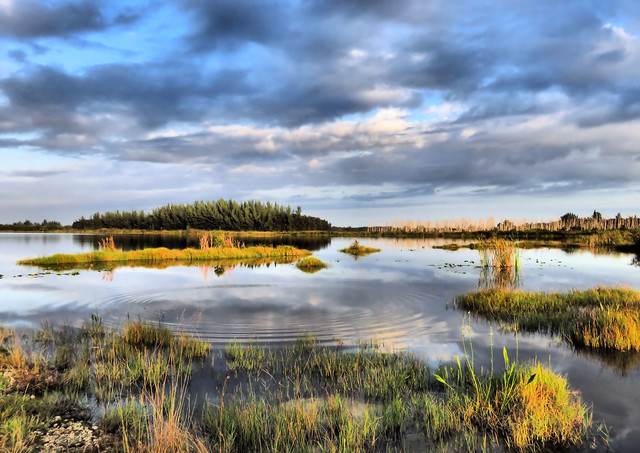
No, it is not only about birds. A fish sends ripples over the lake in the still of morning, breaking up the sky's reflection:
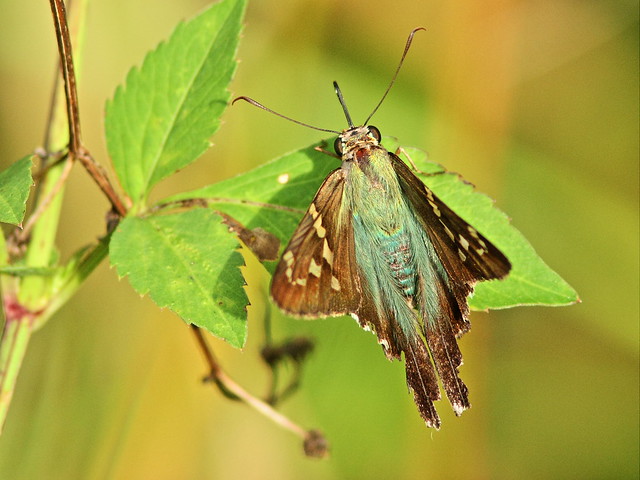
A Long-tailed Skipper rests on a leaf:
= = = = = = = = = = = = = = =
Linking to Misty's CAMERA CRITTERS,
Linking to Eileen's SATURDAY'S CRITTERS,
Linking to GOOD FENCES by Tex (Theresa).
Linking to SKYWATCH FRIDAY by Yogi, Sylvia and Sandy
Linking to WEEKEND REFLECTIONS by James
Linking to BirdD'Pot by Anni
Linking to Wild Bird Wednesday by Stewart
Linking to I Heart Macro by Laura
________________________________________________
Please visit the links to all these memes to see some excellent photos on display
________________________________________________
Soon after we arrived to our second home in NE Illinois we enjoyed a delightful respite from the heat and humidity of south Florida. We visited a nearby sod farm, hoping to see some Buff-breasted Sandpipers along with a Upland Sandpiper that had appeared there in mid-August.

We dipped on both, but did find three American Golden-Plovers as we scanned this extensive sod field.

Two foraged together out in the open turf.

One allowed comparison of its size and shape to a Killdeer, also a member of the plover family.

Another golden-plover appeared closer to the path.

American Goldfinches had already changed into their drab winter plumage.
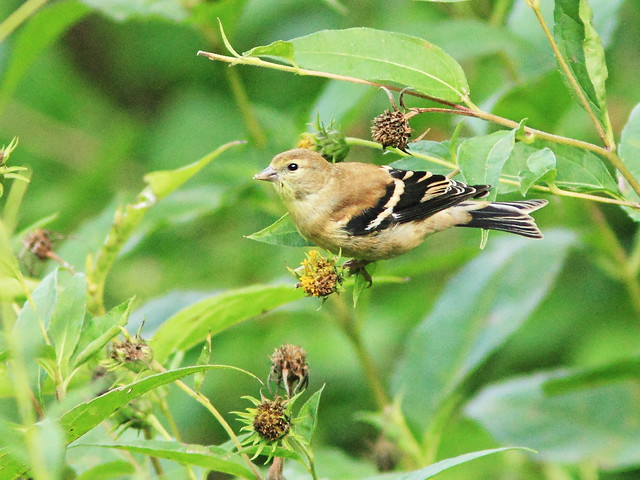

This male goldfinch retained some of its summer brilliance.

A Nashville Warbler joined the goldfinches on the goldenrod, now going to seed.
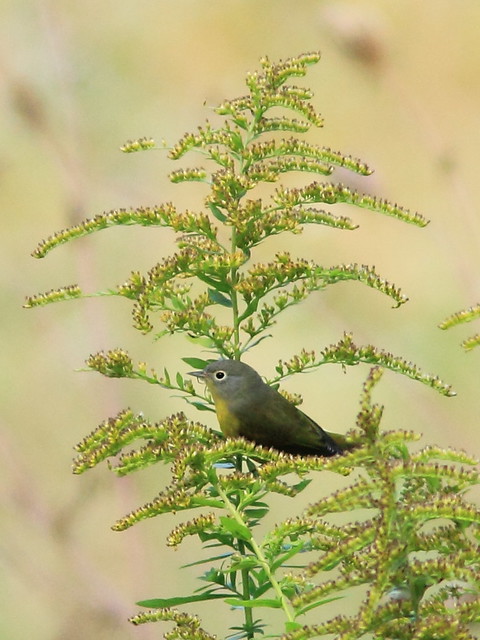
Black-capped Chickadees were numerous but so restless that I had trouble keeping one in my viewfinder.

A long-legged Palm Warbler flew up into a small tree, characteristically wagging its tail.

This Philadelphia Vireo was a nice find. The similar Warbling Vireo lacks the black line in front of its eye and bright yellow on its throat and central breast, quite evident in this photo.

The beginning of October heralded the arrival of the Yellow-rumped Warblers, and signaled that fall warbler migration was drawing to a close. Suddenly the trees were alive with them.

Now it was time to await the arrival of the next wave of visitors, sparrows and finches from the north. Following up on a lead from a local birder, we visited nearby Prairie Green Preserve in Geneva, Illinois.
We followed an indistinct path through the high grass and found the elusive Nelson's Sparrow at the edge of the marsh. This was my first opportunity to photograph this species.

I was afraid to use my flash as it might frighten the bird, so shadows obscured its amazingly bright orange head and chest.

Another target species was the Marsh Wren, which also had eluded my camera. I was not disappointed, as 4 or 5 flitted about in the cattails.

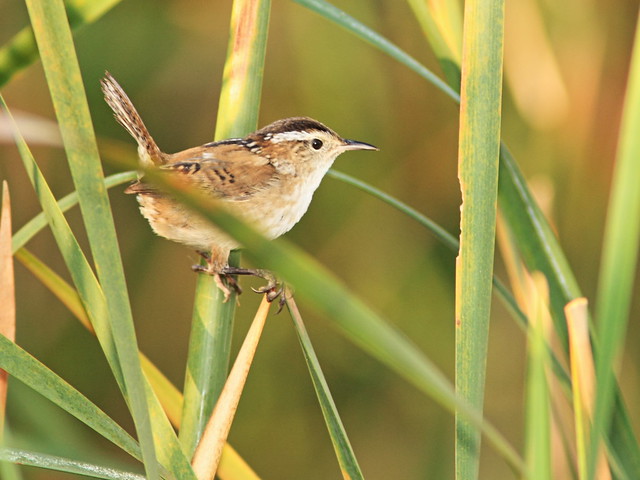
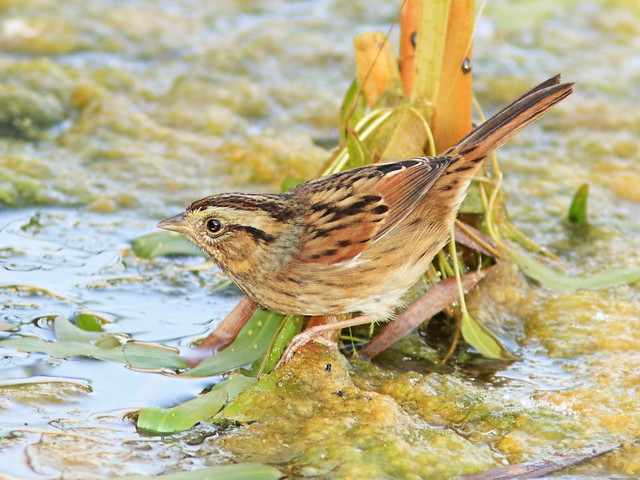
A Swamp Sparrow provided perhaps the best photos I have ever obtained of this species.

To top it off, a Lincoln's Sparrow appeared unexpectedly.

The sparrow was "photo-bombed" by a Common Yellowthroat that popped up beside it in the cattails.

Suffice it to say that this was a very satisfying visit despite the hundreds of nettles that we had to remove from our trousers and socks!
A Clouded Sulphur butterfly on red clover, October 1st:

On October 4th it turned cold and we had snow flurries! Monarch butterfles endured the cold and appeared in good numbers as the morning sun warmed them on October 8th.
